1 free read left. Create a free account for unlimited reading + AI research.
Create free accountWhitepaper DiGRA
1 free read left. Create a free account for unlimited reading + AI research.
Create free accountWhitepaperDiGRA
Distilling the key insights…
Filip Lange-Nielsen's study argues that power-ups have lacked a comprehensive definition in game studies, and that their most distinctive property is a shifting experiential role: they function both as means to an end and as goals in themselves. The paper develops a categorization model for power-ups and adapts Aarseth's game-research framework alongside the MDA (Mechanics, Dynamics, Aesthetics) framework to analyze how these elements shape player experience. Its central claim is that power-ups are malleable design affordances whose tuning can deliberately steer what players feel and do.
The analysis is grounded in a detailed case study of Metroid Prime, a first-person action-adventure title, supported by a first-person playthrough narrative. Within that game, the paper identifies Discovery, Challenge, and Sensation as the principal aesthetic goals, finding that power-ups chiefly sustain Discovery and Challenge while structuring the game's pacing and control of world access. Power-ups are shown to operate simultaneously as enablers, goals, and rewards, with their meaning shifting according to game state.
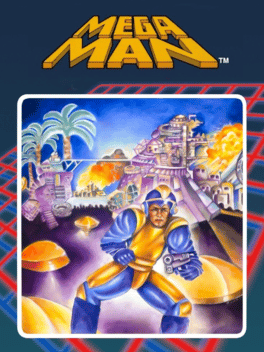
The study extends its argument beyond a single title by comparing power-ups across Mega Man 2 and Super Mario Bros. It characterizes them as contingent mechanics that move between "hyper-ludic" (boosted) and "contra-ludic" (constrained) states, and that can encourage playful exploration, or paidia. The categorization model rests on attributes such as acquisition method, supply, duration, and necessity, sorting power-ups into expendable, re-chargeable, and constant types. The paper concludes that power-ups shape experience across aesthetic categories and offers its model as a tool for further comparative game analysis.
DiGRA · 2016