1 free read left. Create a free account for unlimited reading + AI research.
Create free accountWhitepaper DiGRA
1 free read left. Create a free account for unlimited reading + AI research.
Create free accountWhitepaperDiGRA
Distilling the key insights…
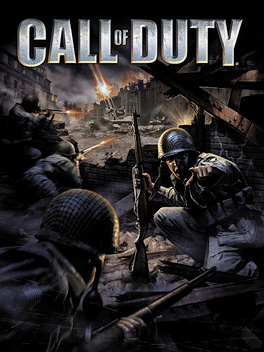
This document challenges New Zealand's approach to classifying video games, which currently applies film-based rating models that treat interactivity as a secondary concern. Its central thesis is that classification should be grounded in empirical evidence of how players actually experience interactive content, rather than in inferential judgments about what games might do to viewers. To support this, the authors propose a gameplay model in which players move between "fiction schemata," through which they interpret a coherent fictional world, and "game schemata," through which they navigate rule-constrained play. The analysis rests on a seven-week diary study of ten male participants playing Dead Island (2011), supplemented by examples from Call of Duty: Modern Warfare 2 and Skyrim.
The study's key findings concern how attention and experience shift during play. Players' focus moves along a continuum between configuration, acting on the game, and interpretation, reading its representational and narrative elements, with configuration typically dominant during violent encounters. The authors also distinguish undeniable content, which players cannot avoid without failing, from deniable content, which can be bypassed. This distinction matters for regulation because it bears on how much exposure a player's choices actually determine.
The authors further argue that player agency and active coping reshape how violent content is experienced compared with passive film viewing. Arousal, frustration, and relief often take the form of "playful mastery" rather than hostility toward others, though some participants reported anger, and in-game choices were understood as lacking real-world consequences. The scope is narrow: a small, single-gender sample, a limited set of titles, and a New Zealand regulatory context under the 1993 Act. The authors acknowledge that further quantitative and qualitative research is needed to validate the model before it could responsibly inform classification decisions.
DiGRA · 2016
DiGRA · 2011