1 free read left. Create a free account for unlimited reading + AI research.
Create free accountWhitepaper DiGRA
1 free read left. Create a free account for unlimited reading + AI research.
Create free accountWhitepaperDiGRA
Distilling the key insights…
South Korean player-versus-player (PvP) participation in World of Warcraft is examined here as a question of motivation: whether it reflects psychopathic tendencies, the appeal of sport, or an effort to validate masculinity. The central thesis holds that Korean male PvP engagement is best understood as a means of affirming masculine identity rather than as evidence of violent or antisocial dispositions. The analysis rests on three years of ethnographic fieldwork, interviews with ten PvP players, and observation of more than one hundred battlegrounds and hundreds of arena matches, situated within a culturally specific Korean context and a single game.
Three recurring motivations emerge from the fieldwork. The first, "baelyeoshim," describes a social obligation to avoid shaming oneself and one's family. The second, "ggalbogi," captures a desire to look down on opponents, which shares some behavioral features with psychopathy but falls short of supporting claims of murderous intent. The third is a masculinity-validation dynamic in which crowd-control and healing roles confer status and hierarchy within teams. Together these findings challenge the view, associated with Grossman, that violent games function as "murder simulators."
The study also points to structural factors that make PvP attractive. Rapid progression, with a character reaching level 85 in roughly three days and acquiring full PvP gear in about a week, lowers the barrier to competitive status. This dynamic is connected to broader military-influenced masculinity norms in Korea and to the growing social power of women, which together may intensify pressure on men to demonstrate dominance.
The conclusions are explicitly limited. The sample includes no female PvP players, the findings are qualitative and culturally specific rather than quantitative, and the authors identify further work on PvP, gender, and Korean cultural influences as necessary to refine these interpretations.
Each row is a game or company this document names, each column a document, oldest first. A mark means that document names it. Select a row to see those documents.

DiGRA · 2016

DiGRA · 2016



DiGRA · 2016

DiGRA · 2016

DiGRA · 2016

DiGRA · 2016

DiGRA · 2016

DiGRA · 2016
DiGRA · 2016
DiGRA · 2016
DiGRA · 2016
DiGRA · 2016
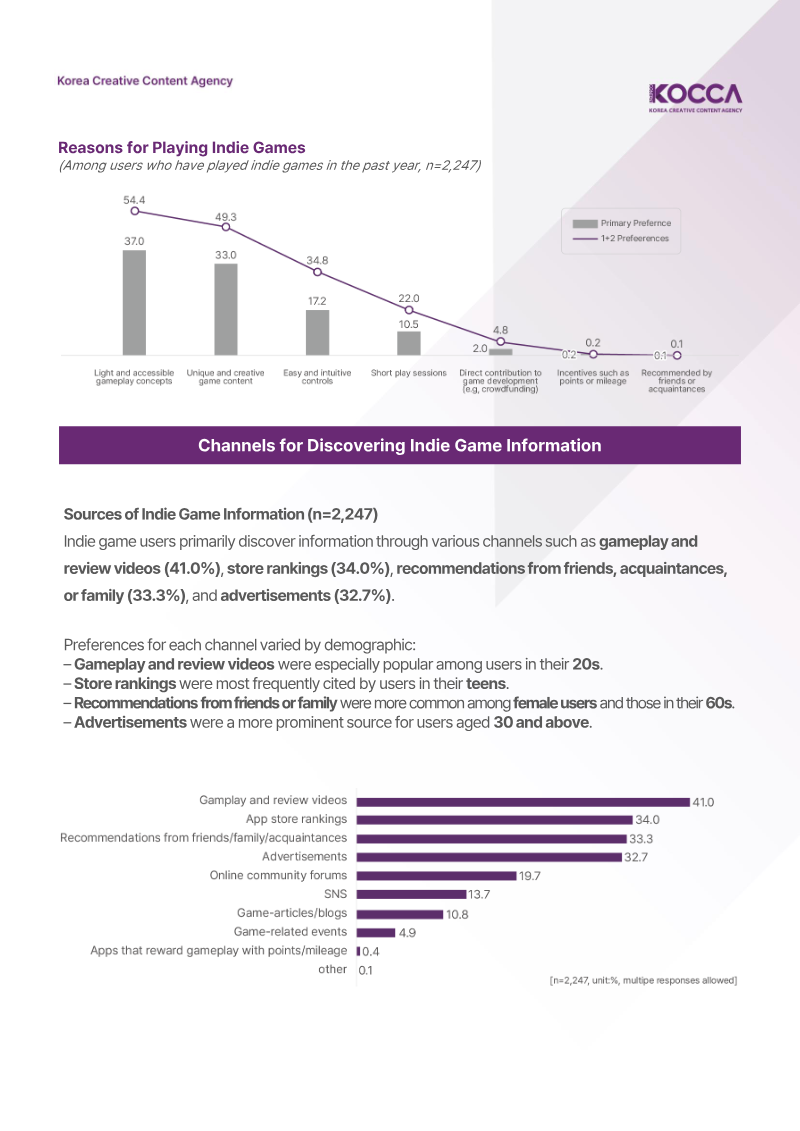
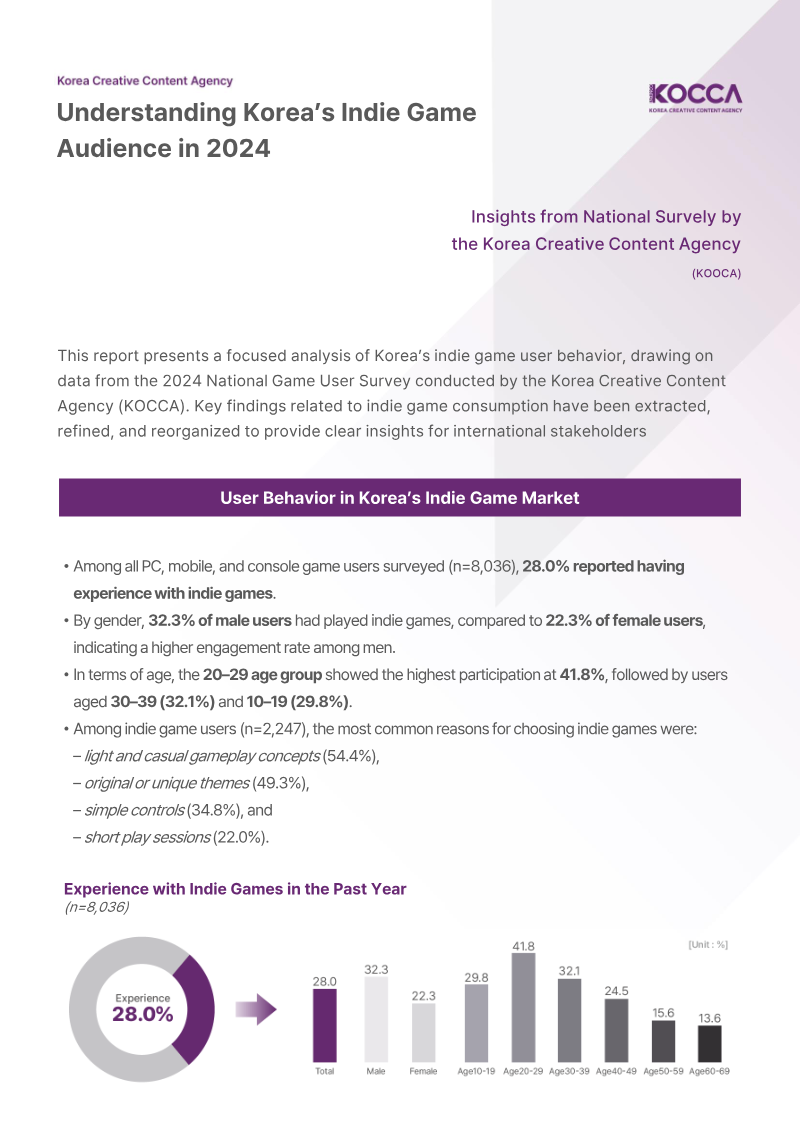
Korea Creative Content Agency