
Atari
1 document by Atari in the Game Industry Library, the newest “Atari Rapport Financier Annuel: Exercice 2012/2013” (2013).
Documents

Atari Rapport Financier Annuel: Exercice 2012/2013
VERITABLE INNOVATEUR DU JEU VIDEO Société anonyme au capital de 14.767.375,50 euros Siège social : 78 rue Taitbout 75009 PARIS - France AXIF AUTORITE Le présent Document de référence a été déposé auprès de l'Autorité des Marchés Financiers le __ 2013, conformément à l'article 212- 13 de son Règlement général.
Reports about Atari
109 documents by other writers name Atari in the title or summary.
Implementing Intelligence: The Platform Culture of Intellivision
The document analyzes the "platform culture" of the Intellivision home game console, focusing on how the concept of "intelligence" was implemented and expressed throughout its design, marketing, and development.
- The paper argues that 'intelligence' was an aesthetic, pragmatic, and social principle underlying the Intellivision console (Mattel Electronics, late 1970s–early 1980s), not just a marketing slogan, despite the system lacking complex onboard AI.
- Intellivision's marketing used comparative framing and visual realism, with slogans urging consumers to 'compare' and positioning the system as the choice of sophisticated gamers, in contrast to rivals such as the Atari VCS.
- Mattel's modular, extensible design, including speech, keyboard, synthesizer, network, and cartridge-adapter peripherals, promoted an imaginary of augmented human intelligence.
Disappearing into the Mirror: Robert Maxwell and the Early UK Videogames Industry
Robert Maxwell's influence on the UK videogames industry, from the mid-1970s to the early 1990s, is the subject of this extended abstract, which argues that his involvement was a strategic investment rather than an accident.
- Mirrorsoft, the games publishing subsidiary of Mirror Group Newspapers under Robert Maxwell, is argued to have treated games publishing as a strategic investment, and its collapse after Maxwell's empire dissolved in 1991 left the UK games sector without a bona fide international publisher during a critical transition.
- The paper argues Mirrorsoft could have steered the industry's shift from small-team, open-platform development toward standardized, closed-platform production, but this potential was never fully realized.
- Early convergence between newspaper and games operations is illustrated by Maxwell's push to modernize newsprint production through desktop publishing, which connected to the 1986 release of Fleet Street Publisher for the Atari ST.
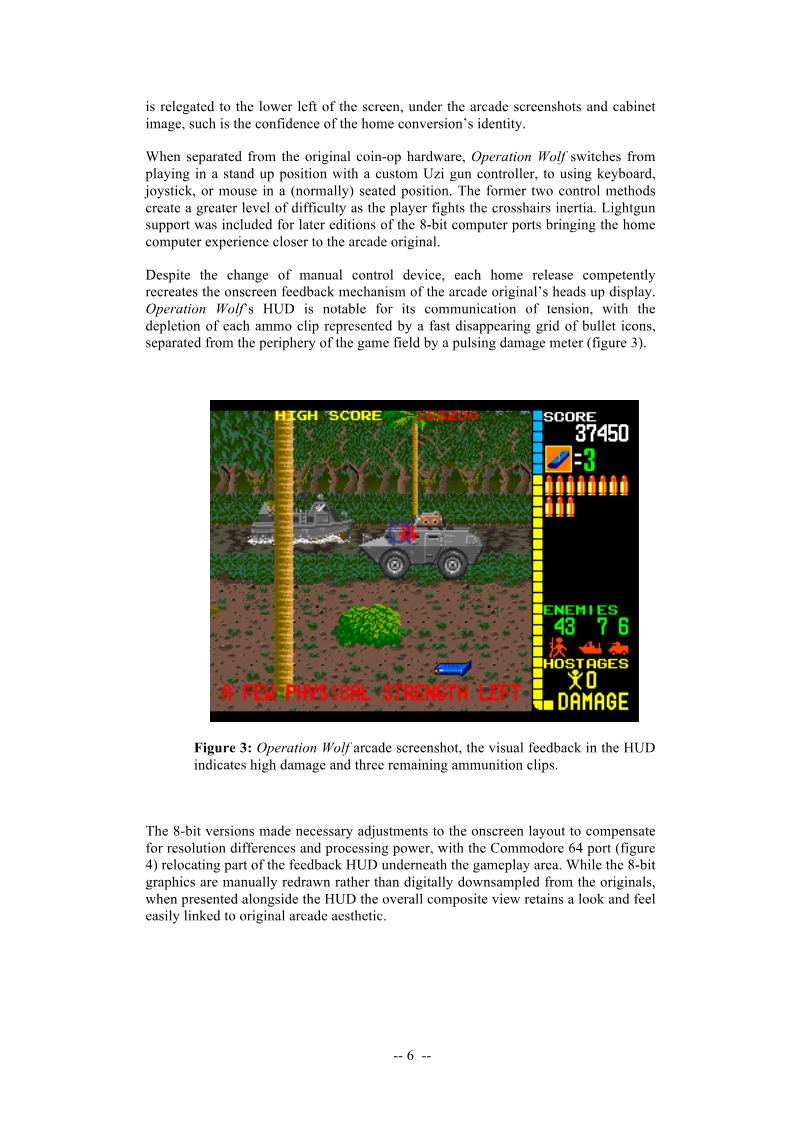
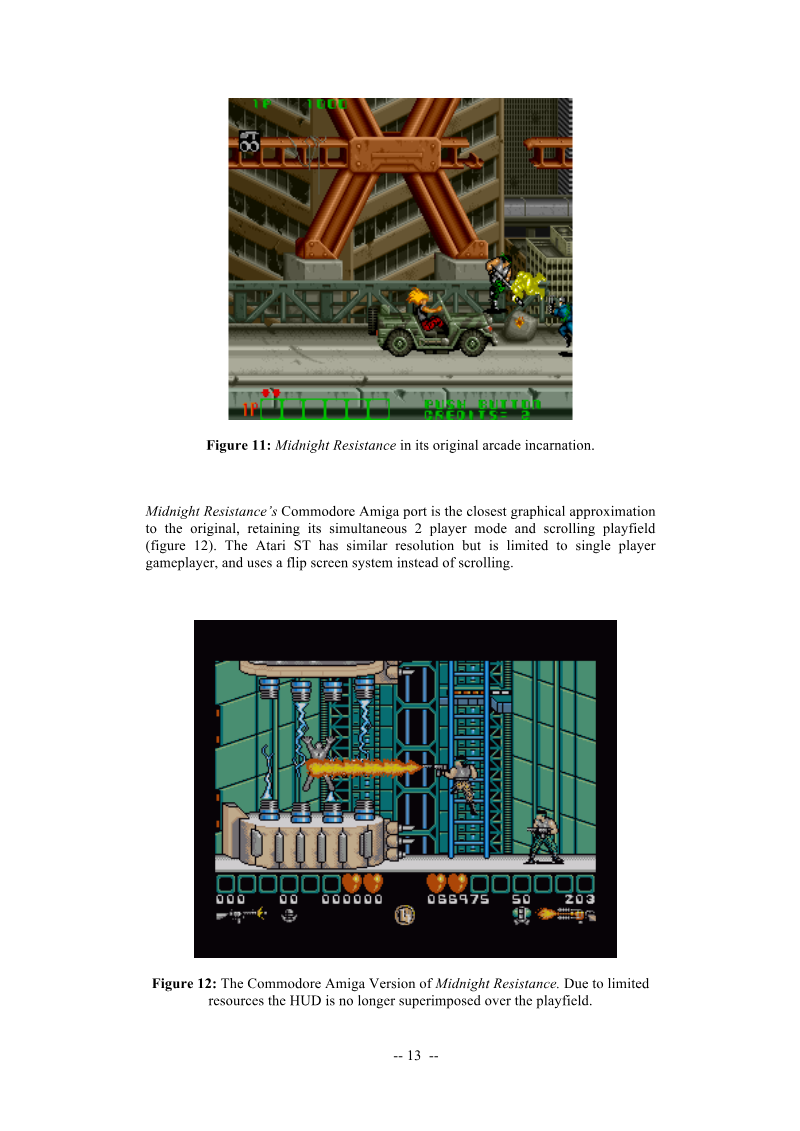
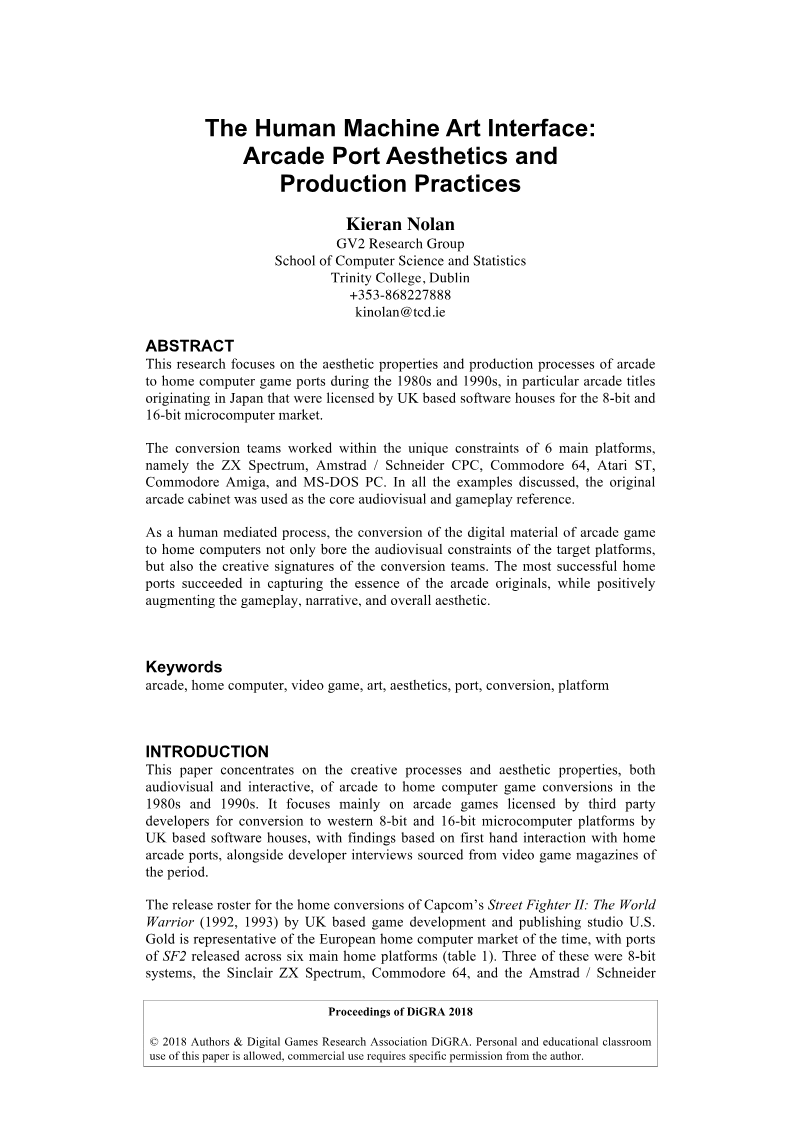
The Human Machine Art Interface: Arcade Port Aesthetics and Production Practices
This analysis investigates the aesthetic characteristics and production methodologies employed in arcade-to-home computer game ports during the 1980s and 1990s.
- British conversion teams typically reconstructed arcade graphics, music, and gameplay by capturing video from the cabinets and manually redrawing assets, rather than working from source files, which produced substantial aesthetic departures from the originals.
- The authors argue that these departures were shaped by individual teams' stylistic choices, not by platform constraints alone, reframing the ports as creative adaptations rather than duplications.
- Conversion teams including Arc, Graftgold, Special-FX, Ocean, and Tiertex relied on stippling to simulate extra colours within restricted palettes, custom converter tools to move assets between systems, and one-button joystick control schemes.
Driving the SID Chip: Assembly Language, Composition, and Sound Design for the C64
James Newman's 2017 analysis argues that the SID chip (MOS6581) shaped videogame music more than any other device, but that its distinctive sound results from the interplay of hardware and software rather than hardware alone.
- The MOS6581 SID chip shaped videogame music more than any other sound hardware of its era, and its distinctive C64 sound cannot be understood from the hardware specification alone, since its most notable techniques emerged through composer-programmers' bespoke music drivers.
- The SID's three-voice synthesizer design, with per-channel ADSR envelopes, a multimode filter, ring and sync modulation, and pulse-width modulation, far exceeded the capabilities of the Atari TIA and NES sound chips.
- The register-level interface, limited polyphony, and frame-locked timing (50Hz on PAL, 60Hz on NTSC) forced techniques such as multiplexing parts across channels, rapid arpeggiation, and frame-accurate waveform manipulation to simulate drums and chords.
Desert Island Diskettes: A Journey through Video Game Sound History
Karen Collins's "Desert Island Diskettes: A Journey through Video Game Sound History" is a personal, curated retrospective of video game audio, published in Issue 06 of Critical Notes in 2017.
- Karen Collins's essay in Critical Notes Issue 06 (2017) rejects a canonical 'best of' ranking, instead choosing fifteen games for their personal resonance with the author, modeled on the BBC's 'Desert Island Discs'.
- The fifteen profiled games span roughly 1972 to 2014, from Pong-era and PC beeper sounds through the Atari 2600, Commodore 64, NES, Sega Genesis, and PlayStation to modern titles like BioShock and Peggle 2.
- Each entry ties the music to hardware constraints, such as the Atari TIA's atonal tuning, the C64's module-based composition, and the Genesis's shift from FM synthesis to digital audio.
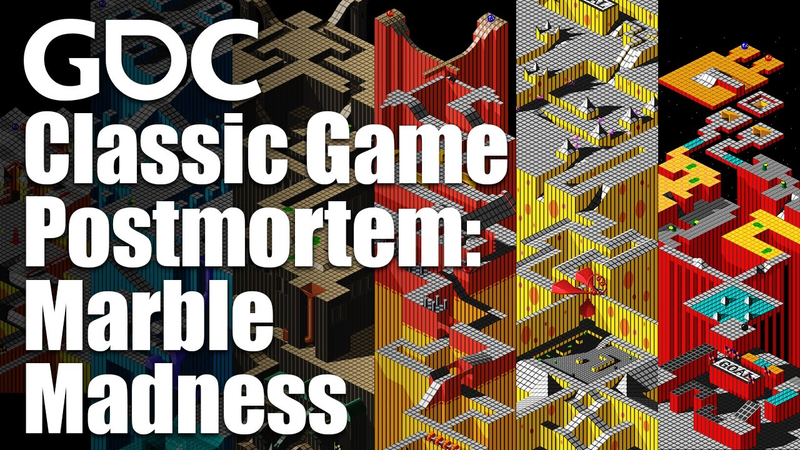
Classic Game Postmortem - Marble Madness
The development of Marble Madness during the mid-1980s arcade industry contraction serves as a case study in balancing technical innovation with the unforgiving economic realities of coin-operated gaming.
- During the 1982-1984 arcade industry crash, sales plummeted by 90%, forcing developers to pivot from custom hardware for every game to a 'system hardware' model where operators bought a base board and swapped out cartridges.
- Atari's development process for Marble Madness involved a high-stakes 'coin drop' testing phase where games were built to 80% completion and placed in arcades; historically, two out of every three games were canceled based on these results.
- Marble Madness achieved commercial success by selling 4,000 units in a depressed market, making it one of the top-selling games of 1984 despite the industry's decline from the 100,000-unit sales peaks of the Pac-Man era.
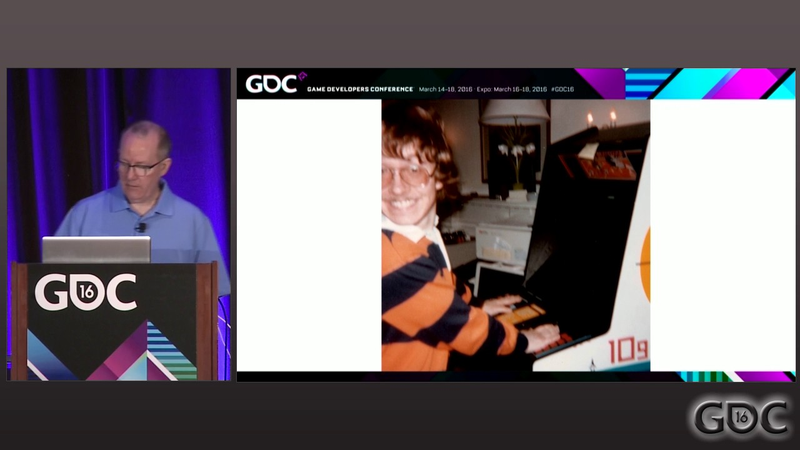
Classic Game Postmortem: Ms. Pac-Man
General Computer Corporation (GCC) emerged in 1981 as a pioneering force in the arcade industry, initially focusing on enhancement kits designed to extend the commercial lifespan of popular titles.
- Ms. Pac-Man was developed by General Computer Corporation (GCC) as a modification kit for the original Pac-Man, utilizing a custom auxiliary circuit board with 10K of ROM to patch the original game code.
- To reverse engineer Pac-Man, the GCC team used a Tektronix 85/50 Z80 emulator to disassemble the original code, allowing them to isolate and modify monster AI behaviors and maze layouts.
- The team implemented anti-copying hardware and a 'bit-swizzle' encryption method on their auxiliary board, which successfully prevented the cloning of Ms. Pac-Man for approximately six months.
Collecting, Preserving, and Interpreting the History of Electronic Games: An Interview with Jon-Paul C. Dyson
Jon-Paul Dyson, director of The Strong museum's International Center for the History of Electronic Games (ICHEG), argues that video games deserve the same serious collection, preservation, and scholarly treatment as any other cultural artifact, and that they are best understood as part of the longer history of play.
- The International Center for the History of Electronic Games at The Strong in Rochester, New York, has grown from fewer than 100 items in 2006 to a collection exceeding 60,000 games and related artifacts, and draws more than 550,000 visitors annually.
- Director Jon-Paul C. Dyson argues that electronic games are uniquely hard to preserve because they depend on obsolete hardware, fragile storage media, and social play contexts that are easily lost.
- The museum's five-part preservation strategy covers original hardware and software, published materials and archival records from industry figures, gameplay recorded on original equipment, and source code preservation with file migration, with digitization occurring only after items are stabilized and cataloged.
A History of Voice Interaction in Games
This paper traces the history of voice interaction in digital games, arguing that the modality has long been promised as a natural form of play while remaining marginal in practice.
- Voice interaction in games has long been promised as a natural form of play yet has remained marginal in practice, a tension the paper examines through platform studies and the constraints platforms place on voice input.
- The earliest identified voice-controlled game is Voice-Chess, built on the Hearsay-I speech understanding system in 1973, and 1960s computer science research used simple games as test cases because a limited, standardised vocabulary made recognition tractable.
- Ambitious early-1980s speech add-ons such as the Halcyon console and the Atari Voice Commander never reached mass production after the 1983 North American video game crash, while Japan's Famicom microphone, largely unused and omitted from the international NES, found a modest niche in titles like The Legend of Zelda and Kid Icarus.
Who Made That Last Game? The Alternative Chronology of the 8-Bit Era in Poland
Game history scholarship tends to fixate on "firsts," such as the first game, genre, or formal innovation, while neglecting the late stages of game history phenomena.
- The 8-bit era reached Poland late because the CoCom embargo on exports to Eastern Bloc countries kept 8-bit microcomputers expensive and scarce until the collapse of communism in 1989.
- After 1989, Polish gamers were flooded with used Western gaming machines, and Atari's 8-bit line stayed popular in Poland until the mid-1990s, earning Poland the nickname the "Last Fortress of the Little Atari".
- Polish late 8-bit games such as the Miecze Valdgira series were hits on the local market until about 1995, but by 1996 new 8-bit titles like Knoorkie: The Pig struggled to find publishers and were picked up by smaller firms like TimSoft.
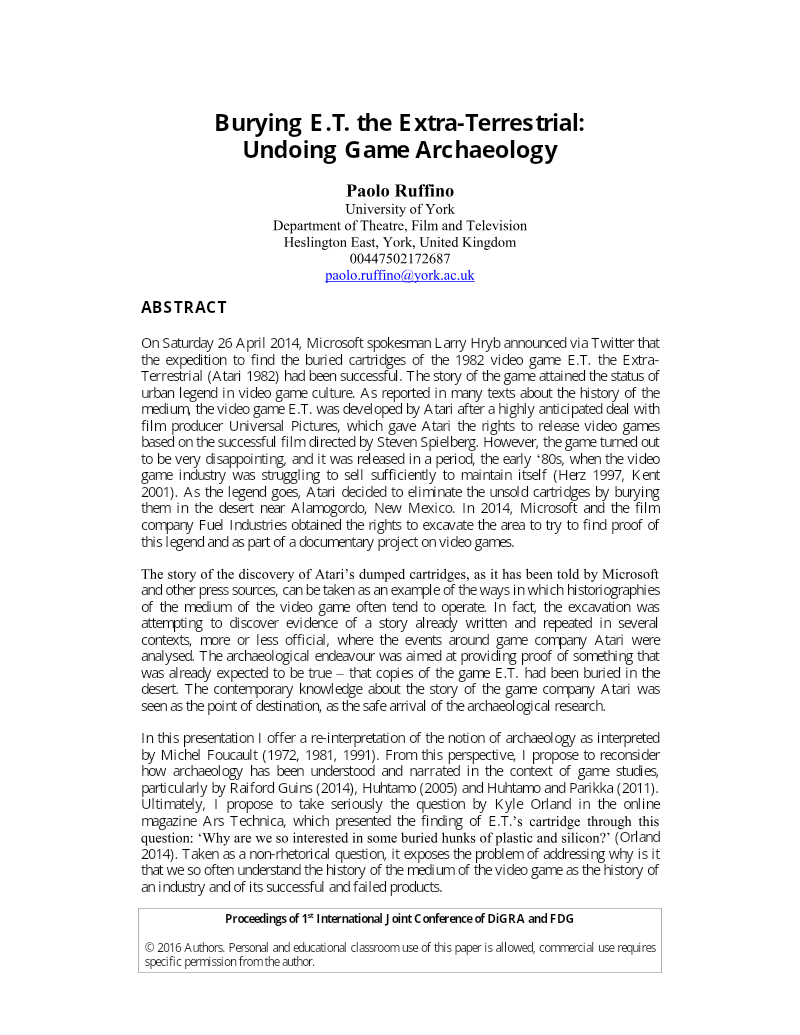
Burying E.T. the Extra-Terrestrial: Undoing Game Archaeology
Paolo Ruffino's conference paper uses the April 2014 excavation of Atari's buried E.T. the Extra-Terrestrial cartridges in Alamogordo, New Mexico, as a case study in how video game history is written.
- The 2014 excavation in Alamogordo, New Mexico, was an attempt by Microsoft and Fuel Industries to verify a long-circulating urban legend that Atari buried unsold copies of the 1982 E.T. game in the desert.
- The author argues the excavation functioned less as genuine historical inquiry and more as confirmation of a narrative already accepted, with the existing Atari story serving as the endpoint of the search.
- Drawing on Foucault's archaeology and genealogy, the paper critiques media archaeologists Raiford Guins, Erkki Huhtamo, and Jussi Parikka for treating game history as the history of an industry's successful and failed products, reinforcing present-day categories.


Atari Document de Référence: 2014/2015
ATAR DOCUMENT DE REFERENCE VERITABLE INNOVATEUR DU JEU VIDEO Société anonyme au capital de 1.708.132,36 euros Siège social : 78 rue Taitbout 75009 PARIS - France Le présent Document de référence a été déposé auprès de l'Autorité des Marchés Financiers le 4 août 2015, conformément à l'article 212-13 de son Règlement général.
Do you work at Atari? Get a free report of how these documents are read and cited here.