1 free read left. Create a free account for unlimited reading + AI research.
Create free accountArticle American Journal of Play
1 free read left. Create a free account for unlimited reading + AI research.
Create free accountArticleAmerican Journal of Play
The International Center for the History of Electronic Games at The Strong grew from fewer than 100 items in 2006.
The International Center for the History of Electronic Games at The Strong, a museum in Rochester, New York, has grown from fewer than 100 items in 2006 to a collection exceeding 60,000 games and related artifacts. Its director, Jon-Paul C. Dyson, explains that the center's collecting philosophy, the "Concentric Circles" framework, encompasses the games themselves, the experiences of players, the work of creators, and the games' connections to broader play history. The institution now draws more than 550,000 visitors annually, awards the World Video Game Hall of Fame (sixteen titles selected since 2015), and supports a growing body of scholarly research through museum fellowships.
Dyson identifies preservation as a distinctive challenge for electronic games, which depend on obsolete hardware, fragile storage media, and social contexts of play that are easily lost. The museum responds with a five-part strategy: collecting original hardware and software, gathering published materials and archival records from industry figures, recording gameplay on original equipment, and preserving source code and migrating files. Digitization follows only after items are stabilized and cataloged. Dyson argues that video games are a major cultural medium, citing a global economic impact exceeding $100 billion and expanding use in artistic expression, education, and therapy.
Dyson also addresses public criticism of games, arguing that concerns about violence and harm to attitudes toward women echo a long history of moral panic over new media, from novels onward. He states that he knows of no study demonstrating lasting real-world increases in violence caused by violent games, and he notes that societal violence has declined since the 1980s while cautioning against assuming a causal link. He acknowledges that online misogyny and the underrepresentation of women in the industry are genuine problems, and points to The Strong's Women in Games initiative as an effort to document women's overlooked contributions. Framing the emerging "New Video Game History" as a movement beyond elite and corporate narratives, Dyson presents the museum's preservation and public-play resources as uniquely suited to support that broader field.
American Journal of Play · 2025
American Journal of Play · 2025
American Journal of Play · 2024
American Journal of Play · 2024
American Journal of Play · 2024
American Journal of Play · 2023
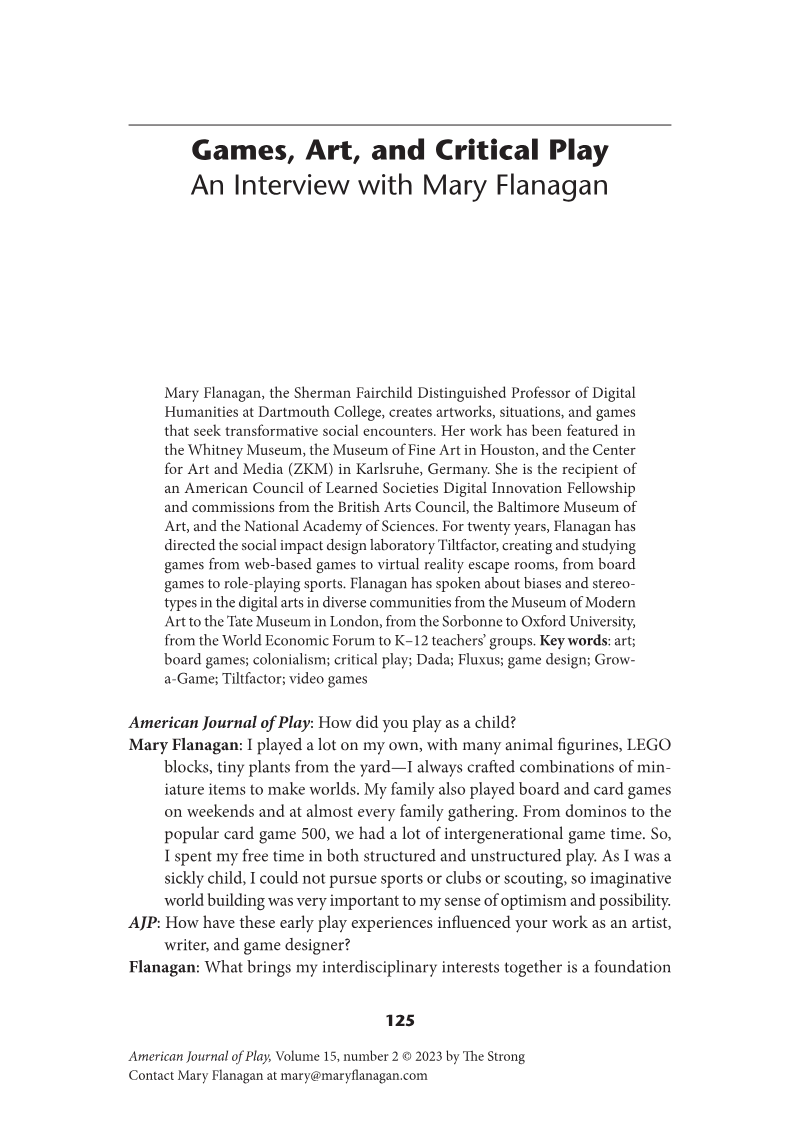
American Journal of Play · 2022
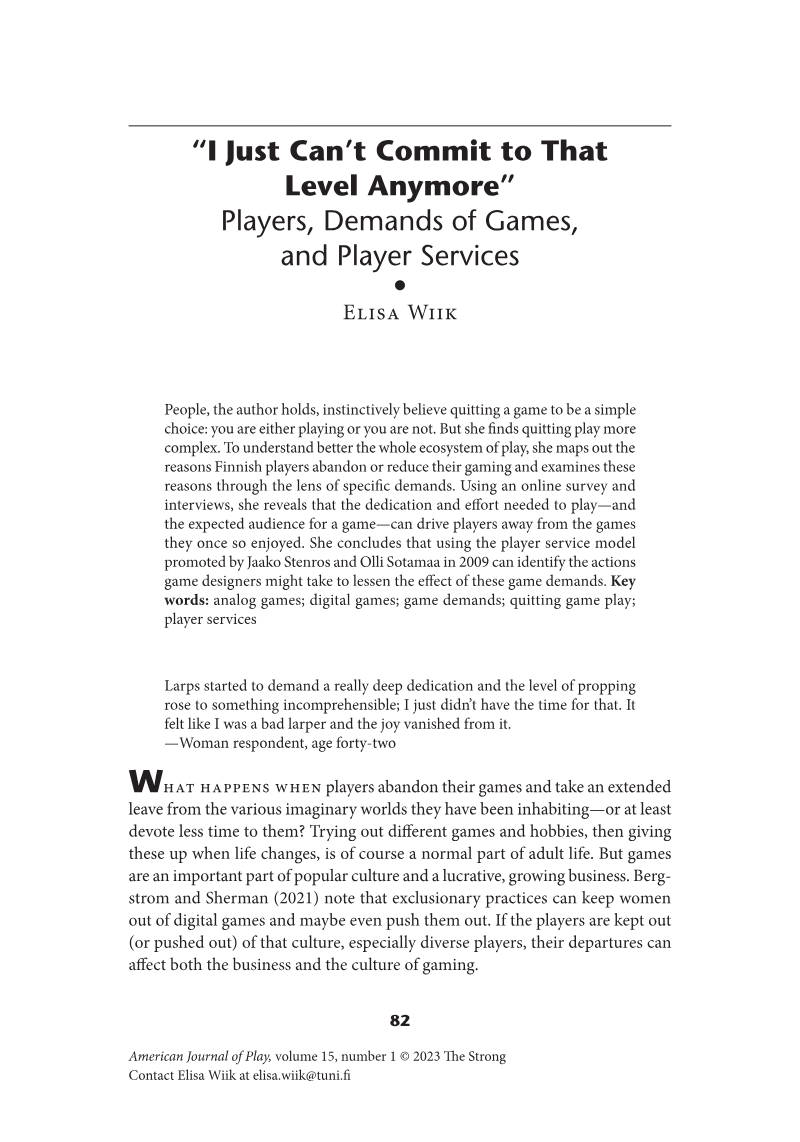
American Journal of Play · 2022
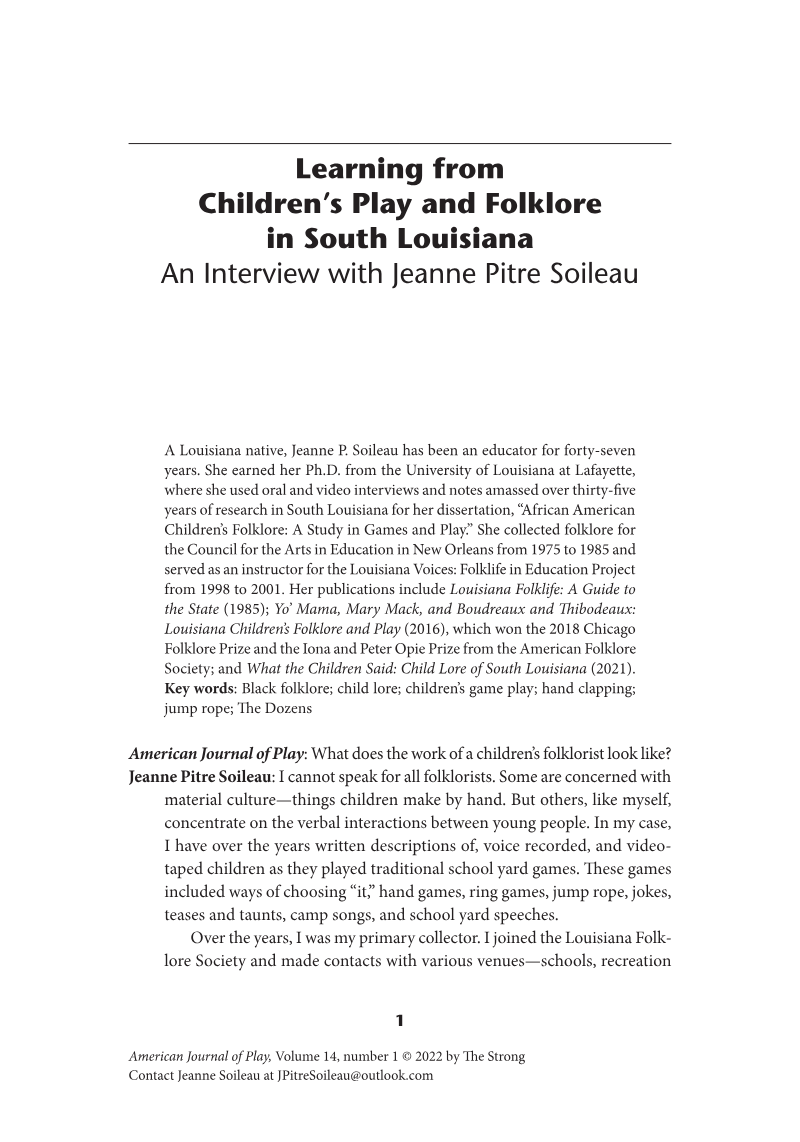
American Journal of Play · 2021
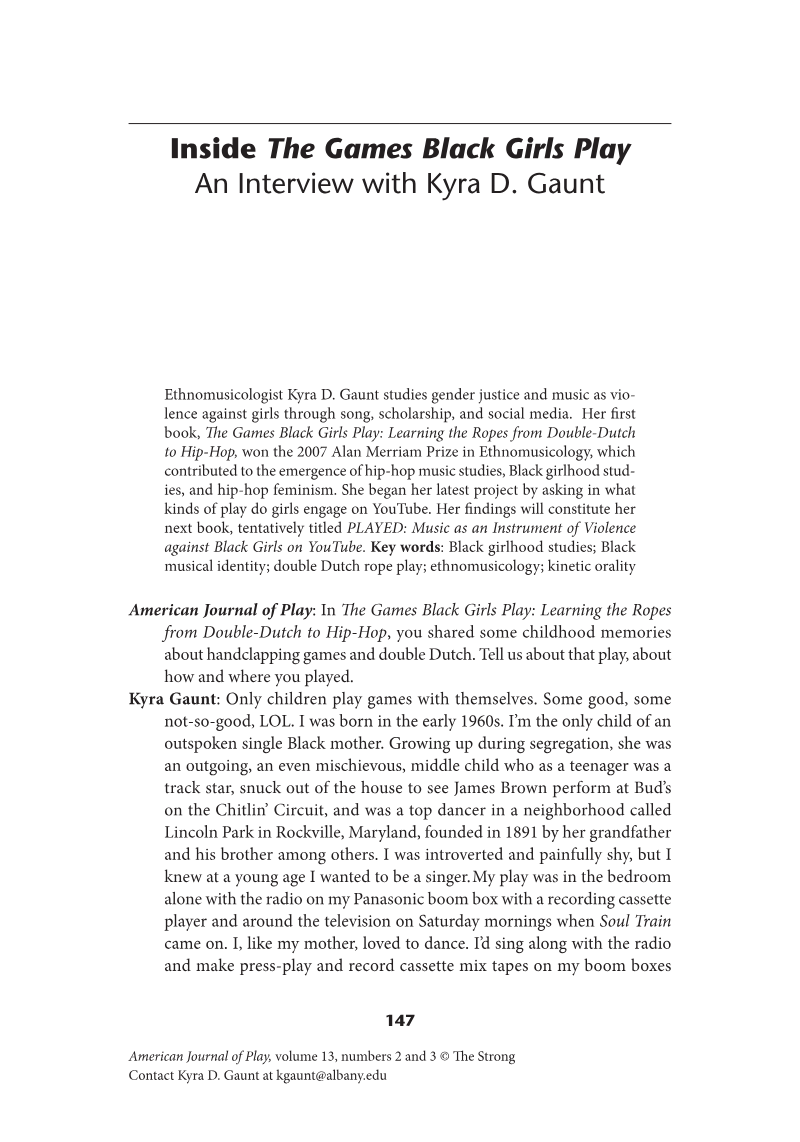
American Journal of Play · 2020
American Journal of Play · 2020
American Journal of Play · 2019
DiGRA · 2026