Solitaire
Documents

Puzzle Monthly #6: Disney Solitaire's Big Win, Playtika's Earn-Out Trap and Solitaire vs Puzzle
Disney Solitaire has established itself as a significant market success by successfully adapting modern puzzle-game mechanics to the solitaire genre. By integrating gacha elements, aggressive live-ops, and a generous progression system reminiscent of top-tier titles like Royal Match, the game has achieved high retention and monetization. This performance highlights a shift in the solitaire category, which has historically struggled to compete with the broader puzzle market due to lower unit economics and a reliance on ad-based revenue models. The success of this title demonstrates that solitaire games can thrive when they move beyond static event schedules and adopt the high-frequency, content-rich strategies that define the contemporary mobile puzzle landscape.
Despite this operational success, the broader financial outlook for the parent company, Playtika, remains complex. Significant debt obligations and the financial pressure of a substantial earn-out agreement with the developer, SuperPlay, have forced a strategic reduction in user acquisition spending. The company is now relying on the organic health of its portfolio rather than aggressive marketing to sustain revenue. This situation underscores the tension between the creative success of individual titles and the structural financial constraints facing major industry players.
The solitaire genre continues to evolve, moving away from traditional, low-monetization formats toward models that incorporate social casino economies and complex meta-layers. While the category remains smaller than the match-three puzzle segment, the most effective titles are those that balance accessible gameplay with high-quality intellectual property and refined, iterative design. Future growth in this space likely depends on the ability of developers to synthesize these proven puzzle-market lessons while navigating the high costs of user acquisition in competitive tier-one markets.
- Disney Solitaire has successfully modernized the solitaire genre by adopting high-frequency live-ops, gacha mechanics, and progression systems similar to top-tier match-three titles like Royal Match.
- Playtika is currently restricting user acquisition spending due to significant debt obligations and the financial pressure of a substantial earn-out agreement with developer SuperPlay.
- Solitaire games are shifting away from traditional, ad-reliant revenue models toward social casino economies and complex meta-layers to improve unit economics.
- The success of Disney Solitaire proves that solitaire titles can compete with the broader puzzle market by moving beyond static event schedules to content-rich, iterative design.
- Playtika is shifting its strategy to rely on the organic health of its existing portfolio rather than aggressive marketing to sustain revenue amidst structural financial constraints.

TWIG #394: Playtika's Solitaire Meltdown, the AppLovin-AdMob Duopoly and Why Nobody Wants New Games
The mobile gaming industry is currently navigating a period of significant contraction and structural instability, characterized by a shift in consumer preference toward established titles over new releases. This trend has contributed to a 12% decline in global downloads, even as ad spend and impressions continue to rise. The market is increasingly defined by a duopoly between AppLovin and Google’s AdMob, which together control 65% of gaming ad revenue. This concentration of power, coupled with rising user acquisition costs and CPI inflation, has created a challenging environment where publishers struggle to maintain profitability through traditional in-app purchase models.
Playtika exemplifies these broader industry struggles, as its portfolio faces a 35% year-over-year revenue decline and internal cannibalization following the launch of Disney Solitaire. Beyond operational missteps, the company is embroiled in significant legal challenges regarding the classification of social casino games. The outcome of these lawsuits poses a systemic risk to the industry, as a legal reclassification of in-game currency could jeopardize the monetization mechanics of loot boxes and other virtual goods across the entire sector.
While some publishers are attempting to mitigate platform fees by pivoting to direct-to-consumer web shops, these efforts have yet to fully offset the revenue losses in core genres like strategy and MMOs. Furthermore, Western developers continue to face difficulties in the live service space, often failing to replicate the success of Chinese-led mobile shooters. Even successful titles like Warframe demonstrate that while consistent content updates can drive engagement, the transition to mobile remains fraught with design limitations and strategic hurdles. Ultimately, the industry is moving toward a landscape of consolidation where high-retention puzzle games dominate, and traditional growth strategies are increasingly ineffective against the backdrop of regulatory pressure and rising acquisition costs.
- AppLovin and Google’s AdMob now control 65% of global gaming ad revenue, creating a market duopoly that contributes to rising user acquisition costs and CPI inflation.
- Global mobile game downloads have declined by 12% as consumer preference shifts away from new releases toward established, high-retention titles.
- Playtika’s portfolio is experiencing a 35% year-over-year revenue decline, exacerbated by internal cannibalization from the launch of Disney Solitaire and ongoing legal challenges.
- Legal proceedings regarding the classification of social casino games pose a systemic risk to the industry, as a reclassification of in-game currency could threaten the viability of loot boxes and virtual goods.
- Publishers are increasingly pivoting to direct-to-consumer web shops to mitigate platform fees, though these efforts have not yet offset revenue losses in the strategy and MMO genres.
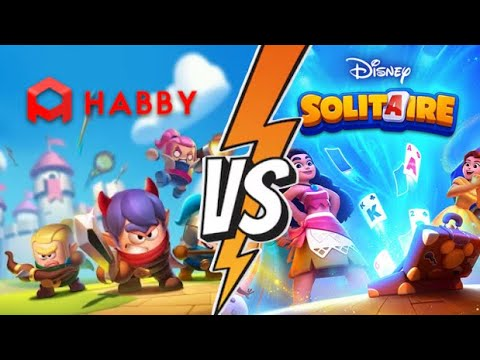
Habby's Wittle Defender vs Disney Solitaire: One of them is a Future Hit!
The mobile gaming landscape is currently defined by two distinct strategies: the aggressive application of legacy intellectual property (IP) to saturated genres and the iterative refinement of hybrid-casual mechanics. The solitaire subgenre serves as a primary example of the former, where major publishers are deploying brands like Disney and Candy Crush into a crowded market. While some analysts question the efficacy of layering legacy IPs onto established gameplay loops, others argue that these brands provide a necessary cost-per-install (CPI) advantage, allowing new entrants to gain traction in a space dominated by established titles like Grand Harvest.
Simultaneously, Habby continues to demonstrate a successful model of scaling through consistent meta-layering. By applying a standardized progression system—incorporating roguelike abilities, stat-based power scores, and squad RPG elements—across diverse core gameplay loops, the studio aims to elevate its annual revenue to compete with top-tier publishers. Their latest soft-launch title, Wittle Defender, exemplifies this approach by combining idle tower defense mechanics with passive input gameplay. This design targets "dead time" consumption, moving away from the high-cognitive-load, active-input requirements seen in many contemporary mobile titles.
The industry is increasingly focused on the transition from ad-driven monetization to long-term in-app purchase (IAP) sustainability. As hybrid-casual games mature, publishers face diminishing returns on ad impressions, necessitating a shift toward deeper monetization strategies. Habby’s methodology, which involves testing numerous prototypes and leveraging shared meta-assets, remains a benchmark for studios attempting to balance rapid iteration with long-term retention. The current soft-launch phase for Wittle Defender in markets including Canada, Australia, and Southeast Asia highlights a strategic focus on refining these hybrid models to ensure that player engagement translates into meaningful, long-term revenue growth.
- Habby is scaling revenue by applying a standardized meta-layer—featuring roguelike abilities, stat-based power scores, and squad RPG elements—across diverse core gameplay loops.
- The soft-launch title 'Wittle Defender' utilizes idle tower defense mechanics to target 'dead time' consumption, intentionally reducing the high-cognitive-load requirements of active-input mobile games.
- Major publishers are leveraging legacy IP like Disney and Candy Crush to secure a cost-per-install (CPI) advantage in the saturated solitaire market, currently dominated by titles like Grand Harvest.
- Mobile publishers are shifting focus from ad-driven monetization to long-term in-app purchase (IAP) sustainability to counter the diminishing returns on ad impressions in maturing hybrid-casual games.
- Habby’s development strategy relies on rapid prototyping and the reuse of shared meta-assets to balance frequent iteration with long-term player retention.