Mobile game advertising in 2022 experienced a pronounced contraction, with total creatives falling nearly 30 % year‑over‑year to 15.8 million while the advertiser base stayed flat at 45,100. The decline stemmed from a shift toward quality‑focused marketing and the impact of Apple’s IDFA changes, which pushed spend to Android. Video ads dominated the format mix (over 86 % of creatives), and casual/puzzle titles captured the majority of spend, displacing RPGs in many markets. Tier 2 and Tier 3 regions saw significant growth, driven by cross‑platform titles such as Genshin Impact and the rise of esports and metaverse expectations.
Geographically, China’s HK/Macau/TW region maintained RPG dominance but broadened to action, casual and MOBA campaigns with large budgets. In the United States, mid‑core and hardcore titles produced the most creatives despite a 10 % revenue decline. Japan’s simulation games led advertising, while Korea shifted from MMOs to card‑RPGs and early NFT experimentation. South Asia’s market was shooter‑heavy, with casual games generating the most creatives and RPGs producing the highest volumes. Turkey’s top titles were ARPGs and shooters, with a surge in casual and parkour advertising tied to esports and influencer content.
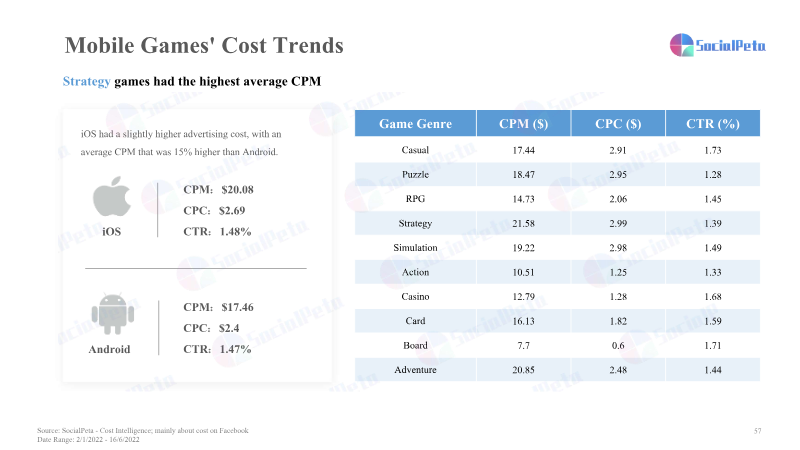
Cost dynamics varied by genre and platform: strategy games commanded the highest CPM ($21.58), while casual titles hovered around $17–$18; iOS ads were 15 % costlier than Android. Female and older users (55–64) paid the highest CPMs ($22.26) and CPCs ($2.90), yet CTR increased with age across formats. Playable ads delivered the lowest CPI but weakest ROAS, whereas banner ads offered the best return on spend.
Emerging channels such as social‑first platforms and AR filters proved highly engaging, with Snapchat’s concise, sound‑driven ads capturing attention within five seconds and AR filters generating 1.7× more immersive brand links. In India, vernacular marketing and programmatic unified platforms are expanding reach to Tier II/III audiences, while playable and rewarded video formats mitigate banner blindness. Overall, the data underscore a diversification of genre advertising, a continued emphasis on high‑budget flexible media strategies, and a pivot toward video‑centric, narrative‑driven campaigns across high‑revenue titles.