PC reports and market data
Documents

Will You Snail? - Q&A (Indie Game Devlog)
The development of the indie platformer Will You Snail centers on a unique core mechanic where an artificial intelligence tracks player movement to generate obstacles in real-time.
- The game features a core mechanic where an AI tracks player movement to generate real-time obstacles, creating a high-intensity, rage-inducing experience.
- The developer is prioritizing viral reach and streamer engagement over immediate monetization, with plans to release the title for free.
- The visual identity has been refined from a chaotic aesthetic to a polished, high-contrast red style to improve watchability and differentiate the game in the rage-platformer genre.
Can You Make A Game Completely Alone?
Solo game development is a viable path for creators, though it requires significant time investment and personal discipline.
- Transitioning from a solo creator to a team leader is a strategic evolution that shifts the focus from manual execution to project management and art direction, enabling more ambitious production.
- Solo development is a viable path for creators, but projects often require a significant time investment of five or more years to complete.
- To avoid burnout and isolation during long development cycles, solo developers should actively engage with online communities for feedback and emotional support.
Partnership on Darkest Dungeon: The Double-Edged Sword
The 50/50 co-presidency model in game development functions as a high-stakes balancing act that requires constant navigation of competing egos and divergent decision-making styles.
- Establish a zero-tolerance policy for unresolved tension: if a disagreement or negative feeling persists for more than 24 hours, the affected partner is obligated to raise and discuss the issue immediately.
- Implement a mutual veto power system to ensure both partners have final say, which helps reduce the pressure to micromanage and provides security that the project will not move in an unwanted direction.
- Use 'devil's advocacy' as a formal decision-making tool by intentionally arguing for positions you do not believe in to stress-test ideas and uncover potential flaws.
PLAYERUNKNOWN: From Mod Creator to Creative Director of PUBG
Brendan Greene’s trajectory from a photographer and designer to the Creative Director of PUBG illustrates the transformative power of modding culture in modern game development.
- PUBG achieved rapid commercial success by selling 40 million copies and reaching 3 million concurrent players within its first year of release.
- The game’s core mechanics, including the shrinking play zone, originated from Brendan Greene’s iterative development of Battle Royale mods for the Arma series.
- Development prioritized emergent gameplay and community feedback over rigid design documentation, allowing for the integration of unintended features like the bulletproof frying pan.
How to Paint an Awesome Image as An Unskilled Game Develper!
Digital painting is an accessible skill for game developers, even those without formal artistic training, provided they follow a structured, iterative process.
- Prioritize composition and grayscale values over complex drawing techniques to create professional-quality concept art within a five-hour timeframe.
- Establish the structural integrity of an image by focusing on abstract shapes and light-dark relationships before introducing any color.
- Use non-destructive editing by working on separate layers and frequently flipping or rotating the canvas to maintain a fresh perspective on the composition.
Anyone Can Make 2D Games! Here's How!
The primary objective of this guide is to provide an efficient, scalable workflow for indie developers to create high-quality 2D game environments.
- Indie developers can achieve professional-grade 2D environments by prioritizing modular design and asset reuse over creating unique illustrations for every game element.
- The 'stamp' technique utilizes reusable vector assets like moss, bricks, and foliage, which are modified through rotation, scaling, and color adjustments to maintain visual variety efficiently.
- Unity’s Z-axis arrangement enables a parallax system where movement speed is tied to depth, effectively simulating a 3D environment within a 2D space.
Steam: What Sells - What Steam's Player Numbers Tell Us About Game Genres - Extra Credits
This analysis examines Steam player engagement data to identify trends across various game genres and titles.
- Multiplayer shooters are the most dominant genre on Steam, occupying nine of the top eleven spots in terms of lifetime player counts.
- Pricing strategies under $20 are highly effective for driving player acquisition, even though free-to-play models do not exclusively dominate the top tier.
- Survival games benefit from a cross-pollinating player base, indicating that fans of this genre are willing to experiment with multiple titles rather than sticking to one ecosystem.
PlayJob Podcast #3: Tim Ruswick
Indie game development is defined by a complex interplay between creative passion and the psychological resilience required to navigate a highly competitive landscape.
- Marketing and community building are the primary drivers of visibility in an oversaturated market, often requiring more time and energy than the actual development of the game.
- Developers should prioritize building a dedicated audience early to ensure initial project traction, rather than relying on traditional discovery mechanisms.
- Long-term sustainability requires decoupling personal identity from professional output to avoid burnout and creative stagnation caused by tying self-worth to commercial metrics.

Most Annoying Game Dev Mistake That Just Keeps Happening!
Game developers frequently face a significant disconnect between their theoretical knowledge of best practices and their actual execution during production.
- Developers frequently fail to apply known best practices like prototyping and iterative testing due to tunnel vision and emotional attachment once production begins.
- To prevent feature creep and over-scoping, developers must create a rigid pre-production roadmap that mandates specific prototyping phases and strict timelines before coding starts.
- External accountability acts as a critical check against scope deviation, whether through peer intervention in teams or by sharing project workflows with an audience for solo developers.
Cinematic Games Are Dead! Long Live Cinematic Games!
The concept of cinematic games has historically been defined by a desire to bridge the representation gap between film and interactive media, often through the adoption of traditional cinematic conventions like dramatic camera angles, cuts, and full-motion video.
- Effective cinematic games should prioritize the feeling of inhabiting a world through game-specific mechanics rather than mimicking traditional film techniques like camera angles or cuts.
- Narrative design should function as interface design, where the core fantasy of a source material is mapped directly to player-controlled mechanics.
- In the development of Fantasia: Music Evolved, the team successfully translated the film's core fantasy of controlling magic into gesture-based gameplay using Kinect motion-tracking.
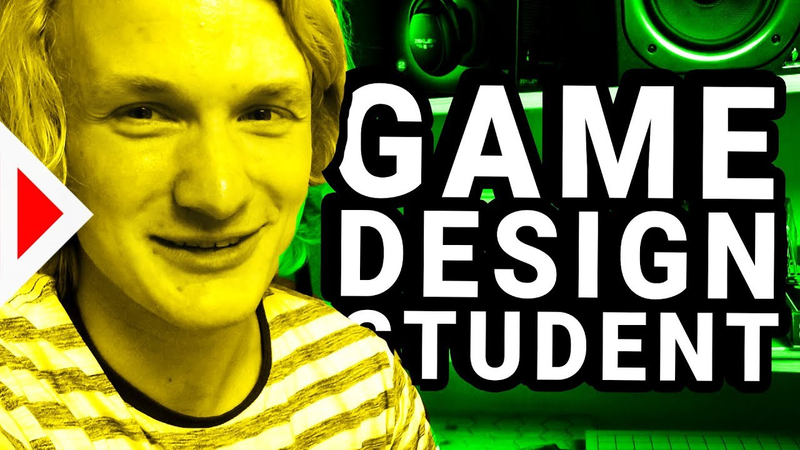
This Is How The Room Of a Game Design Student Looks Like...
This analysis examines the workspace and personal environment of a game design student based in Berlin, serving as a case study on how physical surroundings reflect professional identity and creative methodology.
- The student’s workspace functions as an integrated development environment, bridging formal university education with independent game production through a mix of technical hardware and design literature.
- Project documentation for titles like Cakeship and Upscore utilizes physical booklets to track iterative development, specifically focusing on character design, silhouette-based art, and core game mechanics.
- Professional methodology relies on a structured productivity framework that incorporates task-tracking systems and goal-setting to manage the balance between academic requirements and independent projects.

My Secret To 2D Game Character Animation
The primary objective of this technical demonstration is to outline an efficient workflow for animating 2D game characters using Adobe Photoshop and Spine.
- Achieve fluid, organic movement by staggering the timing and scale of individual bones relative to the root bone to avoid the rigidity of synchronized skeletal animation.
- Implement a hierarchical rigging structure by anchoring components like wings and necks to logical anatomical points after exporting layered assets from Photoshop into Spine.
- Utilize sine-wave motion patterns to simulate natural, continuous movement such as flight cycles.