Monetization

249 documents·90 publishers

Documents

Page 1
Report53 pages

2021-2025 Mobile Market Forecast

The global mobile application market is poised for substantial expansion, with consumer spending projected to reach $270 billion and annual downloads expected to hit 230 billion by 2025. While the rapid acceleration in adoption triggered by the COVID-19 pandemic is normalizing, the industry maintains a resilient growth trajectory. The App Store and Google Play continue to serve as the primary engines of this economy, sustaining strong compound annual growth rates of 21% and 17%, respectively.

A significant structural shift is underway as non-game applications increasingly drive revenue, with projections indicating that non-gaming spend will surpass gaming revenue on the App Store by 2024. This transition is fueled by the widespread adoption of subscription-based business and lifestyle models, reflecting a permanent change in consumer digital behavior. While mature markets like the United States and Germany show signs of slowing adoption, emerging regions such as India, Indonesia, and the Philippines are becoming critical drivers of volume. Simultaneously, Europe is emerging as a high-growth territory, boasting a 23% compound annual growth rate in consumer spending.

These findings underscore a maturing mobile ecosystem where strategic success depends on navigating the divergence between gaming and non-gaming sectors. As the market evolves, stakeholders must leverage data-driven intelligence to optimize competitive strategies and capitalize on the shifting preferences of a global user base. By focusing on high-growth geographic regions and the rising dominance of subscription-based utility apps, developers and marketers can effectively position themselves within the broader mobile economy through 2025.

  • By 2025, global mobile consumer spending is projected to reach $270 billion, with annual downloads expected to hit 230 billion.
  • Non-gaming applications are projected to surpass gaming revenue on the Apple App Store by 2024, driven by a shift toward subscription-based business models.
  • The Apple App Store and Google Play continue to drive the market with compound annual growth rates of 21% and 17%, respectively.
  • Europe is emerging as a high-growth territory with a 23% compound annual growth rate in consumer spending.
  • While adoption is slowing in mature markets like the United States and Germany, India, Indonesia, and the Philippines are becoming the primary drivers of download volume.
+2
Sensor TowerJan 2021
Page 1
Report7 pages

Audio Ad Engagement in Mobile Games

This analysis examines the efficacy of in-game audio advertising as a non-intrusive alternative to traditional video and banner formats within the mobile gaming industry. The primary thesis posits that audio ads maintain player engagement and retention by allowing gameplay to continue uninterrupted, thereby fostering a more positive brand association compared to conventional, disruptive advertising models.

Research findings are derived from a combination of market surveys and behavioral testing. A YouGov survey of 2,200 respondents highlights that 86% of UK adults dislike video ads, while 28% identify audio ads as their preferred monetization model. Behavioral testing conducted by Go Live Test confirms that 100% of participants continued playing during audio ad delivery and achieved 100% brand recall when ads were paired with a companion banner. Furthermore, the data indicates a significant engagement advantage, with audio ads achieving a click-through rate (CTR) of approximately one click per 1.4 listens, vastly outperforming the 0.08% average CTR typical of static banners.

The effectiveness of this format is further validated by a Warner Music Group case study targeting 18-to-30-year-olds in the United States. The campaign achieved a 1.78% CTR—representing a 1,000% increase over traditional banner standards—and an ad completion rate exceeding 75%, significantly higher than the 4% to 8% industry standard for skippable video ads. Additionally, the campaign recorded a 1.8% bounce rate on the destination page, suggesting high intent among users who engaged with the audio format.

These findings suggest that audio advertising offers a viable solution for developers and brands seeking to monetize a global audience of 2.8 billion mobile gamers without compromising the user experience. By integrating seamlessly into the background of gameplay, audio ads mitigate the frustration associated with screen-blocking video ads, ultimately driving higher engagement and more favorable brand outcomes.

  • Audio ads achieve a click-through rate (CTR) of approximately one click per 1.4 listens, vastly outperforming the 0.08% average CTR of static banners.
  • A Warner Music Group campaign targeting 18-to-30-year-olds achieved a 1.78% CTR, representing a 1,000% increase over traditional banner standards.
  • Behavioral testing shows 100% of participants continued gameplay during audio ad delivery, with 100% brand recall when ads were paired with a companion banner.
  • The Warner Music Group campaign recorded an ad completion rate exceeding 75%, significantly higher than the 4% to 8% industry standard for skippable video ads.
  • A YouGov survey of 2,200 UK adults found that 86% of respondents dislike video ads, while 28% prefer audio ads as a monetization model.
+4
AudioMobJan 2021
Page 1
Report25 pages

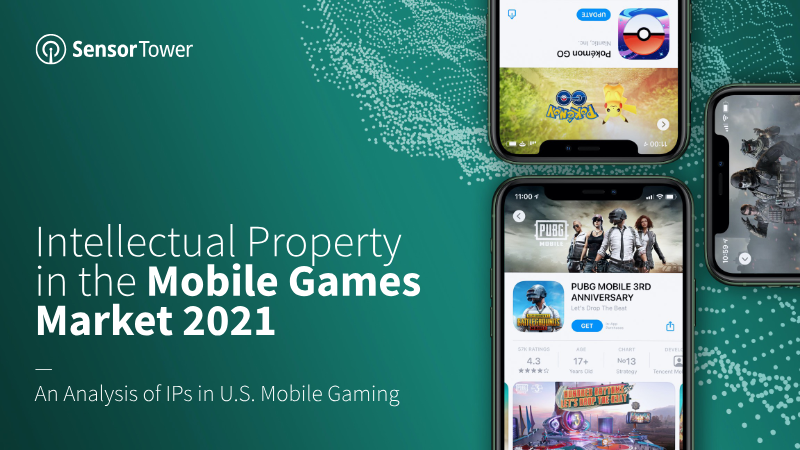
Intellectual Property in the Mobile Games Market 2021: An Analysis of IPs in U.S. Mobile Gaming

The mobile gaming landscape in the United States is significantly influenced by intellectual property (IP), which serves as a powerful driver for both revenue and user acquisition. While IP-based titles represent only 9 percent of the total mobile game market, they command an outsized share of industry performance, accounting for 23 percent of total player spending and 17 percent of all downloads in 2020. This trend underscores the efficacy of established brands in capturing market attention and maintaining stable growth compared to non-IP titles.

Video game-based IPs are the most dominant category, generating one-third of all licensed mobile game revenue in 2020. Other significant contributors include Manga, which emerged as the fastest-growing IP type with a 54 percent year-over-year revenue increase, followed by Television and Comics. Notably, the Marvel brand maintains a pervasive presence across multiple media formats, illustrating how successful IPs often transcend their original medium to achieve cross-platform dominance.

The impact of IP is most pronounced within mid-core genres, specifically Geolocation AR, Action, RPG, and Shooter. Geolocation AR is almost entirely comprised of licensed titles, while Action, RPG, and Shooter genres show the strongest correlation between IP usage and rapid revenue growth. Conversely, massive categories like Puzzle remain largely untapped by IP, with only 5 percent of revenue derived from licensed games, suggesting a potential area for future expansion.

This analysis utilizes data from the U.S. App Store and Google Play throughout 2020, employing a taxonomy that categorizes IPs originating from films, books, television, toys, celebrities, sports, board games, video games, comics, and manga. The findings suggest that as the mobile marketing landscape evolves, particularly following changes to identifier tracking, the strategic deployment of recognizable IPs will become increasingly vital for developers seeking to build awareness and drive sustainable user acquisition.

  • While IP-based games represent only 9 percent of the total U.S. mobile market, they account for 23 percent of player spending and 17 percent of all downloads.
  • Video game-based IPs are the leading category, generating one-third of all licensed mobile game revenue in 2020.
  • Manga is the fastest-growing IP category, experiencing a 54 percent year-over-year revenue increase.
  • IP usage is most concentrated in mid-core genres, with Geolocation AR being almost entirely composed of licensed titles, while Action, RPG, and Shooter genres show the strongest correlation between IP and revenue growth.
  • The Puzzle genre remains an untapped opportunity for IP expansion, as licensed titles currently account for only 5 percent of its total revenue.
+3
Sensor TowerJan 2021
Page 1
Report63 pages

White Paper on Global Mobile Games

The white paper argues that mobile‑game advertising has entered a new phase of intensity and sophistication, driven by rapid creative growth, the dominance of video formats, and evolving privacy regulations. In 2021 ad creatives surged by 200 % YoY while CPMs rose 34 %, with video ads now accounting for over 85 % of spend. The market continues to expand, projecting more than 70 000 advertisers by 2023, yet advertiser growth has slowed post‑pandemic to just 5 % YoY. Android remains the primary platform, hosting roughly two‑thirds of advertisers, and high‑spending Tier 1 markets—particularly the United States, Japan, and Korea—retain their status as key targets for publishers.

Geographically, the United States shows a casual‑game bias among advertisers (26 % of spend) but still supports high‑spending titles such as Free Fire and Subway Surfers. China’s landscape is shifting from RPGs to casual titles, with puzzle games capturing the largest creative share. In the Middle East, strategy and shooter games like Rise of Kingdoms and PUBG Mobile dominate downloads and revenue, whereas the CIS market displays a more diversified mix of strategy, shooter, and casual titles. Across all regions, vertical video ads—especially 30–34 second formats with end‑card elements—outperform horizontal variants for mid‑ and hard‑core titles, achieving conversion rates around 0.15 %. Playable ads also deliver significant lift for mid‑core games.

Privacy changes from Apple and Google have accelerated a shift toward probabilistic attribution models such as SKAN, compelling advertisers to prioritize creative design over granular targeting. Hybrid monetization platforms that blend bidding and non‑bidding networks are gaining traction, while developers increasingly adopt innovative in‑app purchase mechanics (limited‑time offers, battle passes) and social features (chat, PvP, guilds) to enhance engagement and retention. These trends collectively underscore a mobile‑gaming ecosystem that is more video‑centric, privacy‑aware, and focused on long‑cycle strategy titles in high‑engagement markets.

  • Mobile advertising has shifted toward a video-first model, with video ads now accounting for over 85% of total spend and vertical formats outperforming horizontal ones with conversion rates near 0.15%.
  • Privacy regulations have forced a move toward probabilistic attribution models like SKAN, shifting industry focus from granular user targeting to high-quality creative design.
  • Ad creative volume surged 200% year-over-year in 2021, while CPMs increased by 34%, reflecting a period of intense market competition.
  • Android remains the dominant platform for mobile game advertising, hosting approximately two-thirds of all advertisers.
  • While the market is projected to reach over 70,000 advertisers by 2023, growth has decelerated significantly, slowing to just 5% year-over-year in the post-pandemic period.
+2
SocialPeta Data Research InstituteJan 2021
Page 1
Report24 pages

In-Game Events Snapshot

The snapshot presents a comprehensive overview of in‑game event strategies across the global mobile gaming market, focusing on seasonal and promotional collaboration events. It establishes that 90 % of the top‑grossing 100 mobile titles deploy seasonal events, while 40 % of US iOS top‑100 games feature brand collaborations. These events are highlighted as key drivers for player re‑engagement, new user acquisition, and revenue spikes, with examples such as Sky: Children of the Light’s Kizuna AI partnership and Genshin Impact’s Lantern Rite event, which each generated multi‑million daily revenue surges.

The report details the taxonomy of events—UI changes, limited‑time offers, playable content, and special bundles—and identifies profitable revenue streams: time‑limited skins, character drops, themed currency, and gacha mechanics. Seasonal calendars list major holidays (Christmas, Lunar New Year, Halloween) and region‑specific observances (Double Five in China, Sakura season in Japan), underscoring the importance of cultural relevance.

Geographic scope covers North America, China, and Japan, with data on event adoption rates: 51 % of Chinese top‑100 games and 62 % of Japanese top‑100 games use promotional collaborations, compared to 42 % in the US. Methodology relies on GameRefinery’s SaaS platform, aggregating revenue and event data from thousands of titles.

Key conclusions emphasize that events remain a differentiator for high‑performing games, offering scalable monetization and cross‑brand synergy. The snapshot recommends that developers evaluate event fit against audience demographics, content alignment, and potential for brand partnership to maximize engagement and revenue.

  • Seasonal events are a standard industry practice, utilized by 90% of the top-grossing 100 mobile games to drive player re-engagement and revenue spikes.
  • Brand collaborations are a significant growth lever, appearing in 62% of top-100 games in Japan, 51% in China, and 42% in the US.
  • High-profile collaborations, such as Sky: Children of the Light’s Kizuna AI partnership and Genshin Impact’s Lantern Rite, have demonstrated the ability to generate multi-million dollar daily revenue surges.
  • Successful event monetization relies on a mix of time-limited skins, character drops, themed currency, and gacha mechanics.
  • Event strategies must prioritize cultural relevance, with top-performing titles aligning content with region-specific observances like China’s Double Five or Japan’s Sakura season.
GameRefineryJan 2021
Page 1
Report29 pages

How to Win on Mobile in LATAM: 2021

The analysis focuses on Latin America’s mobile ecosystem from July 2020 to June 2021, revealing a region that has accelerated digital adoption and monetization amid the pandemic. Mobile downloads surged 76 % year‑on‑year, reaching roughly 21 billion across iOS and Google Play, while consumer spend climbed 26 % to $2.9 billion. Android dominates downloads (≈89 %) yet iOS retains a higher spend share, commanding 56 % of total consumer expenditure. Brazil and Mexico together generate 73 % of regional downloads, with Brazil’s per‑capita income lower than Uruguay’s but still driving significant spend growth.

Gaming remains a key driver, accounting for 50 % of LATAM consumer spend—below the global average of 68 %. Brazil leads in both downloads (4.6 billion) and revenue ($557 million), with Chile showing a strong spend‑to‑download ratio. Non‑gaming verticals such as Finance, Shopping, and Entertainment also expanded; finance apps grew 36 % YoY in Brazil, while shopping app downloads rose 30 %. Entertainment became the largest spend category in four of six major markets, reflecting limited Smart TV penetration and a shift to mobile streaming.

User engagement metrics underscore high daily time spent, with Brazil averaging 5.4 hours per user and Mexico 4.8 hours—up 32 % and 36 % respectively from two years prior. Social, tools, and business categories saw the largest increases in sessions and minutes, indicating opportunities for productivity and contactless payment solutions. Demographic analysis shows a youthful audience: 61 % of shopping app users in Brazil are Millennials, and Gen Z dominates photo‑video and entertainment segments.

Overall, the report highlights LATAM as a high‑growth mobile market with distinct platform dynamics, strong gaming and finance opportunities, and an emerging preference for mobile‑first entertainment and productivity apps.

  • LATAM mobile downloads surged 76% year-on-year to 21 billion, while consumer spending grew 26% to $2.9 billion between July 2020 and June 2021.
  • Android dominates the market with 89% of total downloads, yet iOS commands 56% of total consumer expenditure in the region.
  • Brazil and Mexico are the primary drivers of the regional market, collectively accounting for 73% of all mobile downloads.
  • Gaming accounts for 50% of total consumer spend in LATAM, with Brazil leading the region at $557 million in gaming revenue.
  • Daily mobile usage is exceptionally high, with average time spent per user reaching 5.4 hours in Brazil and 4.8 hours in Mexico, representing growth of 32% and 36% respectively over two years.
+1
App AnnieJan 2021
Page 1
Report25 pages

Mobile Game Genre Report: Comparing & Contrasting Eastern and Western Markets 2021

This report examines the mobile gaming landscape in 2021, focusing on the strategic differences between Eastern and Western markets regarding genre popularity, monetization, and user acquisition. While mobile is the leading gaming platform globally by revenue and player count, market dynamics vary significantly between regions. The United States remains the largest market for puzzle games, followed by Japan and China, though Western markets generally favor casual genres like puzzle and arcade, whereas Eastern markets demonstrate a higher preference for competitive, immersive titles such as Battle Royale and role-playing games.

Key findings indicate that while puzzle games are popular globally, their implementation differs by region. Western titles often emphasize narrative and decoration, while Eastern titles frequently integrate deeper economies, character collection, and gacha mechanics. Monetization strategies also diverge; Western players show a higher tolerance for in-game advertising, leading to an IAA-focused revenue model. Conversely, Japanese players exhibit a greater willingness to engage in in-app purchases, resulting in a more balanced or IAP-heavy approach. Live-ops, including limited-time events and social engagement features, are identified as critical tools for retention in both regions, though the specific content—such as collaborations with anime or manga in Japan—is tailored to local cultural interests.

The analysis relies on industry data and expert insights, including case studies from developers like Translimit. Methodology involves comparing consumer behaviors, demographic profiles, and revenue streams across key markets. The report concludes that successful global expansion requires rigorous localization of marketing creatives and user acquisition strategies. Developers are encouraged to utilize A/B testing and performance-based ad optimization to navigate the distinct preferences of Western and Eastern audiences, ensuring that both gameplay mechanics and monetization models align with regional expectations.

  • Western markets prioritize casual genres like puzzle and arcade, while Eastern markets demonstrate a stronger preference for competitive, immersive titles such as Battle Royale and RPGs.
  • Monetization strategies differ by region, with Western titles leaning toward in-game advertising (IAA) models, while Japanese players show a higher propensity for in-app purchases (IAP).
  • Puzzle games are a global staple, but Western implementations focus on narrative and decoration, whereas Eastern versions prioritize character collection, deep economies, and gacha mechanics.
  • Live-ops and social engagement features are essential for player retention globally, though content must be culturally localized, such as using anime or manga collaborations in Japan.
  • Successful global expansion requires rigorous localization of marketing creatives and user acquisition strategies, supported by A/B testing and performance-based ad optimization.
+1
NewzooJan 2021
Page 1
Report30 pages

Mobile Game Genre Report: Role-Playing Games 2021

Role-playing games represent the most lucrative segment of the global mobile gaming market, generating $18.5 billion in 2020 and accounting for nearly a quarter of all mobile gaming revenue. This market is geographically concentrated in East Asia, where China, Japan, and South Korea collectively generate over 70% of the genre's global earnings. The landscape is characterized by the dominance of domestic publishers and a heavy reliance on established intellectual properties from movies, literature, and PC ports, which account for approximately half of the top-performing titles. The Marvel franchise serves as a primary example of this trend, exerting a pervasive influence on player acquisition and revenue generation through its immense brand saturation.

While IP-based titles leverage organic recognition, original properties must utilize aggressive influencer marketing and high-quality creative advertisements to compete. Long-term sustainability in the genre is driven by consistent content updates, social competitive mechanics, and time-limited gacha systems. Although in-app purchases remain the primary revenue driver—particularly among high-income male audiences—there is a significant shift toward hybrid monetization. Approximately 83% of players now accept non-disruptive rewarded video ads as a means to progress without direct spending.

To navigate evolving privacy regulations and tracking challenges, developers are increasingly prioritizing high-value user signals within the first 24 hours of gameplay. Interactive playable ads have emerged as a highly effective acquisition tool, occasionally increasing eCPMs by over 200%. By combining traditional spending triggers like battle passes and limited-time events with sophisticated ad integration, publishers are successfully monetizing both high-spending "whales" and non-paying users to maintain growth in an increasingly competitive global market.

  • Mobile RPGs generated $18.5 billion in 2020, representing nearly 25% of total mobile gaming revenue.
  • The market is heavily concentrated in East Asia, with China, Japan, and South Korea accounting for over 70% of global RPG earnings.
  • Approximately 50% of top-performing RPG titles rely on established intellectual properties, such as the Marvel franchise, to drive player acquisition and revenue.
  • Hybrid monetization is becoming standard, with 83% of players accepting non-disruptive rewarded video ads as an alternative to direct in-app purchases.
  • Interactive playable ads have become a critical acquisition tool, capable of increasing eCPMs by more than 200%.
+5
PangleJan 2021
Page 1
Report24 pages

Games Marketing Insights for 2021

This analysis examines the shifting landscape of the global gaming industry following the COVID-19 pandemic, focusing on player motivations, monetization, and community engagement. The primary thesis asserts that the pandemic catalyzed a permanent expansion of the gaming audience, introducing a "new gamer" cohort that differs significantly from existing players in demographics and behavior. While existing players increased their time spent gaming, they became less likely to spend money, whereas new players emerged as a high-value segment with a greater propensity for in-game purchases.

The findings are based on a July 2020 survey of 13,246 mobile gamers across nine markets, including the United States, United Kingdom, Germany, and South Korea. Data indicates that the mobile gaming audience grew by 28 million in the US and 8.6 million in the UK. In Western markets, these new players are significantly younger than existing ones and gravitate toward "core" genres like shooters and strategy rather than casual puzzles. Conversely, South Korea proved an anomaly, where new gamers are older and prefer casual titles. Across all regions, new gamers play more hours per week than veterans and are more open to social features, such as multiplayer modes and in-game chatting.

The industry saw a massive shift toward digital discovery and community. Live-streaming platforms experienced record growth, with Facebook Gaming surpassing one billion hours watched in Q3 2020. Furthermore, 70% of consumers reported increased mobile device usage, making mobile-first discovery essential. A critical finding for marketers is the rising importance of brand familiarity; less than a quarter of players in the US, UK, and Germany tried games they had never heard of, suggesting that title recognition and IP strength are now as vital for mobile games as they are for the console market.

To navigate these shifts, the analysis recommends a mixed monetization model that balances ad-supported content with in-app purchases to capture diverse spending habits. It concludes that developers must embrace "always-on" marketing and community management, as players are increasingly seeking engagement through social media groups and streaming partnerships outside of the game client itself.

  • The pandemic triggered a significant expansion of the gaming audience, adding 28 million mobile players in the US and 8.6 million in the UK by July 2020.
  • New gamers represent a high-value segment with a greater propensity for in-game purchases compared to veteran players, who increased their playtime but decreased their spending.
  • Brand familiarity is critical for acquisition, as fewer than 25% of players in the US, UK, and Germany are willing to try games they have not heard of previously.
  • New gamers in Western markets are younger and prefer core genres like shooters and strategy, while new gamers in South Korea are older and favor casual titles.
  • Live-streaming platforms saw record growth during the pandemic, with Facebook Gaming exceeding one billion hours watched in Q3 2020.
+1
KingJan 2021
Page 1
Report52 pages

Innovate to Win on the Next Level with Hybrid Genre Games

The global mobile gaming landscape has entered a period of sustained growth following the pandemic, with overseas consumer spending reaching $36 billion in the first half of 2021. This represents a 73% increase since 2018, a trend largely spearheaded by China-based publishers who now command a 23% share of the international market. To sustain this trajectory, the industry is shifting toward hybridization, a strategy that blends core mechanics from disparate subgenres to broaden player demographics and optimize revenue streams. By integrating casual elements like farming or social multiplayer features into hardcore frameworks, developers are successfully diversifying their monetization models beyond traditional structures.

Market performance in early 2021 reveals that while Strategy, RPG, and Match subgenres remain the primary revenue drivers, high-growth categories such as Luck Battle and Merge-Saga are emerging as significant leaders. The 4X March-Battle subgenre, in particular, saw a 51% year-over-year increase in consumer spend, fueled by strong performance in the United States, Japan, and Germany. Additionally, the Idol Training subgenre experienced an explosive 129% surge in spending, highlighting the rising influence of Asian cultural themes and "Nijigen" aesthetics in the global market.

Despite these gains, the industry faces challenges from evolving user privacy policies, which contributed to a 12% contraction in Puzzle RPG spending. In response, successful developers are increasingly utilizing hybrid tactics such as Gacha monetization, home design meta-layers, and social connectivity to maintain engagement. The transition toward these multifaceted game designs suggests that the future of mobile gaming lies in the ability to merge deep, mid-core progression systems with accessible, casual mechanics to capture a more diverse and resilient global audience.

  • Mobile gaming consumer spending reached $36 billion in H1 2021, marking a 73% increase since 2018, with China-based publishers now capturing 23% of the international market.
  • The industry is pivoting toward hybrid game design, which integrates casual mechanics like farming or social features into hardcore frameworks to diversify monetization and broaden demographics.
  • The Idol Training subgenre saw a 129% surge in consumer spending, signaling the growing global influence of Asian cultural themes and 'Nijigen' aesthetics.
  • The 4X March-Battle subgenre experienced a 51% year-over-year increase in spending, driven by strong performance in the United States, Japan, and Germany.
  • Evolving user privacy policies have negatively impacted specific categories, evidenced by a 12% contraction in Puzzle RPG spending.
+2
data.aiJan 2021
Page 1
Report24 pages

Games Marketing Insights 2021

This analysis examines the profound shifts in the global gaming landscape triggered by the COVID-19 pandemic, focusing on the emergence of a massive new player demographic. Based on a July 2020 survey of over 13,000 respondents across nine global markets—including the US, UK, Germany, and South Korea—the findings highlight a permanent expansion of the mobile gaming audience. These "new gamers," who began playing after the initial outbreak, are generally younger than existing players and demonstrate "core" gaming behaviors, such as a higher propensity for multiplayer engagement and a preference for complex genres.

Data indicates that while both new and existing players increased their weekly gaming hours, their financial behaviors diverged. New gamers are significantly more likely to spend money on in-game purchases and report higher monthly expenditures than veteran players. Conversely, existing players reported spending less than they did pre-pandemic, despite their increased engagement. Across all cohorts, there is a clear preference for free-to-play, ad-supported monetization models. In terms of discovery, the research underscores the critical role of brand familiarity; less than 25% of players in Western markets tried games they had never heard of, suggesting that mobile marketing is increasingly mirroring the IP-driven strategies of the console industry.

The scope of the industry extends beyond active play into community and content consumption. Live-streaming platforms saw record growth, with Facebook Gaming surpassing one billion hours watched in Q3 2020. Furthermore, the rise of digital commerce has fundamentally altered purchasing habits, with 89% of global consumers expressing concern about physical retail, driving a shift toward mobile-first discovery and online game acquisition. The analysis concludes that developers must adopt mixed monetization strategies and foster out-of-game communities to retain this expanded, platform-agnostic audience.

  • New gamers who entered the market after the COVID-19 outbreak are spending more on in-game purchases monthly than veteran players, who have actually reduced their spending despite increased engagement.
  • Mobile marketing is increasingly reliant on brand familiarity, as less than 25% of players in Western markets are willing to try games they have not heard of before.
  • Live-streaming platforms experienced record growth during the pandemic, with Facebook Gaming reaching over one billion hours watched in Q3 2020.
  • Digital commerce has shifted consumer habits, with 89% of global consumers expressing concern about physical retail, favoring mobile-first discovery and online acquisition.
  • The new player demographic is younger than the existing base and exhibits 'core' gaming behaviors, specifically a higher preference for complex genres and multiplayer engagement.
+1
MetaJan 2021
Page 1
Report42 pages

Mobile Game Taxonomy Report 2021

The mobile gaming landscape underwent a transformative shift in 2020, catalyzed by global lockdowns that accelerated adoption across all major categories. Hypercasual games emerged as the dominant force in volume, experiencing a 123% year-over-year increase to reach 6.3 billion downloads and surpassing the Arcade genre. While Simulation games led the market in spending growth with a 56% increase, the RPG and Strategy genres maintained their financial stronghold, generating half of the total global revenue among top-performing titles. This period of growth was further bolstered by the migration of players from physical venues to mobile Casino platforms and the massive commercial success of high-fidelity releases like Genshin Impact.

Visual and thematic trends shifted toward more sophisticated presentations as the market matured. Although 2D Cartoon remained the most prevalent art style, 3D Realistic aesthetics dominated mid-core segments, and Isometric perspectives gained significant traction within the Hypercasual space. Thematic preferences evolved rapidly, with Fashion and Crime themes growing by 109% and 69% respectively. Notably, the viral success of Among Us spurred a resurgence in Space-themed content and influenced the Puzzle genre to adopt more mid-core characteristics.

Innovation in 2020 was defined by cross-genre experimentation and a move toward higher production values in traditionally casual categories. The Fashion genre serves as a primary example of this evolution, transitioning from 2D Side POV styles toward 3D Cartoon aesthetics and First Person perspectives. Developers are increasingly finding success by blending disparate elements, such as integrating Military and Combat Arena themes into Puzzle mechanics. This trend suggests a broader industry movement toward hybrid-casual models that combine accessible gameplay with the deeper engagement and thematic complexity typically found in mid-core titles.

  • Hypercasual games became the dominant volume leader in 2020 with 6.3 billion downloads, a 123% year-over-year increase that surpassed the Arcade genre.
  • RPG and Strategy titles maintained their financial stronghold, collectively generating 50% of the total global revenue among top-performing mobile games.
  • Simulation games experienced the highest spending growth in 2020, recording a 56% increase in consumer expenditure.
  • The industry is shifting toward hybrid-casual models that blend accessible gameplay with the thematic complexity and high production values of mid-core titles.
  • Thematic demand shifted significantly in 2020, with Fashion themes growing by 109% and Crime themes by 69%.
+1
Sensor TowerJan 2021

Publishers

Related Topics