ReportSensor Tower
Intellectual Property in the Mobile Games Market 2021: An Analysis of IPs in U.S. Mobile Gaming
202125 pages~20 min full read
Key insights
7 slides
Market share
IP games are 9% of the U.S. mobile market.
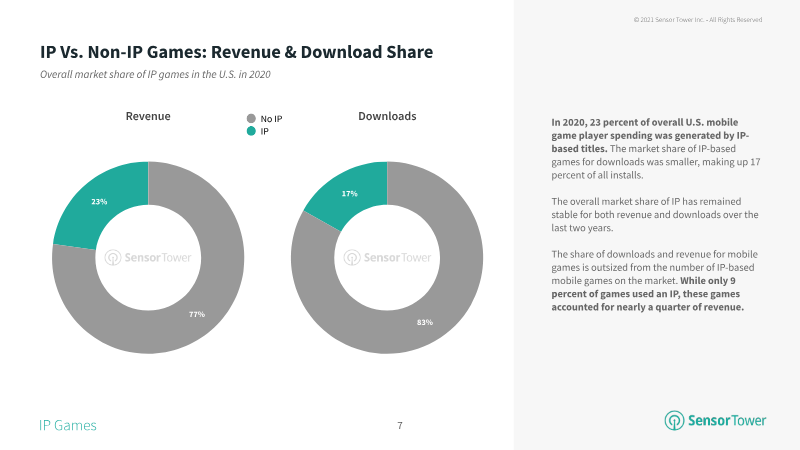
IP-based titles represent only 9 percent of the total mobile game market in the United States. They still command an outsized share of industry performance.
Key number
IP games account for 23 percent of player spending.
IP-based games account for 23 percent of total player spending and 17 percent of all downloads in 2020.
Category leader
Video game IPs generate one-third of licensed revenue.
Video game-based IPs are the most dominant category, generating one-third of all licensed mobile game revenue in 2020. Other significant contributors include Manga, Television, and Comics.
Page 21 of the reportVideogame34
Manga13
Television12
Comics10
Other31
Fastest growth
Manga IP revenue grew 54 percent year-over-year.
Manga emerged as the fastest-growing IP type with a 54 percent year-over-year revenue increase.
Page 9 of the reportManga54
Comics44
Videogame36
Other29
Television24
Genre concentration
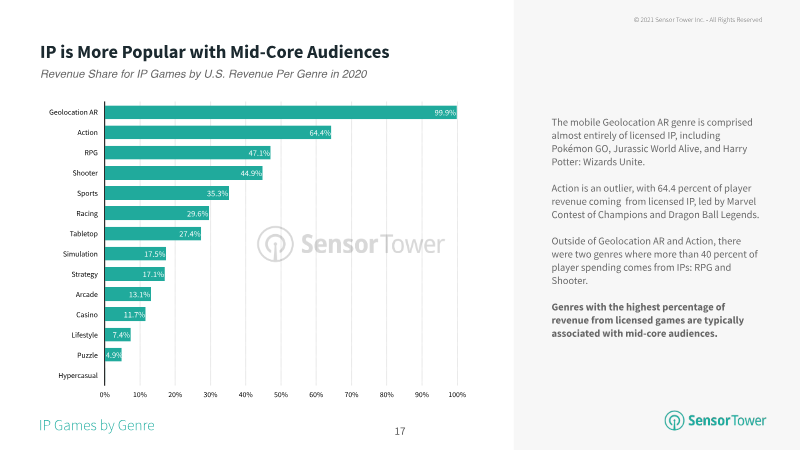
IP usage is most concentrated in mid-core genres.
Geolocation AR is almost entirely comprised of licensed titles. Action, RPG, and Shooter genres show the strongest correlation between IP usage and rapid revenue growth.
Untapped opportunity
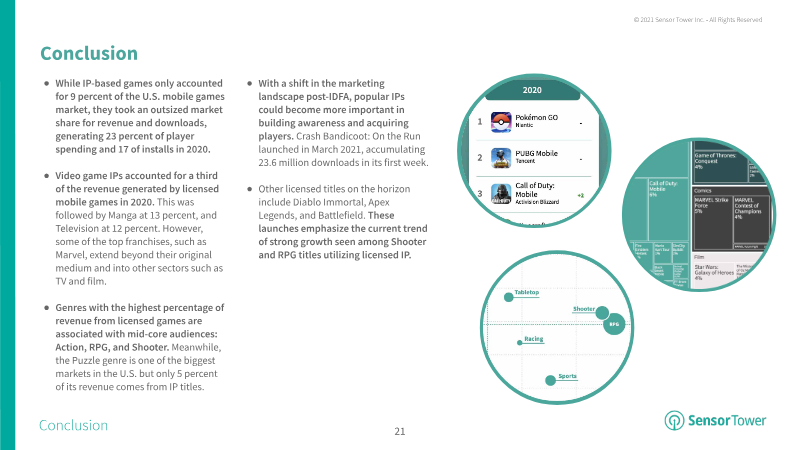
Puzzle genre derives only 5 percent of revenue from IP.
The Puzzle genre remains largely untapped by IP, with only 5 percent of revenue derived from licensed games.
Strategic implication
Recognizable IP becomes critical for user acquisition.
Strategic use of recognizable IP is becoming increasingly critical for user acquisition and brand awareness. This is particularly true as industry changes impact traditional identifier tracking.
1 / 7
Ask AI about this report