Mergers & Acquisitions reports and market data
Documents
Gamescom reaction, Clash Royale drama, Rovio's studio closure, Google's AI hypeman and more
The mobile games industry is currently experiencing a significant shift in market dominance, as evidenced by the recent Gamescom event in Cologne.
- Supercell’s internal review of Clash Royale revealed that aggressive changes, such as removing the season shop, caused significant community backlash due to poor communication and lack of transparency.
- Rovio is closing its Copenhagen studio and cancelling the hybrid card-action game Sonic Blitz, impacting approximately 20 employees.
- Gamescom 2024 was dominated by Chinese publishers like Tencent, Hoyoverse, and NetEase, who are successfully launching cross-platform titles on mobile, PC, and console simultaneously, while Western studios increasingly lag in mobile integration.

Did Apple really resolve its EU dispute? | Week in Mobile Games podcast
Apple’s recent attempt to resolve its regulatory dispute with the European Union regarding the Digital Markets Act remains contentious.
- Apple has updated its App Store business terms in response to EU Digital Markets Act (DMA) scrutiny, setting commission rates at 26% for standard App Store apps, 20% for those using alternative payment processing, and 15% for apps that link out to external payment methods.
- Roblox is facing increased pressure from international regulators, including a three-month mandate from Australian authorities to improve child safety measures after reports that adults could still contact minors on the platform.
- The mobile idle RPG 'Digimon New Century' (referred to as Digimon Up) generated $10 million in player spending across Google Play and the App Store during its first month following its July 15, 2024, launch.
What Happens When You Become A CEO? (The First 100 Days)
The transition into a CEO role within the gaming industry demands a rapid shift from transactional, hands-on management to a visionary, coaching-oriented leadership style.
- New CEOs must ruthlessly prioritize core intellectual properties and divest from non-essential assets to focus resources on flagship franchises and innovation.
- Successful leadership transitions require flattening organizational hierarchies and replacing legacy management to build a high-performance, autonomous, product-focused culture.
- CEOs should dedicate approximately 20 percent of their time to board and stakeholder communication to ensure alignment on long-term goals over short-term market volatility.
TWIG #397: Roblox’s Congressional Crisis, Apple’s EU Overhaul & Netflix Games’ Down to One Studio
Roblox currently faces a critical juncture as it navigates intense congressional scrutiny regarding child safety and systemic exploitation.
- Roblox faces significant operational and valuation risks due to intense congressional scrutiny over child safety, compounded by slowing viral growth and declining daily active user metrics.
- Apple’s revised EU fee structure replaces per-install charges with a flat commission on alternative distribution, a change that disproportionately benefits large-scale operators while disadvantaging smaller developers.
- The gaming industry is experiencing a structural correction from a period of over-valuation, leaving small-to-mid-sized public entities vulnerable due to their inability to achieve the scale required for a hit-driven economy.

Why EVE Online’s studio bought itself back for $120m - and partnered with Google DeepMind
CCP Games has entered a strategic period of independence following a $120 million management-led buyback from Pearl Abyss.
- CCP Games (now rebranded as Fenris) completed a $120 million buyback from Pearl Abyss to regain independence and pursue a distinct, tech-focused portfolio strategy.
- The studio is collaborating with Google DeepMind to use EVE Online’s complex, player-driven economic and social environment as a training ground for AI agents.
- Fenris is open-sourcing its proprietary 'Carbon' engine and technology platform to encourage third-party development and long-term ecosystem sustainability.
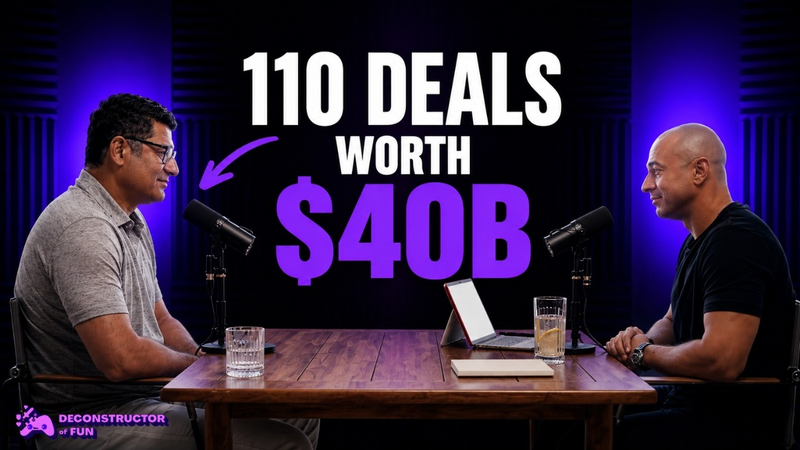
The Man Behind Most Gaming Deals | Affan Butt, Aream & Co.
Successful gaming mergers and acquisitions are fundamentally driven by long-term relationship building rather than transactional, high-pressure sales tactics.
- Successful gaming M&A is driven by long-term relationship building rather than transactional tactics, as evidenced by a track record of over 110 deals totaling $40 billion in value.
- Founders should prioritize meticulous data hygiene and financial validation to ensure deal certainty within a typical six-month timeline, as aggressive, unsuccessful outreach can permanently damage a studio’s reputation.
- Advisors often recommend delaying sales if internal metrics or market conditions are suboptimal, prioritizing the studio's long-term health over immediate transaction fees.
TWIG #396: AppLovin's Q2, Unity's Supersonic Fire Sale and GTA VI's Netflix Trailer Drama
The mobile gaming industry is currently navigating a period of significant structural realignment, characterized by aggressive consolidation, shifting monetization strategies, and a cooling of growth expectations for major ad-tech players.
- AppLovin experienced a 29% share price decline despite 53% year-over-year revenue growth, as investors reacted to decelerating AI performance improvements and conservative forward guidance.
- Unity sold its Supersonic publishing arm to Triple Dot for $40 million, marking a strategic pivot away from direct publishing to focus on its Vector AI ad-tech infrastructure.
- The mobile gaming industry is shifting its primary performance metric from short-term acquisition cycles to 28-day return-on-ad-spend (ROAS) to prioritize sustainable user value.
Sega-Rovio news, Tripledot's Supersonic buy, mobile at Take Two, Playtika shenanigans and more
The mobile games industry is currently navigating a period of strategic consolidation, shifting user acquisition (UA) models, and evolving financial performance across major publishers.
- Tripledot acquired the Supersonic mobile publishing label from Unity for $40 million, marking the company's second major acquisition of unwanted studios from large tech firms in recent years.
- Playtika will slash marketing and user acquisition spend on Disney Solitaire by 70%, citing the game's ability to maintain growth and expand margins despite reduced investment.
- Take-Two reported $739.5 million in mobile bookings for the last quarter, noting that while mobile revenue dipped slightly, direct-to-consumer initiatives have had a positive material effect on margins.

S07, E28: Digital Advertising's M&A Resurgence (with Maor Sadra)
The digital advertising landscape is undergoing a significant transformation, shifting from simple inventory aggregation toward the strategic integration of data, identity, and causal measurement.
- The Mobile Measurement Partner (MMP) landscape is evolving into stable, essential infrastructure, as evidenced by the recent industry-wide investment in AppsFlyer, which serves to codify the status quo rather than drive radical innovation.
- Causal measurement is becoming a strategic necessity for large-scale platforms, moving beyond traditional attribution models that often misattribute 100% of credit to a single touchpoint.
- Enterprise clients are increasingly skeptical of 'AI-first' startups that lack deep domain expertise, preferring established partners over new entrants who rely solely on generic LLM wrappers.
The survival of Sackboy and Crackdown developer Sumo Digital
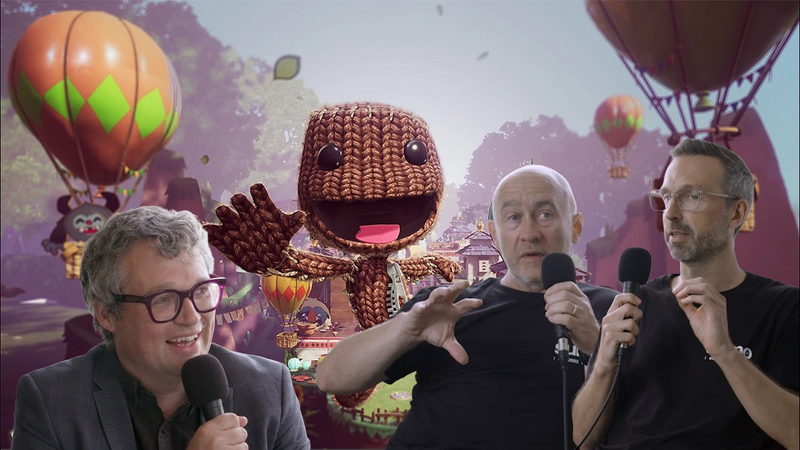
Sumo Digital has fundamentally restructured its business model to prioritize co-development and the support of evergreen titles, effectively pivoting away from the high-risk strategy of self-publishing and large-scale original intellectual property development.
- Sumo Digital has shifted its business model away from high-risk self-publishing and large-scale AAA projects to focus on mid-budget, double-A titles with a target cost of approximately $15 million.
- The studio is mitigating financial risk by utilizing co-funding models and prioritizing the support of evergreen titles alongside its own original intellectual property.
- Operational stability is maintained through an agile, scalable development structure that leverages the Pune studio to remain competitive against lower-cost global markets.

ChinaJoy insights, EA finalises sale and our 100th episode! | Week in Mobile Games podcast
The global mobile gaming landscape is currently defined by a dual trend of aggressive international expansion and structural consolidation.
- Tripledot has acquired Supersonic from AppLovin for an undisclosed sum, with AppLovin retaining a minority stake in Tripledot as part of the deal.
- Devolver Digital is moving to go private, citing the challenges of satisfying public market requirements and the struggle to maintain value after its 2021 IPO, which saw an initial valuation of $950 million.
- Arknights: Endfield surpassed $125 million in mobile revenue within its first six months, experiencing a 72% month-over-month revenue increase in its sixth month following the release of version 1.4.
Gaming in 2027 Just Got Worse, EA Now A Foreign Asset & FFXIV Gets Classy | Games For Breakfast
The global gaming industry is currently navigating a period of significant structural instability, characterized by severe hardware supply constraints, shifting corporate ownership models, and evolving regulatory challenges.
- Electronic Arts (EA) has been sold to Saudi Arabian interests, a move analysts predict will lead to long-term cultural decline and financial instability for the company.
- The gaming industry is experiencing significant labor instability, with current estimates suggesting a 50% reduction in workforce volume across the sector.
- A new financial support fund, the United Video Game Workers fund, has been established to assist developers impacted by industry layoffs, though it is currently restricted to North American residents in the US and Canada.