Mergers & Acquisitions reports and market data
Documents
🚨📢 BREAKING NEWS: Tripledot Buys Supersonic for $40M + EA is Private for $55B + Netflix drama
The gaming industry is undergoing a period of intense consolidation, characterized by the divestment of publishing arms by major ad-tech firms, massive private equity buyouts, and volatile studio management.
- Saudi Arabia’s Public Investment Fund has acquired Electronic Arts in a $55 billion take-private deal, the largest leveraged buyout in gaming history.
- The EA acquisition includes approximately $20 billion in debt, which is expected to drive a strategic shift toward aggressive live-service monetization and mobile revenue.
- Tripledot acquired Supersonic from Unity for $40 million in cash, completing the divestment of ironSource assets Unity acquired in 2022.

EA sells to Saudi, GTA games on mobile, plus Palworld Online, Roblox, Apple, Claude, data and more
The mobile games industry is currently navigating a period of significant structural and technological transition, marked by major acquisitions, shifting market dynamics, and the integration of generative AI.
- Electronic Arts has been acquired by a Saudi-led consortium, primarily the Public Investment Fund (93.4%), in a deal valued at $5.5 billion that closed on August 4, 2026.
- Roblox shares fell 27-30% following Q2 2026 results where revenue grew 36% to $1.5 billion, but bookings growth slowed to 8% and the company faced market skepticism over its shifting monetization strategy.
- GTA titles on mobile have generated $109.9 million in lifetime revenue across iOS and Android, while competitors like Chillbase's 'One State RP' have captured significant market share with over $75 million in revenue since April 2022.

Bungie's Layoffs: The End of an Era?
The recent restructuring at Bungie, characterized by a significant reduction in workforce, marks a critical turning point for the studio following its 2022 acquisition by Sony.
- Bungie has reduced its workforce by approximately 600 positions since its 2022 acquisition by Sony, including a recent round of 400 layoffs that cut nearly 40% of the remaining staff.
- Sony recorded a $766 million impairment charge related to Bungie for fiscal year 2025, indicating that the original integration strategy has failed to meet financial expectations.
- The acquisition thesis—that Bungie would lead Sony's live service initiatives—failed because Bungie’s high-cost expansion model proved incompatible with the microtransaction-heavy frameworks Sony intended to implement.

Google's €890m EU fine and why Netflix's gaming figures mean nothing | Week in Mobile Games podcast
The European Commission has imposed an €890 million fine on Google for violating the Digital Markets Act, specifically targeting anti-steering practices and self-preferencing within the Google Play Store.
- The European Commission has fined Google €890 million for Digital Markets Act breaches, consisting of €460 million for self-preferencing its own services and €430 million for restricting developers from directing users to alternative, cheaper purchase channels.
- Tencent is reportedly in talks to acquire the mobile game developer SuperPlay from Playtika in a deal valued at up to $1.5 billion.
- Netflix’s claim of a 600% increase in mobile game engagement is considered a 'vanity metric' by industry analysts because the company fails to provide standard health metrics like Daily Active Users (DAU) or Monthly Active Users (MAU).

How a former Dow Jones investigator is bringing due diligence to games
The games industry frequently overlooks formal due diligence, often relying on informal networking and casual partnerships that lack rigorous background verification.
- The games industry frequently relies on informal networking rather than rigorous due diligence, creating significant exposure to legal and financial risks in cross-border transactions.
- Effective due diligence must prioritize verifying corporate existence, identifying ultimate beneficial ownership, and ensuring business infrastructure matches the narrative presented in pitch decks.
- Investors and studios should proactively screen for red flags such as opaque ownership structures, missing corporate registrations, and unverified development histories to avoid operational instability.
🚨📢 BREAKING NEWS: GTA 6 Pre-Orders Hit $260M + Tencent & Superplay for $1.5B + PubMatic-Zynga Deal
The gaming industry is currently navigating a period defined by significant capital shifts and balance sheet pressures, with major titles and corporate acquisitions serving as bellwethers for broader market health.
- Grand Theft Auto 6 generated $260 million in global digital pre-orders during the final week of June, with projections estimating 51 million units sold and $3.3 billion to $5.2 billion in revenue by its November launch.
- Analysts warn that if GTA 6 fails to meet performance expectations, the resulting industry-wide valuation decline could negatively impact the broader mobile gaming market.
- Tencent is reportedly in talks to acquire Superplay from Playtika for $1 billion to $1.5 billion to help Playtika manage $2.3 billion in debt maturities due between 2028 and 2029.
Tencent, Playtika and SuperPlay shenanigans, further Google Play changes. Monopoly Go, MTG, more
The mobile games industry is currently navigating significant shifts in corporate ownership, platform accessibility, and market performance.
- Google has dropped its requirement for a 'registered app stores' program, allowing third-party app stores like the Epic Games Store to operate directly within the Google Play Store as of late July 2024.
- Tencent is reportedly in talks to acquire Superplay, the developer of Dice Dreams and Domino Dreams, for up to $1.5 billion following the studio's significant performance growth under Playtika.
- MTG reported Q2 group revenue of $306 million with a 24% profit margin, driven by Raid: Shadow Legends, which earned $111 million, while direct-to-consumer revenue grew to 38% of total group income.
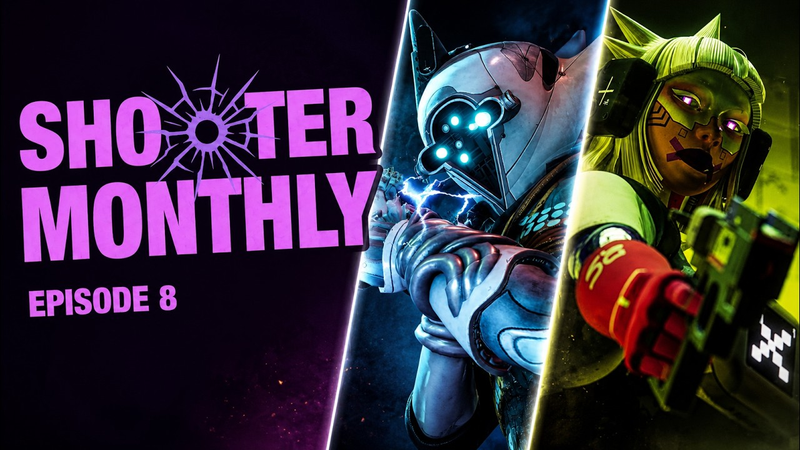
Shooter Monthly #8: The Bungie Eulogy, Why Destiny Fell Off, and Can Marathon Save the Studio
Bungie’s trajectory serves as a definitive case study in the volatility of the live-service model, illustrating how a studio can pioneer a genre while simultaneously struggling with the sustainability of long-term engagement.
- Bungie generated between $1.5 and $2 billion in revenue by successfully blending high-fidelity gunplay with deep RPG progression.
- The decline of Destiny is attributed to the exhaustion of its ten-year narrative arc and a seasonal content model that made player progress feel temporary.
- Bungie failed to transition Destiny into a smaller, long-term maintenance phase, a strategy that successfully sustained competitors like Rainbow Six Siege.

Epic and Google drop settlement and Pokémon Go revenue skyrockets | Week in Mobile Games podcast
The mobile gaming landscape is currently defined by significant legal volatility and shifting consumer spending patterns.
- Epic Games and Google have withdrawn their attempt to settle their US antitrust lawsuit, leaving the court's ruling that Google maintains an illegal monopoly over Android apps in place.
- Pokémon Go experienced one of its most lucrative days in history on July 11, 2026, driven by a free-to-play Go Fest event that encouraged high spending on raid tickets and limited-time bundles.
- A California-led coalition is attempting to block the Paramount-Warner Bros. merger, citing concerns that the combined entity would control 27% of US theatrical film distribution, 30% of blockbuster releases, and 27% of the basic cable market.
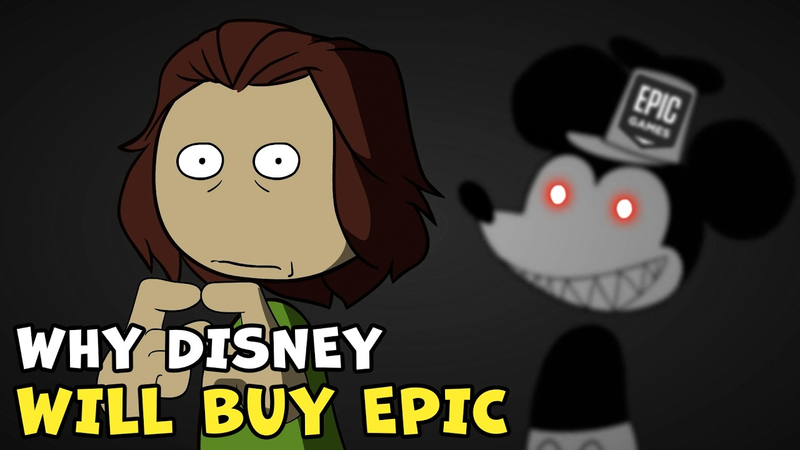
This Sucks: Why We Think Disney Will Buy Epic Games | Extra Credits Gaming
The potential acquisition of Epic Games by Disney is driven by a strategic shift in the entertainment industry, where the primary objective is no longer just content production but the creation of persistent, immersive digital environments.
- Disney’s core business model is the creation of immersive environments that foster emotional attachment, making them a direct competitor to companies like Nintendo that build persistent digital worlds.
- Epic Games provides three strategic assets Disney lacks: a direct relationship with gamers via the Epic Games Store, the infrastructure of the Unreal Engine, and a massive, persistent social space in Fortnite.
- Acquiring Epic would allow Disney to bypass third-party platforms like Sony, Valve, or Microsoft, enabling them to control the entire ecosystem from content discovery to in-game transactions.
Global Gaming Report: Q2 2026
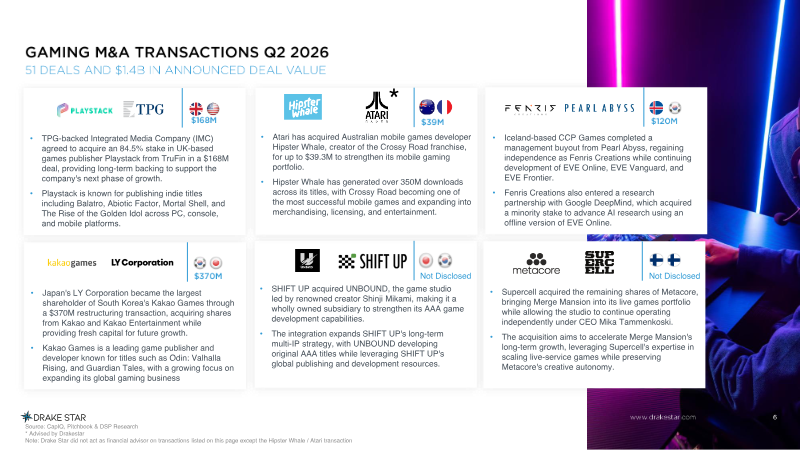
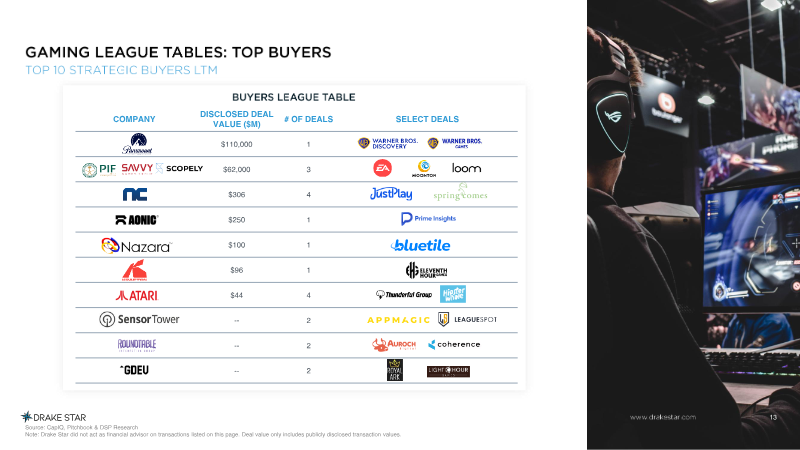
The global gaming industry experienced a period of financial divergence during the second quarter of 2026, characterized by robust private capital formation despite broader equity market volatility.
- Private gaming financing reached a one-year high in Q2 2026, with 96 deals generating over $2.5 billion in capital.
- Institutional investors committed over $2 billion to new gaming-focused funds, signaling sustained interest in indie projects and long-term content strategies.
- The gaming market showed significant divergence, as Western gaming stocks rose 4.8% while mobile gaming and Asian markets declined by 11.6% and 6.4% respectively.
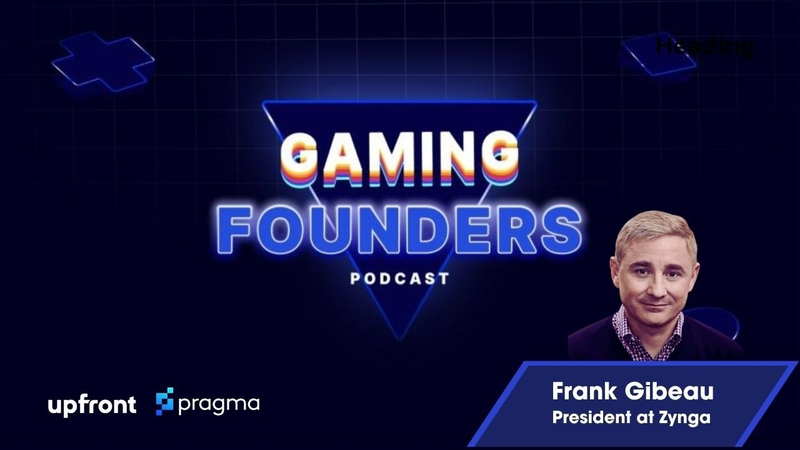
Frank Gibeau: The Zynga Turnaround That Went from $1.87 to $12.7 Billion
The transformation of Zynga from a struggling entity with a stock price of $1.87 to a $12.7 billion acquisition by Take-Two Interactive serves as a definitive case study in corporate restructuring and strategic scaling.
- Frank Gibeau led a turnaround of Zynga from a $200 million enterprise value with $17 million in annual profit to a $12.7 billion acquisition by Take-Two.
- The turnaround strategy focused on replacing 16 of 17 VPs to install mobile-fluent operators and re-anchoring the company culture around the principle that there are no bad soldiers, only bad officers.
- Zynga’s recovery was fueled by an aggressive M&A strategy that utilized proceeds from selling their headquarters to acquire a dozen studios, prioritizing cultural alignment and founder relationships over simply being the highest bidder.