Key insights
4 slides
Key number
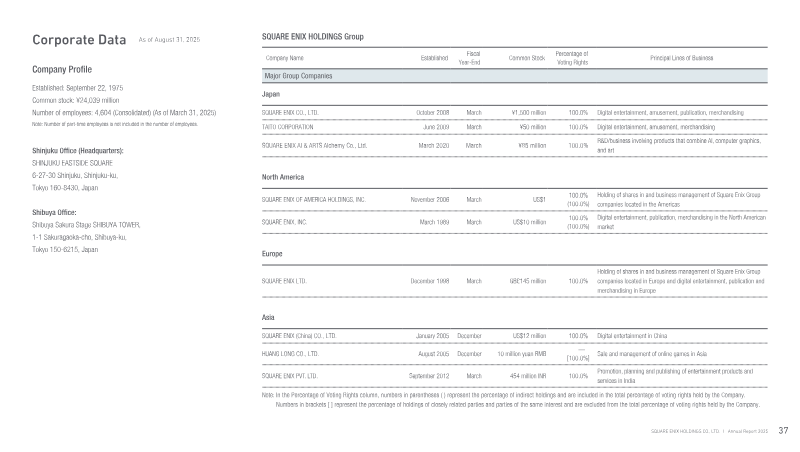
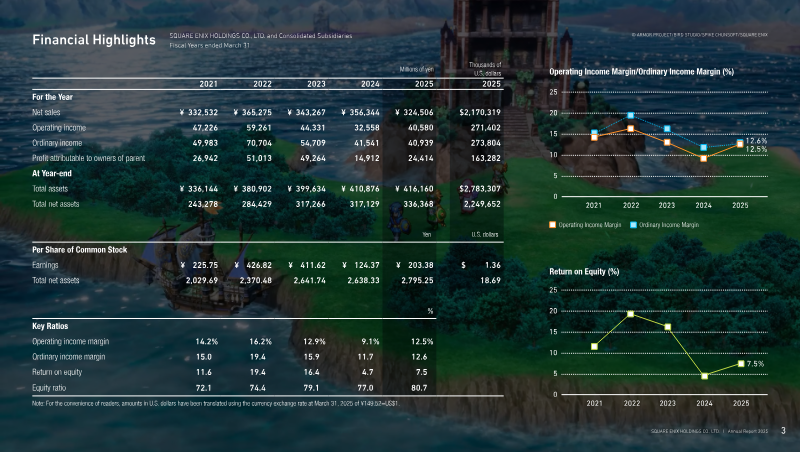
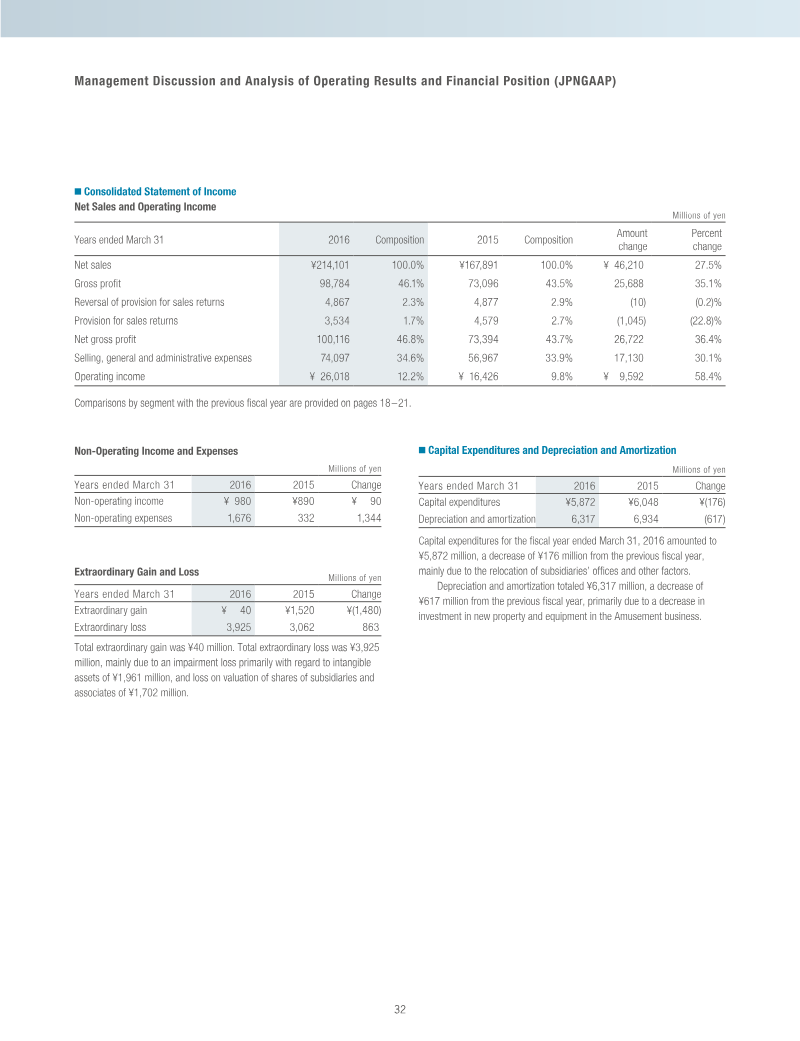
Net sales exceeded ¥200 billion for the first time.
Net sales reached ¥214,101 million, a 27.5% increase from the prior fiscal year. Operating income increased by 58.4% to ¥26,018 million.
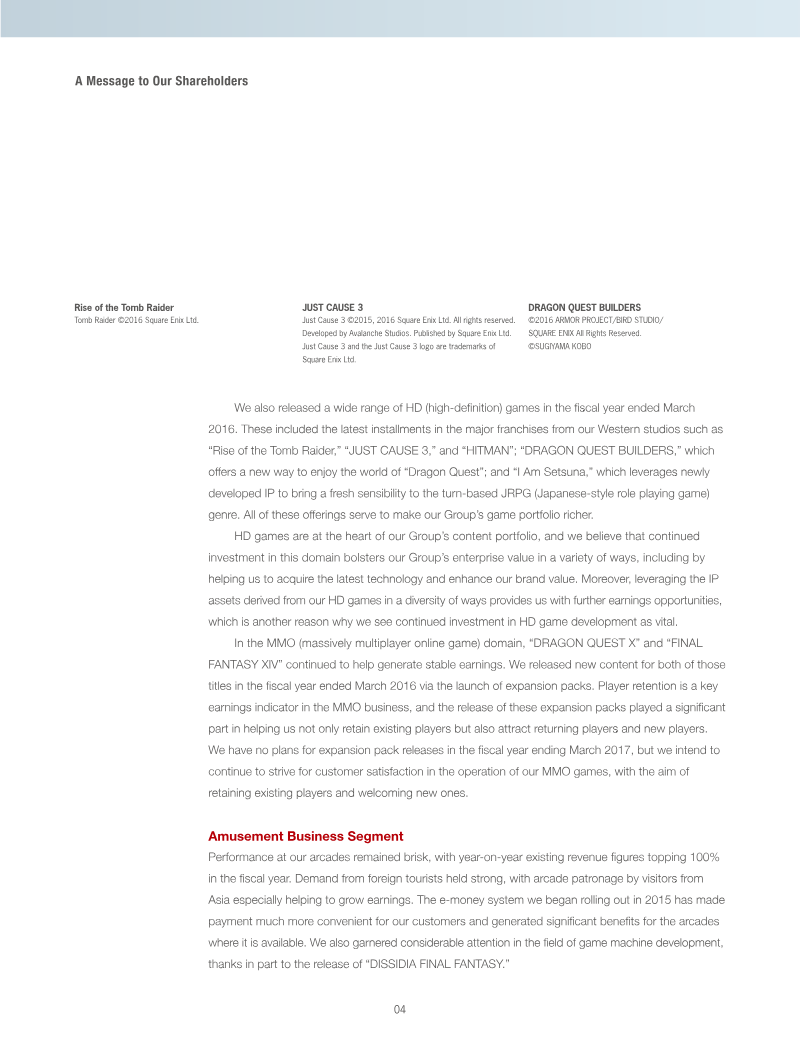
Stable earnings
MMO titles generated stable earnings through new content.
DRAGON QUEST X and FINAL FANTASY XIV retained and attracted players with new content and expansion packs released in the fiscal year ended March 2016.
Tourism demand
Amusement business revenue topped 100% year-on-year.
The Amusement Business Segment saw brisk performance with year-on-year existing revenue topping 100%. Strong demand from foreign tourists, especially from Asia, and an e-money system rollout drove this.
Page 22 of the report201447
201540.7
201641.1
Capital spending
Capital expenditures decreased by ¥176 million.
Capital expenditures decreased by ¥176 million to ¥5,872 million in the fiscal year ended March 31, 2016. The decrease was primarily due to the relocation of subsidiaries' offices.
1 / 4
Ask AI about this report
Summary
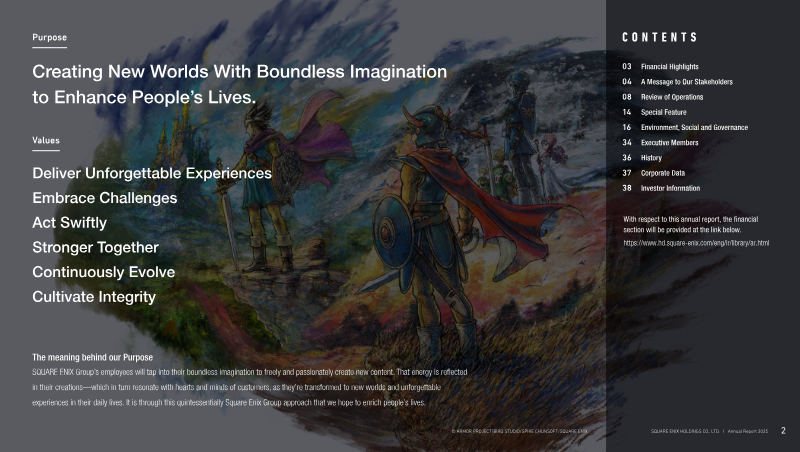
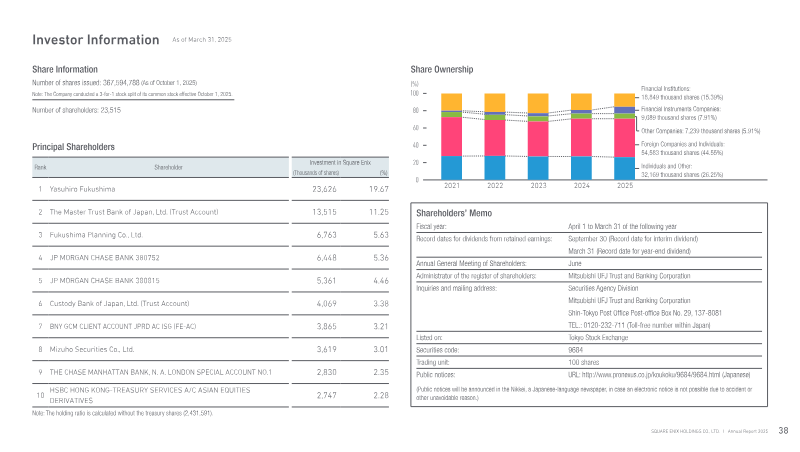
To spread happiness across the globe by providing unforgettable experiences To spread happiness across the globe by providing unforgettable experiences This philosophy represents our company’s mission and the beliefs for which we stand. The Square Enix Group provides high-quality content, services, and products to help those customers create their own Each of our customers has his or her own definition of happiness.
Cite this report
Citation
Generating citation…