Investment reports and market data
Documents

Where is the Game Industry Today? M&A and Public Game Companies | Pixels & Profits #1
The global gaming industry has transitioned from an era of unchecked expansion fueled by low interest rates to a disciplined period defined by operational efficiency, cost-cutting, and a strategic pivot toward live-service models.
- The gaming industry has shifted from an era of unchecked expansion to a disciplined focus on operational efficiency and live-service models due to rising capital costs and difficult user acquisition.
- A competitive bifurcation is occurring where top-tier titles dominate market share, while Western incumbents face increasing pressure from Chinese competitors scaling live-service expertise across console and PC.
- M&A activity has slowed significantly since the 2022 peak, driven by a valuation impasse between private companies holding historical funding valuations and public entities facing tighter capital constraints.

Embracer’s Deal Collapse / Take-Two & Ubisoft Earnings / Mortal Kombat 1
The global gaming industry is currently navigating a period of significant structural realignment, characterized by the failure of aggressive acquisition-led growth strategies and a pivot toward rigorous capital discipline.
- Embracer Group’s failed $2 billion partnership deal and debt-fueled strategy have triggered a 45% decline in its stock price and a 30% reduction in earnings guidance.
- Major publishers are pivoting from aggressive acquisition-led growth to capital discipline, with Take-Two Interactive pruning its development pipeline to prioritize high-impact releases like the next Grand Theft Auto title in fiscal 2025.
- The fighting game genre, led by Mortal Kombat 1, Street Fighter 6, and Tekken 8, is shifting toward live-service monetization models that utilize $70 price points, recurring DLC, and cross-IP collaborations.

Five Reflections Since Co-Founding Naavik
The co-founder of Naavik reflects on four years of building a research and consulting firm within the video game industry, offering five core insights regarding leadership, industry dynamics, and professional growth.
- The gaming industry has transitioned into an 'age of efficiency' characterized by higher interest rates and market corrections, necessitating a shift toward operational discipline and a focus on return on invested capital.
- New technologies like web3, user-generated content, and cloud gaming function as additive layers to existing paradigms rather than replacements, maintaining an 'and' rather than 'or' industry environment.
- Professionals can improve decision-making and empathy by cross-pollinating skills, specifically by applying investor-grade analytical rigor to business operations and vice versa.
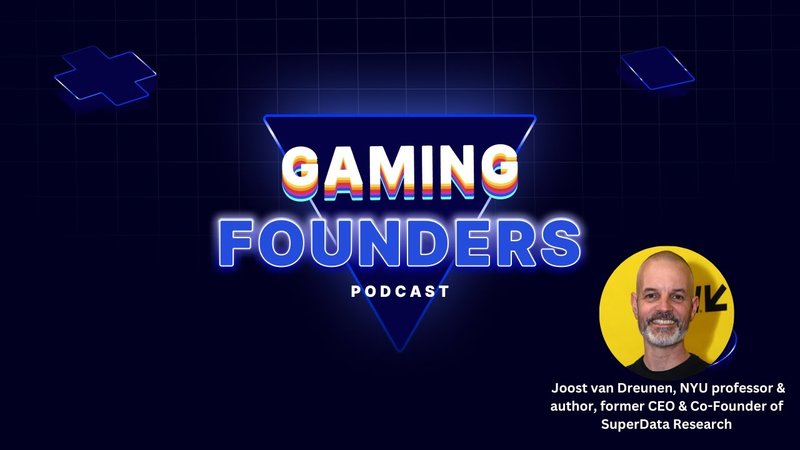
SuperJoost - The Entrepreneurial Journey of Professor and Author Joost van Dreunen
The evolution of the video game industry from a retail-centric model to a digital-first service economy has fundamentally altered how market value is measured and captured.
- The gaming industry has shifted from a retail-centric model to a digital-first service economy, requiring analysts to prioritize KPIs like user acquisition costs, conversion rates, and average spend per user over traditional unit sales.
- Long-term commercial success in the modern gaming landscape is increasingly defined by sustained player engagement in live-service 'forever' games rather than the performance of initial product launches.
- The industry is experiencing a structural bifurcation where online multiplayer experiences are eclipsing traditional premium single-player titles, leading media conglomerates to acquire gaming assets to leverage advertising and multimedia strategies.
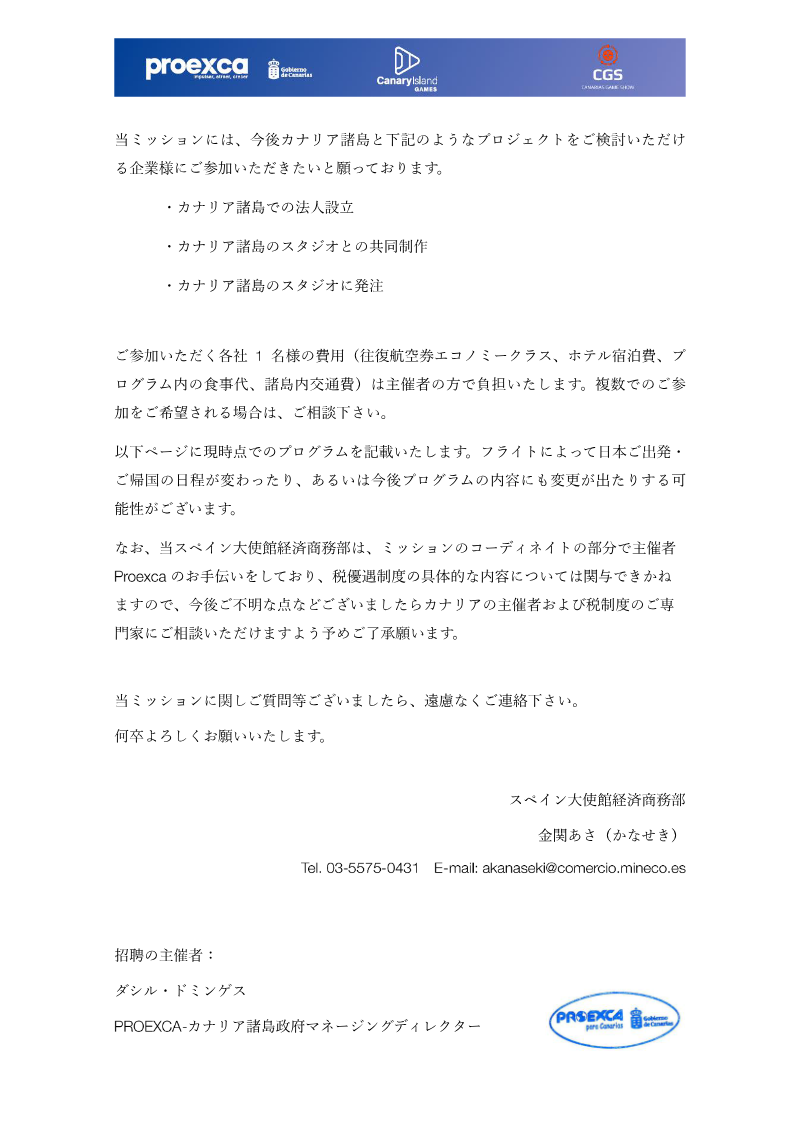
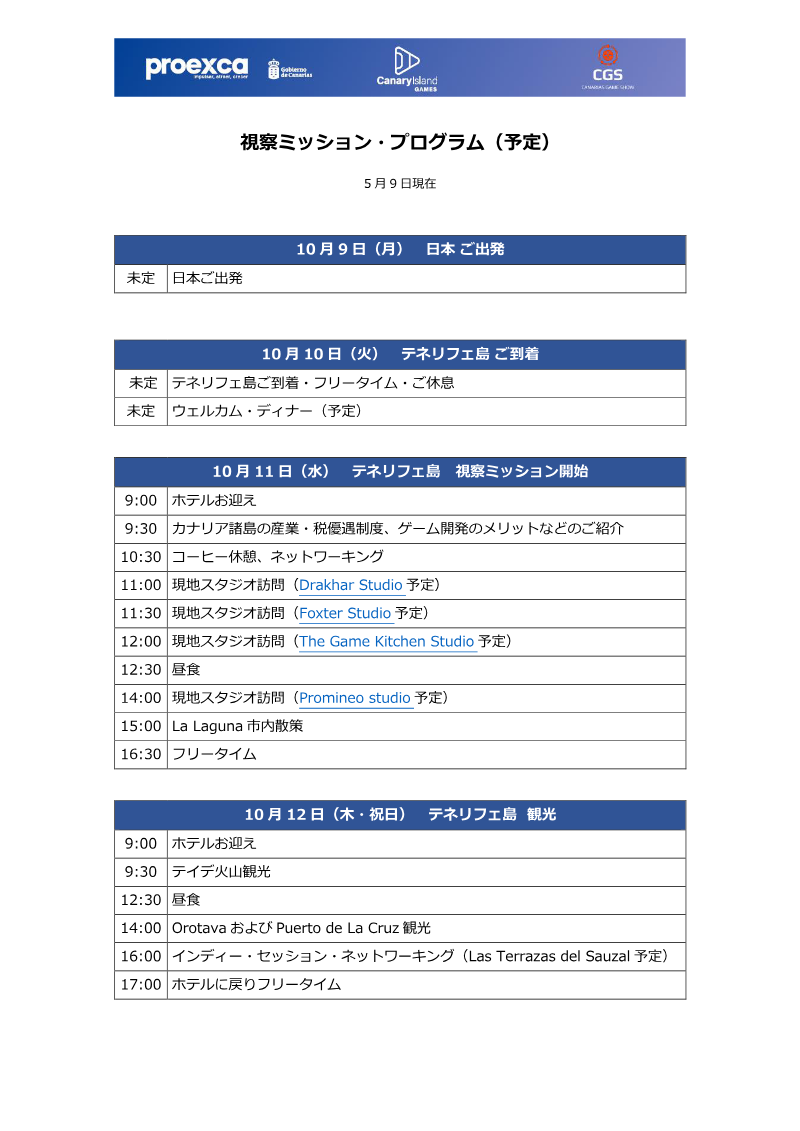
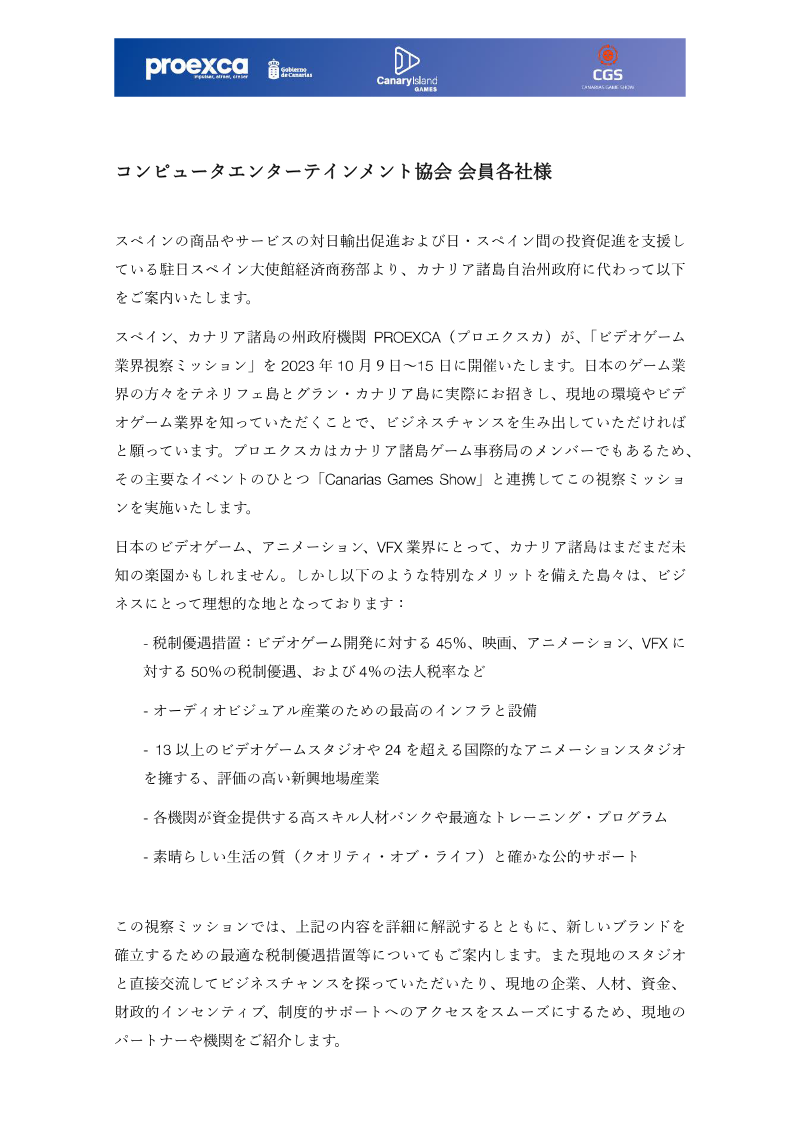
スペイン、カナリア諸島の州政府機関から「ビデオゲーム業界視察ミッション」のご案内
The invitation seeks to generate business opportunities for Japanese video-game, animation and related audiovisual firms by showcasing the Canary Islands as a strategic production hub.
- The Canary Islands government is hosting a business mission for Japanese video game and animation firms from October 9–15 to promote the region as a strategic production hub.
- The mission covers all travel expenses, including economy-class airfare, accommodation, meals, and local transport, for qualified Japanese companies interested in expansion or outsourcing.
- The Canary Islands offer a competitive business environment featuring reduced corporate tax rates and specific financial incentives for game development, animation, and film production.

Founding Funds, Paths to Partner, and Glass Ceilings
The venture capital landscape within the gaming industry remains characterized by significant gender disparity, underscored by the fact that female founders secured only 1.9% of total venture funding in 2022.
- Female founders secured only 1.9% of total venture funding in the gaming industry in 2022, highlighting a persistent and significant gender disparity.
- Evidence indicates that increased gender diversity within investment teams correlates with higher fund returns and more profitable exits, positioning inclusivity as a driver of financial performance.
- To mitigate internal bias, venture firms are increasingly adopting structured operational frameworks, including data-driven investment memos and standardized performance reviews.

The State of Esports, UGC, and Venture Capital
The esports industry is currently undergoing a significant market correction, transitioning from a period of hyper-growth fueled by low interest rates to a more disciplined, sustainable operational model.
- The esports industry is undergoing a market correction as organizations shift from unsustainable, venture-backed scaling to models prioritizing operational efficiency and long-term profitability.
- Esports organizations previously relied on unsustainable media rights deals and high-valuation fundraising, a strategy that collapsed because game publishers retain the majority of ecosystem value without providing significant financial support to teams.
- Venture capital funding in gaming experienced a massive surge from $5.9 billion in 2020 to over $10 billion annually in 2021 and 2022, leading to a current period of recalibration and reduced liquidity.

Esports Winter / E3 Cancelled / Mobile Markets / Sky Mavis Ronin Games
The global gaming industry is currently undergoing a period of significant structural correction, characterized by a shift away from speculative growth toward fiscal discipline and operational sustainability.
- The esports sector is undergoing a structural correction as organizations like TSM and CLG face unsustainable salary structures and an over-reliance on volatile sponsorship revenue.
- Major publishers, including Electronic Arts, are prioritizing fiscal discipline and operational efficiency through workforce reductions and write-offs to focus on established, low-risk franchises.
- The collapse of E3 highlights the failure of traditional trade shows to remain relevant in a direct-to-consumer landscape, despite the ongoing industry need for in-person engagement.



Turkey Game Market 2022 Report
The Turkish gaming market in 2022 serves as a critical case study of a high-growth production hub navigating significant domestic economic volatility.
- The Turkish gaming market experienced a significant revenue contraction in 2022, falling to $625 million from $1.2 billion in 2021 due to currency depreciation and reduced consumer purchasing power.
- Despite the revenue decline, Istanbul remains a global investment hub, ranking second in Europe and fifth globally with over $424 million secured across gaming transactions in 2022.
- The industry is projected to maintain a 24.1% compound annual growth rate through 2026, driven by a strategic shift toward mid-core, PC, and console development alongside AI and blockchain integration.
Gaming Industry Report: Q1 2023
The gaming industry experienced a resilient start to 2023, with a projected global market size of $201 billion, representing a 9% year-over-year increase.
- The global gaming market is projected to reach $201 billion in 2023, reflecting a 9% year-over-year growth rate.
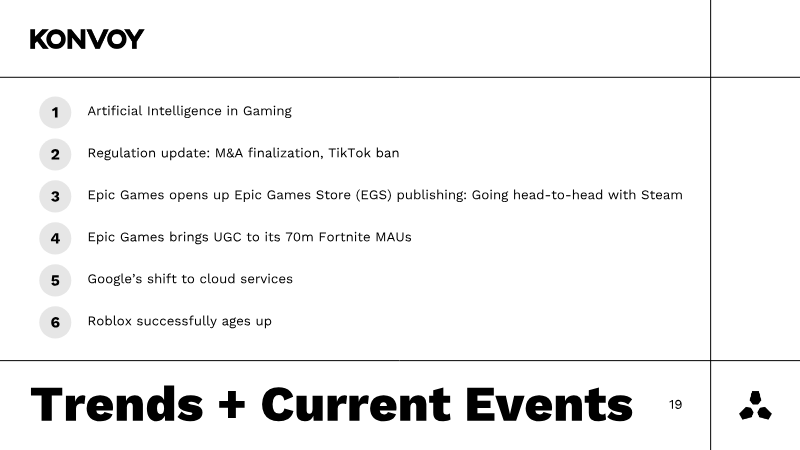
- Major industry players possess $48 billion in cash reserves, signaling a stable environment for future M&A activity despite regulatory headwinds.
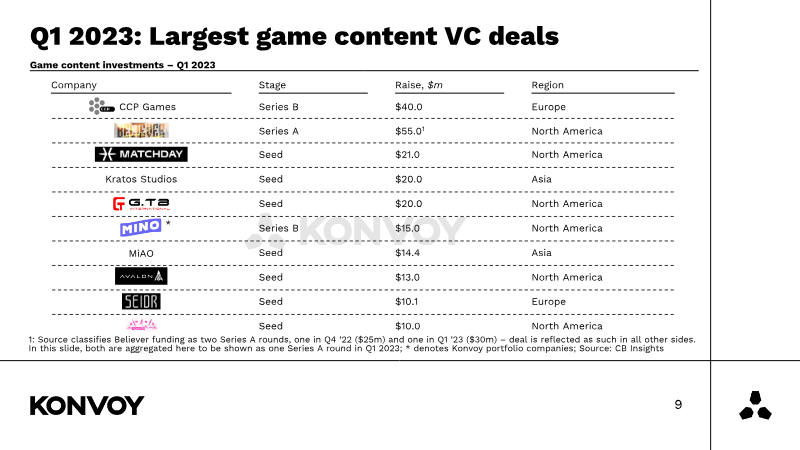
- Venture capital funding totaled $761 million across 109 deals in Q1 2023, with investment heavily concentrated in early-stage ventures rather than late-stage rounds.

The Storied History of Gaming Veteran Louis Castle, Co-Founder of Westwood
The evolution of the real-time strategy genre and the professional trajectory of Louis Castle illustrate the transition of the gaming industry from a hobbyist pursuit to a sophisticated corporate enterprise.
- Westwood Studios scaled its operations by using contract porting work to self-fund original intellectual property, a pragmatic model that allowed for creative autonomy.
- The studio achieved peak growth between 1992 and 1998, reaching a workforce of 250 employees through the success of genre-defining titles like Command & Conquer and Blade Runner.
- Westwood maintained creative control during four major acquisitions by strictly dividing leadership responsibilities between design and operations.

Kress' Corner 5: What is investable anymore in gaming with Moritz Baier-Lentz, Lightspeed Ventures
The gaming industry is currently navigating a period of significant recalibration, moving away from the speculative fervor of recent years toward a model defined by sustainable fundamentals and proven operational expertise.
- Venture capital investment in gaming has shifted from speculative consumer products toward infrastructure and technological enablers that lower production barriers, such as AI and procedural generation.
- Investors are prioritizing elite development teams with proven track records in managing large-scale franchises, specifically favoring PC and console projects over mobile gaming due to current market saturation.
- The industry is moving away from hype-driven trends like Web3 and XR, viewing them only as secondary, enabling technologies rather than primary value propositions.