Investment reports and market data
Documents

Believer’s $55M Series A / Exits in Gaming / Gen AI Playtesting Workflow
Generative artificial intelligence is fundamentally reshaping game development workflows by automating labor-intensive processes such as quality assurance, playtesting, and content iteration.
- Believer secured $55 million in Series A funding to prioritize the development of expansive, long-term transmedia IP over standalone titles.
- Studios are increasingly using generative AI to automate labor-intensive tasks like playtesting and quality assurance, converting verbal feedback into actionable project management tickets.
- The gaming industry is shifting its business model away from quarterly performance metrics toward building games as lifestyle platforms that foster enduring audience engagement.
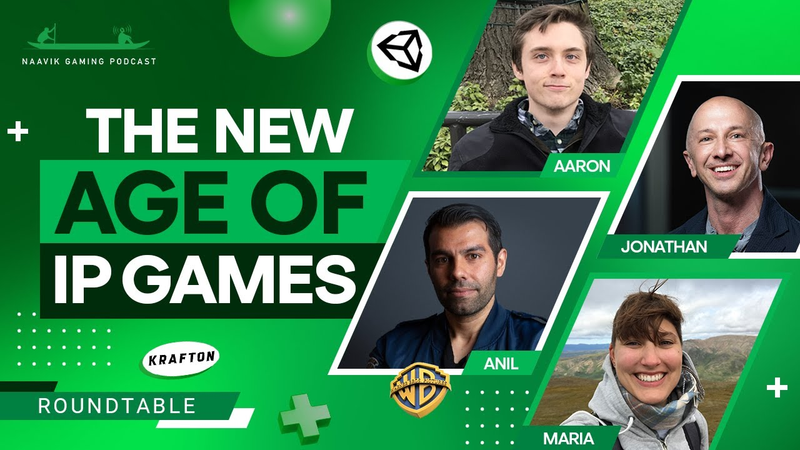
Krafton Targets India / Ramifications of Hogwarts Legacy’s Success / Unity Earnings
The global gaming industry is currently defined by a stark divergence between companies successfully leveraging intellectual property and those struggling with structural or transparency issues. Warner Bros.
- Warner Bros. Games' Hogwarts Legacy generated $850 million in revenue within its first two weeks, validating a strategy of high-quality, multi-platform IP development.
- Warner Bros. Discovery is increasingly integrating gaming as a core pillar of its broader media ecosystem to create synergy between its gaming and streaming divisions.
- Unity is facing analyst scrutiny regarding its post-merger transparency with ironSource, specifically concerning declining high-value customer counts and misleading profitability metrics.
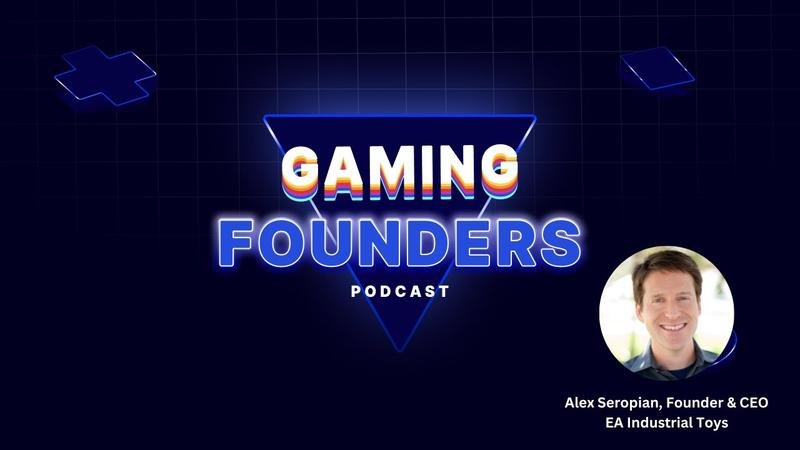
The Halo Effect, 3x Gaming Entrepreneur Alex Seropian
The evolution of the gaming industry over the past three decades reflects a transition from garage-based bootstrapping to complex corporate integration and mobile-first strategies.
- Scaling a studio requires transitioning from early-stage creative risk-taking to organizational maturity, specifically by hiring specialized leadership early to manage operational complexities.
- The evolution of the Halo franchise from a real-time strategy concept to a first-person shooter demonstrates that long-term success relies on rigorous playtesting and active community engagement.
- Large conglomerates like Disney have struggled with vertical integration in gaming, suggesting that licensing models are often more pragmatic than attempting to build internal development capabilities without institutional experience.

Kress's Corner #4 - How to grow a Startup from 5 to 100 people?
Scaling a startup from a small team of five to a robust organization of 100 requires a fundamental shift in leadership philosophy, moving away from centralized control toward a model of empowerment and delegation.
- Scaling from 5 to 100 employees requires transitioning from centralized control to a model of delegation and empowerment to prevent the founder from becoming an operational bottleneck.
- Founders must establish clear, written milestones for success and remain prepared to pivot or exit if objectives are not met within an 18-month window to avoid sunk-cost bias.
- Sustainable growth is achieved by prioritizing psychological safety and transparent communication, which fosters creativity and efficiency without relying on fear-based management.


Global Gaming Report Q1 2023
The global gaming industry entered 2023 showing signs of a robust public market recovery, evidenced by a 12% rise in the Drake Star Gaming Index and a notable expansion in valuation multiples.
- The Drake Star Gaming Index rose 12% in Q1 2023, signaling a robust public market recovery despite a temporary dip in M&A volume to 43 deals.
- Private financing remained resilient with over 200 deals raising $1.3 billion, driven primarily by early-stage investments and a strategic pivot away from blockchain toward AI and gaming tools.
- Embracer Group remained the most active consolidator, completing 18 deals totaling over $1.1 billion during the quarter.


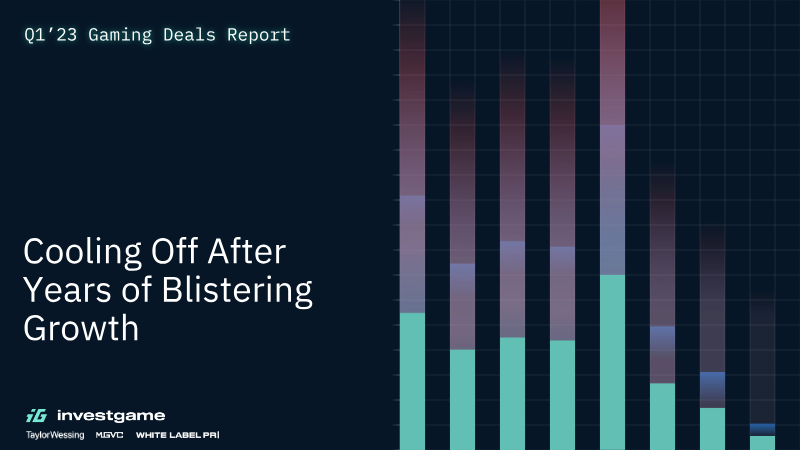
Q1'23 Gaming Deals Report
Analysis of the global video game industry’s financial activity in the first quarter of 2023 reveals a period of market correction and stabilization following previous record highs.
- M&A activity hit a multi-year low in Q1 2023 with only 43 closed deals totaling $11.4 billion, representing a 94% year-over-year decline in value.
- Private investment value plummeted 71% year-over-year to $3.3 billion across 141 deals, reflecting a broader market correction and stabilization.
- The market is bifurcated, as early-stage venture capital remains robust while late-stage and public market activities are constrained by high interest rates and bearish sentiment.
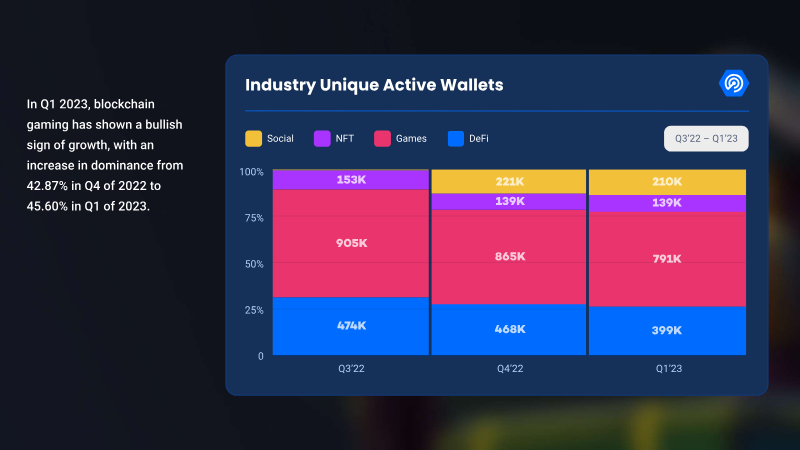
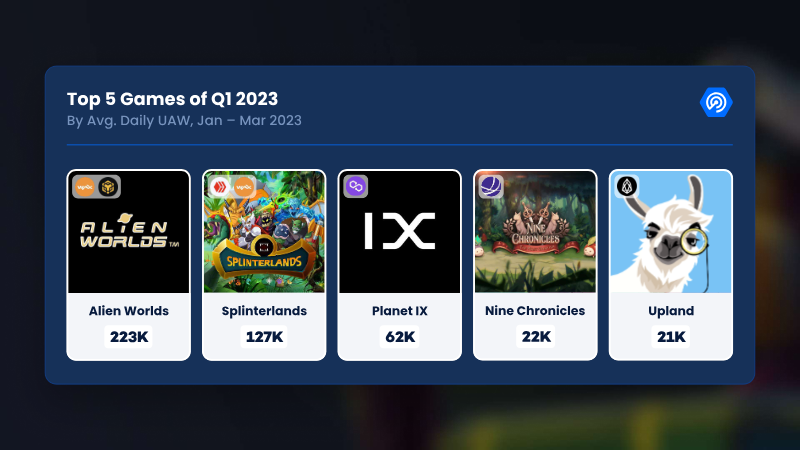
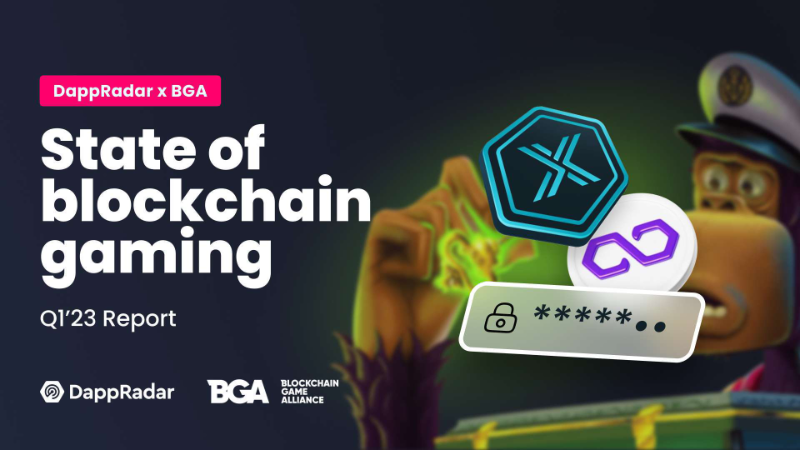
State of Blockchain Gaming Q1 2023 Report
Blockchain gaming demonstrated resilience and growth during the first quarter of 2023, solidifying its position as a primary driver of decentralized application activity.
- Blockchain gaming and metaverse projects secured $739 million in investment during Q1 2023.
- Investment in the sector grew by 12.95% quarter-over-quarter compared to the $654.5 million recorded in Q4 2022.
- The $739 million total for Q1 2023 represents a sustained upward trajectory in capital interest for blockchain-based gaming.
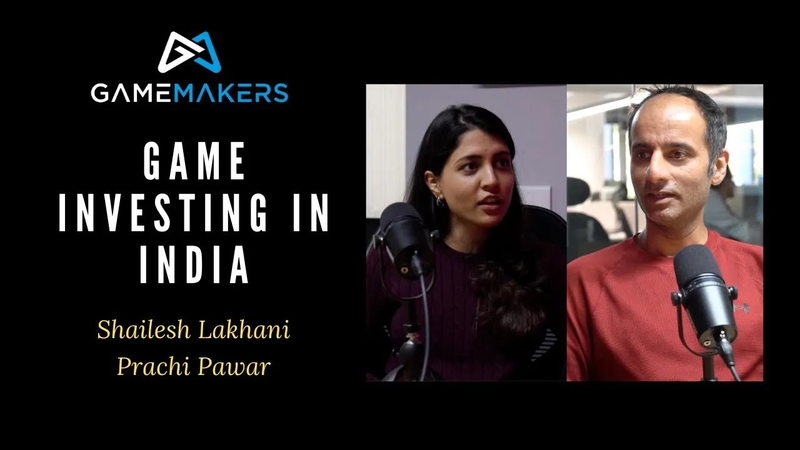
Sequoia Capital India on Investing in Indian Gaming Market
Sequoia Capital India maintains a bullish long-term outlook on the Indian gaming market, identifying it as a nascent but rapidly expanding sector.
- The Indian gaming market has experienced a 400 to 500 percent growth in size over recent years, leading Sequoia Capital India to project the emergence of a billion-dollar domestic game title within the next decade.
- Investment strategy prioritizes high-quality studios, esports, and distribution platforms, specifically targeting founders who demonstrate sustainable unit economics and long-term product-market fit over aggressive, cash-burning growth.
- While the market has seen a correction in valuations from the 2020 and 2021 peaks, the environment remains competitive and healthy for high-quality teams.

Panel: Go Big or Go Home: From Indies to Big Conglomerates....
Artificial intelligence is fundamentally reshaping the gaming industry by serving as a critical catalyst for production efficiency and creative iteration.
- AI is functioning as a critical catalyst for production efficiency, enabling smaller studios to generate high-quality assets and lower the barrier to entry in a saturated market.
- The industry is shifting toward a model where games act as primary narrative engines for broader intellectual property strategies, prioritizing cross-platform accessibility and frictionless engagement.
- While AI accelerates technical workflows, the market is increasingly valuing authentic, human-led creative vision as the primary driver for competitive differentiation.
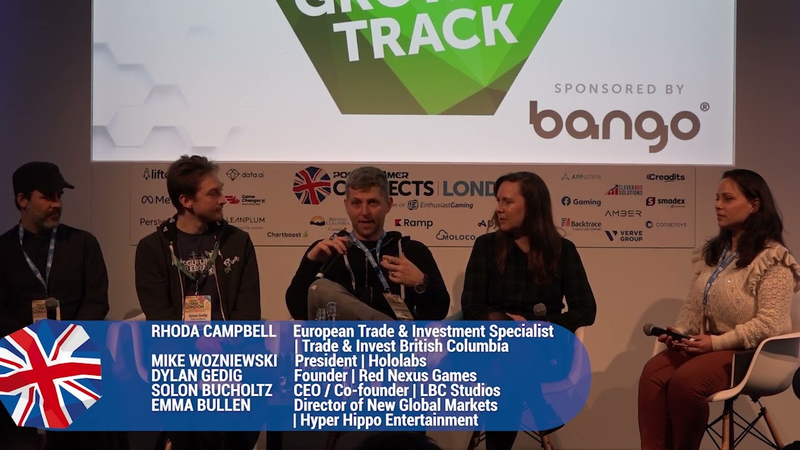
Panel: Location, Location, Location: Why Is “Where” You set Your Studio up, Still Important
British Columbia has established itself as a premier global hub for game development, defined by a mature ecosystem that prioritizes collaborative growth over aggressive competition.
- British Columbia’s game development ecosystem thrives on a collaborative model that prioritizes industry-wide growth and professional networking over aggressive competition.
- Physical studio location remains a critical driver for effective onboarding, creative collaboration, and talent retention, despite the industry-wide shift toward remote and hybrid work models.
- The region sustains long-term innovation through a cycle where experienced professionals are nurtured and eventually launch their own independent ventures within the local market.

Venture Debt 101
Venture debt has matured into a $29 billion financial sector, functioning as a strategic, non-dilutive capital tool for startups that have already achieved product-market fit.
- Venture debt has evolved into a $29 billion financial sector that provides non-dilutive capital to startups that have already achieved product-market fit.
- Unlike venture equity, which targets binary outcomes, venture debt is a lower-beta instrument structured as a three-year amortizing loan designed to extend operational runway and accelerate growth.
- Venture debt is positioned senior to equity in the capital structure and is intended for high-margin, scalable enterprises rather than as a rescue mechanism for insolvent firms.
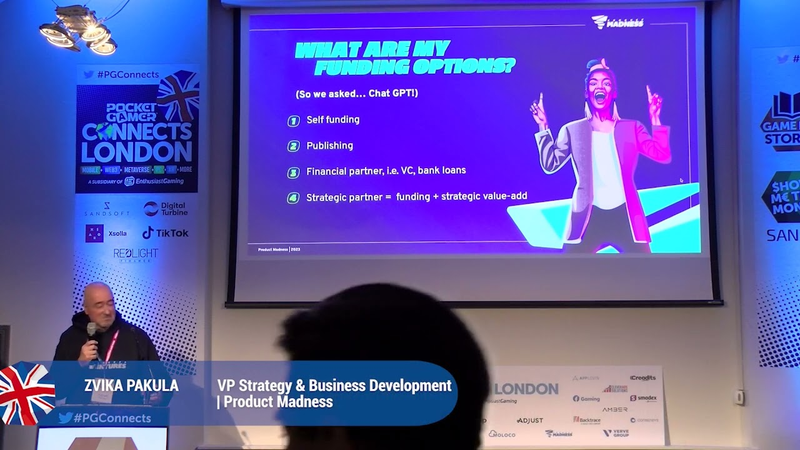
Funding Early Stage Gaming - Zvika Pakula, Product Madness
Securing funding for early-stage gaming ventures requires a strategic, realistic approach that balances creative vision with market data.
- Early-stage founders must prioritize building prototypes that generate actionable KPIs rather than attempting to develop a full-scale product prematurely.
- Achieving meaningful market share in the current gaming landscape requires planning for user acquisition costs that can reach 15 to 20 million dollars.
- Development cycles for genres such as social casino, RPG, or casual gaming typically span one to two years, requiring a long-term strategic approach to funding.