Investment reports and market data
Documents
Blockchain Game Alliance: State of the Industry 2024
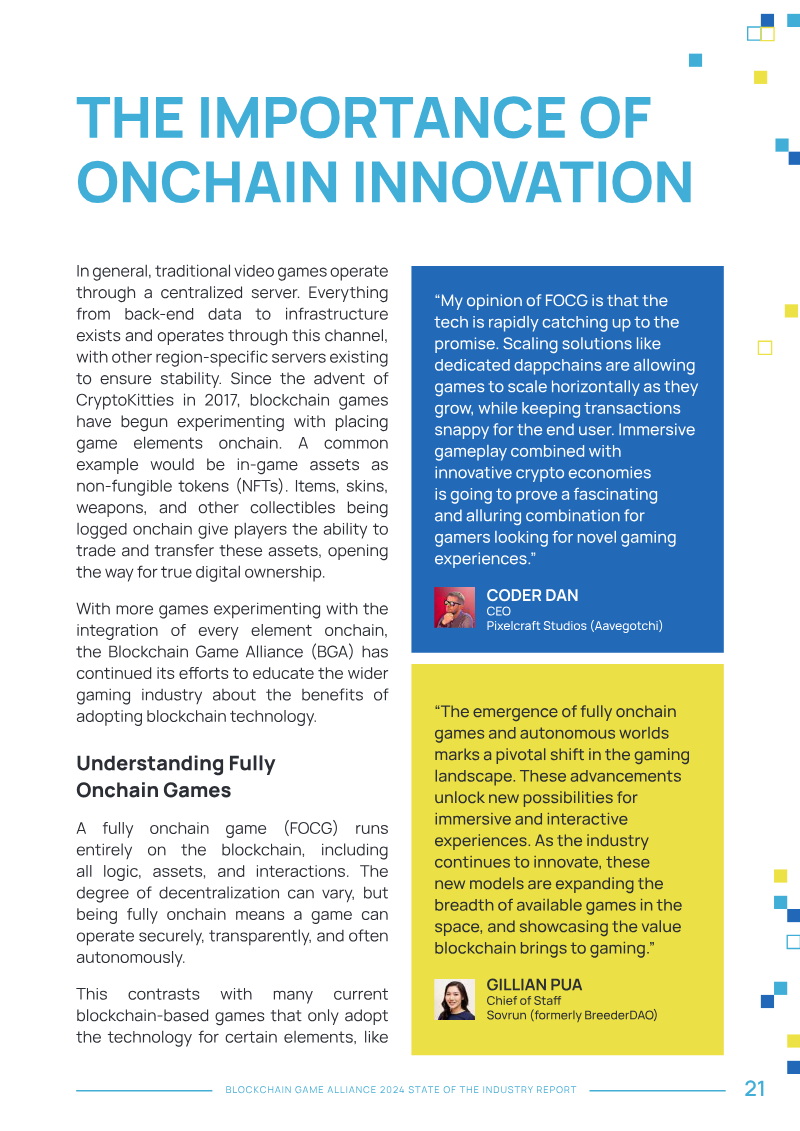
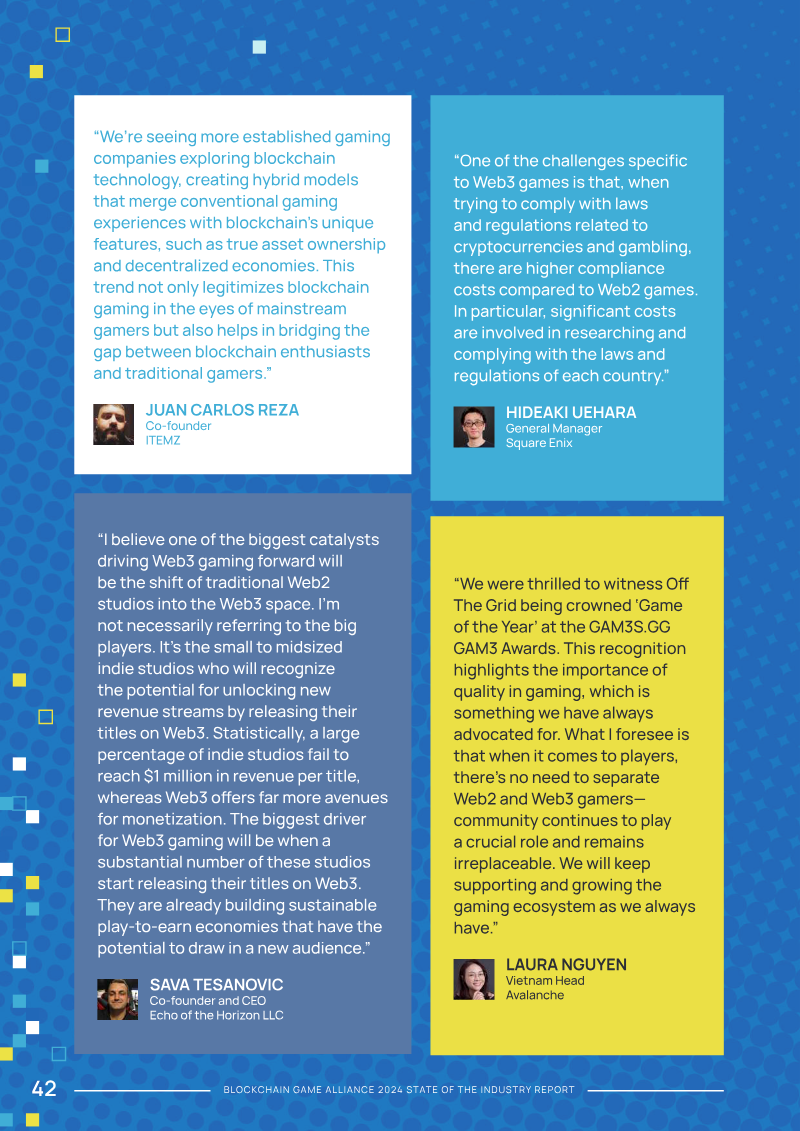
The blockchain gaming sector is entering a phase of maturation characterized by a strategic pivot from speculative financial models toward high-quality, "fun-first" development.
- The blockchain gaming industry is shifting from speculative models to 'fun-first' development, with 71% of professionals identifying player asset ownership as the primary value proposition.
- Mainstream adoption is being driven by the entry of traditional giants like Sony and Ubisoft, though 66.3% of practitioners still cite public perceptions of scams as a significant barrier.
- Operational barriers like onboarding complexity and poor user experience remain the top hurdles to mainstream growth, despite a notable decrease in the severity of these concerns since 2023.
Gaming Industry Report: Global & MENAP Outlook Q4 2023
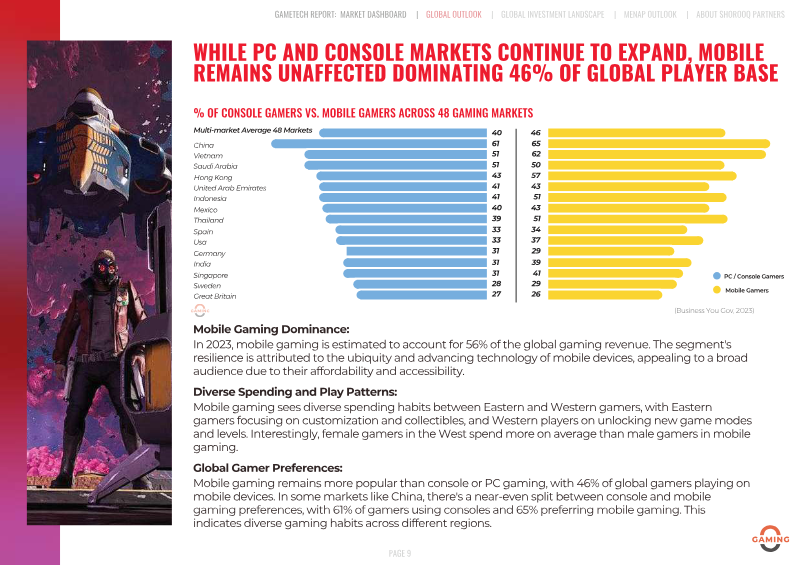
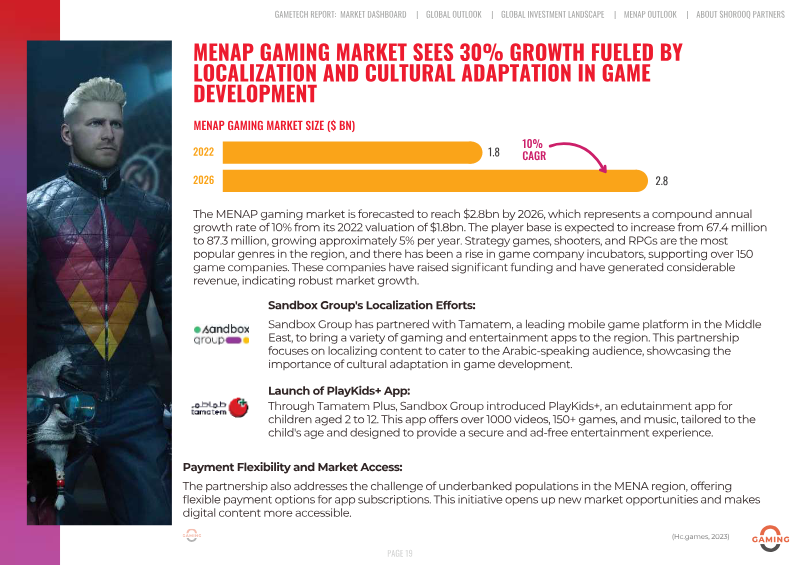
The analysis presents a forward-looking assessment of the global gaming market with a particular focus on the MENAP region, outlining the strategic opportunities that are reshaping the industry in 2024 and beyond.
- Investment activity in the gaming sector is currently targeting early-stage ventures from pre-seed to Series A, with typical ticket sizes ranging from $1 million to $8 million.
- Strategic investment is focused on three core pillars: high-value intellectual property, software solutions that reduce development costs, and ecosystems centered on user-generated content.
- The industry is experiencing a rapid convergence of emerging technologies, including AI, VR, cloud gaming, quantum computing, and GPU-as-a-Service, to accelerate content creation and distribution.
Savvy Games Group’s Ambition, Strategy, and Future
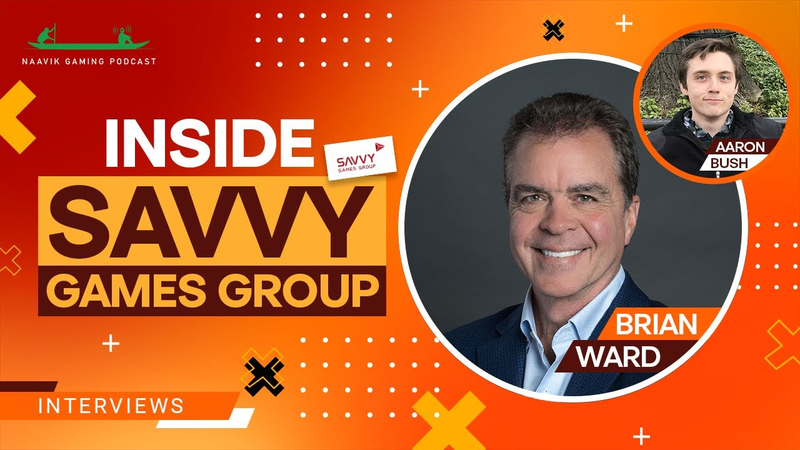
Savvy Games Group functions as a central pillar of Saudi Arabia’s Vision 2030, aiming to establish the Kingdom as a premier global hub for gaming and esports by 2033.
- Savvy Games Group aims to establish Saudi Arabia as a global gaming and esports hub by 2033 as a core component of the Vision 2030 initiative.
- The organization is executing a strategy to create 39,000 domestic jobs and develop a self-sustaining gaming infrastructure through internal studios like Steer Studios and the 966 entity.
- The group utilizes a decentralized management model that grants acquired studios, such as Scopely, creative autonomy while providing the capital necessary for long-term growth.
VC Funding Down / Fortnite Kid Safety / OpenAI Drama / Embracer Restructure
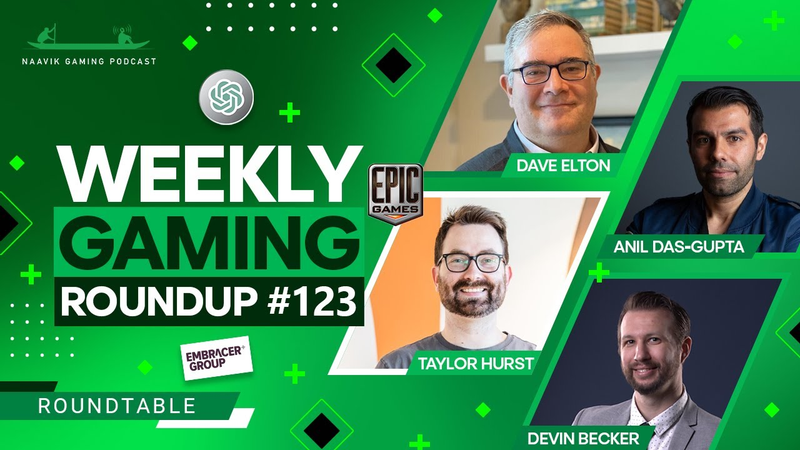
The global gaming industry is currently undergoing a period of intense structural correction, characterized by a sharp 68% year-over-year decline in venture capital funding during the third quarter.
- Venture capital funding for the global gaming industry plummeted by 68% year-over-year in Q3, signaling a shift away from pandemic-era growth patterns toward more scalable infrastructure and technology investments.
- Embracer Group is undergoing significant restructuring, including widespread layoffs and asset divestment, following an over-leveraged acquisition strategy.
- Major publishers are retreating from high-risk, high-cost live-service models on console and PC due to the difficulty of sustaining constant content updates and specialized architectural requirements.

BITKRAFT Summit 2023: Market Outlook -Zig when others Zag - Full Video
The BITKRAFT Summit 2023 market outlook provides a comprehensive analysis of the gaming industry’s venture capital landscape amidst broader macroeconomic uncertainty.
- Global gaming venture capital deal value has declined approximately 85% from 4Q21 to 3Q23, mirroring a broader 66% drop in aggregate global venture funding over the same period.
- Gaming venture funding has undergone a mean reversion, with current investment levels returning to pre-pandemic 2020 baselines, signaling that high-conviction investors remain active while lower-conviction players have exited.
- Asia has emerged as a dominant force in the gaming venture landscape, accounting for approximately 50% of global venture deal value and 49% of global deal volume.

WHAT HAPPENED TO THE WEB3 GAMING DREAM???
The Web3 gaming sector has undergone a profound transformation following the collapse of the speculative bubble that defined the 2021–2022 period.
- The Web3 gaming sector has shifted away from the speculative bubble of 2021–2022, which was driven by unsustainable play-to-earn models and venture capital demands for rapid exit liquidity.
- Developers are pivoting toward player-centric design, treating blockchain technology as an optional, secondary layer rather than a mandatory core requirement for gameplay.
- The industry is currently undergoing a maturation phase similar to the post-dot-com era, prioritizing product viability and standalone fun over hype-driven growth.

7 x GAME INDUSTRY TRUTHS with CHRIS HEWISH, PRESIDENT of XSOLLA
The global gaming industry has entered a period of structural realignment, transitioning from an era of cheap capital and hyper-growth to a disciplined environment defined by high interest rates and inflation.
- The gaming industry has shifted from a hyper-growth model to a disciplined environment focused on profitability, sustainable business models, and rigorous profit-and-loss management due to high interest rates and inflation.
- Personalized player experiences driven by behavioral economics can increase consumer spending by nearly 40% when grounded in psychological theory rather than industry imitation.
- Developers are increasingly adopting direct-to-consumer distribution models to bypass traditional storefront fees and reclaim margins in an environment of shrinking revenue.

M&A Master Class: Chris Petrovic Teaches Acquiring Great Gaming Companies
Mergers and acquisitions in the gaming industry serve as critical mechanisms for scaling operations, acquiring specialized talent, and integrating innovative research and development.
- Successful M&A in gaming requires a clear strategy focused on long-term value creation through 'forever franchises' rather than short-term financial engineering.
- The industry is trending toward a conglomerate model similar to major entertainment studios, where large entities manage diverse portfolios of specialized developers to maximize cross-platform IP.
- To preserve the creative momentum that makes a studio valuable, acquirers should utilize an 'opt-in' integration strategy that maintains operational autonomy while providing access to centralized resources.
Indie Starter Kit: The Basics of Founding a Successful Games Company
Establishing a successful games company requires a foundational commitment to a clear, compelling vision that transcends short-term industry trends or purely financial motivations.
- A compelling, large-scale vision is essential for attracting top-tier talent, investors, and partners, as it serves as a long-term motivator that transcends short-term industry trends like AI, NFTs, or VR.
- Maximize the internal value of your company before seeking external investment to retain greater control and leverage during negotiations.
- In the early stages, hire only self-motivated individuals who are more skilled than yourself, as the quality of your team defines the limits of what your studio can create.

Why Is Gaming Spend Not Up More? / M&A and Funding Trends / Earnings Season Begins
The gaming industry is currently navigating a period of stagnation characterized by a complex interplay of macroeconomic pressures and structural shifts.
- Gaming content spending in the U.S. is down 6% to 7% from 2021 levels when adjusted for inflation, despite a nominal year-to-date increase of 2%.
- M&A deal volume has plummeted by 60% year-over-year, reflecting a broader retreat of investment activity to pre-pandemic levels.
- Funding is heavily skewed toward early-stage ventures, with 85% of current deals concentrated in pre-seed and seed rounds, leaving late-stage studios facing down-rounds or closure.


Wyniki Finansowe 9M23
The financial results for the first nine months of 2023 for PCF Group S.A. reflect a period of transition characterized by a decline in profitability compared to the same period in 2022.
- PCF Group S.A. grew its total workforce to 722 employees by September 30, 2023, up from 612 in 2022 and 495 in 2021.
- The company maintains a global footprint with 473 employees in Europe and 249 in North America, operating across hubs including Warsaw, Newcastle, Dublin, Montreal, and New York.
- The organizational structure is heavily weighted toward production, with the majority of the 722 staff comprised of developers and quality assurance professionals.

The Economic Impacts of Video Game Technology Spillover: UK and Nordic Economies
The analysis quantifies how video-game technology generates measurable economic benefits beyond the entertainment sector, arguing that spill-over effects constitute a significant engine of growth for advanced-technology economies.
- In 2021, video game technology spill-overs contributed £1.3 billion in total output and £760 million to UK GDP, while sustaining 9,900 non-gaming jobs.
- Spill-over activity from the UK games industry accounts for 13% of the sector's gross value added and 19% of its total employment.
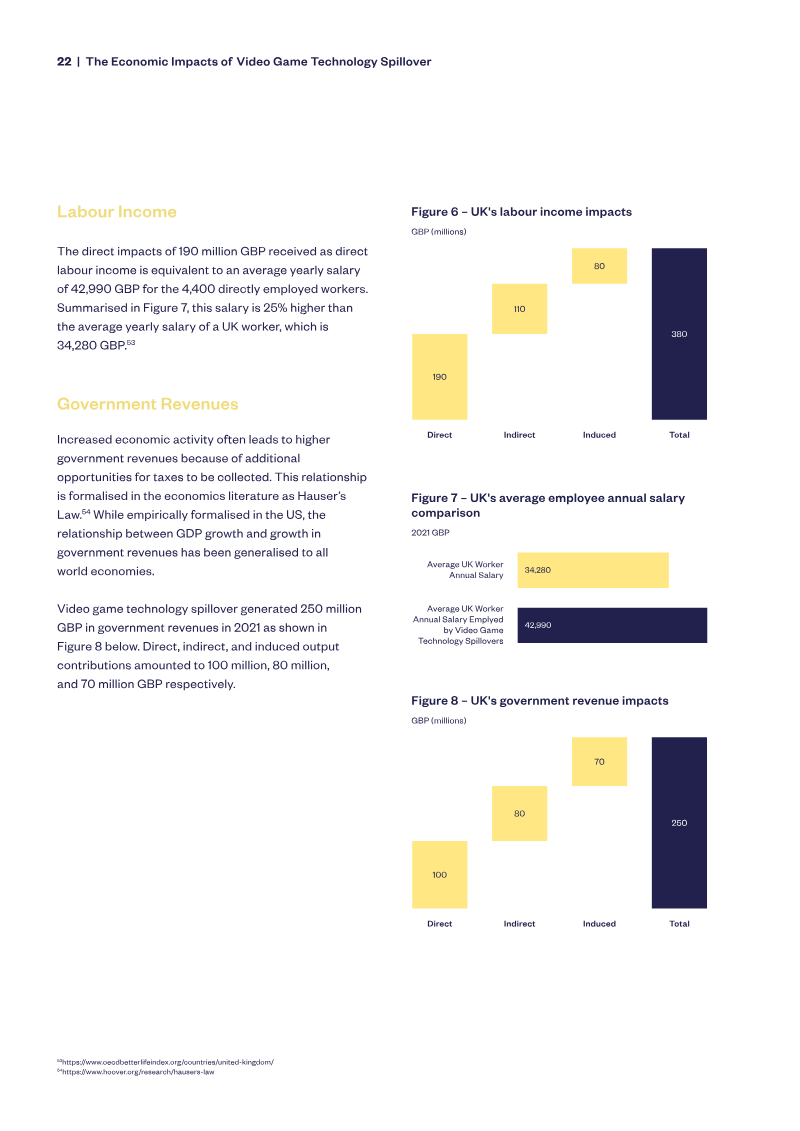
- Non-gaming roles supported by game technology—primarily in IT, business services, and energy—command average salaries 25% higher than the UK national mean.