Ai
64 documents·40 publishers
Documents

Report108 pages
Creative Industries in the UK Report
The United Kingdom’s entertainment market reached a historic peak of £11.1 billion in 2022, representing a 6.9% year-on-year increase and nearly doubling its total value since 2015. This growth is fundamentally underpinned by a comprehensive transition to digital consumption, with digital services now commanding a 91% market share across the video, music, and gaming sectors. While physical formats generally continue a long-term decline, specific niches such as vinyl and 4K UHD Blu-ray demonstrate notable resilience, with vinyl revenue surpassing CD sales for the first time this century.
The video games sector remains the largest individual segment, valued at £4.66 billion. Digital software sales account for 90% of this spend, led by mobile gaming and console downloadable content. Although hardware sales faced challenges due to global supply chain constraints, the market remains robust, with digital sales for major titles like Elden Ring and FIFA 23 significantly outperforming physical retail. Similarly, the video market reached a record £4.43 billion, fueled by a 17.6% surge in subscription video-on-demand services. Approximately 68% of UK households now maintain an average of 2.5 streaming subscriptions, cementing the dominance of online distribution.
The music industry mirrors these trends, with subscription streaming accounting for 84% of its £1.99 billion valuation. Interestingly, 2022 saw a nuanced recovery for physical retail as high-street specialists and independent shops experienced a 12.6% growth in sales following the normalization of post-pandemic trading. Despite this resurgence of local brick-and-mortar outlets, online channels still facilitate nearly 95% of total music spending. Strategic initiatives like Record Store Day and the implementation of advanced data tracking continue to support the industry's evolution, ensuring that both digital innovation and traditional retail advocacy remain central to the UK’s creative economy.
- The UK entertainment market reached a record £11.1 billion in 2022, a 6.9% year-on-year increase that nearly doubles its 2015 valuation.
- Digital services now dominate the landscape with a 91% market share across video, music, and gaming sectors.
- The video games sector is the largest segment at £4.66 billion, with digital software sales—driven by mobile and console DLC—accounting for 90% of that total.
- The video market grew to £4.43 billion, supported by a 17.6% surge in subscription video-on-demand services, with 68% of UK households now averaging 2.5 subscriptions each.
- Music industry revenue reached £1.99 billion in 2022, with subscription streaming accounting for 84% of total valuation.
+1
ERAJan 2023
Report33 pages
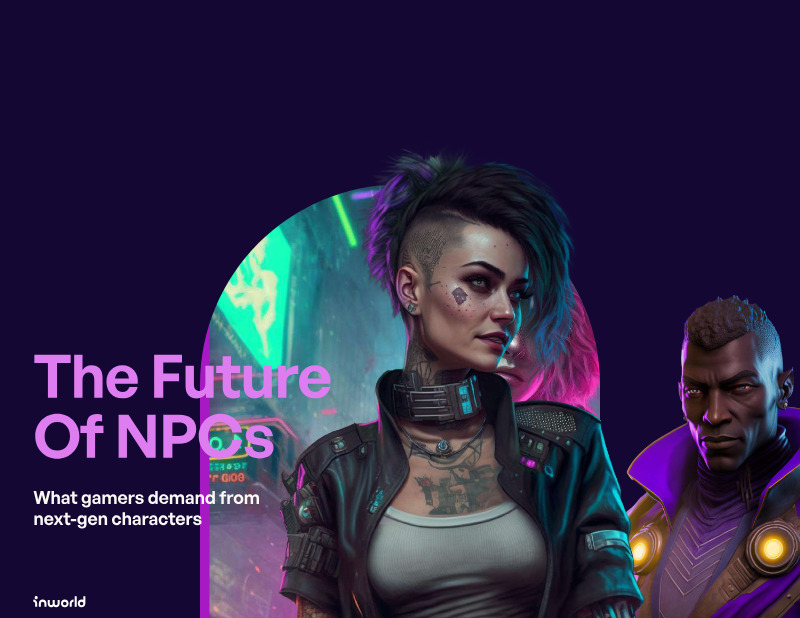
The Future of NPCs
This analysis explores the evolving role of non-playable characters (NPCs) in the video game industry, arguing that while graphical and narrative technologies have advanced, NPC interactivity has remained stagnant. The central thesis posits that integrating advanced AI—specifically large language models and machine learning—is essential for maintaining player immersion and driving commercial growth. By moving away from static dialogue trees toward dynamic, situational awareness, developers can address long-standing player frustrations regarding repetitive behaviors and scripted limitations.
Key findings indicate a significant market demand for sophisticated AI integration. Data shows that 84% of gamers view NPCs as vital to their experience, yet 52% are frustrated by repetitive dialogue. The transition to advanced AI NPCs appears to offer a clear financial incentive: 81% of players expressed a willingness to pay more for games featuring intelligent characters, and 79% stated they would be more likely to purchase a title with such features. Furthermore, 88% of respondents believe advanced AI would improve overall gameplay and immersion, suggesting that these technologies could increase player retention and session length.
The scope of the research focuses on 1,002 U.S.-based gamers aged 16 to 50 who play at least five to eight hours per week across PC, console, mobile, and VR platforms. Methodology involved a 20-minute survey conducted by Bryter Research, which included a demonstration of generative AI NPC capabilities to gauge participant reactions. The findings suggest that while role-playing and sandbox genres stand to benefit most, there is a near-unanimous consensus (99%) among surveyed gamers that advanced AI NPCs represent a positive value add for the industry.
- 99% of gamers view the integration of advanced AI into NPCs as a positive value add for the industry.
- 81% of players are willing to pay more for games that feature intelligent, AI-driven characters.
- 79% of gamers report an increased likelihood to purchase titles that incorporate advanced AI NPC capabilities.
- 52% of players express frustration with current NPC limitations, specifically citing repetitive dialogue as a primary pain point.
- 88% of players believe that advanced AI integration would directly improve overall gameplay and immersion, potentially boosting retention and session length.
+1
Inworld AIJan 2023

Report84 pages
DeNA Integrated Report 2022
DeNA is undergoing a strategic evolution to diversify its portfolio into two primary pillars: "Entertain," comprising Games and Live Streaming, and "Serve," focusing on Healthcare and Sports. This transition is supported by core competencies in artificial intelligence, agile in-house development, and a regional "Home Base" strategy centered in Yokohama. By leveraging high-potential technologies such as Web3 and health big data, the organization aims to balance stable cash flow from established entertainment properties with high-growth opportunities in medical data and global streaming markets.
Financial performance in fiscal year 2021 reflects this transition, with profit attributable to owners reaching 30.5 billion yen and a return on equity of 13.2%. While the Game Business experienced a revenue decline to 74.7 billion yen due to a lack of new hits, the Live Streaming segment saw a 1.4x revenue increase, and the Healthcare segment achieved its first quarterly profit. Strategic capital moves, including the sale of approximately half of the company's Nintendo shareholdings and the acquisition of subsidiaries like IRIAM and DATA HORIZON, have been implemented to increase asset efficiency and expand the medical database to over 15 million insured individuals.
Operational and governance structures have been modernized to support this multi-sector growth. The January 2022 establishment of a cross-departmental Product Development Department and a new Group Executive System aims to accelerate business execution and talent cultivation. Personnel strategies now emphasize specialized technical rankings to attract top-tier engineers, while executive compensation is increasingly linked to mid-to-long-term growth indicators. Looking ahead, the strategy focuses on releasing three to five global game titles annually, expanding the Pococha streaming service into the United States and India, and deepening the long-term strategic partnership with Nintendo to secure a robust global presence.
- DeNA is pivoting toward a dual-pillar strategy of 'Entertain' (Games and Live Streaming) and 'Serve' (Healthcare and Sports) to balance stable cash flow with high-growth sectors.
- Fiscal year 2021 financial results included 30.5 billion yen in profit attributable to owners and a 13.2% return on equity.
- The Game Business revenue declined to 74.7 billion yen due to a lack of new hits, while the Live Streaming segment grew 1.4x and the Healthcare segment achieved its first quarterly profit.
- Strategic capital reallocation included selling approximately half of the company's Nintendo shareholdings and acquiring subsidiaries like IRIAM and DATA HORIZON to expand its medical database to over 15 million insured individuals.
- The company is targeting an annual release cadence of three to five global game titles and is expanding the Pococha streaming service into the United States and India.
+1
DeNA Co.Sept 2022
Report7 pages
AI's Ever-Growing Presence in Gaming: $1.8B in VC Investments
Venture capital investment in AI-focused gaming startups has experienced significant growth, totaling $1.8 billion between 2020 and 2024. This influx of capital reflects a strategic shift in investor interest toward verticalized AI tooling designed to enhance scalability and production efficiency within the gaming sector. By 2024, AI-focused startups accounted for approximately 65% of total deal activity in gaming infrastructure, signaling a move away from broader platform bets toward specialized technological solutions.
The investment landscape is categorized into three primary segments: in-game content generation, development infrastructure, and other AI-focused applications. Content generation, which includes tools for creating assets, worlds, and narrative elements, leads the market with $1.2 billion in deal value across 119 deals. Development infrastructure, encompassing productivity tools, testing automation, and backend analytics, secured $0.4 billion across 72 deals. The remaining $0.2 billion was directed toward marketing, influencer tools, and player analytics.
Methodologically, the analysis focuses on startups that received venture financing between 2020 and 2024, specifically excluding studios that utilize AI solely for internal production. The data reveals a robust compound annual growth rate of approximately 35% in deal value from 2022 to 2024. While early-stage rounds dominate the market, the average check size has tripled over the five-year period, rising from $2.6 million in 2020 to $7.3 million by 2024. Andreessen Horowitz, Bitkraft, and Y Combinator emerge as the most active investors, with Andreessen Horowitz leading in both the number of deals and total invested capital.
- Venture capital investment in AI-focused gaming startups reached $1.8 billion between 2020 and 2024, with deal value growing at a 35% compound annual rate from 2022 to 2024.
- AI-focused startups now account for approximately 65% of all gaming infrastructure deal activity, reflecting a strategic pivot toward specialized verticalized tooling over general platform investments.
- In-game content generation tools lead the market with $1.2 billion in funding across 119 deals, followed by $0.4 billion for development infrastructure and $0.2 billion for marketing and analytics.
- Average investment check sizes have tripled over the five-year period, increasing from $2.6 million in 2020 to $7.3 million by 2024.
- Andreessen Horowitz, Bitkraft, and Y Combinator are the most active investors in the space, with Andreessen Horowitz leading in both total deal count and capital deployed.
+2
GDevJan 2020