Adventure reports and market data
Documents
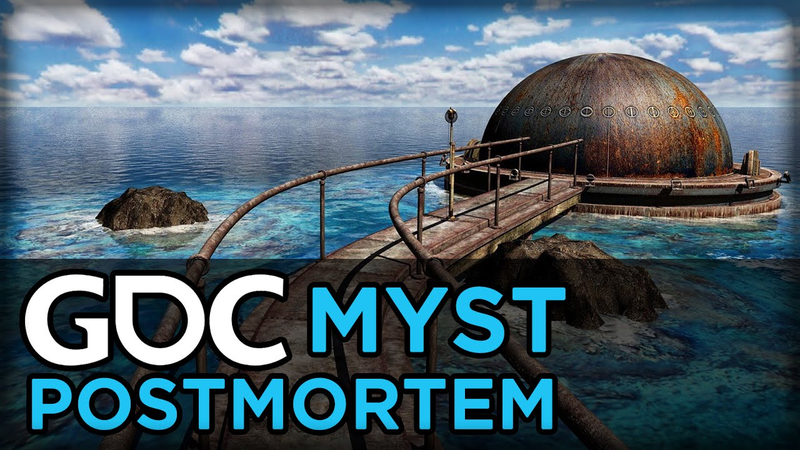
Classic Postmortem: The Making Of Myst
The development of Myst represents a foundational shift in interactive entertainment, prioritizing player agency and environmental immersion over traditional gaming conventions.
- The development of Myst prioritized environmental immersion and player agency over traditional gaming conventions, successfully targeting a broad, non-traditional audience.
- The team utilized a hub-and-spoke 'Ages' structure to manage the severe data constraints of early CD-ROM technology.
- Technical limitations regarding character interaction were addressed through creative narrative framing, such as using books to justify one-way communication.
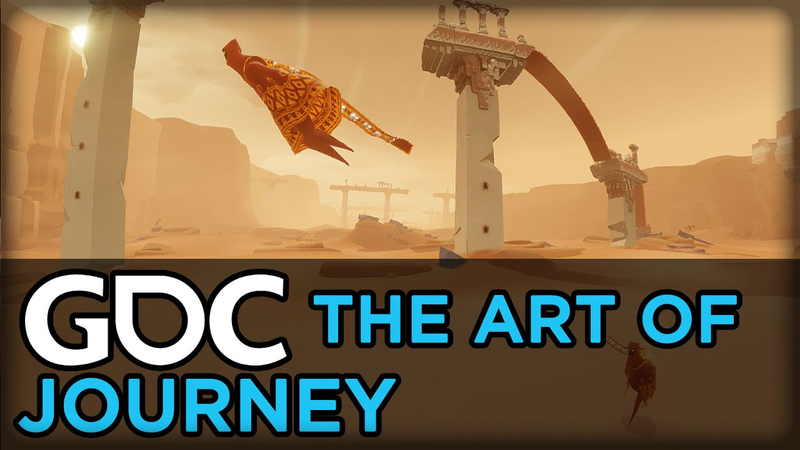
The Art of Journey
The art direction for the game Journey focused on creating an immersive, non-verbal experience through a minimalist and iconic visual language.
- The development team prioritized a minimalist, silhouette-driven aesthetic over high-detail models to enhance fluid movement and environmental interaction.
- Emotional narrative was achieved through a structured color progression, transitioning from muted, earthy tones to vibrant blues as a reward for the player.
- The removal of traditional UI and cutscenes in favor of player-controlled sequences significantly increased the emotional impact of the game's conclusion.

Simogo audio collaborator Jonathan Eng on his working process
The collaborative relationship between independent Swedish developer Simogo and composer Jonathan Eng highlights the potential for organic, community-driven professional partnerships in the game industry.
- Simogo and Jonathan Eng demonstrate that indie developers can successfully source talent through organic discovery on public gaming forums rather than traditional recruitment channels.
- The creative workflow relies on an iterative, long-term dialogue where the composer plays early game builds to ensure audio aligns with the evolving narrative and atmospheric requirements.
- For the project The Sailor’s Dream, the development and composition process spanned approximately nine to ten months of remote collaboration between Gothenburg and Malmö.
Games You Might Not Have Tried - ep 7 - Find New Games - Extra Credits
This analysis highlights a curated selection of video games that offer unique narrative, mechanical, or cultural value despite having flown under the radar of mainstream audiences.
- Games like The Talos Principle, This War of Mine, and Darkest Dungeon demonstrate that prioritizing thematic depth and innovative mechanics can create compelling experiences that transcend traditional high-budget polish.
- The Talos Principle utilizes puzzle-based gameplay to explore complex philosophical questions regarding the nature of human consciousness.
- This War of Mine offers a unique perspective on the genre by shifting the focus of survival simulation to the harrowing experiences of civilians in a war zone.
Mechanics and Tone - How Does Gameplay Relate to Story? - Extra Credits
The synthesis of gameplay mechanics and narrative is a fundamental pillar of effective game design.
- Gameplay mechanics must be developed as a foundational element of the narrative rather than an afterthought to ensure cohesive, immersive player experiences.
- Disjointed mechanics and narrative cause player disengagement, as users begin to perceive the story as an interruption to the gameplay loop.
- Effective mechanical design functions like literary style or artistic color palettes, grounding the player in the game’s emotional stakes and intended tone.
Big Bad - II: What Makes a Good Villain? - Extra Credits
The creation of compelling narrative villains in video games requires a departure from the traditional, one-dimensional "mechanics villain" archetype.
- Effective narrative villains must be driven by a coherent, logical philosophy they perceive as righteous, rather than being defined by inherent evil or one-dimensional mechanical roles.
- Characterization should be demonstrated through organic gameplay actions and set pieces rather than relying on exposition or monologues, which are less efficient in the interactive medium of gaming.
- Humanizing antagonists by giving them a fatal flaw—such as a misguided response to personal tragedy—forces players to question the morality of their own actions and deepens thematic resonance.
Why Games Do Cthulhu Wrong - The Problem with Horror Games - Extra Credits
The core conflict in adapting H.P. Lovecraft’s Cthulhu Mythos to video games lies in the fundamental incompatibility between the medium’s traditional empowerment fantasy and the existential horror of the source material.
- The fundamental conflict in Lovecraftian game design is the clash between the medium’s traditional empowerment fantasy and the source material's core theme of human insignificance.
- Treating cosmic entities like Cthulhu as defeatable bosses with health bars destroys the existential horror by making the threat mundane and manageable.
- Effective horror in this genre requires subverting player agency by ensuring that actions are ultimately inconsequential and survival is never guaranteed.

Games You Might Not Have Tried - ep 6 - Find New Games - Extra Credits
This analysis highlights a curated selection of video games chosen for their unique design perspectives, mechanical innovation, and ability to provide distinct player experiences.
- Games that prioritize unique design vectors—such as procedural generation, asymmetric roles, and unconventional storytelling—often provide more compelling player experiences than those following conventional industry trends.
- Titles like 'Cart Life' and 'Papers, Please' demonstrate that minimalist UI and moral decision-making mechanics are effective tools for fostering player empathy and simulating complex human experiences.
- Handheld titles like 'Crimson Shroud' and 'Etrian Odyssey IV' successfully adapt traditional tabletop and dungeon-crawling mechanics into modern, accessible formats.
Games You Might Not Have Tried - ep 5 - Find New Games - Extra Credits
This overview highlights a curated selection of video games chosen for their novelty, innovative mechanics, and unique narrative approaches rather than traditional metrics of production quality.
- Prioritizing creative risk-taking and unconventional design often yields more memorable and intellectually stimulating experiences than traditional high-production-value titles.
- Thomas Was Alone demonstrates how simple mechanics can serve as effective narrative metaphors, while The Unfinished Swan highlights the value of aesthetic innovation.
- Titles like Mark of the Ninja and FTL prove that refined genre-specific mechanics—such as stealth systems and roguelike structures—can define a game's success regardless of budget.
Raising the Dead - How Telltale's Walking Dead Revived Adventure Games - Extra Credits
Telltale Games’ The Walking Dead serves as a primary case study for the revitalization of the adventure game genre, demonstrating that the format remains viable when developers prioritize narrative depth over outdated mechanical tropes.
- Telltale Games’ The Walking Dead successfully revitalized the adventure genre by prioritizing narrative depth and character development over outdated mechanical tropes.
- The game achieved its success by removing traditional barriers such as inventory management, pixel hunting, and convoluted puzzle-solving.
- By stripping away legacy mechanics, the developers modernized the adventure format to focus on the core appeal of immersive storytelling rather than mechanical constraints.
Games You Might Not Have Tried: 16-bit - Find New Games - Extra Credits
The 16-bit era of gaming contains numerous high-quality titles that remain under-appreciated by modern audiences.
- The 16-bit era on the SNES and Sega Genesis contains sophisticated design elements, such as branching narratives and complex character progression, that remain foundational to modern game development.
- Starflight serves as a critical historical precursor to modern space-faring RPGs like Mass Effect by establishing early exploration-based mechanics.
- E.V.O.: Search for Eden introduced unique biological evolution systems, while Warsong functioned as a key evolutionary step for the tactical strategy genre.
The Hero's Journey - I: How Journey Crafts a Compelling Narrative - Extra Credits
The hero’s journey, a narrative framework popularized by Joseph Campbell in 1949, serves as a foundational archetype in modern storytelling.
- The hero's journey framework is most effective when used as a diagnostic tool for character development rather than a rigid, prescriptive template for plot.
- Interactive media can elevate the hero's journey by forcing players to physically experience emotional narrative beats through gameplay mechanics.
- In 'Journey', the 'Refusal of the Call' is represented by environmental constraints like winds that push players back toward the objective, turning technical limitations into meaningful narrative moments.