1 free read left. Create a free account for unlimited reading + AI research.
Create free account
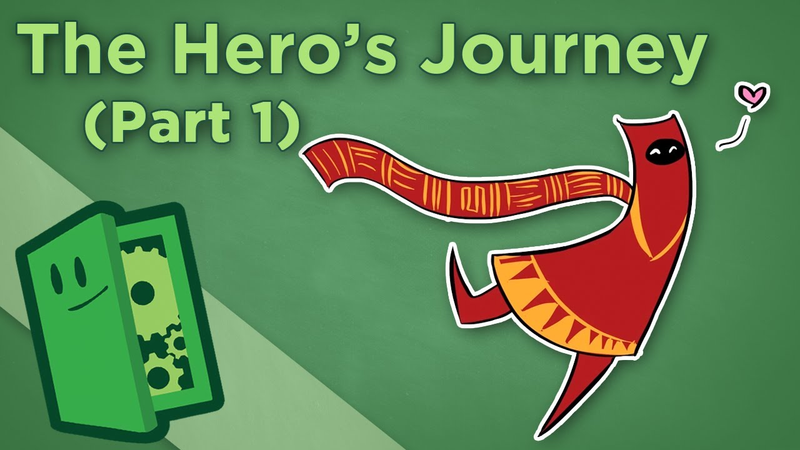
The Hero's Journey - I: How Journey Crafts a Compelling Narrative - Extra Credits
Key insights
6 takeaways- 01Joseph Campbell’s hero's journey, popularized in 1949, remains a foundational archetype that can be adapted to transcend the passive observation typical of film and literature.
- 02The hero's journey framework is most effective when used as a diagnostic tool for character development rather than a rigid, prescriptive template for plot.
- 03The 'Call to Adventure' should be a simple, clear signal, such as the mountain beacon in 'Journey', to allow players to focus on internal character transformation rather than complex exposition.
- 04Interactive media can elevate the hero's journey by forcing players to physically experience emotional narrative beats through gameplay mechanics.
- 05In 'Journey', the 'Refusal of the Call' is represented by environmental constraints like winds that push players back toward the objective, turning technical limitations into meaningful narrative moments.
- 06By integrating narrative beats into mechanics, designers can transform potentially immersion-breaking elements, like invisible walls, into experiences of inevitability and character growth.
Ask AI about this video
Transcript
[Music] before we begin please join me in welcoming back our good friend Lely whom you may remember as The Talented lady behind the webcomic name game which you can find at its new home namame comic.com anyway she'll be tackling art duties for us today high five there are a handful of fundamental concepts that pervade modern entertainment whether it's Games movies books or graphic novels there are some ideas that you see pop up again and again today and next week we're going to be talking about one of those the hero's journey the hero's journey is a concept originated by Joseph Campbell in his 1949 book the hero with a thousand faces the basic tenant is that there are certain commonalities to how cultures around the world formulate their myths and stories the extrapolation that many modern entertainers make for better or worse is that because so many of our foundational myths may follow the pattern outlined by Campbell in the hero with a thousand faces if they emulate this pattern it'll help them to create something that resonates with any audience perhaps the most famous example of this is the
classic Star Wars Trilogy Lucas has repeatedly said how much he relied on the hero's journey when crafting the Star Wars Mythos but you see the hero's journey in pop culture all the time in fact it's shockingly common in RPGs Final Fantasy games are littered with the hero's journey fantasy novels tend to take it as a given even most of your summer Blockbusters end up using it in some form but like any theoretical concept it's a lens a way of looking at certain story lines and ideas it's a tool to help us gain perspective and guide us when our own writing is rudderless but like any lens its value is in narrowing our Focus so there's a lot that it leaves out in fact many problems with modern storytelling can be attributed to viewing the hero's journey as a formula for how to create rather than a tool to help us examine our Creations it's how you get so many Bal fantasy Adventures or syy feeling action flicks but that said there are some excellent uses of it that show why this is such a powerful concept so let's go to one of those and use it to explore what the hero's journey actually is without further Ado yes the hero's journey is traditionally separated into a series of individuated stages Journey follows these so closely that I'm pretty sure they're giving us a hint at what they
were doing with the title but what makes Journey unique amongst all the various products that rely on the hero's journey is that it really makes you live each of these stages rather than simply observing someone else going through the process so we're going to take a look at each of these stages in Journey and see how they used them there in order to explore the hero's journey as a whole we're going to try to explore how we can use this concept in games to create unique and meaningful play rather than Samy stories about a boy who has to embark on an Epic Quest and save the world and so on you know the tune the first stage in the hero's journey is the Call to Adventure this is the moment that signals to the hero that they have to move beyond the ordinary and everyday existence they once had and pursue some larger goal it's Princess Leia's hologram in Star Wars basically in Journey this is the very opening it's the star that you follow that shows you your way to the mountain this sort of agent a sign guiding the hero to Adventure is very common in the hero's journey in fact Campbell often talks about the Call to Adventure often being a vision of the Journey's goal a sort of coming to awareness of an internal objective you didn't know you had the key here is to not complicate The Call to Adventure make it interesting have it kick in our understanding of the
ordinary but don't have it be something too complex it can be an old man showing up in your doorstep with a pack of dwarves or a kindly Uncle giving you a ring it can be finding a sword and a stone or a king ordering you to go get a golden fleece but if you want to use the hero's journey effectively keep this part simple we don't need much to buy into the hero's journey by definition we're going to be leaving the realm of the ordinary anyway so we don't need a very complex setup to get us to go on a journey the real meat what's interesting about the hero's journey is how the hero tackles that journey and deals with leaving the world they know so save your complexity for the character of the hero rather than for how they get into the adventure in the first place the second step in the hero's journey is the refusal of the call it's the moment the hero turns away from his Destiny and tries to return to the life he knew in anything following the hero's journey Paradigm this is either impossible or utterly calamitous usually it's the moment that we get to see the heroes reluctance and we get to empathize with them as a human being it's the remove this cup from me moment the best examples of anime tend to execute on this well using an attempt to deny Destiny and the futility of doing so to humanize characters who are substantially more powerful than will ever be this is the stage that keeps us
from seeing the characters in the story simply as all powerful plot devices and instead lets us associate the story with our personal lives and to be honest when we first played Journey we didn't see this stage in there we even dismissed it as impossible to achieve this level of characterization without dialogue and a prescripted narrative but one day while James was teaching the design Club at digipen one of his students pointed out to him that in fact pretty much everyone experiences the refusal of the call and journey kind of blew our minds actually the student said that at some point pretty much everybody playing Journey deviates from the prescript scripted path and tries to explore the desert only to be blown back towards their inevitable and unavoidable goal intrigued by this idea James then watched a half a dozen people play Journey and sure enough everyone did it within the first 30 minutes this was incredible to us as from a mechanics as metaphor perspective the designers were having you live the hero's journey and experienc the frustration of the refusal of the call in a way that merely telling you about it in a game context could never do this meant that they had taken an inherently negative constraint of their game that they couldn't build a big enough world or deliver the experience they wanted to while letting the player EXP L to their heart's
content and they gave that meaning thereby making their invisible walls not as terrible and immersion breaking as the invisible walls you find in many games now that's design okay I can see by the way things are going that we are not covering all of this in one show next week I promise we'll get through the rest talk about how Journey delivers on them and how we can use that in other games see you then [Music] oh [Music]
Summary
The hero’s journey, a narrative framework popularized by Joseph Campbell in 1949, serves as a foundational archetype in modern storytelling. While frequently utilized as a rigid formula in games, films, and literature, the model is most effective when treated as a diagnostic tool for character development rather than a prescriptive template for plot. By examining the game Journey, it becomes clear that interactive media can transcend passive observation by forcing players to physically experience the emotional beats of the hero’s journey through gameplay mechanics.
The first stage, the Call to Adventure, functions as a simple, clear signal that draws the protagonist away from the ordinary world toward a specific objective. In Journey, this is represented by the visual beacon of the mountain, which provides an immediate, intuitive goal without requiring complex exposition. By keeping the initiation simple, creators allow the player to focus on the internal transformation of the character rather than the mechanics of the setup.
The second stage, the Refusal of the Call, is essential for humanizing a protagonist by demonstrating their reluctance to accept destiny. In many narratives, this is a scripted moment of hesitation; however, Journey integrates this concept through player agency. When players attempt to deviate from the intended path, the game’s environmental constraints—such as winds that push the player back toward the objective—function as a mechanical manifestation of the refusal. By turning a technical limitation into a narrative beat, the designers transform an otherwise immersion-breaking invisible wall into a meaningful experience of frustration and inevitability. This approach demonstrates how game design can use mechanics as a metaphor to deepen the player's connection to classic narrative structures.




















Comments