Action-Adventure reports and market data
Documents
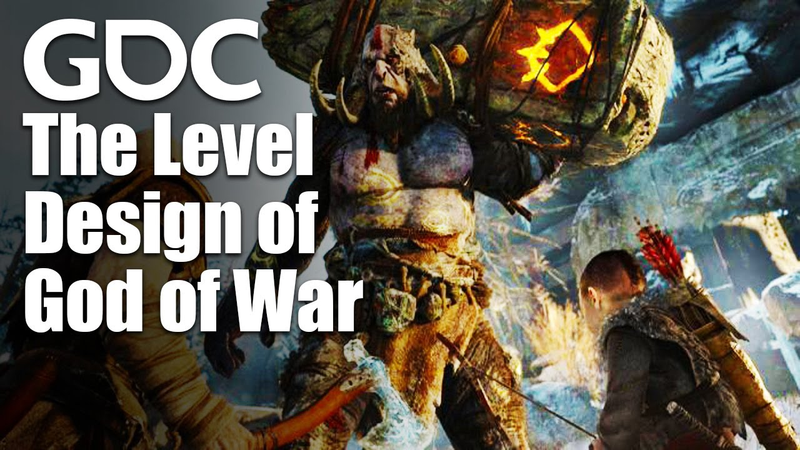
The Level Design of God of War
The transition of the God of War franchise from a fixed-camera action series to an immersive, modern experience is anchored by three core pillars: combat, narrative, and exploration.
- The game’s design is built on three core pillars—combat, narrative, and exploration—which serve as a consistent lens to ensure environmental cohesion and seamless transitions between gameplay and cinematic storytelling.
- Development teams utilized standardized architectural metrics based on specific unit values for movement and spacing to ensure technical consistency and creative flexibility across the entire game world.
- To maintain pacing and prevent repetition, the design team introduced new mechanics as thematic anchors every 90 to 120 minutes.
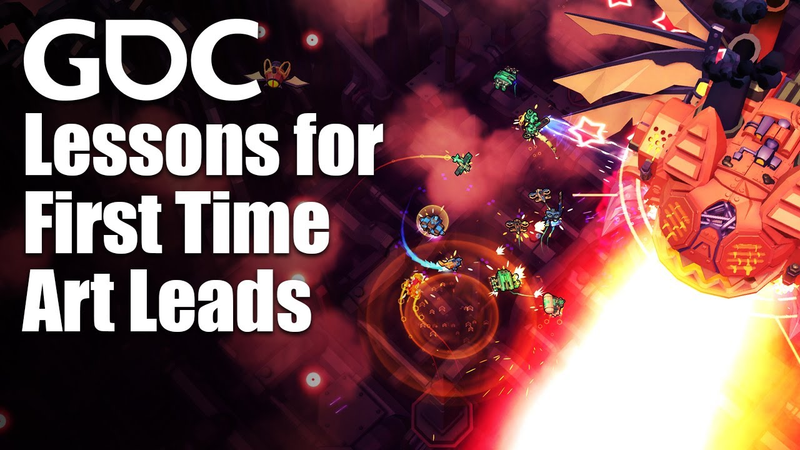
What They Don't Teach You in Art School: Lessons for First Time Leads
Transitioning from an individual contributor to a team lead in the game industry requires a fundamental shift in focus from personal artistic output to the cultivation of team health and project stability.
- Transitioning to a lead role requires shifting focus from personal artistic output to service-oriented management, prioritizing team health and project stability over individual technical tasks.
- Operational efficiency is maintained by using rigorous data collection for scheduling, detailed asset checklists for cross-departmental handoffs, and strict time limits on brainstorming sessions.
- An optimal team size is approximately five members, which facilitates more personalized management and clearer communication channels.
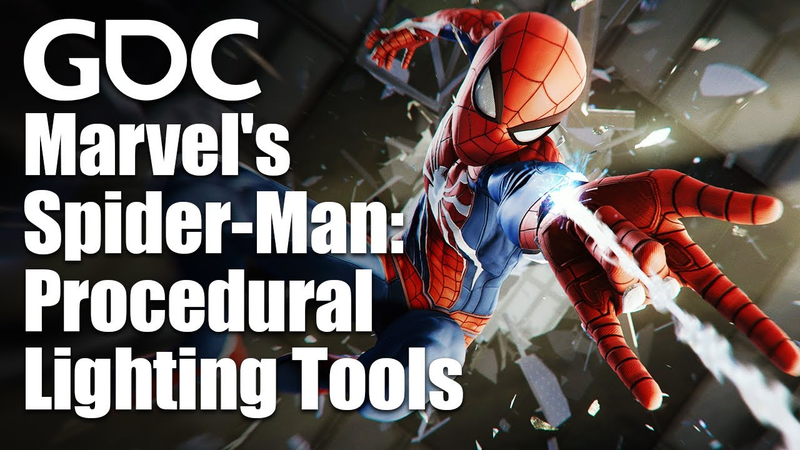
Marvel's Spider-Man: Procedural Lighting Tools
The development of Marvel’s Spider-Man relied on sophisticated procedural workflows to manage the immense scale of a digital Manhattan while maintaining high visual fidelity.
- Insomniac Games utilized procedural workflows to manage the open-world environment of Marvel's Spider-Man, which is divided into 726 individual tile regions defined by JSON zone files.
- To optimize lighting, the team procedurally placed street lamps based on sidewalk normals and fixed curb distances, while using signed distance functions to ensure light probes were positioned outside of building volumes.
- The studio implemented an 'imposter' system to replace high-resolution building geometry with single-mesh models and texture atlases, significantly reducing memory overhead by storing albedo at full resolution and spec/gloss/emission at half resolution.

Wind Simulation in God of War
Achieving a dynamic and immersive environment in God of War required the implementation of a sophisticated three-tiered wind system.
- Santa Monica Studios implemented a 3D GPU fluid simulation for God of War (2018) to create a dynamic, living world where wind affects particles, hair, fur, cloth, and vegetation.
- The wind simulation utilizes a uniform 3D volume grid, optimized for a strict GPU time budget by separating diffusion and advection passes per axis to reduce register pressure and improve asynchronous scheduling.
- To handle contention during multi-threaded GPU writes, the team used a 16.16 fixed-point format with atomic integer additions, saving approximately 130 microseconds in high-contention scenarios.

Can You Make a Good Game Without Good Play Mechanics?
Modern game design is evolving beyond a strict reliance on traditional play mechanics, shifting toward a broader definition of interactive experiences that prioritize player agency and emotional resonance.
- Game design should extend beyond traditional play mechanics, as fun can be derived from exploration, social interaction, and creative expression rather than just mechanical challenges.
- Exploration can be gamified without traditional obstacles by using 'itemization' and 'visualization,' such as using checklists or stamps to define boundaries and provide a sense of progress in open-world environments.
- In role-playing design, developers must distinguish between 'being you' (allowing player personality expression) and 'being him/her' (maintaining a character's consistent identity), ensuring that player choices align with the character's established persona to preserve immersion.

Vehicle Physics and Tire Dynamics in Just Cause 4
The vehicle physics system in Just Cause 4 was designed to support over 100 diverse vehicle types within a large-scale open-world environment while maintaining a 30Hz simulation rate.
- To maintain stability in a 30Hz simulation, Avalanche Studios implemented friction clamps that prevent the physics model from diverging when applying high levels of grip.
- The team utilized a 'useful mass' heuristic to calculate friction clamping, which determines the ratio of vehicle mass represented by a single tire based on its relative wheel load.
- By decoupling the tire model from strict realism, developers can use steepness in friction curves to simulate 'feel'—where the slope represents grip levels and the leveling off of the curve simulates the sensation of sliding.
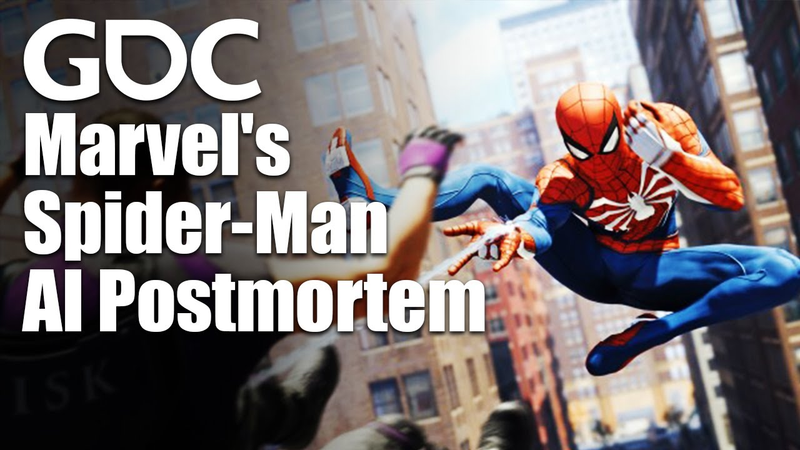
Marvel's Spider-Man AI Postmortem
The development of Marvel’s Spider-Man necessitated a fundamental shift in artificial intelligence architecture to manage the complexity of 64 distinct enemy classes within an open-world environment.
- Insomniac Games utilized a data-driven approach for combat AI, where designers configured complex move sets and combos through data files rather than directly editing behavior trees or finite state machines.
- To prevent combat from feeling stagnant, the team implemented an 'intensity meter' that tracks enemy aggression and triggers special attack sequences or simultaneous strikes when the meter fills.
- The AI combat system manages enemy positioning using a 'hill climber' algorithm that iteratively pushes potential bot locations radially outward to maintain optimal spacing and keep enemies on the navigation mesh.
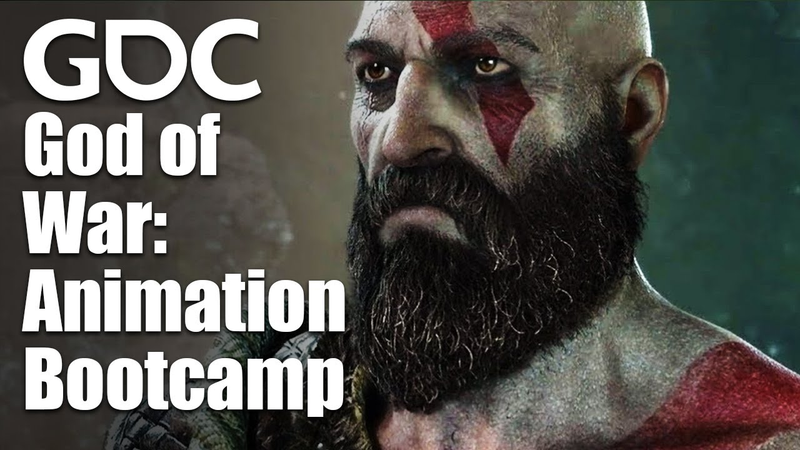
God of War: Breathing New Life into a Hardened Spartan
The 2018 reimagining of God of War represents a fundamental shift in character design and narrative delivery, moving the protagonist, Kratos, from a stylized, rage-driven figure into a grounded, relatable mentor.
- The 2018 God of War reboot transitioned from stylized, rage-driven character design to realistic, human-like models to explore themes of fatherhood and vulnerability.
- The production utilized a theater-inspired model, incorporating extensive rehearsals, table reads, and live-action pre-visualization to support a continuous one-take narrative style.
- Full-performance capture—recording body, face, and audio data simultaneously—was implemented to ensure consistent emotional chemistry between Kratos and Atreus.
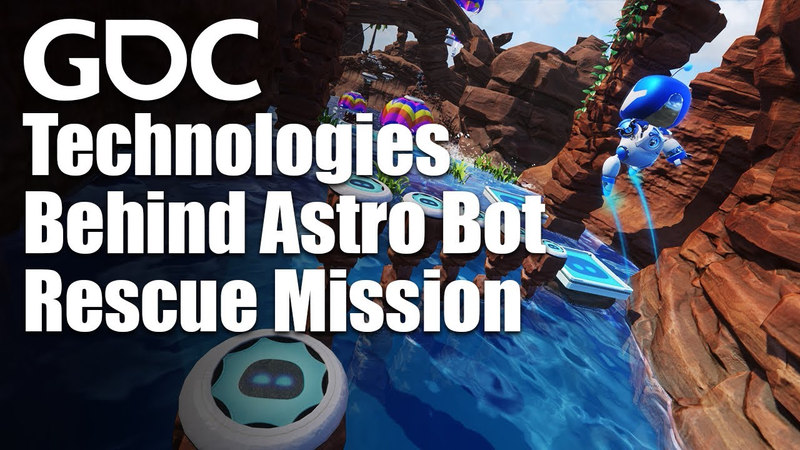
Taming Technologies Behind Astro Bot Rescue Mission
The technical development of the virtual reality platformer Astro Bot Rescue Mission focused on maintaining high performance and user comfort within the constraints of the PlayStation VR hardware.
- To prevent motion sickness on PlayStation VR, the team maintained a constant 60 FPS, scaled to 120Hz via reprojection, throughout the 18-month development cycle.
- Performance was optimized by manually segmenting levels into 30-meter sections to manage visibility and draw calls effectively.
- The rendering pipeline utilized a forward approach with MSAA and a dynamic resolution system that adjusted based on previous frame GPU times to ensure stability on PS4 Pro.
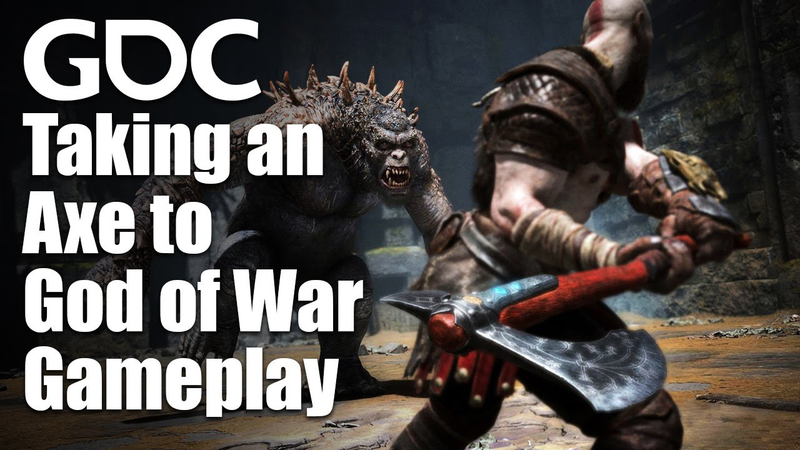
Taking an Axe to God of War Gameplay
The reinvention of the God of War combat system centers on transitioning from a wide-angle, crowd-clearing perspective to an intimate, third-person experience that emphasizes deliberate, tactical engagement.
- The combat system was redesigned from a wide-angle, crowd-clearing perspective to an intimate, third-person experience that prioritizes tactical, deliberate engagement.
- The transition from the Blades of Chaos to a recallable axe shifted the core gameplay loop toward precision, weight, and fluid, interruptible move sets.
- A new stun-based mechanic replaced traditional health-gated grabs, requiring players to manage targets strategically and utilize environmental interactions.
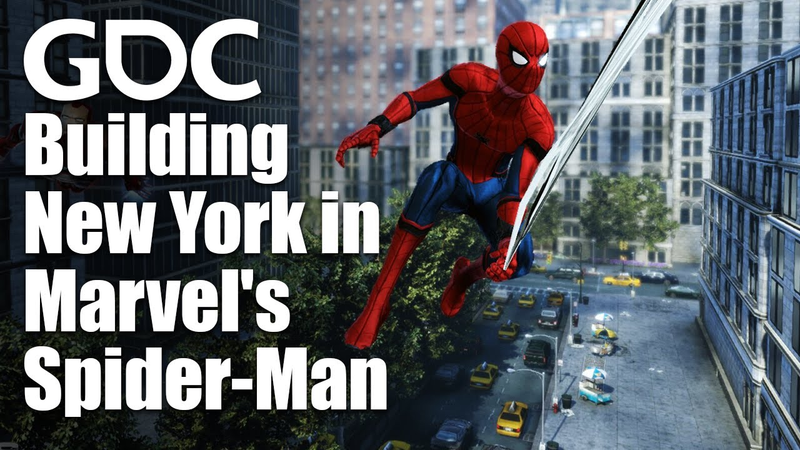
Building New York in Marvel's Spider-Man: It's Still Just Level Design
Creating a compelling open-world experience requires a rigorous, goal-oriented design framework that balances architectural realism with the demands of fluid player movement.
- Effective open-world design requires a rigorous hierarchy of objectives that balances architectural realism with the specific, fluid movement requirements of the player.
- Early-stage prototyping using scaled-down testbeds is essential to establish critical spatial metrics, such as building heights, street widths, and block sizes, before full-scale production.
- Strategic adjustment of environmental boundaries and traffic systems is necessary to resolve conflicts between realistic city layouts and the high-speed traversal mechanics required by the game.

AMA: Brian Horton, Creative Director on Insomniac Games’ Marvel’s Spider-Man: Miles Morales
Marvel’s Spider-Man: Miles Morales serves as a focused character study that establishes Miles as a distinct hero through unique bioelectric powers and a narrative deeply rooted in the protection of his Harlem community.
- Insomniac Games utilized a focused, intimate narrative scope to establish Miles Morales as a distinct hero while maintaining high production quality during the logistical constraints of the global pandemic.
- The development team differentiated Miles from Peter Parker by creating unique combat styles and traversal animations, supported by specialized motion capture techniques.
- Authenticity in the Harlem setting was achieved through direct collaboration with local residents and story consultants, alongside the integration of American Sign Language via professional ASL actors.