Market Analysis
Report
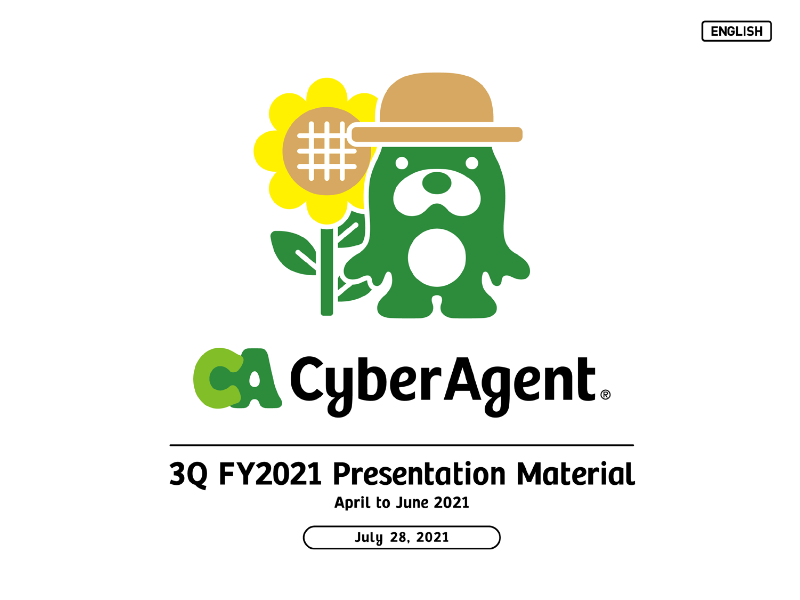
1Q FY2024 Presentation Material
The presentation outlines CyberAgent’s fiscal‑year 2024 first‑quarter performance, emphasizing a robust rebound across its three core businesses—Internet advertising, media (ABEMA), and game development. Consolidated sales reached ¥193 billion, up 15.2 % year‑over‑year, while operating profit climbed to ¥6.28 billion, a 7.5‑point increase from the prior year’s loss. The advertising arm delivered ¥105.3 billion in revenue, up 10.1 % YoY, and an operating profit of ¥5.6 billion, reflecting a 13.3 % YoY gain and sustained improvement in operating‑margin efficiency (OPM). Media operations posted ¥42.7 billion, a 27.8 % YoY rise, though operating loss narrowed to ¥0.9 billion, driven by reduced losses in ABEMA‑related activities. Game sales hit ¥45.0 billion, up 10.1 % YoY and 6.5 % QoQ; operating loss fell to ¥3.4 billion, a 32.9 % YoY decline and 42.4 % QoQ improvement, thanks to a new hit title. Financial statements show total assets of ¥468.7 billion and shareholders’ equity of ¥129.0 billion, with cash deposits at ¥184.8 billion. SG&A expenses rose 8.1 % YoY to ¥43.7 billion, while headcount increased to 7,336 employees. Strategically, the company targets a “growth phase” with new digital ad platforms (e.g., ANA Moment Ads), continued investment in ABEMA, and a pipeline of high‑quality games such as “Jujutsu Kaisen Phantom Parade.” Forecasts indicate that FY2024 operating profit will reach ¥30 billion, with sales projected at ¥750 billion. The presentation stresses a commitment to enhancing monetization, AI‑driven advertising efficiency, and extending game lifecycles to secure long‑term profitability.
CyberAgent



Report
Michigan Game Development Landscape Report
The Michigan game development landscape is characterized by a concentrated cluster of studios primarily situated within the Ann Arbor region. As of late 2020, the local industry ecosystem reflects a specialized hub of creative and technical talent focused on game design and interactive media. This geographic focus suggests a strategic alignment with the state’s broader technology and research corridors, leveraging proximity to major academic institutions to sustain a pipeline of skilled labor and innovation in software development. The industry presence in this territory encompasses a variety of independent and established entities engaged in the production of digital entertainment. While the sector contributes to the regional economy through high-skill job creation and intellectual property development, the concentration in Ann Arbor highlights a specific localized strength rather than a broad statewide distribution. This centralization facilitates networking, collaborative opportunities, and a shared infrastructure that supports the lifecycle of game production from initial concepting to market release. The data indicates that the Michigan gaming sector is positioned as a growing component of the Midwestern technology scene. By fostering a dedicated community of designers and developers, the region maintains a competitive edge in the national landscape of interactive entertainment. The focus on game design specifically underscores a commitment to the creative aspects of the medium, ensuring that the local industry remains integrated with global trends in user experience, narrative development, and technical execution within the gaming market.
International Game Developers’ Association