Report38 pages
Landscape Shifts in IP Gaming: An Analysis of How the Competitive Landscape of IP in Gaming Has Shifted in 2023
The global gaming landscape in 2023 was defined by the overwhelming commercial dominance of established intellectual properties, which accounted for every top launch on PC and console. Licensed mobile titles generated $16 billion in gross revenue, driven largely by the unprecedented success of Monopoly GO!, which reached $1 billion in revenue in under seven months. This performance propelled Hasbro and Scopely to the top of the corporate and publisher rankings, respectively. While video game and anime IPs continue to command the largest market share—particularly in Asia where they account for 70% of downloads—board game IPs experienced a significant revenue surge within the United States.
Strategic integration of IP serves as a critical driver for both monetization and marketing efficiency. Role-playing games remain the most lucrative genre for licensed content due to the effectiveness of gacha-based monetization, while cross-platform collaborations and limited-time events continue to expand audience reach. Furthermore, established franchises demonstrate superior cost-efficiency compared to original titles, achieving high sales volumes with significantly lower marketing expenditures. This suggests that leveraging recognized brands provides a vital competitive advantage in an increasingly crowded marketplace.
Despite the high visibility of major hits, the mobile IP market remains largely unsaturated, with licensed titles currently accounting for less than 20% of total revenue across most genres. While RPGs and social casino mechanics have proven successful, casual categories such as puzzle and simulation games represent significant untapped opportunities for future integration. Growth in the sector is increasingly dependent on high-profile new launches rather than the expansion of legacy titles, indicating that the strategic selection and execution of new IP partnerships will dictate the next phase of industry expansion.
- Established intellectual properties dominated the 2023 market, accounting for every top-performing launch on both PC and console platforms.
- Licensed mobile titles generated $16 billion in gross revenue in 2023, with Monopoly GO! reaching $1 billion in under seven months to drive Hasbro and Scopely to the top of industry rankings.
- Video game and anime IPs dominate the Asian market with a 70% share of downloads, while board game IPs saw a notable revenue surge in the United States.
- Established franchises offer superior cost-efficiency over original titles, achieving higher sales volumes while requiring significantly lower marketing expenditures.
- The mobile IP market remains largely untapped, as licensed titles currently account for less than 20% of total revenue across most genres.
+1
Sensor TowerJan 2024
Report103 pages
State of Mobile 2024
The global mobile economy experienced a significant recovery in 2023, with consumer spending rising 3% to $171 billion and daily engagement surpassing five hours per user in leading markets. While mobile gaming faced a slight 2% contraction in spending due to economic headwinds and a shift toward longer title life cycles, the broader industry was bolstered by a resilient non-gaming sector. This growth was primarily driven by social media "tipping," video streaming subscriptions, and the rapid emergence of generative AI. Mobile advertising also remained a cornerstone of the ecosystem, reaching $362 billion with projections to exceed $400 billion in the coming year.
The landscape is increasingly defined by a shift in consumer behavior and monetization strategies. Non-gaming apps reached a record $64 billion in spend, led by TikTok, which became the first non-game app to surpass $10 billion in lifetime revenue. In contrast, the gaming market saw a decline in new hit releases, with the industry consolidating around established high-fidelity IPs and social multiplayer genres like Creative Sandbox and Battle Royale. Despite this consolidation, breakout successes like Monopoly GO and Honkai: Star Rail demonstrated that high-quality debuts can still disrupt saturated markets.
Across various sectors, mobile integration has reached unprecedented levels. Travel and ticketing apps saw record-breaking demand as consumers returned to in-person events, while the finance sector experienced a surge in personal loan apps and "Super Apps" amid global inflation. Retail also underwent a structural shift as China-based platforms like Temu gained significant global market share. Ultimately, the 2023 data reflects a mature mobile market where growth is increasingly tied to sophisticated AI integration, creator-driven economies, and the transition of traditional services into comprehensive digital hubs.
- The global mobile economy grew 3% to $171 billion in 2023, supported by a $362 billion advertising market projected to exceed $400 billion in the coming year.
- Mobile gaming spending contracted by 2% as the industry consolidated around established high-fidelity IPs and social multiplayer genres, though titles like Monopoly GO and Honkai: Star Rail proved that high-quality debuts remain viable.
- Non-gaming apps reached a record $64 billion in consumer spend, highlighted by TikTok becoming the first non-game app to surpass $10 billion in lifetime revenue.
- Daily user engagement in leading markets surpassed five hours, driven by social media tipping, video streaming subscriptions, and the rapid integration of generative AI.
- The finance sector saw a surge in personal loan apps and 'Super Apps' as a response to global inflation, while travel and ticketing apps experienced record-breaking demand.
+1
data.aiJan 2024

Report56 pages
Paving Ways to the Games Industry: 2024
The Swedish games industry stands at a critical juncture, balancing rapid expansion with systemic structural challenges that threaten its long-term competitiveness. As of 2022, the sector encompasses 939 companies and over 8,400 employees, yet it remains heavily reliant on international labor to compensate for a persistent domestic skills gap. The primary thesis posits that sustainable growth depends on transitioning from a reliance on traditional recruitment toward a more inclusive, flexible, and collaborative ecosystem that integrates diverse talent, including newly arrived immigrants and individuals from non-traditional backgrounds.
To bridge the gap between current educational outputs and industry requirements, the sector must overcome significant bureaucratic and social barriers. While a robust network of regional incubators and innovation hubs provides a foundation for entrepreneurship, the industry is hindered by restrictive migration policies, a lack of standardized skill validation for international applicants, and insufficient senior mentorship for junior staff. Addressing these issues requires the implementation of innovative educational models, such as micro-credentials and intensive reskilling programs, which prioritize professional potential over rigid, legacy hiring requirements.
Ultimately, the industry’s future success hinges on a unified effort between public sector agencies, educational institutions, and private studios. By fostering greater awareness of game development as a viable career path and dismantling administrative hurdles, the sector can cultivate a more diverse and psychologically safe workforce. Prioritizing inclusive hiring strategies, language flexibility, and targeted outreach to underrepresented groups is not merely a social imperative but a strategic necessity to ensure that Sweden maintains its position as a global leader in game innovation and economic development.
- As of 2022, the Swedish games industry comprises 939 companies and over 8,400 employees, but it faces a critical skills gap that necessitates a heavy reliance on international labor.
- Sustainable long-term growth requires shifting from traditional recruitment models toward an inclusive ecosystem that integrates immigrants and individuals from non-traditional backgrounds.
- The industry is currently hindered by restrictive migration policies, a lack of standardized skill validation for international applicants, and a shortage of senior mentorship for junior staff.
- To align educational outputs with industry needs, the sector must adopt innovative models like micro-credentials and intensive reskilling programs that prioritize professional potential over rigid hiring requirements.
- Maintaining Sweden's position as a global leader in game innovation requires a unified strategy between public agencies, educational institutions, and private studios to dismantle administrative and social barriers.
+1
The Swedish Games IndustryJan 2024
Report11 pages
Gaming Report: Q1 2024
The gaming venture capital landscape in the first quarter of 2024 reflects a market reaching a steady state, characterized by a shift away from speculative Web3 and metaverse investments toward more sustainable development and content-focused funding. Global venture activity during this period totaled $1.3 billion across 153 deals. While deal count remained largely flat compared to the previous quarter, total deal value increased by 22.1% quarter-over-quarter. Despite a 17.3% year-over-year decline in deal volume, the market is currently on track to exceed 2023’s aggregate funding levels, suggesting a stabilization of capital deployment within a more realistic valuation environment.
Development-focused companies, particularly those specializing in blockchain infrastructure and developer tools, captured significant attention in early 2024, momentarily outpacing content-focused investments. However, the broader industry remains highly competitive, with PC and console gameplay increasingly concentrated in established "forever titles." New content faces a challenging landscape, as only a small fraction of total playtime is dedicated to non-annual franchise releases. Investors are increasingly prioritizing high-quality content and scalable infrastructure, creating a more selective, investor-friendly environment.
The report also highlights the growing importance of in-game advertising as a critical monetization strategy. With major industry players and brands integrating programmatic ad solutions, the sector is seeing increased utility for both developers and advertisers. Companies like Anzu exemplify this trend, leveraging technology to bridge the gap between brand reach and measurable return on investment. As the industry moves past the hype-driven cycles of the pandemic, the focus has shifted toward long-term operational efficiency and proven monetization models, with exit activity expected to improve as market conditions stabilize.
- Global gaming venture capital reached $1.3 billion across 153 deals in Q1 2024, marking a 22.1% quarter-over-quarter increase in total deal value.
- The market is trending toward stabilization with a shift away from speculative Web3 and metaverse funding in favor of sustainable development and infrastructure-focused investments.
- Despite a 17.3% year-over-year decline in deal volume, current funding levels put the industry on track to exceed the total aggregate capital deployed in 2023.
- New content faces a difficult market entry as PC and console player engagement remains heavily concentrated within established 'forever titles' and annual franchises.
- In-game advertising is emerging as a critical monetization strategy, with companies like Anzu utilizing programmatic solutions to bridge the gap between brand reach and measurable ROI.
+4
PitchBookJan 2024
Report33 pages
Q1 2024 Gaming Deals Report
The gaming industry is currently navigating a period of strategic stabilization defined by cautious capital deployment and a pivot toward long-term profitability. High interest rates and broader macroeconomic pressures have dampened late-stage financing and public listing activity, leading investors to prioritize capital efficiency over aggressive expansion. Despite these headwinds, the ecosystem remains supported by a robust foundation of over $15 billion in dry powder held across more than 65 gaming-focused funds, which continues to fuel a healthy pipeline of early-stage seed investments.
Market performance is increasingly bifurcated across platforms. The PC and console sectors demonstrate notable resilience, bolstered by the consistent success of independent studios and sustained engagement on digital storefronts like Steam. In contrast, the mobile gaming market is undergoing a necessary contraction following post-pandemic volatility and the persistent impact of privacy-related advertising headwinds. While mobile startups currently face significant barriers to entry and a decline in late-stage venture interest, the sector is expected to initiate a gradual recovery by 2025 as business models adjust to the new regulatory and acquisition landscape.
Looking ahead, the industry is transitioning away from the speculative growth patterns of previous years toward a more disciplined investment environment. Syndicate-based funding has emerged as a primary mechanism for risk mitigation, reflecting a broader trend of collaborative investment. As the market stabilizes, expectations are shifting toward an uptick in midcap merger and acquisition activity throughout the remainder of the year. This evolution underscores a fundamental industry-wide commitment to sustainable growth, with investors increasingly favoring established platforms and proven development teams over high-risk, late-stage ventures.
- The gaming industry is shifting toward disciplined, long-term profitability as high interest rates and macroeconomic pressures reduce late-stage financing and public listing activity.
- Over $15 billion in dry powder remains available across more than 65 gaming-focused funds, ensuring a steady pipeline for early-stage seed investments despite broader capital constraints.
- PC and console sectors show resilience through strong independent studio performance and consistent engagement on platforms like Steam, while mobile gaming faces a contraction due to privacy-related advertising headwinds.
- Mobile gaming is projected to begin a gradual recovery by 2025 as business models adapt to new regulatory and acquisition environments.
- Syndicate-based funding has become the primary mechanism for risk mitigation, reflecting a market-wide trend toward collaborative investment strategies.
+2
InvestGameJan 2024
Report15 pages
Levelling Up: State of India Interactive Media and Gaming Research FY24
The Indian interactive media and gaming sector has emerged as a significant economic force, reaching a market valuation of $12.5 billion in fiscal year 2024. Within this landscape, gaming stands out as the fastest-growing segment, contributing $3.8 billion to the total market. Driven by a 20% compound annual growth rate, the gaming industry is projected to reach $9.2 billion by fiscal year 2029. This growth is underpinned by a massive user base of 590 million gamers, which expanded by 23 million individuals over the past year, and a 30% increase in average weekly engagement time, now reaching 13 hours per user.
Monetization trends reveal a shift toward midcore gaming, which experienced a 53% year-on-year revenue increase. In-app purchases remain the primary growth driver, with the average revenue per paying user rising 15% to $22. While real-money gaming continues to be a major contributor, it faces margin compression due to recent regulatory and taxation adjustments. Despite these challenges, the sector benefits from high user sophistication, with significant overlap between real-money and midcore gaming audiences.
The findings are based on a comprehensive mixed-methods study conducted between May and October 2024, incorporating primary survey data from 2,269 smartphone users across 16 Indian cities alongside secondary market analysis and industry expert interviews. The research highlights a maturing ecosystem supported by government recognition of gaming as a "sunrise sector." Policy developments, including the establishment of Centers of Excellence for Animation, Visual Effects, Gaming, and Comics, and the formal classification of esports as a sport, signal a transition toward a more structured and mainstream industry environment.
- The Indian gaming sector reached a $3.8 billion valuation in FY24 and is projected to grow at a 20% CAGR to reach $9.2 billion by FY29.
- India’s gaming ecosystem now includes 590 million users, with average weekly engagement increasing by 30% to 13 hours per user.
- Midcore gaming is a primary growth engine, recording a 53% year-on-year revenue increase, while average revenue per paying user rose 15% to $22.
- Real-money gaming remains a significant market contributor but is currently experiencing margin compression due to recent regulatory and taxation adjustments.
- The broader interactive media and gaming market in India is valued at $12.5 billion as of FY24.
+1
LumikaiJan 2024
Report24 pages
Mobile Gaming Benchmarks: Q1 2024
The Q1 2024 mobile gaming benchmarks provide a comprehensive analysis of player engagement metrics, specifically retention rates, session lengths, and session counts across 15 game genres. The analysis is based on data from over 10,000 games utilizing the GameAnalytics platform, representing 1.67 billion monthly active users across North America, Europe, the Middle East, and Asia. The primary objective is to offer developers a standardized framework to evaluate game performance, identify areas for optimization, and refine mechanics to improve long-term player retention and engagement.
Key findings indicate that global median retention rates for the first quarter of 2024 were 22.91% for Day 1, 4.20% for Day 7, and 0.85% for Day 28. Classic games—encompassing board, card, casino, and trivia titles—consistently outperformed other genres across most regions and metrics. While North America and Europe generally exhibit higher retention averages, the Middle East shows a distinct preference for classic games, which achieve their highest regional performance there. Puzzle games also demonstrate notable stability, maintaining consistent engagement metrics across all monitored territories.
Regarding session behavior, the global median session length is 4.45 minutes, with most genres averaging 4 to 5 sessions per day. Europe leads in session duration, while the Middle East records the highest frequency of daily sessions, particularly within the puzzle and word genres. The analysis suggests that session length and frequency are highly correlated with game pacing and social features. To optimize these metrics, the findings recommend a data-driven approach involving A/B testing, funnel analysis, and the implementation of LiveOps to adapt to player behavior in real-time.
- Global median retention rates for Q1 2024 were 22.91% for Day 1, 4.20% for Day 7, and 0.85% for Day 28.
- Classic games, including board, card, casino, and trivia titles, consistently outperformed all other genres across most regions and metrics.
- The global median session length is 4.45 minutes, with most genres averaging between 4 and 5 sessions per day.
- The Middle East records the highest frequency of daily sessions globally, particularly within the puzzle and word genres.
- Europe leads all regions in average session duration, while North America and Europe generally exhibit higher retention averages than other territories.
+2
GameAnalyticsJan 2024
Report35 pages
Guide to Growing Chinese Gaming Apps Overseas: 2024
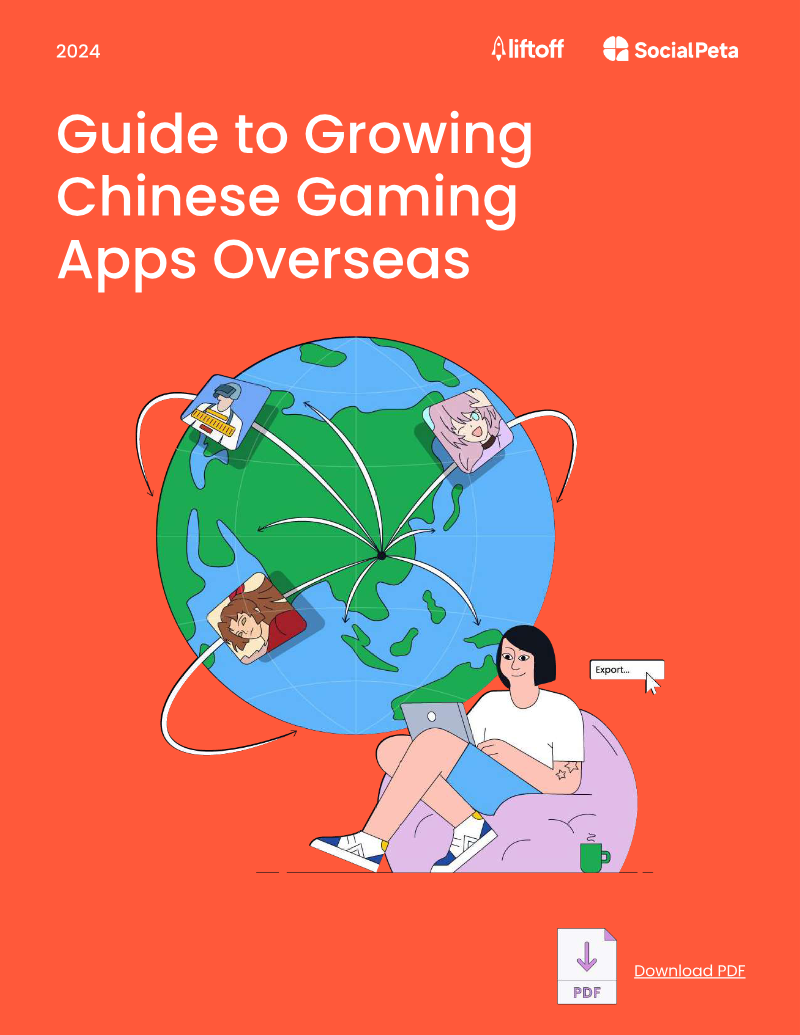
Chinese gaming applications continue to exert a dominant influence on the global stage, particularly within the strategy and role-playing game segments in mature markets such as the United States, Japan, and South Korea. While these regions offer substantial revenue potential, they are characterized by intense competition and elevated costs per install. To navigate these challenges, successful publishers are shifting toward hyper-localized strategies that tailor art styles to regional aesthetic preferences—favoring manga-inspired visuals in Japan and realistic or cartoon aesthetics in Western markets—while utilizing local influencers to establish brand credibility.
Technological innovation serves as a primary driver for operational efficiency and user acquisition. The integration of generative AI has become essential for the rapid localization of ad creative, voice-overs, and marketing copy, ensuring both speed and brand compliance. High-performing titles currently leverage high-volume, innovative campaigns that incorporate minigames and AI-enhanced visuals to capture player attention. Beyond acquisition, long-term retention is increasingly supported by the implementation of social hangout spaces, home-building systems, and character trial models that balance accessibility with monetization.
Monetization strategies have evolved to prioritize engagement through sophisticated, time-limited mechanics. Publishers are frequently employing box gachas, pull-milestone rewards, and gamified event structures such as diceboards and bingo to incentivize spending. Furthermore, the consistent deployment of diverse live events remains a critical requirement for maintaining player interest and competitive viability. By combining these aggressive monetization tactics with a commitment to continuous content updates, Chinese developers are effectively sustaining growth and deepening their footprint across the global gaming landscape throughout 2024.
- Chinese publishers are maintaining global dominance in strategy and RPG segments by shifting to hyper-localized art styles, specifically manga-inspired visuals for Japan and realistic or cartoon aesthetics for Western markets.
- Generative AI is now a core operational requirement for rapid, compliant localization of ad creative, voice-overs, and marketing copy to manage high costs per install in mature markets like the U.S., Japan, and South Korea.
- High-performing user acquisition campaigns are increasingly utilizing minigames and AI-enhanced visuals to capture player attention in highly competitive environments.
- Long-term player retention is being driven by the integration of social hangout spaces, home-building systems, and character trial models that balance game accessibility with monetization.
- Monetization strategies have shifted toward sophisticated, time-limited mechanics such as box gachas, pull-milestone rewards, and gamified event structures like diceboards and bingo.
+5
LiftoffJan 2024

Report24 pages
From Volatility to Stability: Q3 2024 Gaming Deals Report
The third quarter of 2024 marks a period of stabilization for the global gaming industry, signaling a transition from post-pandemic volatility toward a new, normalized market environment. The industry has moved past the extreme fluctuations of the COVID-19 era, with capital deployment for private investments settling at approximately $1 billion across 120 rounds. While public markets remain under pressure, the quarter saw the first initial public offering in two years, suggesting a cautious but potential thaw in public listing activity.
Key findings reveal a strategic shift in investor focus, as capital increasingly flows toward platform and technology sectors rather than traditional gaming content. This trend is evidenced by a sharp uptick in private investments for infrastructure, payment, and development tools. Within the gaming segment, early-stage venture capital remains consistent, while late-stage fundraising continues to face significant headwinds. Corporate venture capital has emerged as a vital component of the ecosystem, frequently co-investing with traditional venture firms to support studios and tech providers.
Geographically, North America and Western Europe remain the primary hubs for investment activity, though the mobile market continues to rely heavily on Asian developers for new top-performing releases. Steam sales data reflects a divergence in performance, with AA and indie publishers driving a 35% year-over-year growth in gross revenue, while AAA titles have experienced stagnation.
The analysis relies on tracking closed transactions within the video game industry, excluding pure gambling, betting, and non-gaming blockchain entities. By monitoring deal types—including control and minority mergers and acquisitions, venture capital rounds, and public offerings—the data provides a comprehensive view of capital flows. The findings emphasize that while the gaming sector faces ongoing challenges in late-stage funding, the broader ecosystem is finding stability through diversified investment in gaming-adjacent technologies and a resilient indie development scene.
- The gaming industry has transitioned to a normalized market environment, with Q3 2024 private investment totaling approximately $1 billion across 120 rounds.
- AA and indie publishers are outperforming the broader market, driving a 35% year-over-year growth in gross revenue while AAA titles remain stagnant.
- Investor capital is shifting away from traditional content toward infrastructure, payment systems, and development tools.
- Public market activity shows signs of a thaw with the first initial public offering in two years, despite continued pressure on public listings.
- Early-stage venture capital remains consistent, but late-stage fundraising continues to face significant headwinds.
+3
InvestGameJan 2024

Report25 pages
Global Mobile Gaming Industry Outlook 2024
The global mobile gaming market experienced a period of stabilization in 2023, with total in-app purchase (IAP) revenue reaching $76.7 billion. While this figure represents a 2% year-on-year decline, it remains 22% higher than pre-pandemic levels recorded in 2019. The industry outlook is positive, with revenue projected to rebound to $78 billion in 2024 and surpass $100 billion by 2028, reflecting an anticipated average annual growth rate of approximately 6.8%.
Market performance in 2023 was characterized by a shift in consumer preference away from mid-core and hardcore genres toward casual and hybrid-casual titles. Casual gaming revenue grew by 8% to $28.6 billion, now accounting for 38% of the global market. Within this segment, puzzle and board games performed exceptionally well, with both genres reaching $10 billion in revenue. Notable titles such as Royal Match and MONOPOLY GO! were primary drivers of this growth, with the latter emerging as a significant revenue contributor in the board game category. Conversely, traditional powerhouses like RPG and strategy games saw revenue declines of 10% as the pandemic-driven stay-at-home demand subsided.
Geographically, the United States remains the largest mobile gaming market, generating $22.2 billion in 2023. While the U.S. market remained stable, other key regions experienced varied results; the Chinese iOS market held steady, whereas Japan and South Korea saw revenue contractions of 13% and 7%, respectively. Despite broader genre declines, high-quality new releases—particularly in the RPG sector—continued to secure top positions in growth rankings. The analysis relies on estimated IAP data from the Apple App Store and Google Play, excluding advertising revenue and third-party Android marketplace income.
- The global mobile gaming market generated $76.7 billion in IAP revenue in 2023, a 2% year-on-year decline, but is projected to rebound to $78 billion in 2024 and exceed $100 billion by 2028.
- Consumer preferences shifted toward casual and hybrid-casual titles, with casual gaming revenue growing 8% to $28.6 billion, now representing 38% of the total market.
- Puzzle and board games were primary growth drivers, each reaching $10 billion in revenue, bolstered by the success of titles like Royal Match and MONOPOLY GO!.
- Traditional mid-core and hardcore genres, specifically RPG and strategy games, experienced a 10% revenue decline as pandemic-era demand subsided.
- The United States remains the largest mobile gaming market with $22.2 billion in 2023 revenue, while Japan and South Korea saw significant contractions of 13% and 7%, respectively.
+2
Sensor TowerJan 2024
Report54 pages
Save Point 2024: Recapping the Year's Biggest Trends in Live Streaming
The live streaming industry in 2024 underwent a fundamental transformation characterized by decentralization and the diversification of content beyond traditional gaming. As platforms like Kick experienced explosive growth and new services emerged to fill regional voids left by Twitch’s departure from Korea, the ecosystem shifted toward a multi-platform approach. Creators increasingly utilized simulcasting to expand their reach, while high-production marathons and global IRL content became the primary drivers of audience engagement. This evolution reflects a broader move away from platform exclusivity toward a creator-led model where individual influence dictates viewership patterns.
Esports and competitive gaming remained central to the industry’s success, though the nature of consumption changed significantly. Co-streaming emerged as a dominant force, accounting for nearly 45 percent of all esports viewership, while mobile esports solidified its status as a global powerhouse, particularly during the Esports World Cup. Simultaneously, the industry benefited from a strong synergy between transmedia adaptations and gaming, as film and television projects like Fallout revitalized interest in specific titles. The rise of VTubers and the enduring popularity of RPGs and nostalgia-driven remakes further sustained high levels of viewer retention throughout the year.
Beyond gaming, the landscape expanded to include political commentary, music-focused programming, and massive independent events that rivaled traditional broadcast media. Large-scale spectacles, such as La Velada del Año 4, demonstrated the potential for creators to command millions of concurrent viewers outside of established gaming frameworks. Brands successfully capitalized on these shifts by integrating directly into the viewer experience through strategic initiatives like Twitch Drops. Ultimately, the industry in 2024 proved that long-term growth is now tethered to the ability to blend interactive community engagement with diverse, multi-genre content that transcends the traditional boundaries of the gaming sector.
- The live streaming industry shifted toward a creator-led, multi-platform model in 2024, characterized by widespread simulcasting and the rise of alternative platforms like Kick following Twitch’s withdrawal from the Korean market.
- Co-streaming has become a dominant force in competitive gaming, now accounting for nearly 45 percent of total esports viewership.
- Large-scale, non-gaming spectacles like La Velada del Año 4 demonstrated that independent creators can now command millions of concurrent viewers, rivaling traditional broadcast media.
- Mobile esports solidified its status as a global powerhouse in 2024, highlighted by the significant viewership performance of the Esports World Cup.
- Transmedia adaptations, such as the Fallout series, proved highly effective at revitalizing interest in specific gaming titles and driving viewer retention.
+1
Stream HatchetJan 2024

Report32 pages
Gaming Report 2024: Meet the Moment
The global video game market, valued at $196 billion in 2023, is entering a period of sustained expansion with a projected annual growth rate of 6% through 2028. This upward trajectory is primarily fueled by younger demographics who increasingly utilize gaming environments as essential hubs for social interaction, creative expression, and commerce. To capitalize on this shift, industry leaders must pivot away from traditional, siloed development toward immersive, cross-platform ecosystems that prioritize interoperability and the integration of user-generated content. Expanding intellectual property across diverse media formats is now a critical requirement for maintaining relevance and maximizing consumer engagement.
The industry is simultaneously undergoing a structural transition toward a hardware-agnostic model, necessitated by the rise of cloud-based distribution and the demand for seamless, multi-channel experiences. As market saturation intensifies, the high failure rates observed in mobile gaming underscore the need for more rigorous operational discipline. Companies are increasingly required to align product development, finance, and marketing functions through data-driven strategies. By leveraging artificial intelligence to optimize user acquisition and retention, organizations can better navigate the volatility of the current landscape and address the growing disparity between headcount expansion and actual revenue growth.
To secure long-term viability, gaming organizations are modernizing their internal structures by standardizing development tools and fostering entrepreneurial autonomy. This evolution includes a holistic integration of generative AI into core workflows to improve operational efficiency and scale production capabilities. Furthermore, as competition for specialized talent intensifies, firms are refining their compensation and support models to align with broader technology industry standards. These combined technological and organizational shifts are essential for navigating current market turbulence and ensuring that gaming entities remain competitive in an increasingly complex and interconnected digital economy.
- The global video game market reached a $196 billion valuation in 2023 and is projected to grow at an annual rate of 6% through 2028.
- Industry growth is driven by younger demographics treating gaming environments as primary hubs for social interaction, commerce, and creative expression.
- Market leaders must transition from siloed development to immersive, cross-platform ecosystems that prioritize interoperability and user-generated content.
- The industry is shifting toward a hardware-agnostic model, requiring companies to adopt cloud-based distribution and seamless multi-channel experiences.
- Organizations must integrate generative AI into core workflows to improve operational efficiency, scale production, and address the disconnect between headcount growth and revenue.
+2
Bain & CompanyJan 2024

Report46 pages
Q4 2024 Digital Market Index
In Q4 2024 global in‑app purchase revenue reached a record $39.4 billion, up 13.5% year‑over‑year, with non‑game apps now nearly matching game revenue at $19.2 billion versus $20.2 billion. iOS dominates the market, generating roughly 70% of IAP revenue ($30 billion) and outpacing Google Play’s growth (15.4% versus 9.7%). Overall app downloads remained flat at about 34 billion, while non‑game downloads increased and game downloads stabilized after a pandemic peak.
Strategy titles emerged as the most lucrative segment, generating over $4.8 billion in IAP revenue—a 80% quarter‑over‑quarter lift that offset an 11% year‑over‑year decline in RPGs. Strategy games also accounted for six of the top ten download growth drivers, with a 26% year‑over‑quarter increase. In contrast, RPG revenue fell 29% globally, though regional pivots in Korea—where strategy and puzzle games grew 55% and 14%, respectively—helped mitigate the loss. Puzzle titles also contributed to overall download growth.
TikTok (including Douyin) led non‑game app monetization, delivering $6 billion in IAP revenue for the year—more than double any other app or game. Advertising spending in the United States reached $34 billion in Q4, with social media platforms capturing 77% of the spend; TikTok experienced the fastest year‑over‑year growth at 22%. Amazon drove U.S. digital ad spend growth, supporting campaigns for Audible, Prime Video and Amazon Music, while other major advertisers such as Verizon, Liberty Mutual, Coca‑Cola, Microsoft, Epic Games, Target and Walmart increased spend—particularly on gaming and social platforms. Retail‑media impressions hit a record 80 billion, up 4% year‑over‑year, with Walmart and Target dominating the top ten categories and Best Buy‑Samsung and Chewy‑Nestlé emerging as the most viewed co‑branded pairs.
Collectively, these findings illustrate a strategic shift toward strategy titles, the continued dominance of TikTok in app monetization, and an outsized role for social media advertising and retail‑media partnerships during the holiday peak. The data cover global markets with a focus on U.S., Korean, and broader digital advertising trends for the fourth quarter of 2024.
- Global in-app purchase (IAP) revenue hit a record $39.4 billion in Q4 2024, a 13.5% year-over-year increase, with non-game apps ($19.2 billion) nearly reaching parity with gaming ($20.2 billion).
- iOS remains the primary revenue driver, generating $30 billion (70% of total IAP revenue) and outpacing Google Play’s growth at 15.4% versus 9.7%.
- Strategy games became the most lucrative gaming segment with $4.8 billion in Q4 IAP revenue, marking an 80% quarter-over-quarter increase that helped offset an 11% year-over-year decline in RPG revenue.
- TikTok (including Douyin) is the dominant non-game monetization force, generating $6 billion in annual IAP revenue, more than double that of any other single app or game.
- U.S. advertising spend reached $34 billion in Q4, with social media platforms capturing 77% of the total and TikTok recording the fastest year-over-year growth at 22%.
+1
Sensor TowerJan 2024

Report44 pages
Global Games Market Report 2024
The Global Games Market Report 2024 projects a modest 2.1 % year‑over‑year growth, bringing worldwide revenues to $187.7 billion in 2024 and reaching $213.3 billion by 2027 at a 3.1 % compound annual growth rate. PC gaming remains the largest segment, generating $43.2 billion in 2024 and accounting for roughly 22 % of total revenue by 2027, while consoles are expected to rise to a 30 % share as cross‑platform releases become more common. Mobile revenue growth has slowed after the pandemic, and its market share is projected to decline further, underscoring a shift toward PC‑centric titles.
Player numbers are set to climb to 3.42 billion, a 4.5 % increase driven largely by PC adoption; mobile and console growth are more modest at 3.5 % and 2.3 %, respectively. The report’s methodology blends primary consumer research, macro‑economic data, app‑store feeds, and public company financials to estimate players, payers, and revenue streams. It also highlights the rising influence of user‑generated content (UGC) and cross‑generational appeal, noting that Gen Alpha and Gen Z together represent 94 % and 86 % of online gamers, respectively. UGC is emerging as a significant revenue source for both studios and creators, demanding strategies that balance older and younger player habits.
Key insights emphasize the growing importance of IP‑driven franchises, licensing, and transmedia ventures for revenue generation. Detailed breakdowns cover game delivery models, monetization tactics, genre performance, and regional revenues—including VR and cloud gaming metrics. The report promotes tailored consulting services such as TAM sizing, genre teardowns, audience analysis, campaign measurement, and live‑service strategy to help studios optimize development, marketing, and monetization in an increasingly competitive landscape.
- The global games market is projected to reach $187.7 billion in 2024, growing at a 3.1% CAGR to hit $213.3 billion by 2027.
- PC gaming is the leading segment with $43.2 billion in 2024 revenue, while console market share is expected to rise to 30% due to the prevalence of cross-platform releases.
- Total player count is forecast to reach 3.42 billion, a 4.5% year-over-year increase primarily driven by growth in PC adoption.
- Mobile gaming revenue growth has slowed post-pandemic, leading to a projected decline in its overall market share as the industry shifts toward PC-centric titles.
- Gen Alpha and Gen Z represent 94% and 86% of online gamers respectively, highlighting the critical need for strategies that balance the habits of younger demographics.
+1
NewzooJan 2024
Report72 pages
Africa Games Industry Report 2024
The Africa Games Industry Report 2024 presents a data‑driven assessment of the continent’s gaming ecosystem, targeting investors, policymakers, developers and the broader public. It argues that Africa’s youthful demographics, rapid mobile penetration and cultural diversity create a fertile environment for game development and monetisation. The report identifies fre‑to‑play with in‑app purchases as the dominant revenue model, while premium titles, ad‑based income, subscriptions and licensing remain viable alternatives for developers willing to overcome higher entry barriers.
Key findings show that the Sub‑Saharan gamer base has more than doubled from 77 million in 2015 to 186 million in 2021, with mobile gaming accounting for 95 % of players and nearly 90 % of the region’s $778.6 million revenue in 2022. Approximately one‑third of players make in‑app purchases, underscoring significant monetisation potential. The industry is largely composed of small to medium studios and solo developers, with Unity the preferred engine and mobile/PC platforms dominating. Yet only 36 % of respondents earn income from games, and infrastructure challenges—unreliable power (71 %) and costly internet (57 %)—continue to impede growth.
The report calls for coordinated action from investors, studios, policymakers and the public. It highlights mobile network operators and alternative payment systems as critical partners for expanding reach, while outlining a five‑factor ecosystem—reliable infrastructure, talent pathways, informed investors, connected industry and evidence of success—to unlock high‑value jobs, cultural exports and foreign investment. The overarching thesis is that Africa’s gaming sector is poised for rapid expansion, offering substantial economic and creative opportunities if these systemic barriers are addressed.
- The Sub-Saharan gamer base grew from 77 million in 2015 to 186 million in 2021, with mobile gaming driving 95% of the player base and nearly 90% of the region's $778.6 million revenue in 2022.
- Free-to-play with in-app purchases is the dominant revenue model, with approximately one-third of players currently making in-app purchases.
- Infrastructure remains the primary barrier to growth, with 71% of developers citing unreliable power and 57% citing high internet costs as significant impediments.
- Despite the sector's scale, only 36% of surveyed developers currently earn income from their games.
- The industry is primarily composed of small-to-medium studios and solo developers who predominantly utilize the Unity engine for mobile and PC platforms.
Maliyo GamesJan 2024

Report46 pages
Newzoo PC & Console Gaming Report 2024
The 2024 Newzoo PC & Console Gaming Report presents a cautiously optimistic outlook for the global market, with 2023 revenues rising 2.6 % to $93.5 bn. Growth is largely driven by PC game sales, while console revenue increased modestly at 1.7 % YoY. Playtime is falling, and player growth is flattening: PC players are projected to grow at 1.6 % CAGR and console players at 3 % through 2026, making it increasingly difficult to expand the player base. Premium transactions dominate spending, accounting for roughly 56–57 % of total spend; live‑service and subscription models still lag behind full‑price titles, underscoring the need for studios to focus on high‑quality releases and robust content pipelines.
Fortnite and Roblox command over 60 % of total playtime in 2023, reinforcing a highly concentrated market where established platforms and annual franchises dominate engagement. Quarterly playtime has fallen 26 % since Q1 2021, with older titles accounting for more than 60 % of hours and new releases only about 8 %. Live‑service pay‑to‑play games capture the majority of new‑title revenue, making it challenging for fresh IPs to gain traction.
Concentration among publishers has tightened further: between 28 and 34 publishers captured 80 % of monthly active users in 2023, a trend that has been tightening since 2021. While the number of titles driving 75–90 % of MAU has remained roughly flat, playtime per user is falling. Over half of the top new releases are franchise titles, and remakes or transmedia adaptations can boost both new and legacy game MAU by 35–60 %.
Multi‑platform play is significant, with nearly half of gamers (47 %) playing on two or more platforms. Multi‑platform players spend 79 % of their time and represent 41 % of the total player base, indicating higher engagement and spend. Emerging markets are projected to outpace established ones with a 4.7 % CAGR versus 0.2 %, and cloud gaming is identified as a key entry point due to high awareness (32 %) and low hardware barriers. Expanding beyond a single platform—especially into mobile or cloud services—offers new revenue routes but requires tailored experiences and messaging for diverse audiences.
- The market is highly consolidated, with 28 to 34 publishers capturing 80% of monthly active users and just two titles, Fortnite and Roblox, commanding over 60% of total playtime in 2023.
- Engagement is dominated by legacy content, as older titles account for over 60% of total hours played, while new releases capture only 8% of playtime.
- Premium transactions remain the primary revenue driver, accounting for 56–57% of total spending and outperforming live-service and subscription models.
- Global PC and console revenue grew 2.6% to $93.5 billion in 2023, though player growth is flattening with projected CAGRs of only 1.6% for PC and 3% for console through 2026.
- Quarterly playtime has declined 26% since Q1 2021, and over half of the top new releases are franchise titles, highlighting the difficulty of establishing fresh IPs.
+1
NewzooJan 2024

Report53 pages
State of Play: Xsolla Report
The report argues that the indie game sector has become a dominant force in the global market, driven by lowered entry barriers, widespread use of accessible engines, and a shift toward influencer‑led discovery. Data show that 2024 indie sales surpassed AAA titles, generating over $15 million in lifetime revenue across PC, Xbox, and Steam, with action, adventure, and RPG genres leading. Indie titles now account for 18 % of U.S. PC/console players and achieve higher average Steam ratings (≈72 %) than AAA games, reflecting a 12‑month YoY growth spike in early 2024 that continues to push positive momentum.
Key enablers include Unity’s 38 % market share, Unreal’s steady growth, and Godot’s sharp rise, which together support the release of 8 000–10 000 titles annually. Free or low‑cost asset stores and backend services such as Xsolla Backend reduce development time and cost, with studios reporting average backend build costs of $21 million versus in‑house development. Cross‑platform publishing and a 29 % share of Steam revenue in 2023 further accelerate market penetration.
The U.S. remains the largest gaming market, but regional hubs like Wisconsin are emerging through local publisher support and flexible work models. QA professionals increasingly influence inclusive design, while systemic barriers to gender and LGBTQ+ representation persist. Average U.S. developer salaries rose from $88,010 in 2023 to $91,009 in 2024, and the edutainment sector is projected to grow from $9.1 B in 2020 to $30.7 B by 2025, driven by online learning platforms.
Online education and influencer marketing are rapidly expanding; MOOCs are expected to reach $279 billion by 2029, and the global influencer market is projected at $36 billion in 2024. These trends underscore continuous skill development and targeted influencer partnerships as cost‑effective channels for monetization, marketing, and distribution. The synthesis highlights the need for strategic adaptability among publishers, developers, and investors to capitalize on the evolving indie landscape.
- Indie games surpassed AAA titles in 2024, generating over $15 million in lifetime revenue and accounting for 18% of U.S. PC/console players with an average Steam rating of approximately 72%.
- The indie sector is supported by an annual output of 8,000–10,000 titles, driven by engine market shares led by Unity (38%) and the rapid adoption of Godot.
- Outsourcing backend services to providers like Xsolla reduces development costs significantly, with studios reporting average build costs of $21 million compared to the higher expense of in-house development.
- The edutainment sector is projected to grow from $9.1 billion in 2020 to $30.7 billion by 2025, while the global influencer market is expected to reach $36 billion in 2024.
- Average U.S. developer salaries increased from $88,010 in 2023 to $91,009 in 2024, reflecting ongoing labor market shifts alongside the emergence of regional hubs like Wisconsin.
XsollaJan 2024

Report17 pages
Global MSP Report
The Global MSP Report presents a comprehensive analysis of the managed services provider (MSP) market, focusing on transaction activity, valuation trends, and strategic consolidation across the United States and Europe. The report documents a sharp increase in private‑placement activity during Q4 2024, with deal value rising from $34 million in Q3 to $2.2 billion, driven largely by platform deals and a 83% share of total activity involving strategic buyers acquiring multiple MSPs. Strategic consolidation remains robust, with six of the top ten players each adding at least four MSPs between 2023 and 2024, while financial investors continue to focus on single‑company investments.
Market valuation data indicate that the global MSP sector reached $305 billion in 2024 and is projected to grow at a CAGR of 7.2% to $571 billion by 2033, reflecting escalating IT complexity and demand for cost‑efficient services. Deal concentration is highest in IT services (88% of Q4 2024 activity), with software, networking, and communications sectors contributing smaller shares. The report lists 58 announced M&A deals in Q4 2024, with a total of 500 transactions completed since 2013 by the reporting firm.
Key outcomes highlighted include rapid deployment of new technology, cost efficiency gains, and enhanced service capabilities. The analysis draws on Pitchbook and Drake Star data, covering 2023‑2024 transactions across North America, Europe, and the Middle East, and provides detailed transaction tables for individual deals, including revenue, deal size, and acquirer information.
- The global MSP market reached a valuation of $305 billion in 2024 and is projected to grow at a 7.2% CAGR to $571 billion by 2033.
- Private-placement deal value surged from $34 million in Q3 2024 to $2.2 billion in Q4 2024, driven by a high volume of platform deals.
- Strategic buyers dominated Q4 2024 activity, accounting for 83% of total transactions as they aggressively acquired multiple MSPs.
- Six of the top ten industry players completed at least four MSP acquisitions each between 2023 and 2024, signaling robust sector consolidation.
- IT services accounted for 88% of all M&A activity in Q4 2024, with the remaining volume distributed across software, networking, and communications.
+1
Drake StarJan 2024
Report13 pages
Digital Services Report
The quarterly Digital Services Report presents a comprehensive snapshot of the global digital services landscape for Q2 2024, focusing on mergers and acquisitions, fundraising activity, market trends, and key performance indicators across technology-enabled services. The report highlights a robust deal pipeline, with 350+ disclosed M&A transactions totaling over $7.4 billion and 880+ fundraising deals raising more than $8.1 billion, underscoring continued investor confidence despite macro‑economic uncertainty. Notable transactions include Cognizant’s $1.3 billion acquisition of Belcan, EQT’s $3.0 billion purchase of Perficient, and Virtusa’s acquisition of ITMAGINATION, illustrating a strategic shift toward digital transformation capabilities. Fundraising highlights feature Sikich’s $250 million minority investment from Bain Capital, Uniqus Consultech’s $10 million Series B led by Nexus Ventures, and Raft’s $60 million venture round from Washington Harbour.
Market analysis identifies generative AI and other AI‑powered technologies as primary catalysts for future deal momentum, with expectations of heightened M&A activity in Q3 2024 driven by pent‑up demand and abundant private equity capital. Geographic coverage spans North America, Europe, and Asia-Pacific, with a focus on technology‑enabled services such as cloud migration, cybersecurity, business intelligence, and data analytics. Methodology relies on proprietary Drake Star analysis of M&A and private placement databases, supplemented by secondary sources including Capital IQ, PitchBook, and SimilarWeb.
The report concludes that corporates increasingly pursue inorganic growth to unlock value, achieve efficiencies, and stay ahead of technological disruption. It positions digital services as a high‑growth sector poised for continued consolidation and innovation, offering investors and executives actionable insights into emerging trends and strategic opportunities.
- Q2 2024 saw robust activity in the digital services sector with over 350 M&A transactions totaling $7.4 billion and 880 fundraising deals raising $8.1 billion.
- Major M&A activity was headlined by EQT’s $3.0 billion acquisition of Perficient and Cognizant’s $1.3 billion purchase of Belcan, signaling a strategic focus on digital transformation capabilities.
- Generative AI and AI-powered technologies are identified as the primary catalysts for deal momentum, with expectations for increased M&A activity in Q3 2024.
- Private equity remains a significant driver of market movement, exemplified by Bain Capital’s $250 million minority investment in Sikich.
- Market demand is concentrated in technology-enabled services, specifically cloud migration, cybersecurity, business intelligence, and data analytics.
Drake StarJan 2024

Report276 pages
India's Media & Entertainment Sector: March 2024
India’s media and entertainment landscape is in the midst of a rapid digital pivot, with online platforms projected to surpass traditional television as the leading revenue driver by 2024. The sector is expected to grow at a 10 % CAGR, reaching INR 3.1 trillion ($37 billion) by 2026, driven largely by new‑media segments such as OTT video, gaming and digital advertising. Traditional channels—print, radio, out‑of‑home (OOH) and regional TV—continue to expand modestly, reinforcing a “linear + digital” model that balances legacy audiences with emerging consumption patterns.
Key growth engines include a surge in mobile‑first media, where 904 million broadband subscriptions and 574 million smartphone users fuel a daily mobile media spend of over four hours. OTT video viewership now covers 98 % of smartphone owners, with regional‑language content rising from 47 % to 52 %. Gaming dominates the mobile gaming market, with Free Fire and BGMI generating a quarter of in‑app purchase revenue, while esports viewership climbs to 78 % of gamers. Music and radio also expand through digital monetisation, with streaming revenues growing 10 % to INR 24 billion and radio advertising up 17 %.
The sector’s future hinges on cross‑platform content strategies, bundled FAST/OTT offerings, AI‑driven personalization and unified audience measurement. Challenges persist: low OTT profitability, ad‑rate pressure, regulatory uncertainty around gaming and gambling, and the need for first‑party data in a cookie‑less environment. Nonetheless, India’s position as the world’s largest app‑download market and its growing 1 billion active screens by 2030 underscore a resilient, technology‑driven growth trajectory across film, television, gaming, music and live events.
- India's media and entertainment sector is projected to reach INR 3.1 trillion ($37 billion) by 2026, growing at a 10% CAGR as online platforms overtake traditional television as the primary revenue driver.
- Mobile-first consumption is the primary growth engine, supported by 904 million broadband subscriptions and 574 million smartphone users who spend over four hours daily on mobile media.
- Gaming is a dominant market force, with Free Fire and BGMI accounting for 25% of in-app purchase revenue and esports viewership reaching 78% of the gaming population.
- OTT video viewership has reached 98% of smartphone owners, with regional-language content consumption increasing from 47% to 52% of the market.
- Digital monetization is expanding across legacy segments, evidenced by a 10% growth in music streaming revenue to INR 24 billion and a 17% increase in radio advertising.
EYJan 2024