The Legend of Zelda: Majora's Mask
GameBy Nintendo EAD Software Development Group No.3 · Released Apr 27, 2000
The Legend of Zelda: Majora's Mask is a direct sequel to Ocarina of Time, it utilizes the same engine and visual style as its predecessor.
- How much revenue has The Legend of Zelda: Majora's Mask made?
- How many players does The Legend of Zelda: Majora's Mask have, and how is that changing?
- What do industry reports say about The Legend of Zelda: Majora's Mask's performance?
- Which games compete with The Legend of Zelda: Majora's Mask, and how do they compare?
Connections
Each row is a game or company named alongside The Legend of Zelda: Majora's Mask, each column a document, oldest first. A mark means that document names it. Select a row to see those documents.
About the game
- Released
- Apr 27, 2000
- Developer
- Nintendo EAD Software Development Group No.3
- Publishers
- Nintendo, Gradiente
- Genres
- Puzzle, Adventure
- Platforms
- Wii, Nintendo 64, 64DD, Wii U
- Links
- Official site, Wikipedia
Game data from IGDB.com
Documents about The Legend of Zelda: Majora's Mask

Design Club: Shroom and Gloom!
Shroom and Gloom represents a significant evolution in the roguelike deckbuilder genre by subverting established conventions popularized by titles like Slay the Spire.
- Shroom and Gloom utilizes a dual-deck system that separates combat cards from exploration and survival cards, creating a strategic interplay between the two mechanics.
- The game replaces traditional block mechanics with a health-management system where healing is tied to specific kill conditions, such as 'if fatal' effects, forcing players to plan turns around securing specific eliminations.
- The game features 'evolving' cards that become more powerful after being lodged in an enemy and returned to the player's hand upon the enemy's death.
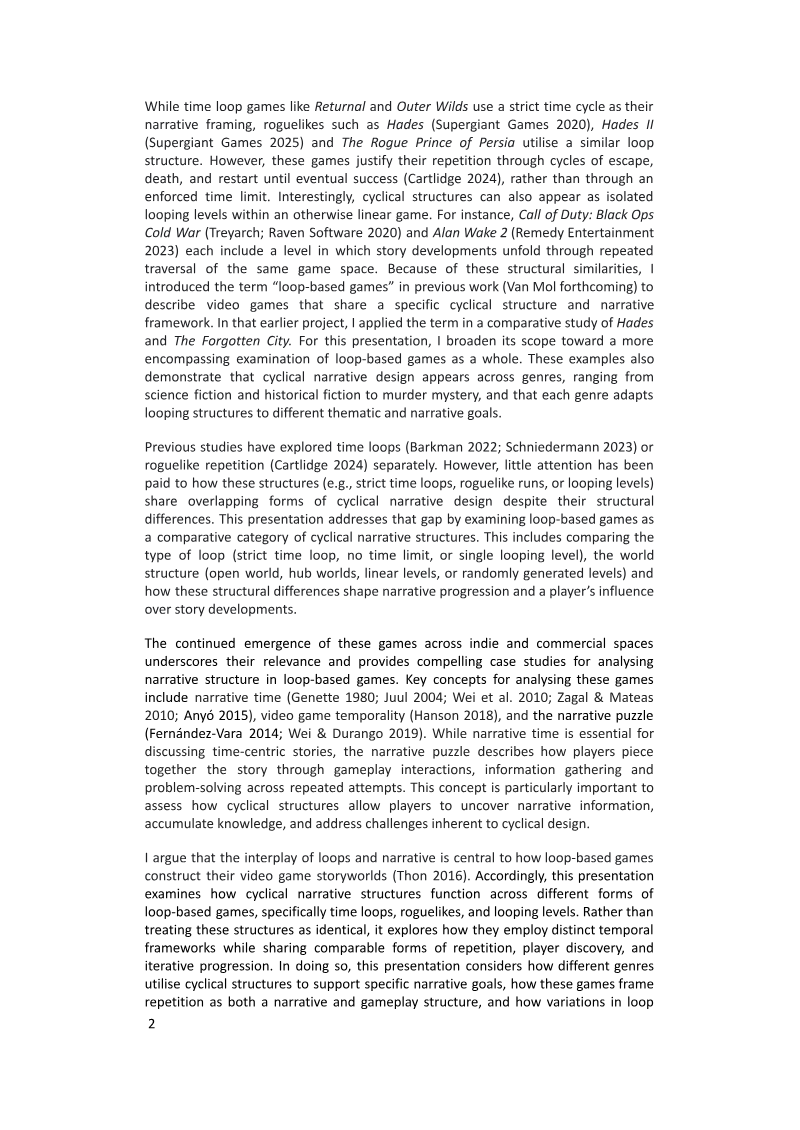
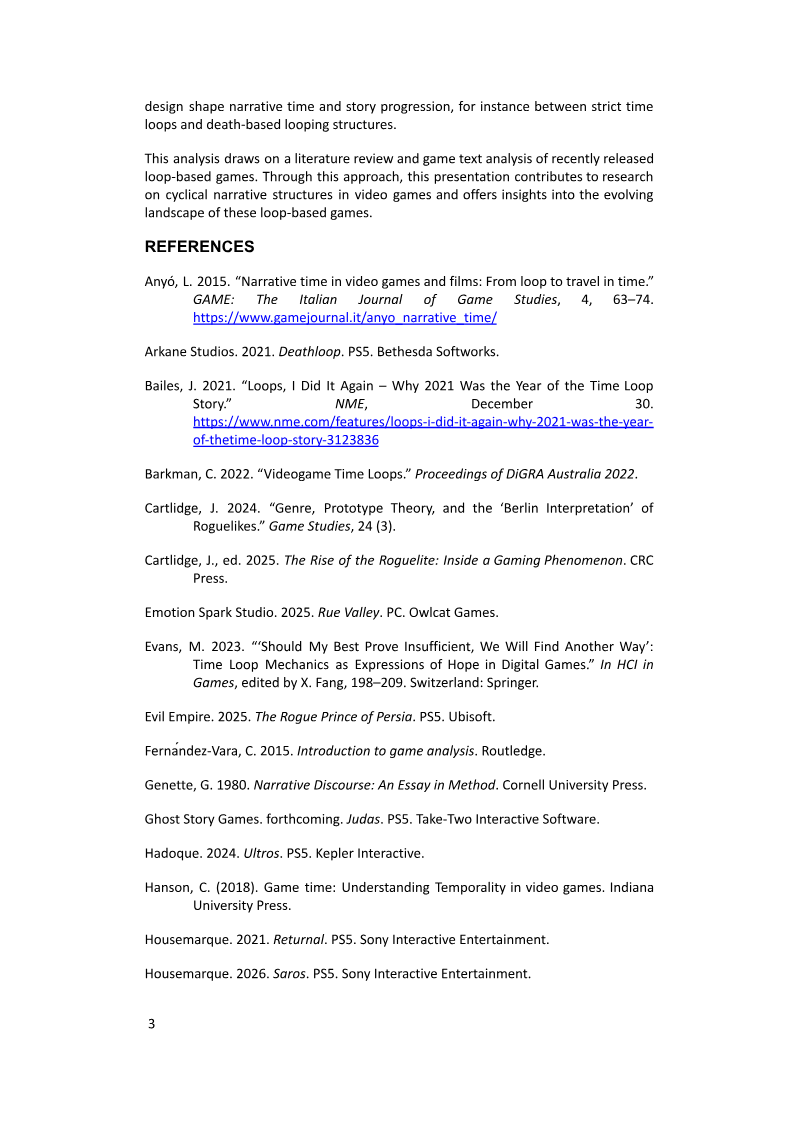
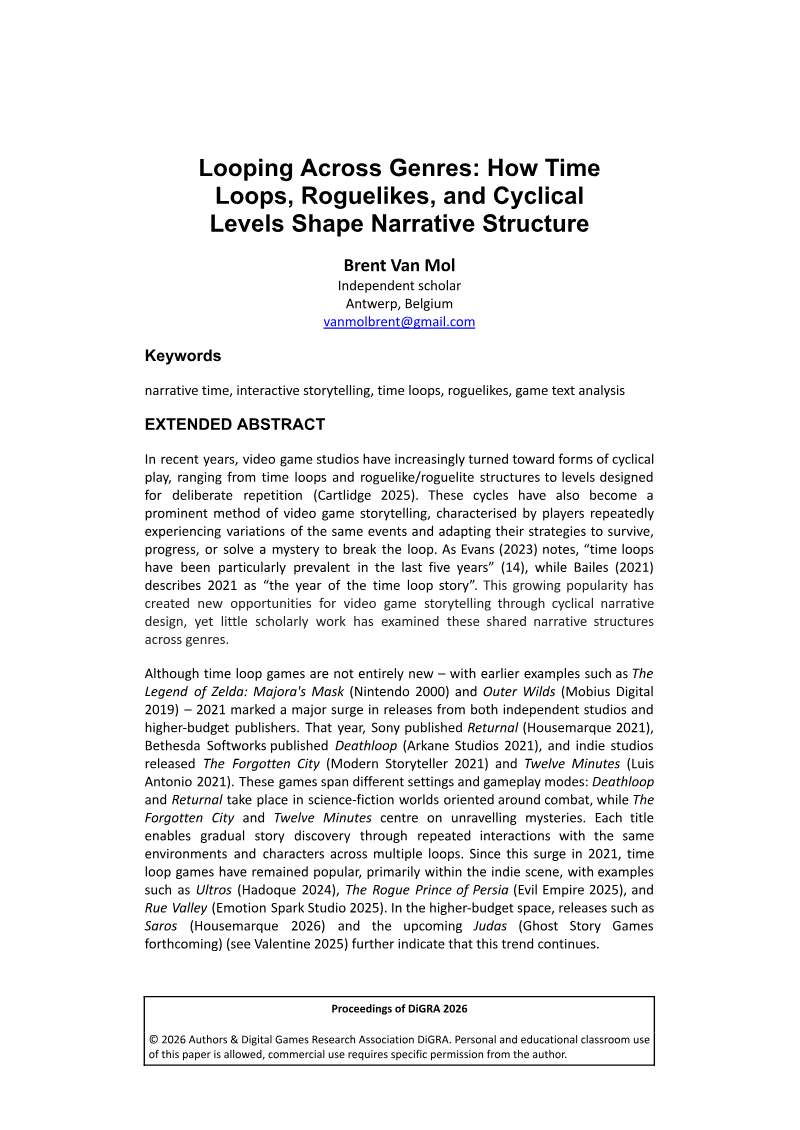
Looping Across Genres: How Time Loops, Roguelikes, and Cyclical Levels Shape Narrative Structure
This paper examines loop-based video games, a category it defines to cover time loop games, roguelikes, and levels built around deliberate repetition, as a shared form of cyclical narrative design.
- The paper defines 'loop-based video games' as a single category covering time loop games, roguelikes, and levels built around deliberate repetition, and argues that the interplay between loops and narrative is fundamental to how these games build their storyworlds.
- The paper's comparative framework assesses loop-based games along three dimensions: loop type (strict time loop, no time limit, or single looping level), world structure (open world, hub worlds, linear, or randomly generated levels), and how these choices shape narrative progression and player influence over story developments.
- The paper identifies the 'narrative puzzle' as a key concept: players assemble story information across repeated attempts, gathering knowledge and solving problems from loop to loop.
Rules of the Game 2025: Uncommon Techniques from Insightful Designers
Effective game design relies on the strategic application of intentional friction, where mechanical limitations, scarcity, and unconventional controls are used to align gameplay systems with a project’s core emotional and thematic goals.
- Designers should use intentional friction—such as mechanical limitations and scarcity—to align gameplay systems with the project’s core emotional and thematic goals.
- Technical development should prioritize rapid, messy iteration over rigid scripting standards, allowing for temporary, one-off solutions during early production to protect the player experience.
- Innovation is best achieved by stripping mechanics to their simplest form and selectively reintroducing complexity to foster emergent, varied gameplay.
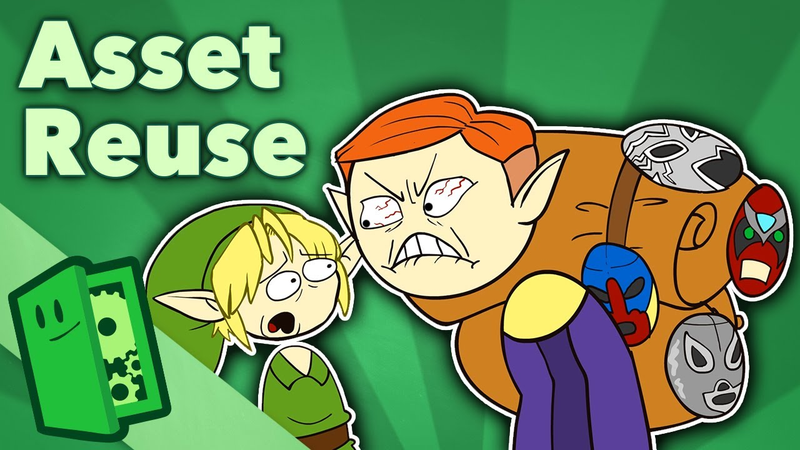
Asset Reuse - Working Smarter, Not Harder - Extra Credits
The practice of asset reuse in game development is often unfairly stigmatized as laziness or cost-cutting, when it is, in fact, a strategic design tool that allows developers to prioritize innovation and depth.
- Asset reuse is a strategic design tool that allows studios to shift finite resources away from redundant technical labor and toward core gameplay, narrative depth, and world-building.
- Reusing existing assets can enable rapid production cycles, such as the 16-month development timeline achieved for Dragon Age 2.
- Successful implementations like Fallout: New Vegas and The Legend of Zelda: Majora’s Mask demonstrate that reusing assets can facilitate superior role-playing depth and unique narrative experiences.