Six Ages: Ride like the Wind
Game
6 documents in the library are about Six Ages: Ride like the Wind, from writers such as Game Developers Conference, GameDiscoverCo and Loading... The Journal of the Canadian Game Studies Association. Each has a summary and key insights with the page they come from.
Connections
Each row is a game or company named alongside Six Ages: Ride like the Wind, each column a document, oldest first. A mark means that document names it. Select a row to see those documents.
Documents about Six Ages: Ride like the Wind
Four Day Workweek: We Did It! What Now?
Independent game studios are increasingly adopting a four-day, 32-hour workweek to combat systemic burnout and enhance recruitment competitiveness.
- Independent game studios are adopting a 32-hour, four-day workweek to combat systemic burnout and improve talent retention.
- Productivity remains stable or increases under the four-day model as teams optimize workflows, prioritize high-impact tasks, and utilize asynchronous communication.
- Successful implementation requires rigorous production planning, flexible scheduling, and a fundamental shift in organizational culture.
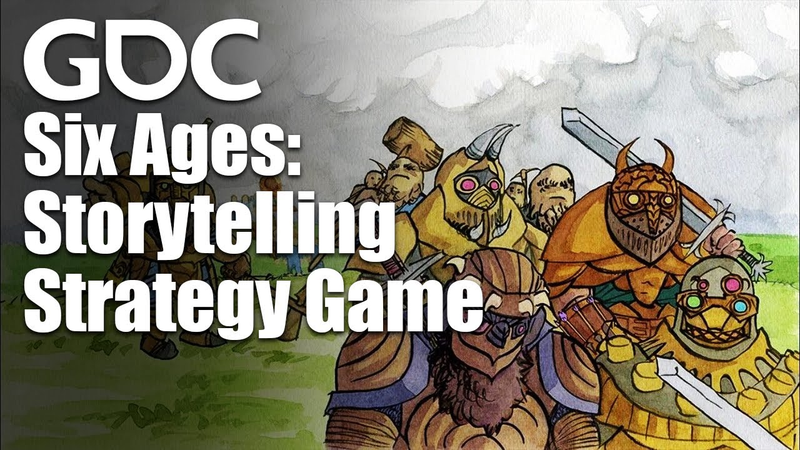
Designing 'Six Ages', a Storytelling Strategy Game
Six Ages: Ride Like the Wind functions as a sophisticated hybrid of strategy and interactive fiction, designed to immerse players in a mythology-driven clan management simulation.
- Six Ages uses a core loop that combines turn-based strategy actions, such as resource management, with emergent narrative events to create a 'strategy book' experience.
- The game utilizes a custom domain-specific language called 'Opal' to manage complex scripting, allowing writers to trigger conditional scenes, long-term story arcs, and time-limited bonuses.
- To maintain immersion, the game employs 135 unique tags to ensure that events and bonuses are context-sensitive, preventing irrelevant information from appearing to the player.
The Impact of One Streamer on a Game After Release
Kitfox Games communications director Victoria Tran presents a single-case analysis of how one Twitch stream affected a game that had already been on the market for months.
- A non-sponsored stream of 'Six Ages' by a creator with 250,000 followers resulted in a 60% increase in sales over the two days following the broadcast.
- The stream achieved a 9.7% click-through rate on a dedicated tracking link, significantly exceeding standard social media benchmarks of 2–5%.
- Influencer impact is not strictly linear to follower count, as success is heavily dependent on audience engagement, genre alignment, and the game's inherent watchability.
Why Fashion in (Most) Games Sucks, and Why You Should Care
Fashion serves as a sophisticated, underutilized language within game design, functioning as a critical tool for storytelling, character development, and world-building.
- Developers should decouple aesthetic choices from functional gear statistics to allow players to express personal identity without compromising gameplay performance.
- Fashion should be treated as a core gameplay mechanic rather than a static asset, using examples like Hitman or Love Nikki to integrate clothing into active player experience.
- Intentional fashion design serves as a critical tool for storytelling and world-building, communicating a character’s history, cultural identity, and personality.
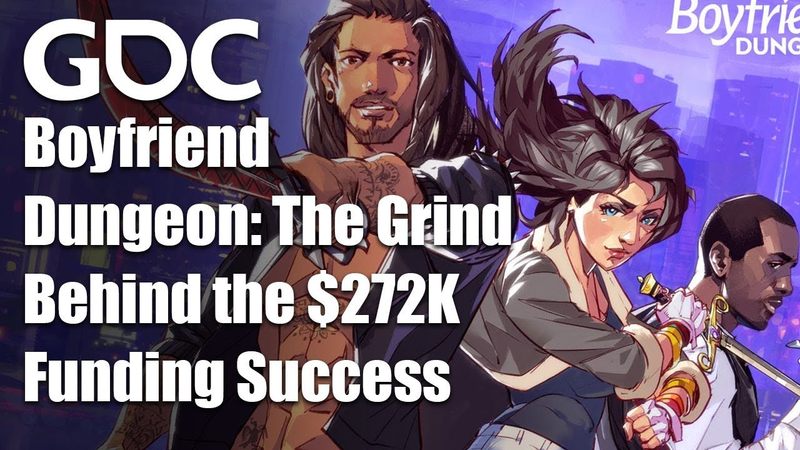
Game Discoverability Day: NOTICE ME: The Grind Behind the $272K Funding Success of Boyfriend Dungeon
The successful crowdfunding of the indie title Boyfriend Dungeon, which raised $272,000 against a $65,000 goal, serves as a case study for effective game discoverability and community-driven marketing.
- Boyfriend Dungeon achieved 418% of its funding goal, raising $272,000 against a $65,000 target by prioritizing community-driven engagement over paid advertising.
- Twitter served as a critical conversion engine, driving 17% of total pledges—a rate significantly higher than the industry average of less than 1%.
- A high-conversion hook must be immediately understandable, utilizing a clear 'one-sentence' pitch that combines distinct genres, such as the game's 'dating sim meets dungeon crawler' premise.
Interview: David Dunham, Lead Designer, Producer and Programmer of King of Dragon Pass
The interview with David Dunham, lead designer and programmer of the strategy-storytelling game King of Dragon Pass, explores the development philosophy and narrative architecture behind his influential title.
- King of Dragon Pass shifts the focus from traditional character-leveling mechanics to managing an entire clan, prioritizing cultural values over statistical optimization.
- The game’s narrative architecture is built upon hundreds of self-contained, context-sensitive scenes that function as modular components for a non-linear story arc.
- Development utilized a collaborative writing approach, notably involving Robin Laws, to ensure that economic systems provided meaningful weight and consequence to player decisions.
Companies behind it
As the documents state it.