1 free read left. Create a free account for unlimited reading + AI research.
Create free accountArticle Loading... The Journal of the Canadian Game Studies Association
1 free read left. Create a free account for unlimited reading + AI research.
Create free accountArticleLoading... The Journal of the Canadian Game Studies Association
Distilling the key insights…
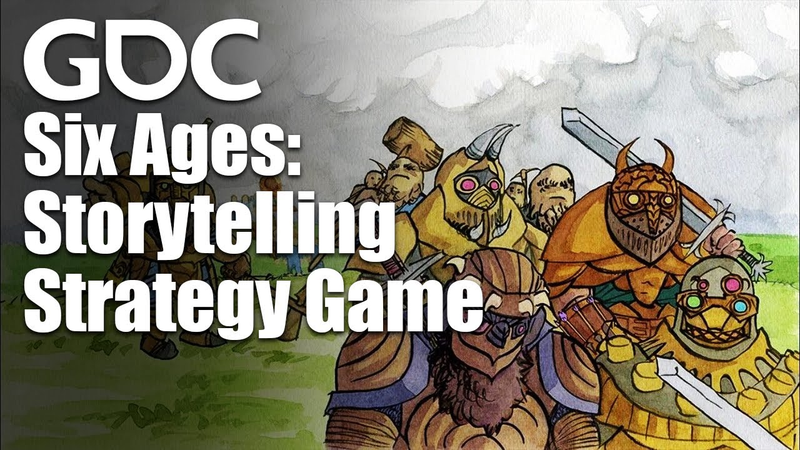
The interview with David Dunham, lead designer and programmer of the strategy-storytelling game King of Dragon Pass, explores the development philosophy and narrative architecture behind his influential title. The primary thesis centers on the creation of an emergent, replayable narrative experience that prioritizes world-building and roleplaying over traditional character-leveling mechanics. By blending tabletop roleplaying sensibilities with computer-based strategy, the game aims to immerse players in a consistent, myth-driven fantasy world where choices are dictated by cultural values rather than simple statistical optimization.
Key findings emphasize that the game’s narrative is constructed through hundreds of self-contained, context-sensitive scenes that function as building blocks for a larger, non-linear story arc. Dunham highlights the importance of static artwork as a tool for environmental storytelling and notes that the game’s UI was intentionally designed to avoid breaking immersion, opting for advisor-led dialogue instead of standard data-heavy dashboards. The development process relied heavily on a collaborative writing approach, with significant contributions from writer Robin Laws, and utilized an economic system to provide weight and consequence to player decisions.
The scope of the discussion covers the game’s original 1999 PC release and its subsequent multi-platform expansion to mobile and modern systems. Dunham identifies the game’s unique focus on managing an entire clan—rather than a single avatar—as its defining characteristic. The methodology for the game’s design involved iterative testing to ensure that emergent narrative branches remained coherent and that the game’s economic systems supported, rather than distracted from, the storytelling. Looking forward, the discussion touches on the development of the spiritual successor, Six Ages, which seeks to refine these systems by simplifying underlying mechanics while maintaining the core focus on deep, emergent, and player-driven narrative arcs.

Loading... The Journal of the Canadian Game Studies Association · 2018
Loading... The Journal of the Canadian Game Studies Association · 2018
Loading... The Journal of the Canadian Game Studies Association · 2017
Loading... The Journal of the Canadian Game Studies Association · 2017
Loading... The Journal of the Canadian Game Studies Association · 2017
Loading... The Journal of the Canadian Game Studies Association · 2017
Loading... The Journal of the Canadian Game Studies Association · 2017
Loading... The Journal of the Canadian Game Studies Association · 2017
Loading... The Journal of the Canadian Game Studies Association · 2017
Loading... The Journal of the Canadian Game Studies Association · 2017
Loading... The Journal of the Canadian Game Studies Association · 2016
Loading... The Journal of the Canadian Game Studies Association · 2016

Jonas Tyroller · 2025