New Super Mario Bros.
12 documents in the library are about New Super Mario Bros., from writers such as Nintendo, Dataspelsbranschen and Game Maker's Toolkit, the newest from 2022. Each has a summary and key insights with the page they come from.

New Super Mario Bros. is a side-scrolling 2.5D action-adventure platformer game for the Nintendo DS, starring Mario and Luigi. The game features a solo story mode with Mario or Luigi, a two-player wireless game Mario Vs. Luigi, as well as a minigame mode for up to four players. The gameplay of New Super Mario Bros. is very much like that of the classic 2D platformers, mostly Super Mario Bros. and Super Mario Bros. 3, and substantially builds upon them to create gameplay both classic and contemporary. As the game is on DS, the touch screen allows players to store an additional power-up and view the distance still to go in a level.
- Released
- May 15, 2006
- Developers
- Nintendo Entertainment Analysis & Development, Nintendo
- Publisher
- iQue
- Genres
- Platform, Adventure
- Platforms
- Wii U, Nintendo DS
- Links
- Wikipedia
Game data from IGDB.com
Documents about New Super Mario Bros.

How Game Designers Solved These 11 Problems
Game design is fundamentally an exercise in iterative problem-solving, where the primary challenge lies in accurately identifying root causes before implementing solutions.
- Effective game design requires diagnosing root causes through empirical playtesting rather than merely addressing surface-level symptoms.
- Designers should isolate adjustable 'levers' within game systems to implement solutions that preserve the core identity of the title.
- Successful mechanics often resolve multiple issues simultaneously, such as the respawn bubble in New Super Mario Bros. Wii, which improved both accessibility and multiplayer flow.
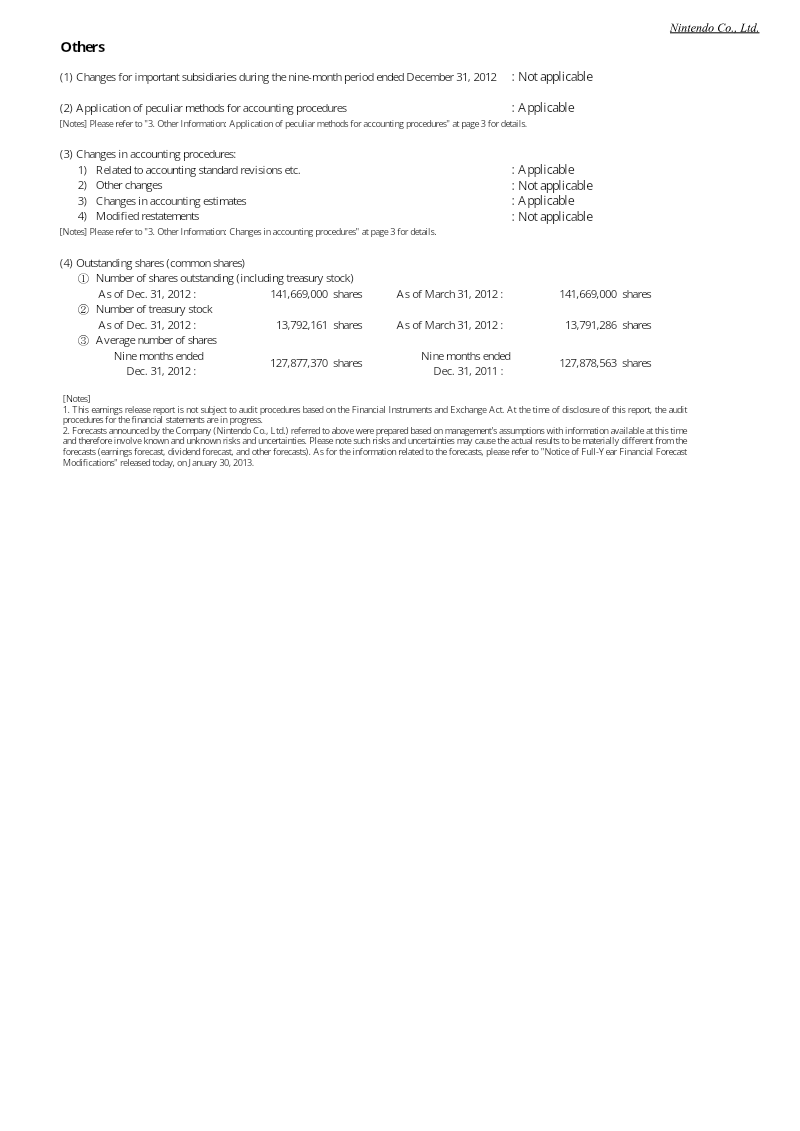
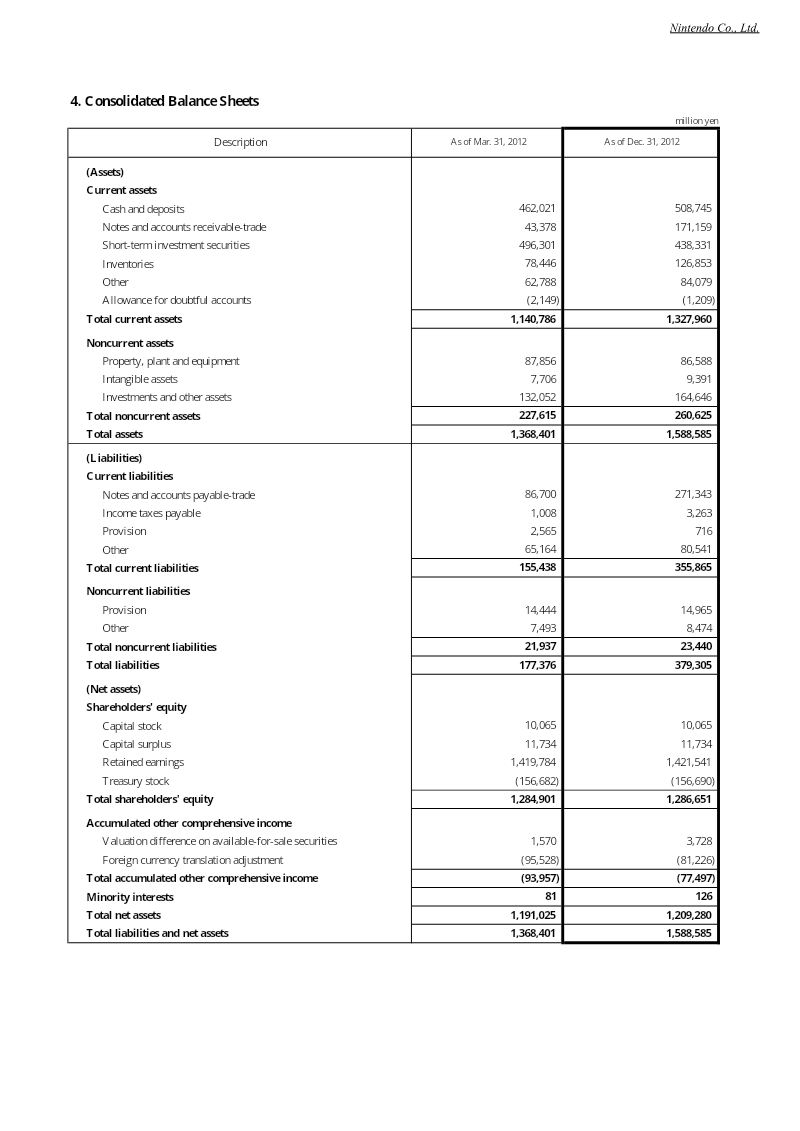
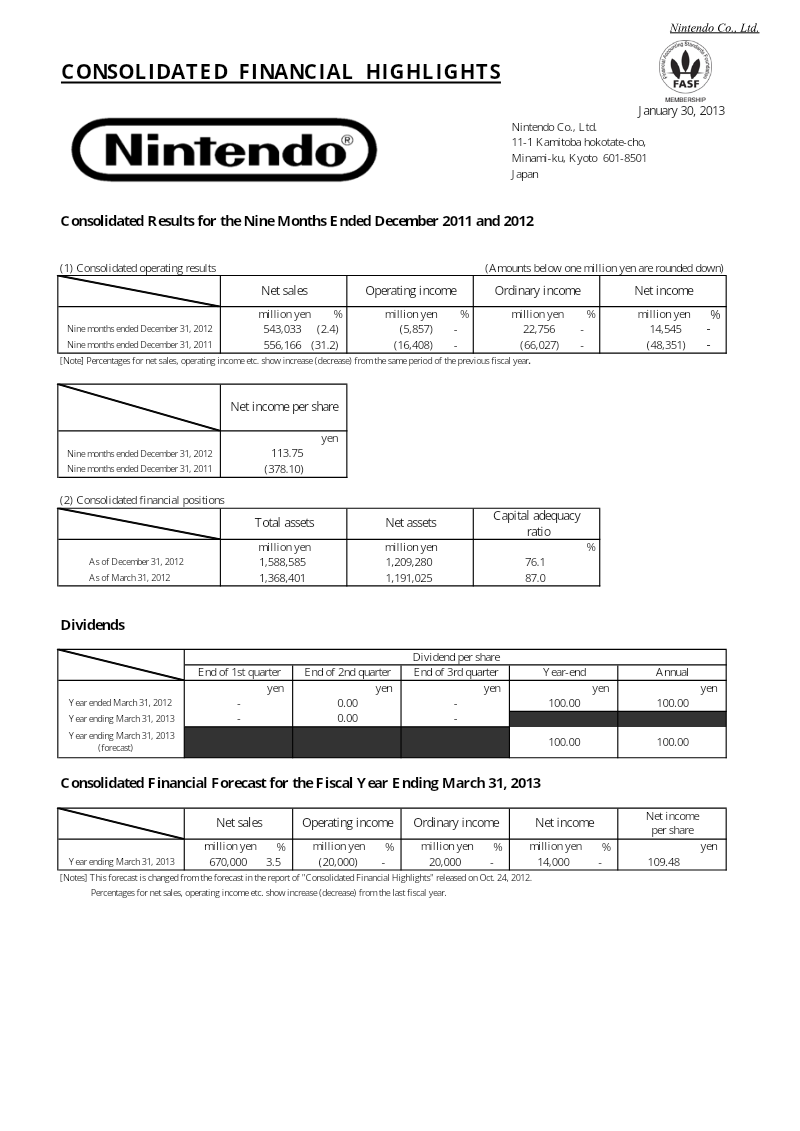
Consolidated Results for the Nine Months Ended December 2011 and 2012
Nintendo’s consolidated financial results for the nine-month period ending December 31, 2012, reflect a transitional phase characterized by the launch of the Wii U home console and the continued expansion of the Nintendo 3DS handheld platform.
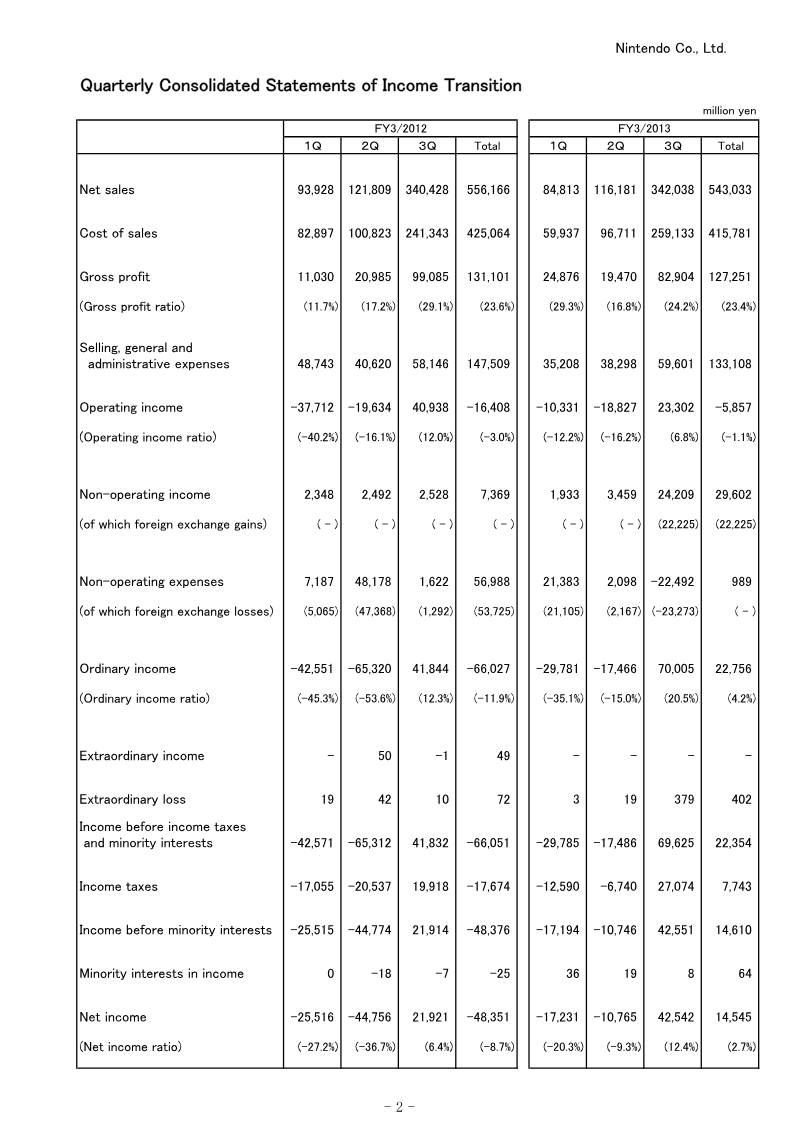
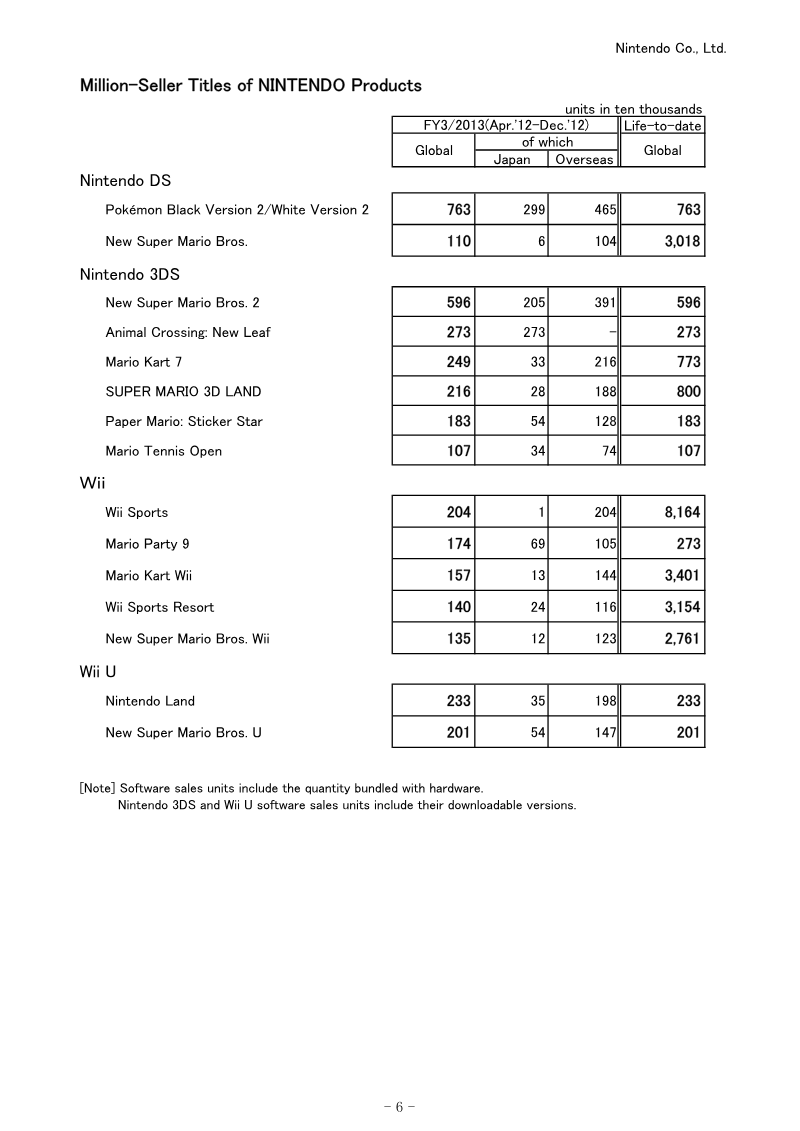
Nintendo Financial Results Briefing: Nine-Month Period Ended December 2012
The financial results for the nine-month period ending December 2012 reflect a transitional phase for Nintendo as the company navigated a shift in its hardware portfolio.
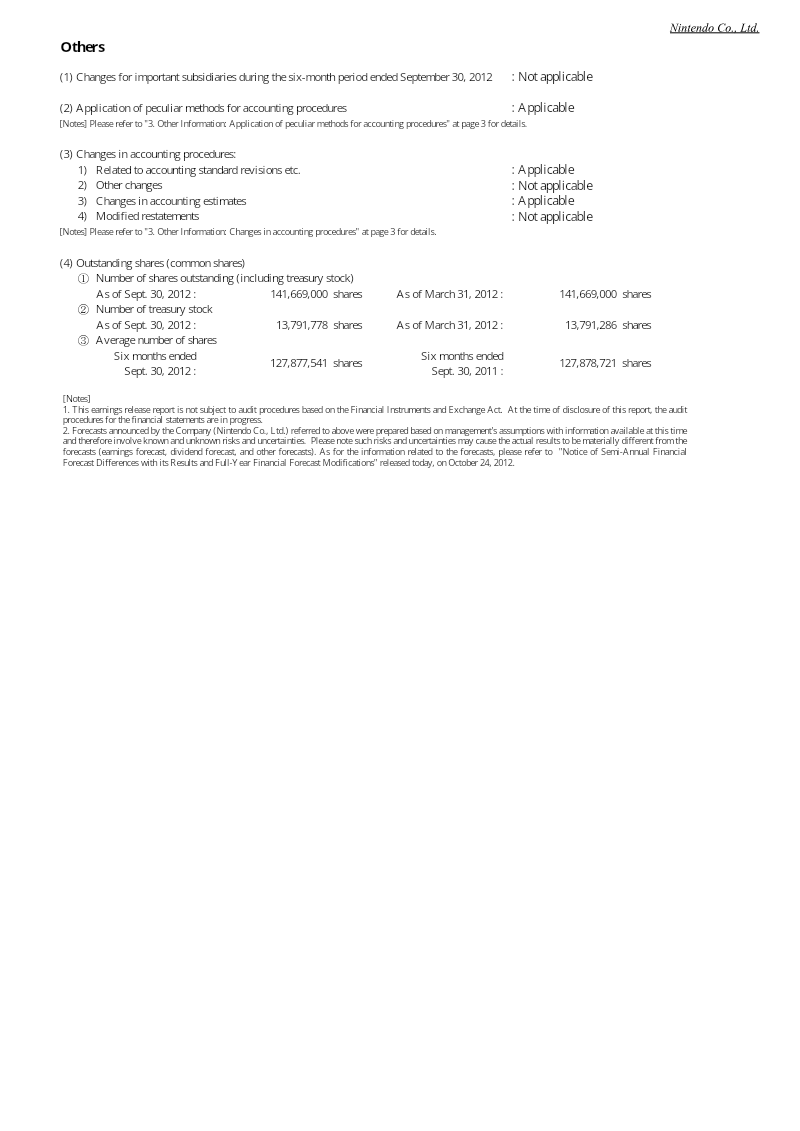
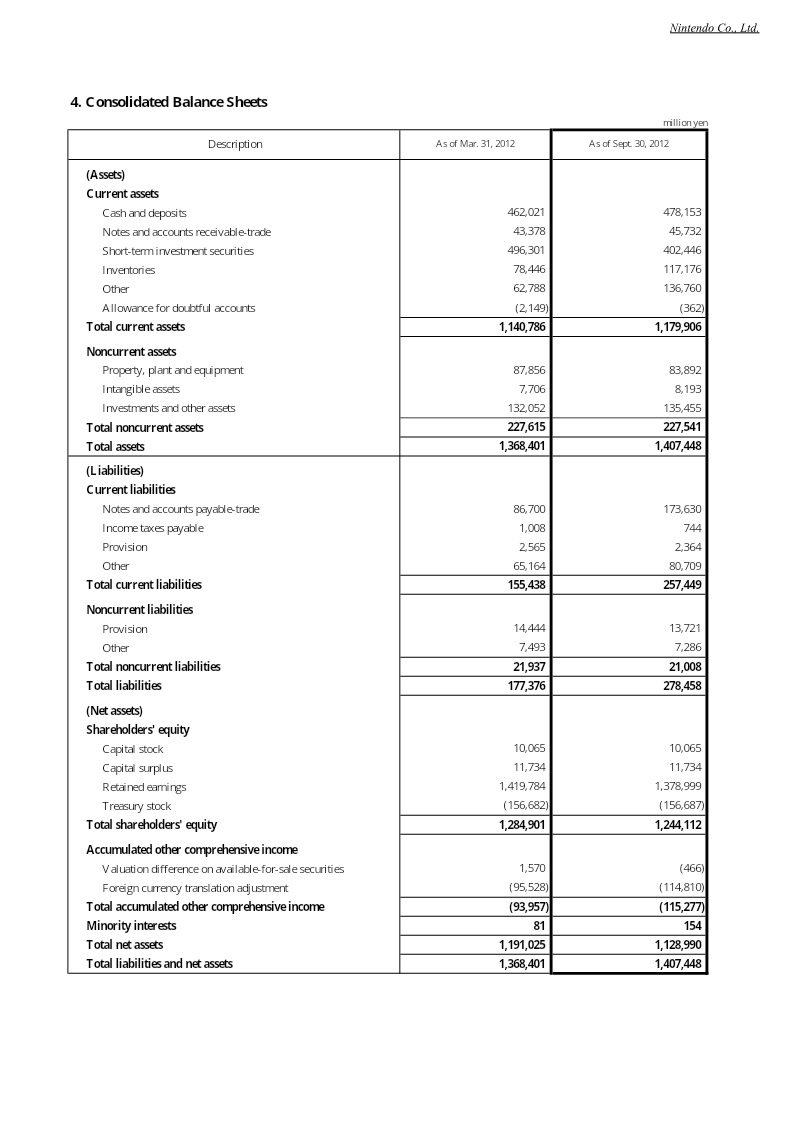
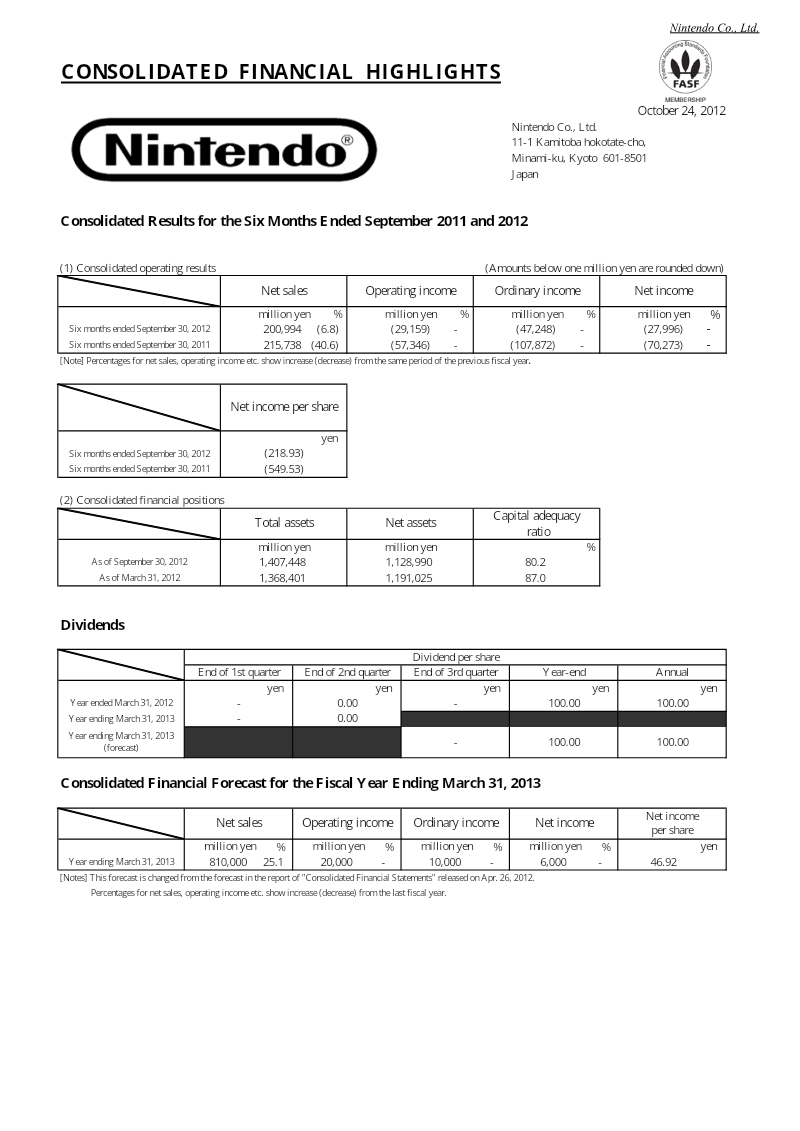
Nintendo Consolidated Results for the Six Months Ended September 2012
Nintendo’s consolidated financial results for the six months ended September 30, 2012, reflect a period of significant transition and financial challenge.
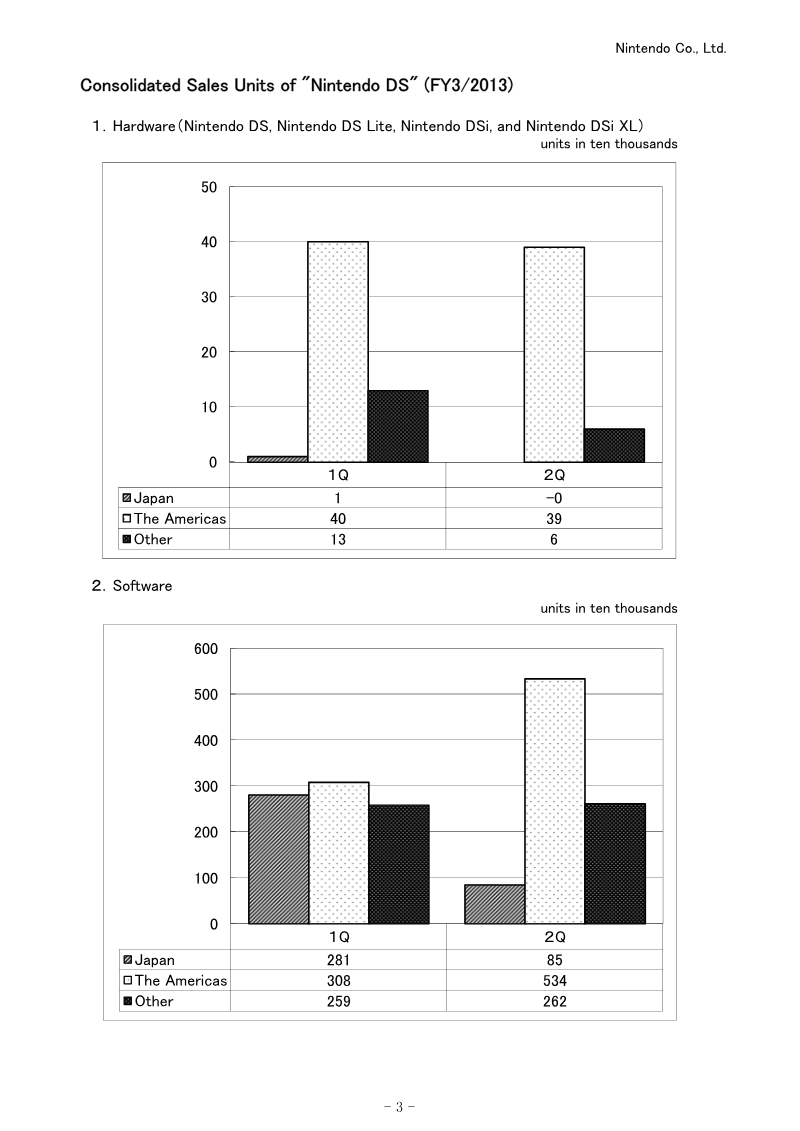
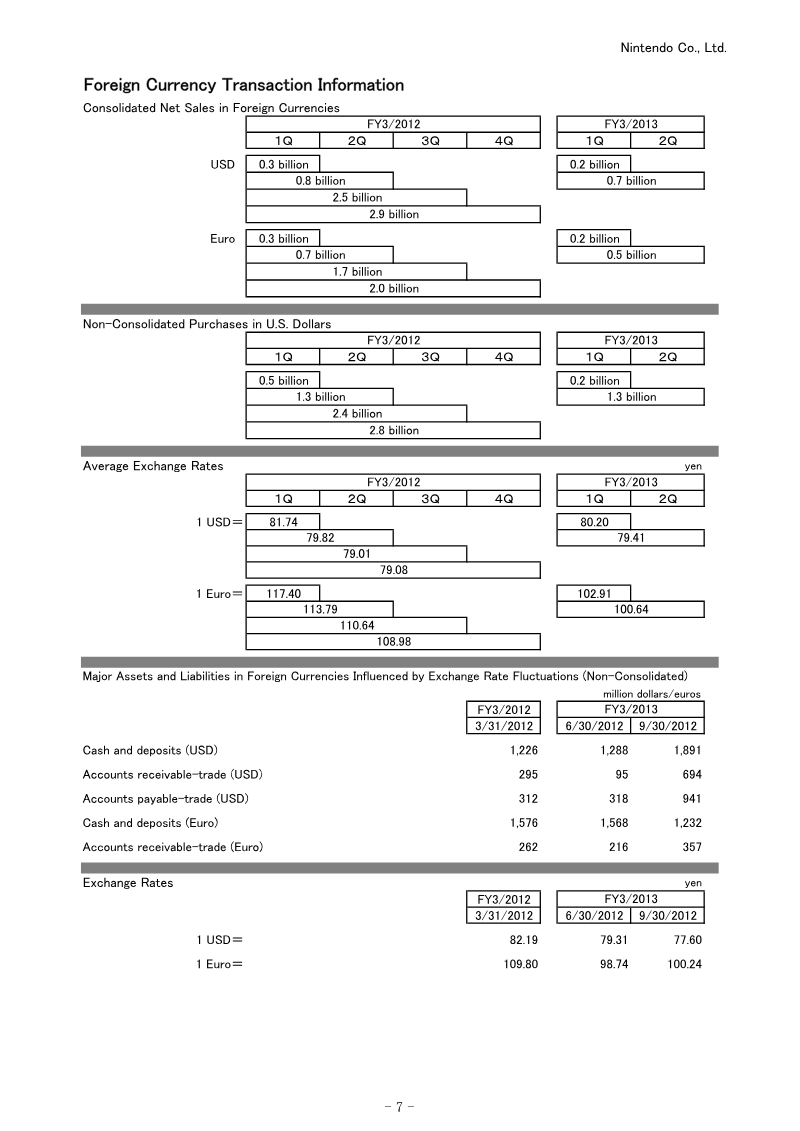
Financial Results Briefing for the Six-Month Period Ended September 2012: Supplementary Information
This financial briefing outlines Nintendo’s performance for the six-month period ending September 30, 2012, detailing a challenging fiscal environment characterized by declining net sales and ongoing operating losses.
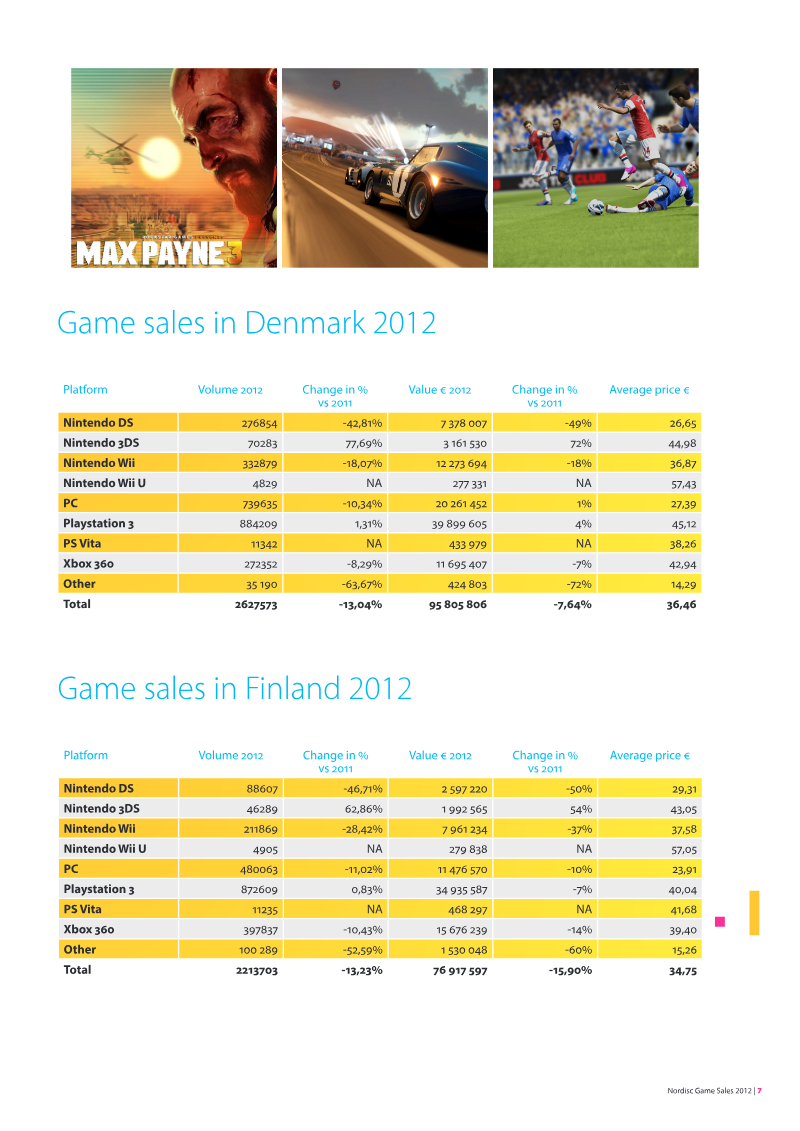
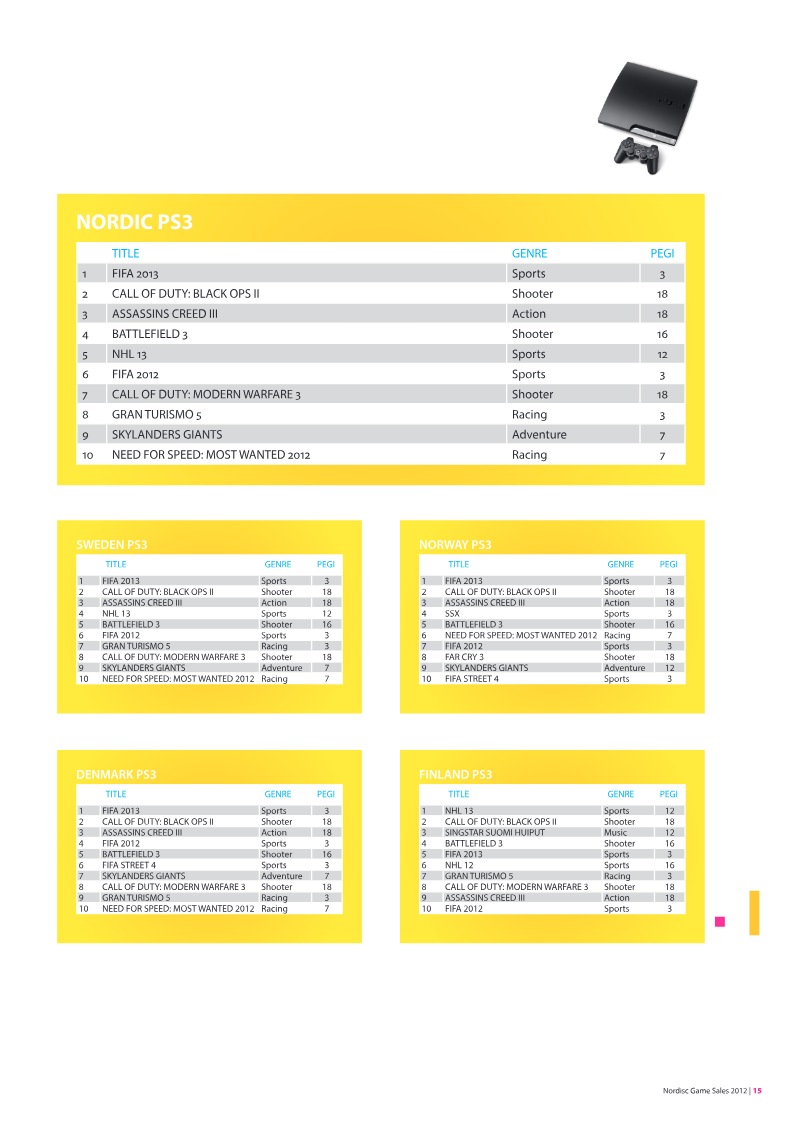

Nordic Game Sales 2012
The Nordic video game market experienced a notable contraction in 2012, with retail sales declining by 13.5 percent.
- Nordic retail video game sales contracted by 13.5 percent in 2012, primarily due to a structural shift toward digital distribution channels not captured in traditional tracking.
- The market was dominated by three core genres: action titles (16.15 percent), sports games (13.63 percent), and shooters (10.40 percent).
- Major franchises like FIFA 13 and Call of Duty: Black Ops II maintained robust commercial performance despite the overall retail downturn.
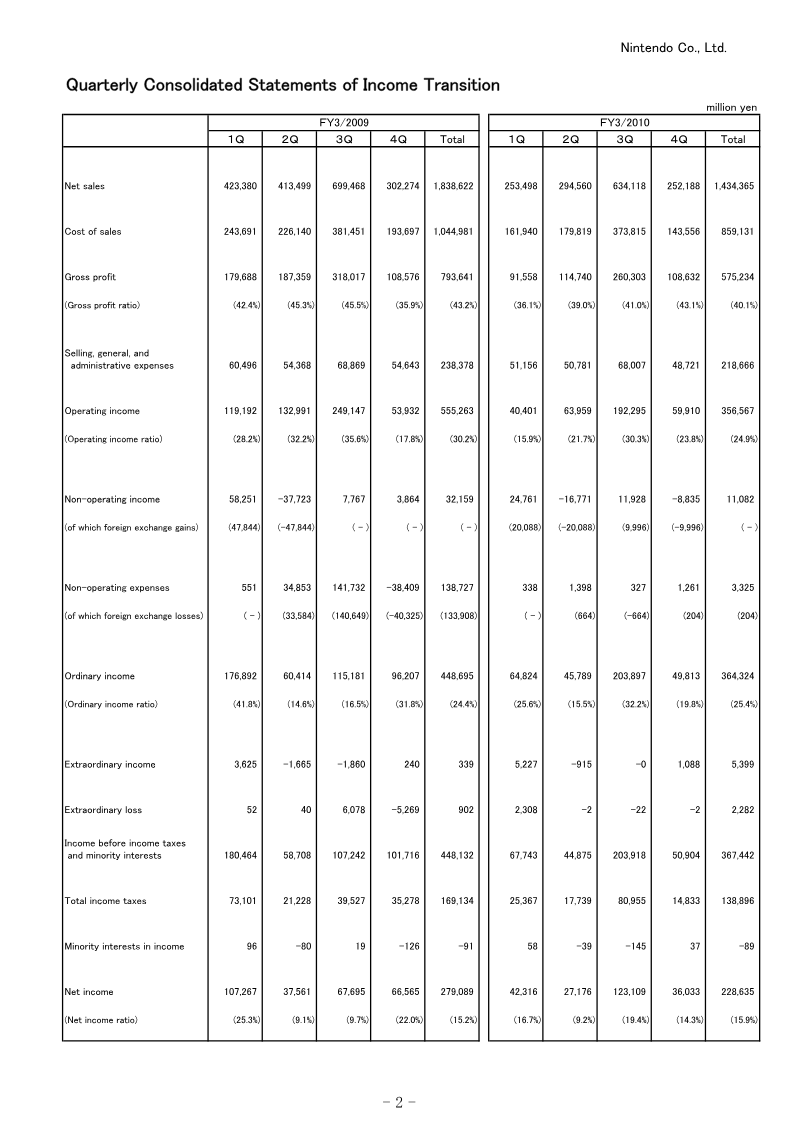
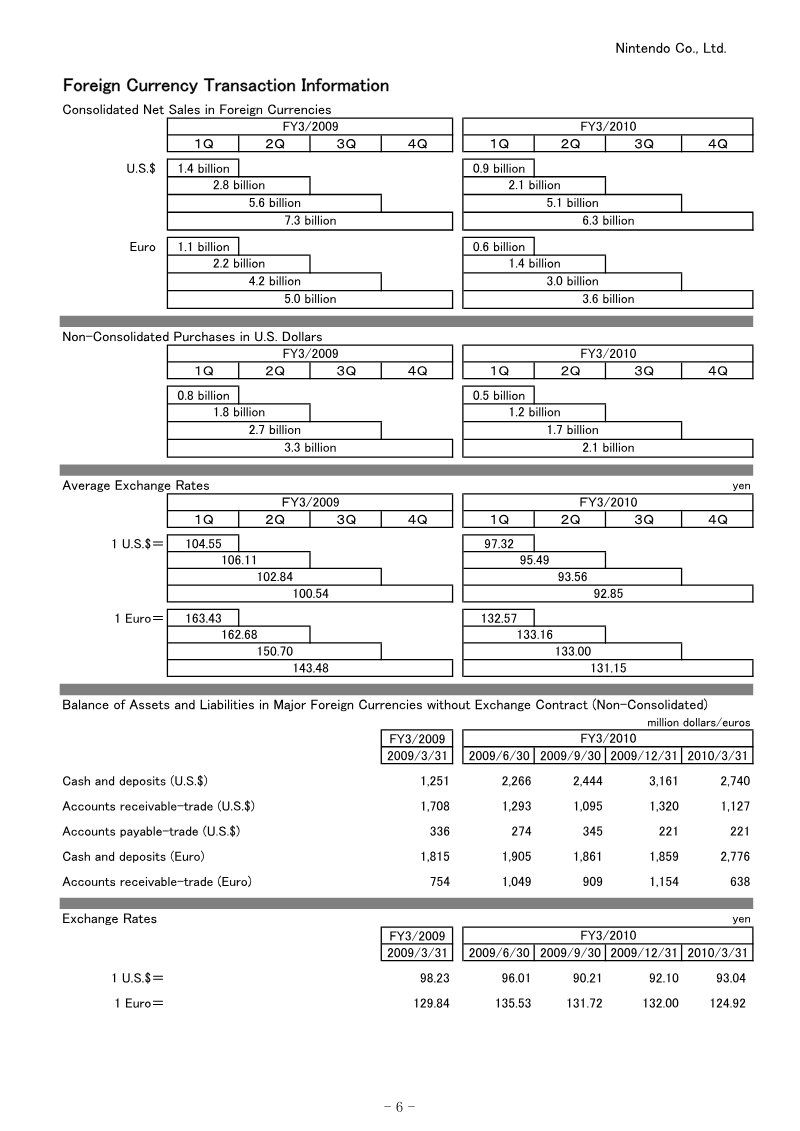
Financial Results Briefing for Fiscal Year Ended March 2010: Supplementary Information
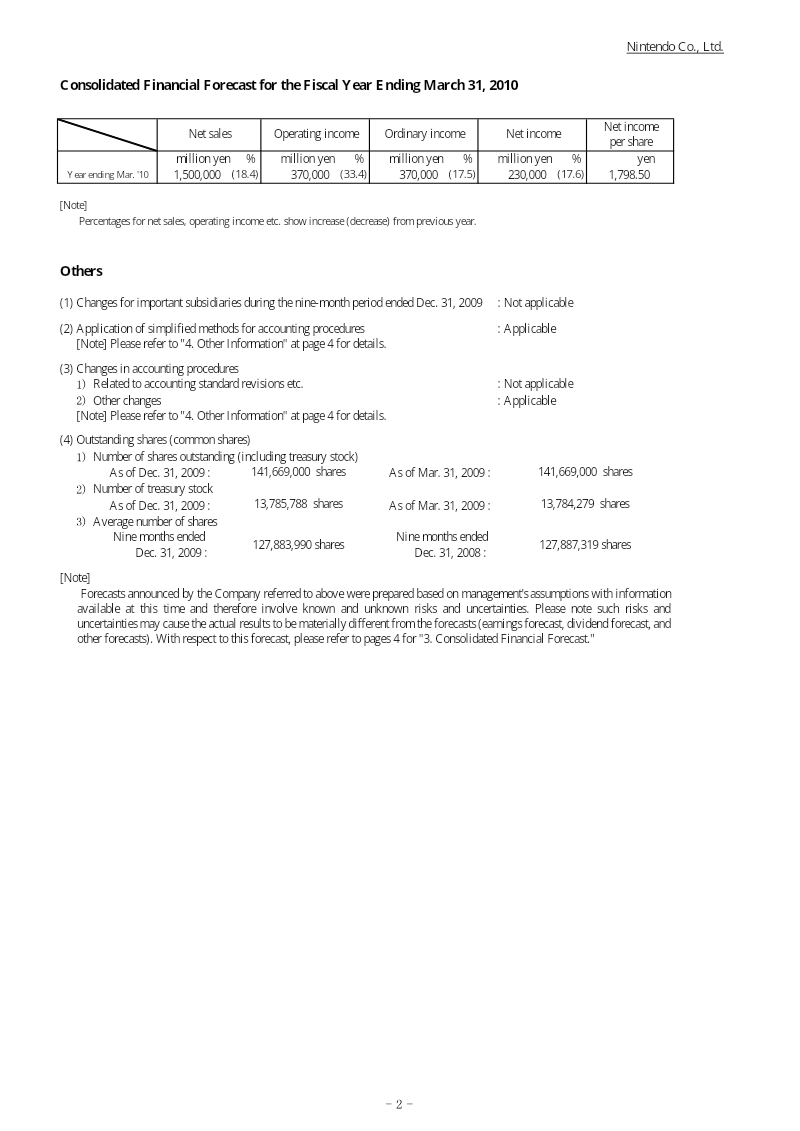
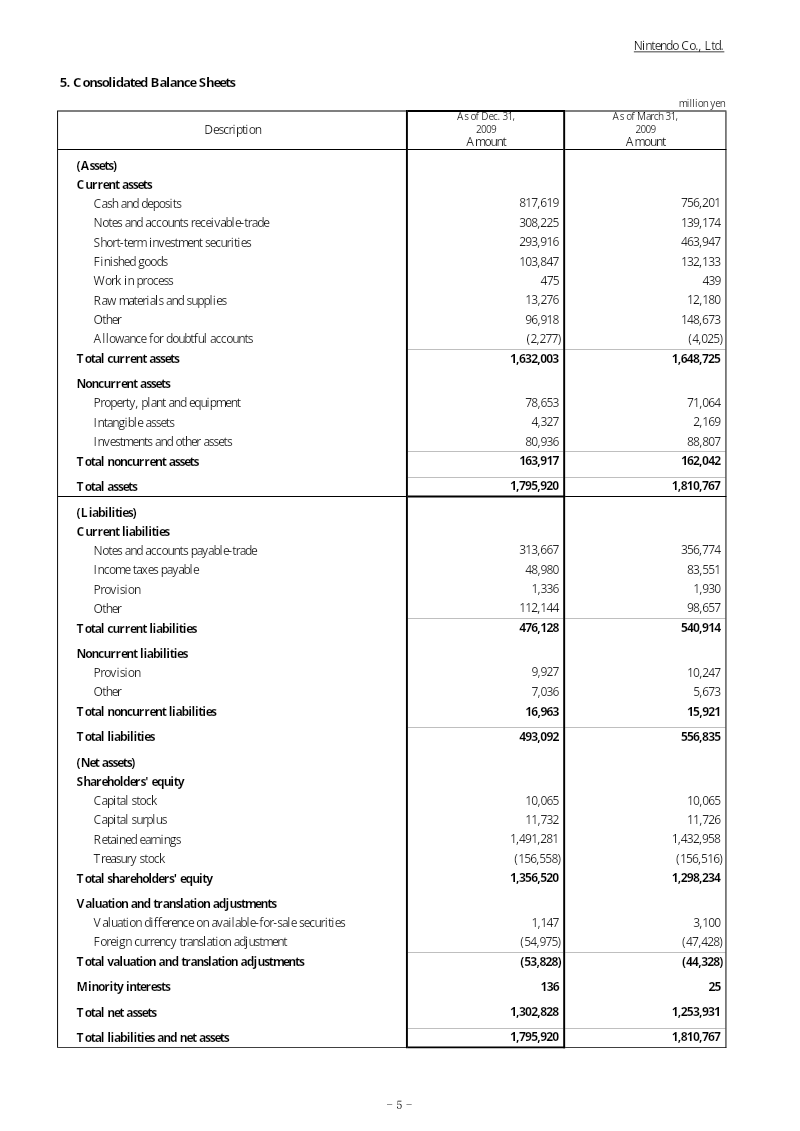
The financial results for the fiscal year ended March 2010 reflect a period of contraction for Nintendo following several years of rapid growth.
Consolidated Results for the Nine Months Ended December 2008 and 2009
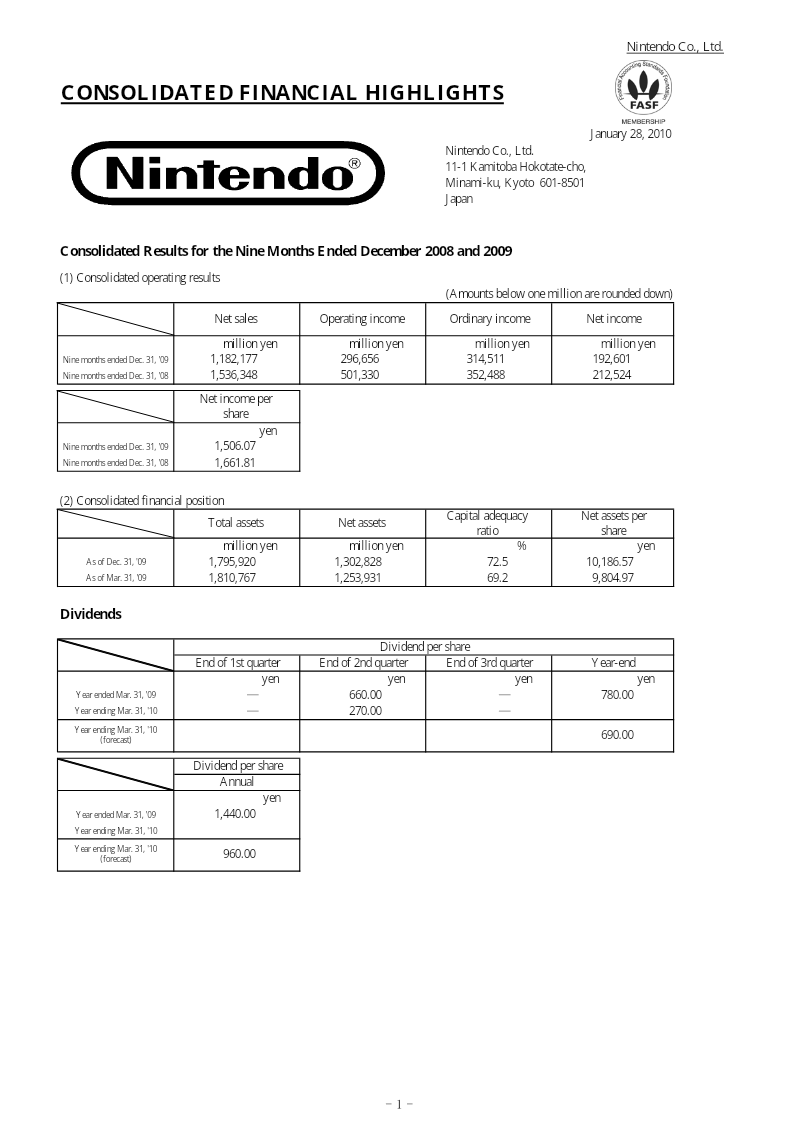
Nintendo’s consolidated financial results for the nine-month period ending December 31, 2009, reflect a period of contraction compared to the same timeframe in 2008.
Financial Results Briefing: Nine-Month Period Ended December 2009
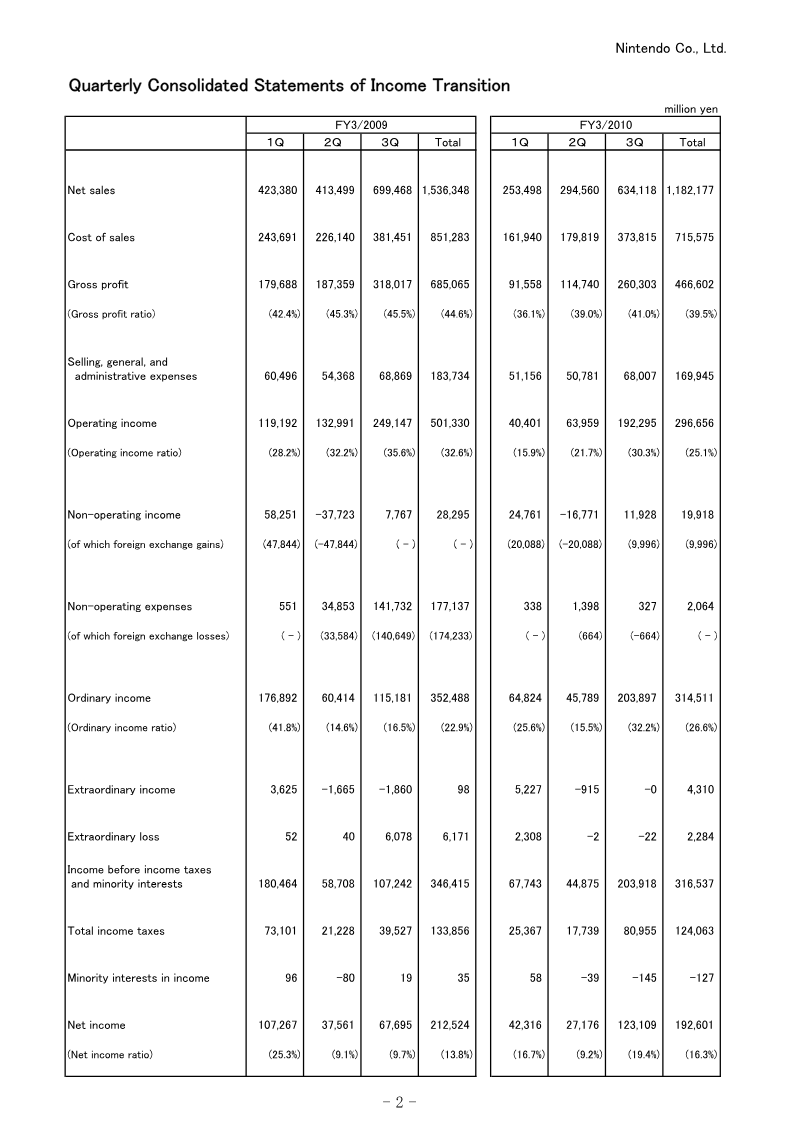
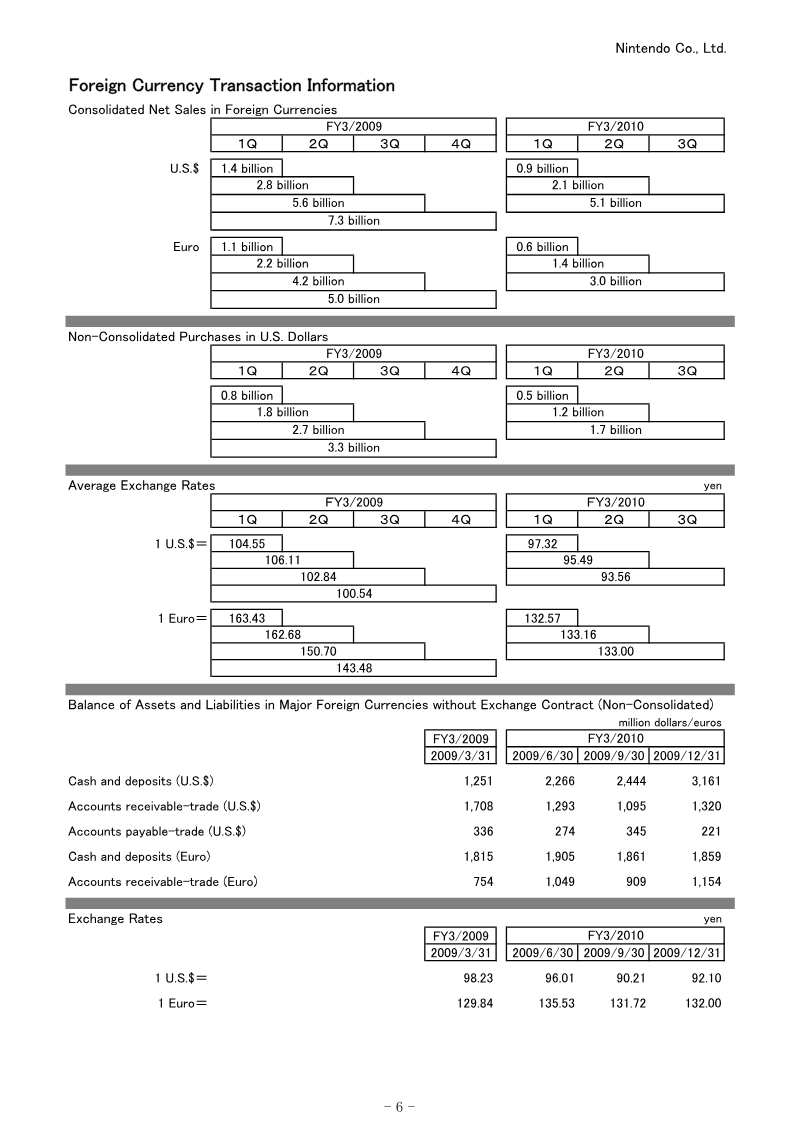
This financial results briefing details Nintendo’s performance for the nine-month period ending December 31, 2009.
- Nintendo experienced a period of financial contraction for the nine-month period ending December 31, 2009, reporting net sales of 1,182,177 million yen, operating income of 296,656 million yen, and net income of 192,601 million yen.
- The gross profit margin declined to 39.5% for the nine-month period, down from 44.6% during the same period in the previous fiscal year.
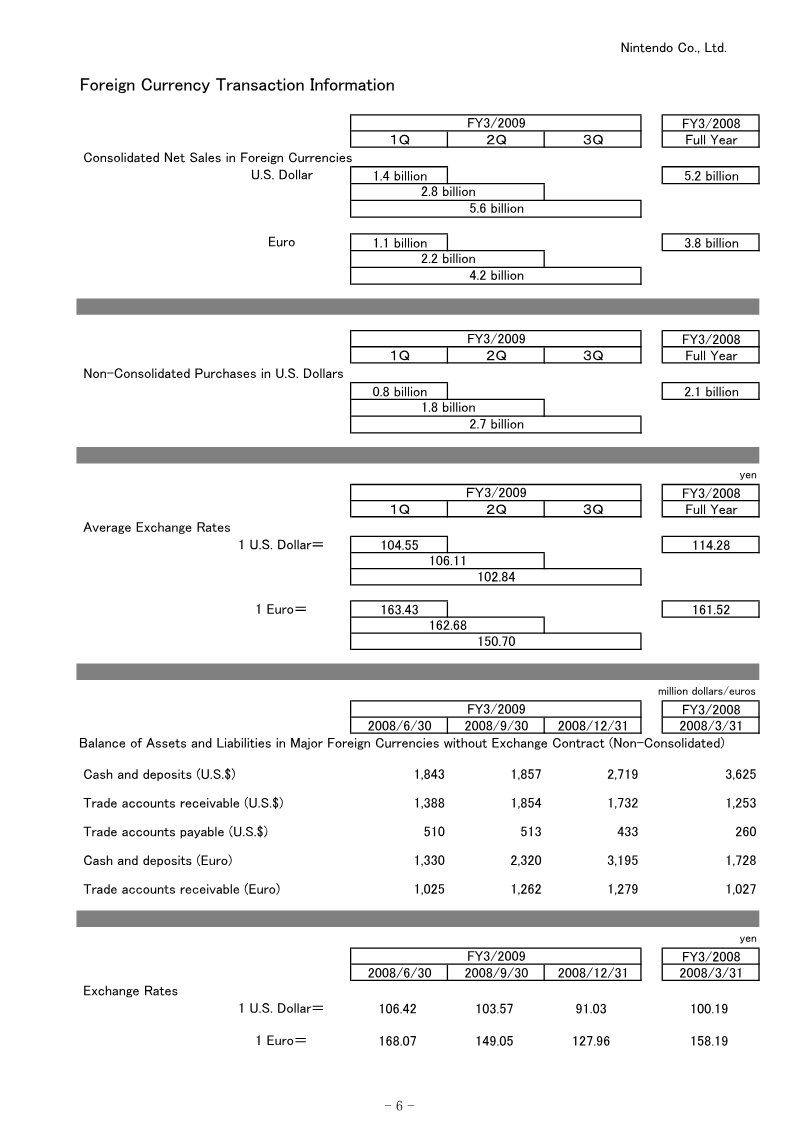
- Financial performance was negatively impacted by foreign exchange volatility, specifically the appreciation of the Japanese yen against the U.S. dollar and the Euro.
Financial Results Briefing for the Nine-Month Period Ended December 2008
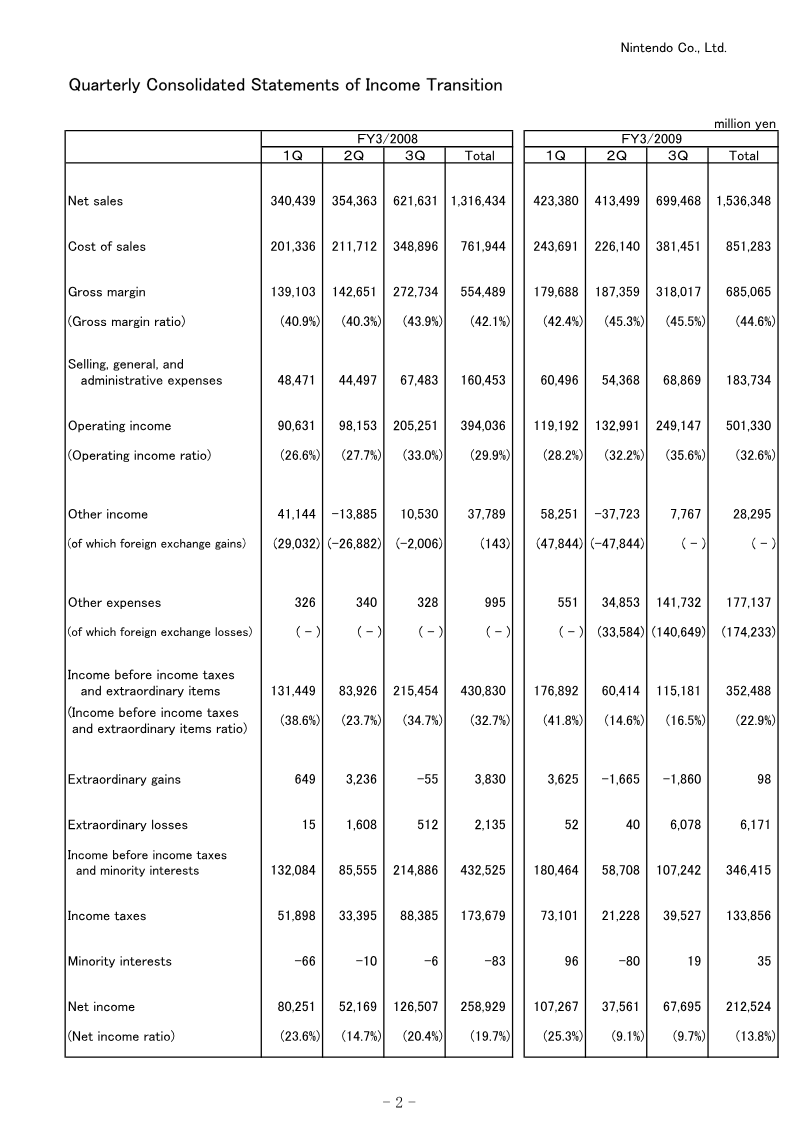
The financial results for the nine-month period ending December 2008 demonstrate continued growth for Nintendo, characterized by strong hardware and software sales for the Nintendo DS and Wii platforms.
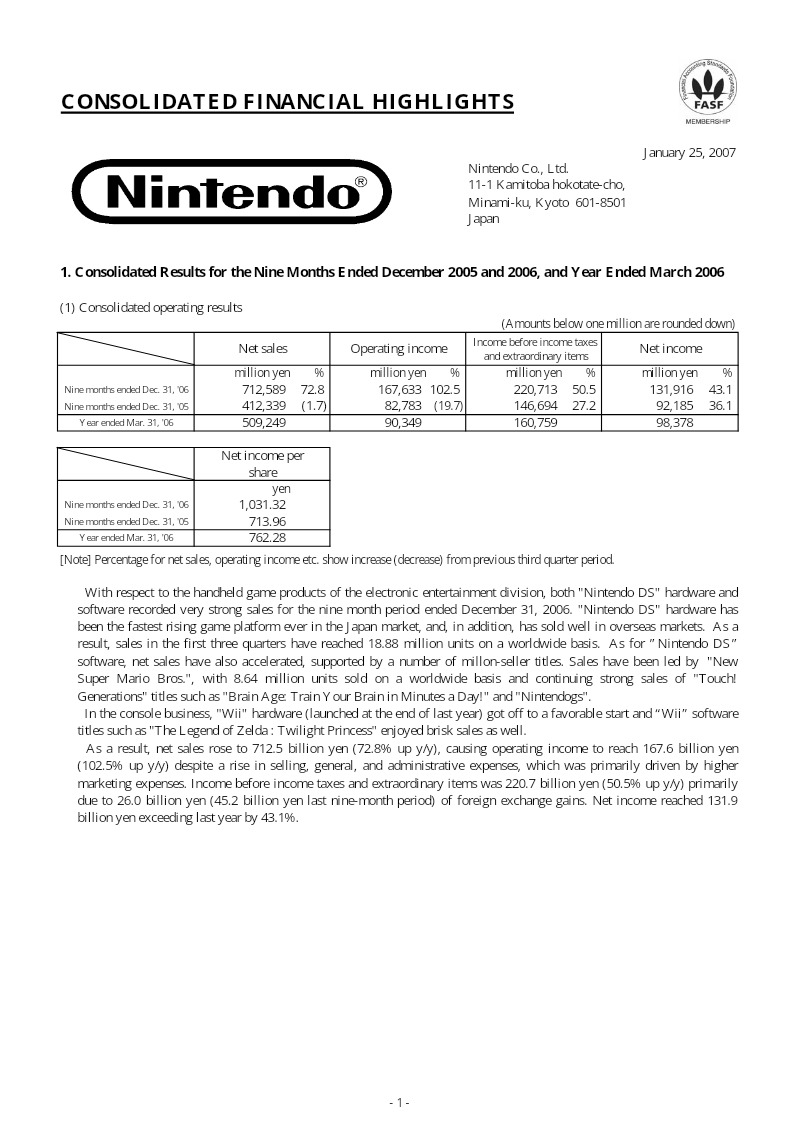
Consolidated Financial Highlights: Nine Months Ended December 2006
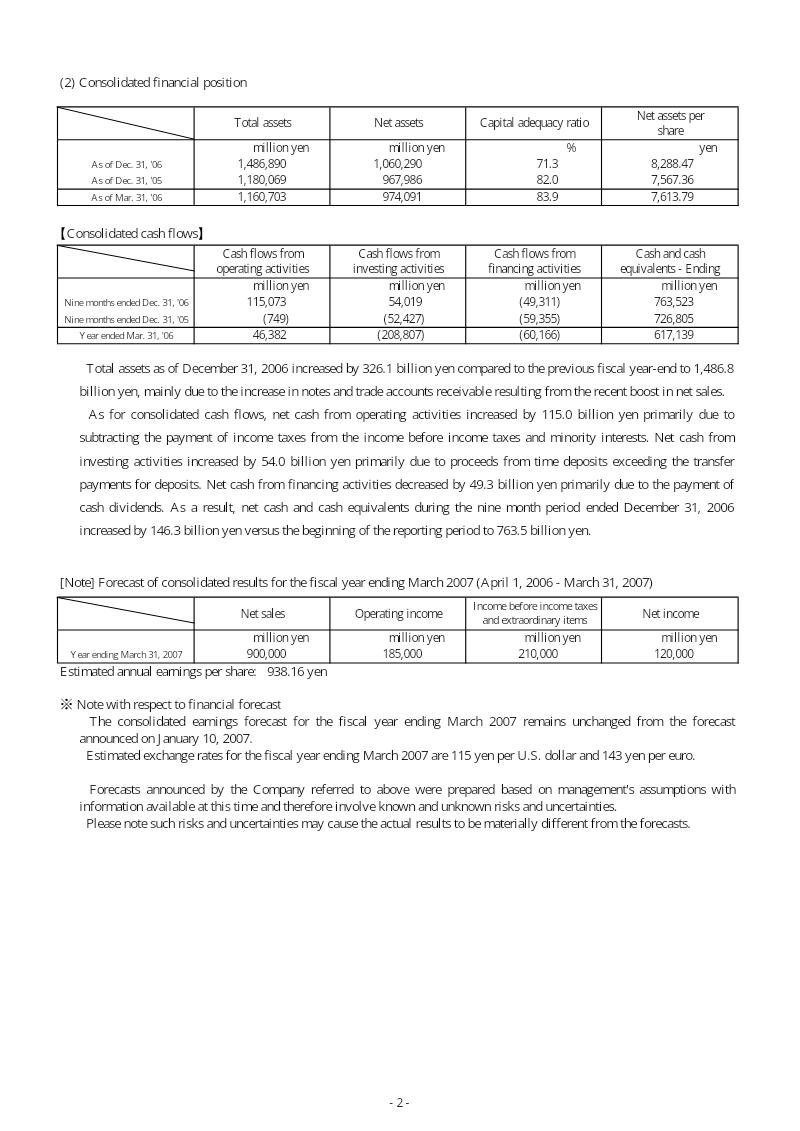
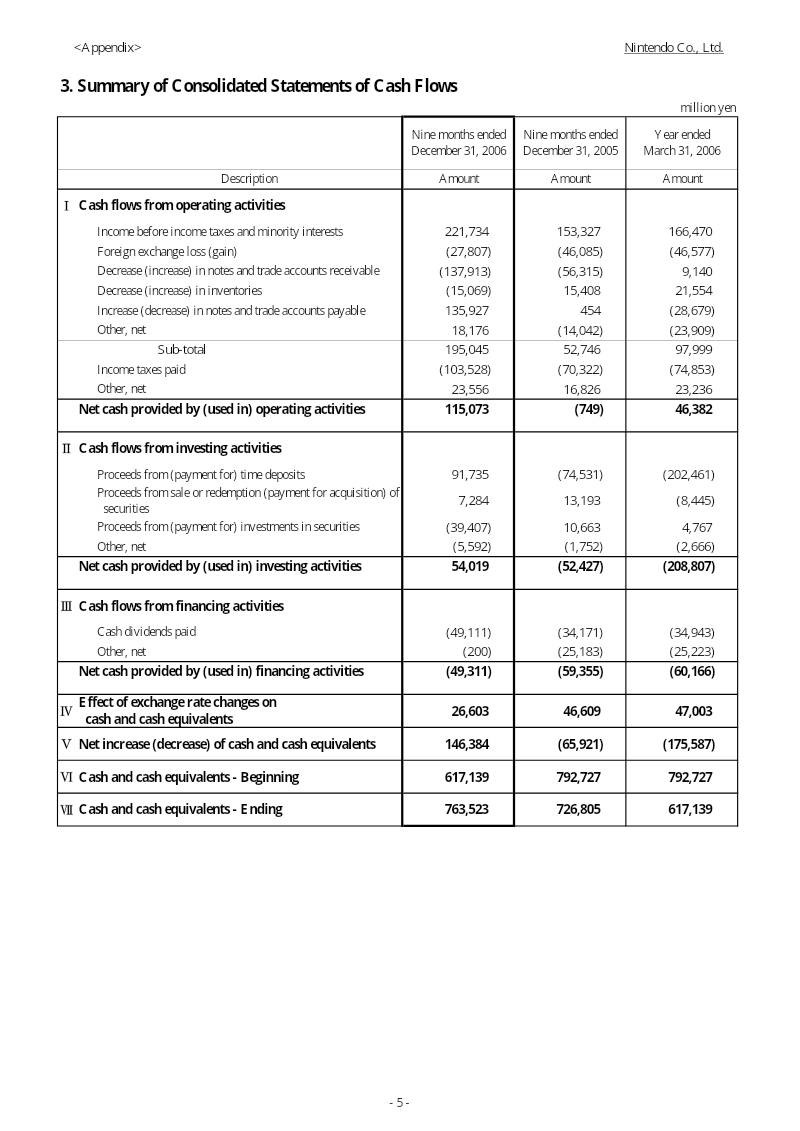
Nintendo Co., Ltd. experienced significant financial growth during the nine-month period ending December 31, 2006, driven by the robust performance of its electronic entertainment division.
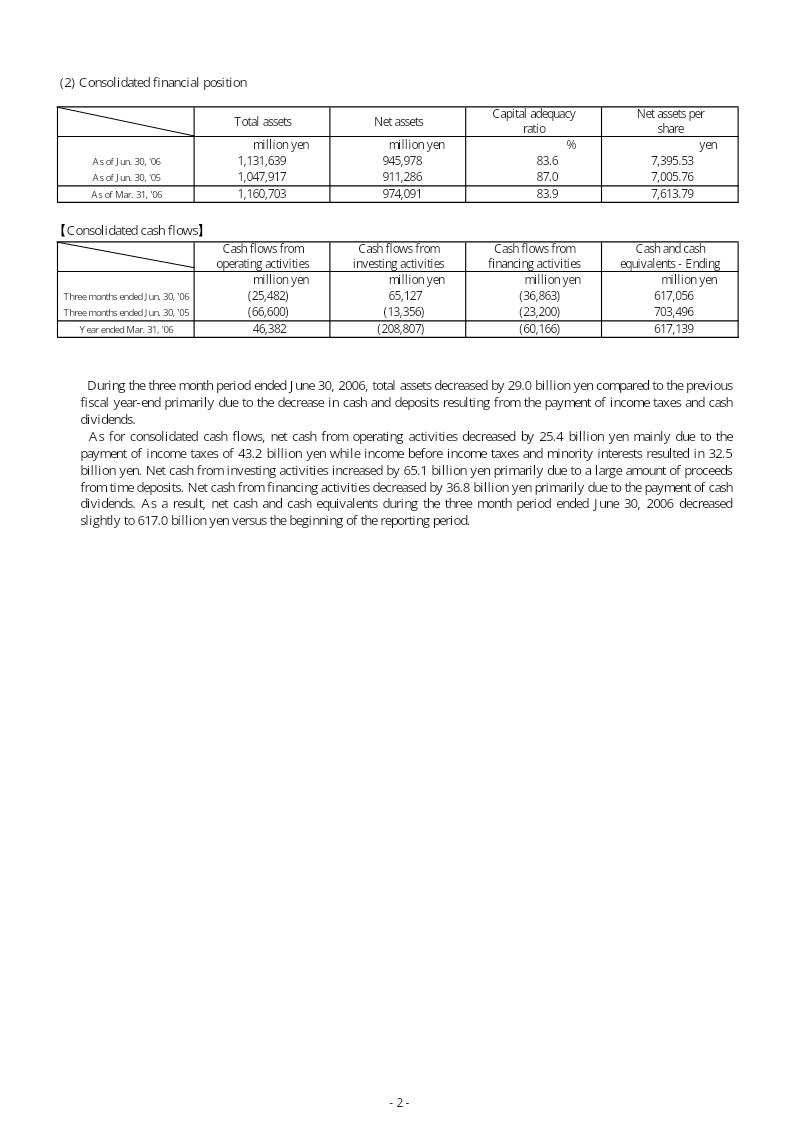
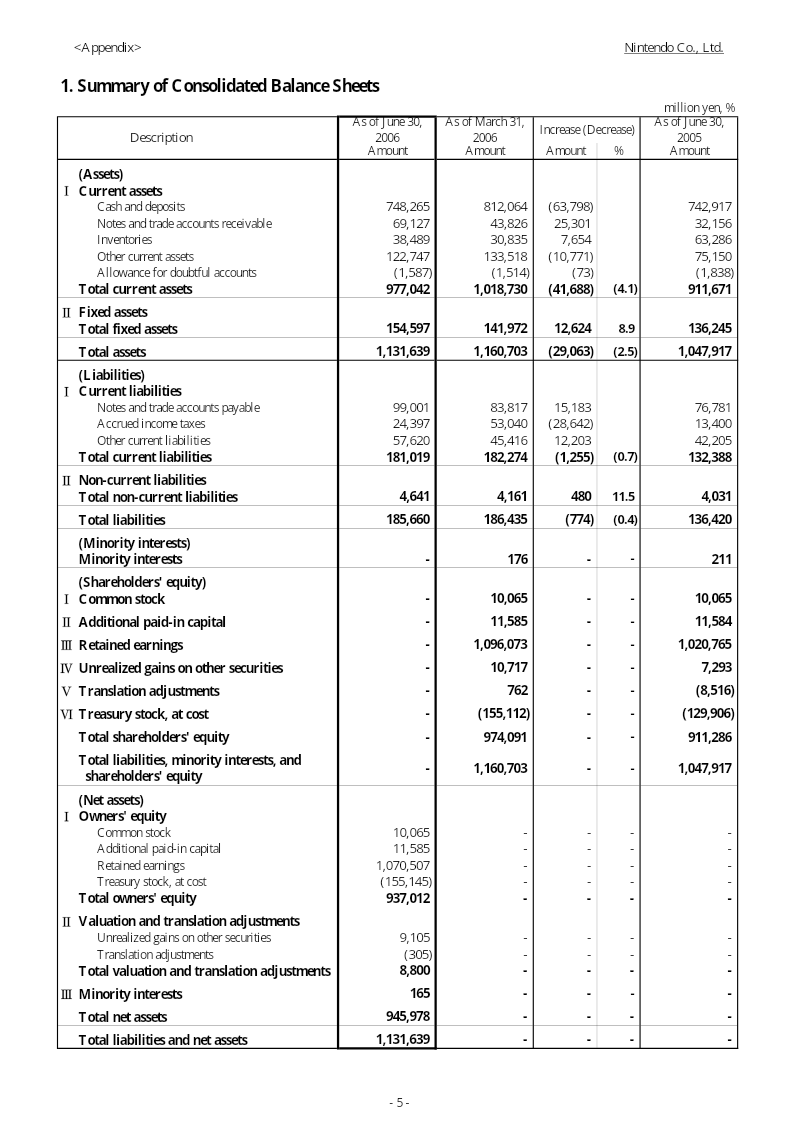
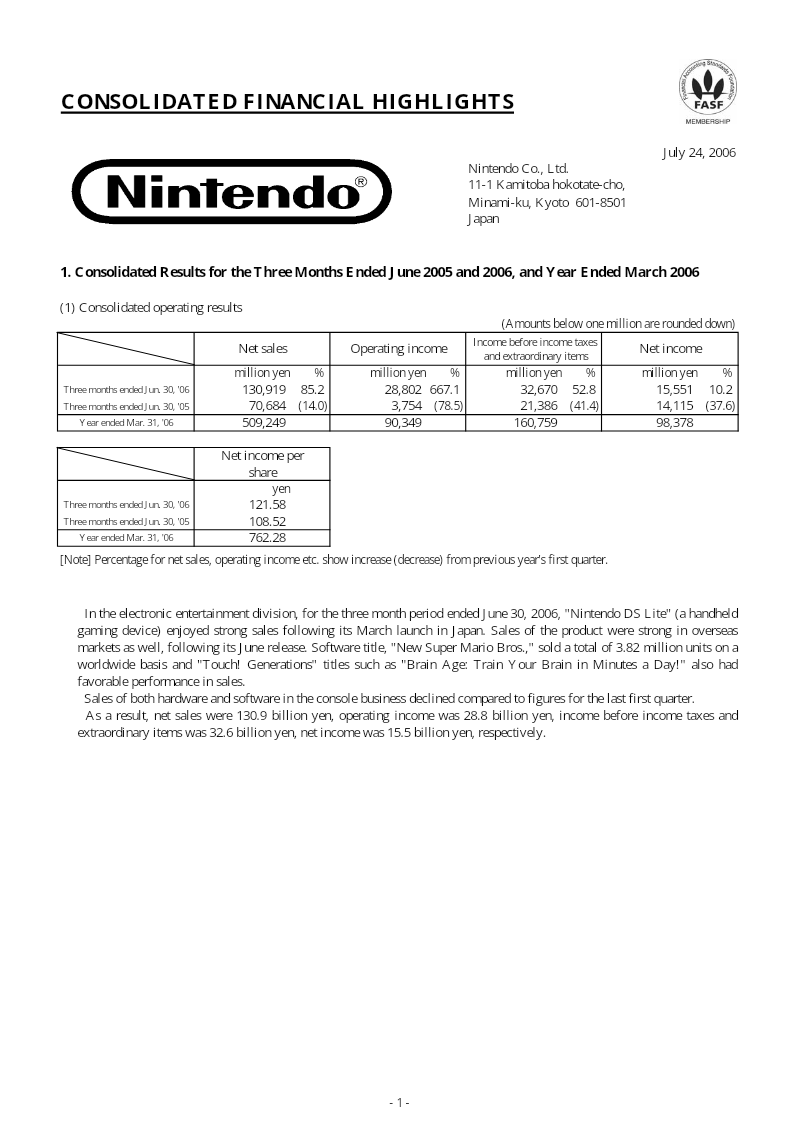
Consolidated Financial Highlights: Three Months Ended June 2006
This report details the consolidated financial results for Nintendo Co., Ltd. for the first quarter ending June 30, 2006, and provides updated earnings forecasts for the fiscal year ending March 31, 2007.