Islanders
GameBy Coatsink
Documents about Islanders

Our New Game "Didn't Meet Expectations"
The development of a new indie title, codenamed Dodo Derby, serves as a case study in the challenges of game design and the importance of adhering to established development philosophies.
- Prioritizing a strong, clear 'fantasy' or core concept at the start of development is essential for the studio's success, as projects lacking this foundation often lead to aimless prototyping and eventual cancellation.
- The studio cancelled 'Dodo Derby' after six months of development because the gameplay-first approach resulted in unintuitive rules and a high skill gap that could not be resolved without over-complicating the design.
- Development teams often fall into the trap of 'echo chamber' testing, where playing exclusively with the same small group masks usability issues and lack of accessibility for broader audiences.

How to Make Anything Fun
Fun functions as a biological reward mechanism, signaling that the brain is effectively building and refining its internal model of the world.
- Fun is a biological prompt for learning, functioning similarly to hunger or thirst, and is best achieved by creating an optimal learning environment.
- The 'Flow' state—the core of fun—requires a balance between challenge and skill, frequent and fast feedback, clear goals, and a high signal-to-noise ratio.
- Game design should prioritize a smooth difficulty curve that keeps players within the 'flow channel,' utilizing emergent and combinatorial complexity to provide layers of depth.

You (Probably) Can't Trust Game Dev Formulas
The modern game development landscape is defined by its inherent unpredictability, rendering rigid, universal formulas for success largely obsolete.
- Prioritize the core game idea over execution, as experienced developers often reach a point where technical execution is no longer the primary hurdle to creating a successful product.
- Develop a unique visual identity quickly by leveraging constraints; for example, the game Slots & Daggers established its final aesthetic in just two weeks by combining gestural iPad sketches with specific post-processing and lighting effects.
- Balance familiarity and novelty by ensuring a game is recognizable enough to not alienate players while offering a distinct hook, such as combining the established deck-builder rogue-like genre with a claw machine mechanic.

What Sells on Steam: You Don't Need a Hook
Successful indie game development on Steam does not require a unique gameplay hook—a specific mechanic designed to differentiate a title—but rather a focus on compelling player experiences and market appeal.
- Commercial success on Steam is driven by the player's desired experience and fantasy, rather than a unique gameplay mechanic or 'hook'.
- Developers should prioritize solving for 'appeal'—the visual or conceptual urge that makes a player want to engage with the game before they have even played it.
- Successful game development strategies include iterating on proven formulas (like Thronefall), finding market gaps (like Islanders), or translating successful media tropes into a game environment.
They Paid Us To Upgrade Our Indie Game
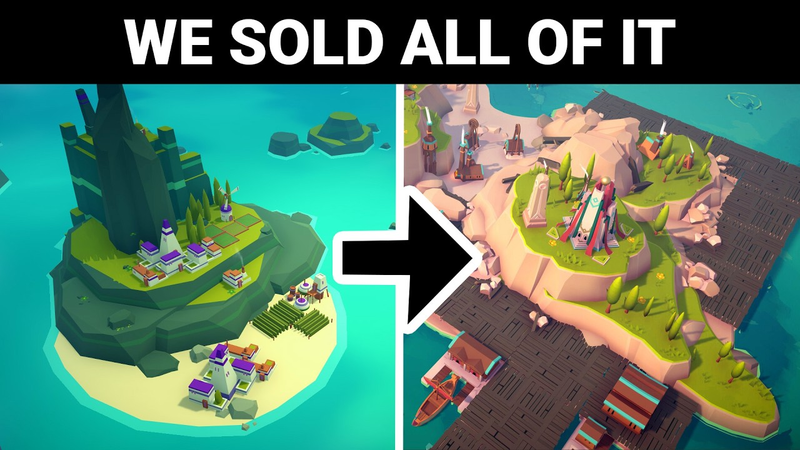
The sale of intellectual property (IP) by independent developers can serve as a viable strategy for both exiting a project and ensuring its continued development.
- Selling an indie game IP can be a viable exit strategy when the original developers no longer wish to maintain the project, as demonstrated by the sale of 'Islanders' to the porting studio Coatsync.
- The sale price for the 'Islanders' IP was approximately 1 to 2 times the total revenue the game had generated in the year following its initial release.
- Selling an IP can provide significant relief from the long-term stress of maintenance, porting, and community management, which the author notes can be exhausting and prone to contractual failures.
2 Years of Indie Game Development
This summary reflects on a two-year journey in independent game development, focusing on the transition from a student to a financially secure developer.
- The release of the game Islanders, developed in collaboration with an established studio, achieved over 200,000 sales and provided the necessary financial and professional foundation for a career in indie development.
- Long-term career sustainability requires prioritizing game production over content creation, as the developer is moving away from a rigid weekly YouTube upload schedule to focus on project quality.
- Solo development projects like Will You Snail highlight significant operational challenges, specifically the difficulty of self-marketing and the technical limitations of working without a dedicated art team.

I Answer All Your Game Dev Questions | Q&A
This overview provides professional guidance on entering and succeeding in the independent game development industry, drawing on over a decade of experience from a professional developer.
- Prioritize project-based learning over passive study by focusing on core programming logic like loops and conditional statements rather than memorizing syntax.
- Maintain a manageable project scope to ensure completion, as the ability to finish projects is a critical factor in achieving a sustainable, full-time career.
- Build a portfolio of unique, appealing projects rather than relying on academic degrees, as employers prioritize demonstrable skills and interpersonal reliability.

How To Design a Decision | Game Design
Effective game design relies on the construction of engaging, meaningful decisions. A successful decision-making framework consists of five core pillars: options, impact, understanding, future consequence, and challenge.
- Effective game design relies on a five-pillar framework consisting of options, impact, understanding, future consequence, and challenge.
- Meaningful player agency requires providing multiple options that lead to distinct, tangible outcomes rather than singular paths.
- Players must have a clear understanding of the cause-and-effect relationship between their actions and game results to facilitate learning and progression.

THIS IS A WARNING! - Indie Game Devlog
This account of indie game development provides a realistic, unvarnished look at the daily operations of a professional developer.
- Professional game development is defined more by tedious maintenance, bug fixing, and administrative tasks than by creative design work.
- Post-launch success for a title like Islanders requires managing significant technical debt, including verifying save-file compatibility and resolving platform-specific issues on Linux and Mac.
- The daily reality of an indie developer involves substantial bureaucratic burdens, such as legal entity formation and tax documentation, which frequently consume time intended for game production.
How to Randomly Generate Levels (and Islands)
Procedural level generation offers a scalable method for creating infinite game content, but successful implementation requires a structured, iterative approach.
- Prioritize handcrafted design during the prototyping phase to establish quality benchmarks and define core gameplay loops before automating content generation.
- Implement a hybrid generation approach by using predefined, handcrafted assets as building blocks rather than calculating individual geometric vertices.
- Utilize trial-and-error placement algorithms where objects are dropped into random positions and validated against specific constraints, discarding invalid placements until a suitable location is found.
We Released Our Game on Steam!
The launch of the minimalist strategy game Islanders on Steam marks a significant milestone for Grizzly Games, characterized by immediate commercial success and high visibility on the platform’s front page.
- Grizzly Games achieved immediate commercial success and high platform visibility upon the Steam launch of their minimalist strategy title, Islanders.
- The launch phase required the small indie team to pivot rapidly toward high-volume technical maintenance, bug fixing, and community management to support a suddenly expanding player base.
- Islanders differentiates itself from traditional city builders by removing complex resource management in favor of a procedural, point-based system focused on building placement and proximity bonuses.
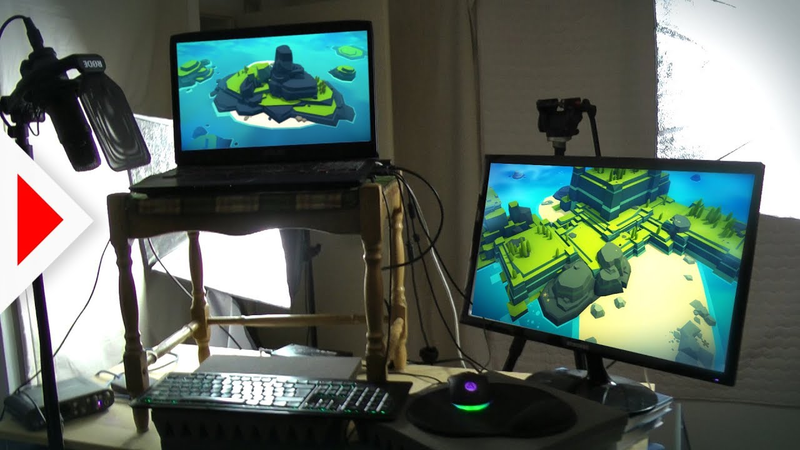
Game Dev: The Week Before Launch (Devlog)
The final week of development for the indie title Islanders highlights the technical and logistical hurdles inherent in preparing a game for a Steam launch.
- The final week of development for Islanders focused on critical technical stabilization, specifically resolving Linux build compatibility, dynamic batching failures from multiple light sources, and mesh transformation errors.
- The development team utilized Unity’s frame debugger, iterative testing, and community-sourced troubleshooting to address performance bottlenecks before the Steam launch.
- To maintain productivity and morale during the high-stress pre-launch period, the team employed a dual-project workflow, working on a separate platformer project during daily livestreams.