For Honor
GameBy Blue Byte
Documents about For Honor
Game Developers Conference60 min
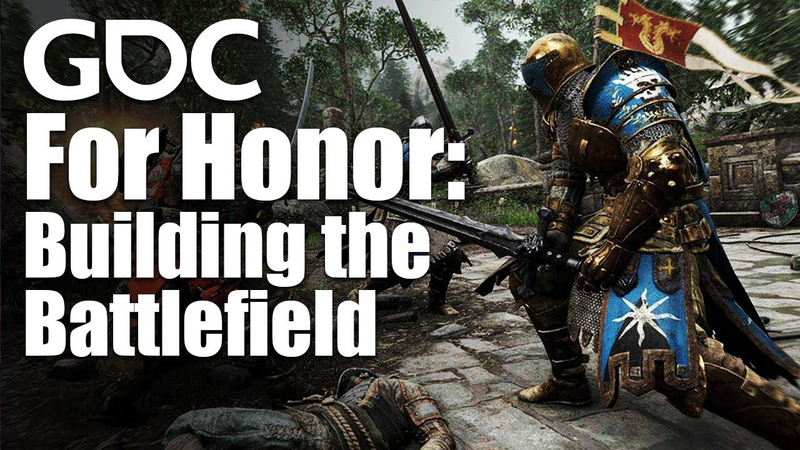
Deterministic vs. Replicated AI: Building the Battlefield of For Honor
The architecture of For Honor relies on a deterministic, input-driven simulation model designed to facilitate high-fidelity, skill-based melee combat.
- For Honor utilizes a distributed peer-to-peer deterministic simulation where only player and AI inputs are transmitted across the network, ensuring all clients reach the same game state without synchronizing complex object properties.
- The game architecture treats AI and human players identically, using a shared 'Katana' state machine tool that allows designers to define character states, movement, defenses, and branching conditions without hard-coding logic.
- To manage large-scale battles with up to 200 actors, the team replaced complex, costly platoon-merging logic with simple flocking rules to handle movement and target acquisition efficiently.
Game Developers ConferenceSep 2019
Game Developers Conference51 min
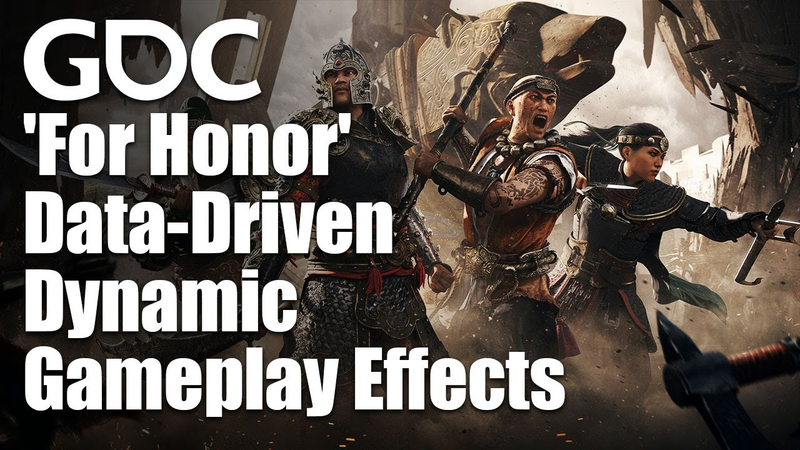
Data-Driven Dynamic Gameplay Effects on For Honor
For Honor employs a modular, data-driven modifier system designed to decouple gameplay logic from core programming, thereby granting designers the autonomy to iterate on mechanics without constant engineering support.
- Ubisoft implemented a data-driven modifier system for For Honor that allows designers to dynamically create gameplay effects—such as stat buffs, AI decision-making, and attack properties—without requiring additional programming code.
- The system utilizes a modular architecture where modifiers can be applied to various entities, including players, NPCs, capture points, and interactive objects, enabling high reusability across different game features.
- To manage performance under a load of approximately 3,000 queries per frame, the team implemented entity-specific caps, limiting soldiers to 6 active modifiers while allowing players a higher threshold.
Game Developers ConferenceAug 2019
Game Developers Conference52 min
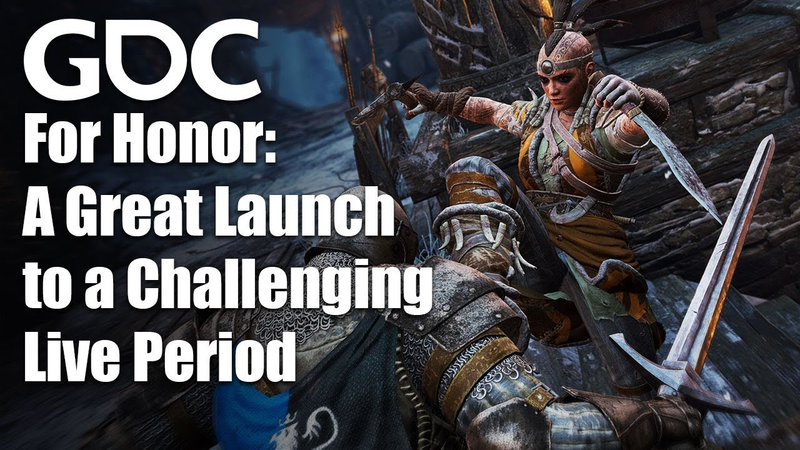
For Honor: From a Great Launch to a Challenging Live Period
The transition from traditional game development to a games-as-a-service model requires a fundamental shift in mindset, moving from the delivery of a static product to the ongoing management of an evolving ecosystem.
- Transitioning to a games-as-a-service model requires shifting from static product delivery to managing an evolving ecosystem, necessitating a move from intuition-based design to rigorous, data-driven balancing.
- Maintaining competitive integrity in live services depends on tracking granular metrics, such as win rates and move-usage patterns, across diverse player skill levels.
- Infrastructure stability is critical to long-term viability, as evidenced by the necessity of transitioning from peer-to-peer networking to dedicated servers to resolve post-launch performance vulnerabilities.
Game Developers ConferenceMay 2018
Companies behind it

As the documents state it.