VideoDeconstructor of Fun
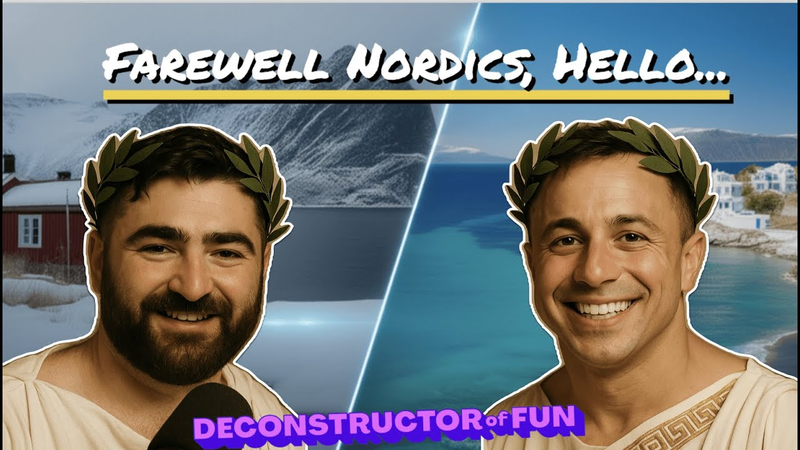
Why Scandinavia Makes You So Happy? And Why We Chose To Leave.
1 Sept 202574 min video
Transcript
This place has a way of hugging you and cradling you in a way that you don't expect. And I don't want to use the word cradle. I I think it like has a way of like sucking your ambition in some way and just like making you so complacent and and happy. [Music] Scandinavia is the greatest conservative scop that no one talks about. Phil, you keep pushing this conspiracy theory. Tell me more about this. All right. Well, there are certain things that I think now living here for 8 years that like people do not understand about this region of the world. This is the most conservative place I think I've ever lived. Uh, and I've lived in I lived in the south. I've lived in North Carolina.
But it it like manifests in interesting ways. And when I say conservative, I mean like small C conservative.
What do you what does that mean? you you you experienced this too, right? So, not
necessarily like, you know, the modern political conservative movement, but more of
like the Burky and small C. Reverence for tradition is really what I mean here. Like the Swedish celebration of the most randomass holidays and routine is is unparalleled. St. Lucia Day, um Fat Tuesday, uh going to get candy every single week, uh Donald Duck TV, like there's all of these traditions that help like bind these people together.
Yeah. But but it is a monarchy. I
mean, sure, sure. Yeah. So, so that would reinforce the point. I don't I don't think the monarchy is too active here. I don't think they're like uh you know, veto vetoing bills.
It's one of the symbols of conservatism.
True, true, true. But like most most Swedish things are fairly modest, though. That's one of the things I would I would push back on. Like when you look at almost all of the summer homes, they're all the same color red, which by the way, someone actually did a PhD thesis on like why they all look the same. But it's that it's that no no tall
poppy, which is a Chinese proverb. Um, you know, law of equality that these people seem to follow that I think actually enhances modesty. There's a lot of modesty here
in dress too. Again, conservative
conservative it's it's humility. Fins also love to put put the word humility. That's the uh that's the most cherished value. And you see you see humility in an interesting way in Finland. It's very much like like my wife describes Finns as aspirational Germans. And so she's finished. And and so the way it comes like for example in Germany or in Finland, if you'd buy an expensive car, first of all, you would not buy a Porsche. Like that would be like what are you doing? Flashiness is not the thing. You would buy a car that is more expensive than a Porsche, but it is a station wagon BMW or something like that, you know? Like with the crazy horsepowers. It's a 4x4. It's like it's
so much utility. like there has to be utility component to it. And then what you do is you cover up that it is a super BMW or Audi or whatever. So you take away the tax like when you're buying your car, there's an option like can I get it without it saying that this is a supercar? Let's hide it from everybody and let just me drive my super car
and not be flashy. So humility extends to every aspect. That was just a car example, but I think you know people catch the drift how it works.
Yeah, I know. And it extends to dress too, right? You you've seen those Instagram memes of people living in a particular region and checking back in like every so often. Like you definitely have a Swedish dress evolution here. Like I've watched my girlfriend go through it.
Like all of her clothes are starting to become darker and more monotone.
Mhm.
Um the width of the jeans is starting to expand. By the way, we're revisiting 90s American fashion right now in
in Sweden. Midrifts are back. Uh there's there's things you thought you would
never see that are back in. Baby,
so you're moving out of Sweden.
Uh yeah, I would say it's it's pretty confirmed at this point. Look, there there's a couple
confirmed. What is confirmed?
Look, it look there's already there there's always a lot of pieces, especially, you know, when you get a business. um when you've lived here for so long, uh there's a lot of legal obligations that you try to figure out as well cuz I'm an American too and I think that makes the tax situation always more complicated. Uh but you're coming with me. We're holding hands, right?
We're jumping together.
We're we're jumping together. So September is the date that both of us are leaving Scandinavia, the greatest conservative SCOP that no one talks about, and both of us are migrating south. How far south are we going?
Uh, the Mediterranean.
The Mediterranean. Correct. And And the funny thing, so
what happened was like without knowing what each of us was doing, actually I kind of had a whiff of what you're going
to do. So, you're moving to Cyprus, which is which is the place that everybody thought I would be moving
and I'm moving not that far away, Athens, just like it is right now between Helsinki and Stockholm. So tell me about like how did you end up an American living in Sweden, getting Swedish citizenship, drinking from the Kool-Aid of the conservative SCOP and then going to the uh the the Puerto Rico of Europe?
Is that is that what it's called?
Uh you tell me. It's a tax haven with uh where nobody would live otherwise, but the taxes are really low and it's infrastructure is not quite there. It sounds like Puerto Rico to me. The weather is great. Gets evolving.
Yeah, just like Puerto Rico. It's evolving. It's the uh you would meet the Jake Pauls of Europe in in Puerto Rico.
Uh oh. Game devs, we know that great
gameplay is what players love. But integrating metagame features like challenges, progression, rewards is crucial for retention and monetization. However, coding them is a tedious and timeconuming process. That's why top studios have turned to Hero. Hero provides a complete suite of battle tested metagame features that are quick to implement, letting you spend more time on the core gameplay experience. Ready to ship fully featured, engaging games? Check out hero today by clicking the link below.
Man, I you know I was I was you know when you when you go through this process, you start to like look back at dates uh for certain for certain things for dregistration or whatever it may be. And it was like shocking that I've lived in this continent for like basically a fourth of my life. I've lived in the old the old continent uh Europe which is crazy to me. Uh absolutely crazy. Like I've gotten Swedish citizenship. Uh, I have two Swedish pets. I started a Swedish business. Um, yeah, it's it's
it's it's weird, right? I didn't I didn't go on this journey on purpose. Uh, but I would say this, like this is why I think games is like the greatest thing in the world. And if you're listening to this, you have this opportunity. If you work in games, it can take you anywhere, right?
Uh, it can take you absolutely anywhere because games are made everywhere. It's like those very curious industries. We usually call them like these acclamation effects in economics where like industries tend to cluster because there are knowledge spillovers like Silicon Valley, but games have like this multiple equilibria where like hey there's a London hub, there's a Los Angeles hub, uh there's a Finnish hub, there's a Swedish hub, uh and that enables you as a highly skilled labor to move and have companies pay you pay you to come to their place and take care of all the messy details. And I think if you get that opportunity, particularly as an American, like you don't want to like have regrets. You don't want to look the path not taken. I think most Americans like if especially if they studied abroad in college, they're like, "Oh man, what would it be like to live in Europe?"
Well, I imagine it. If you work in games, you can make it happen.
Yeah.
Just be willing to accept 2x the tax rate and half the salary
and you can live the European dreams. Well, that's why not many Americans move around is because of the student debt and the uh the salaries here being so much lower and the tax so much higher. But I think the the way you view opportunities is exactly the way I do it is like what would happen if I wouldn't take this opportunity rather than like oh how hard is I need to move. I need to figure out this. I need to figure like rather just think about it like 10 years later would you regret that you didn't take this path? But tell me a little bit more about Cypress. Did you visit Cypress and were like, "God damn it, I don't want to leave."
I did.
I did.
I I mean, here's you have to fit it in like a broader context. I mean,
I'm ready for kind of the next stage of life.
Uh hopefully Eric Crest is somewhere laughing. And so, like, okay,
the contractor wife.
Yeah. Yeah. So,
are we are we making her a full-time employee?
Yeah. And I I don't I don't think it's going to be the old content for us. Uh, we can talk about this more later, but I've I've had an amazing time here. You know, I have so much respect and thanks for the Swedish people.
Uh, I'm ready to take up arms against Putin. Uh, you know, you know, I'm ready to be at the border uh to defend my my citizenship. But
you haven't gone through the Swedish military forces, just to be clear. You're not part of the Swedish defense forces. So, you're the last one to be called.
We'll see if conscription starts again. That would be interesting. Oh, then you wave your US passport and be like, I need to go back home. They need me.
Uh, we'll see. We'll see. I put a lot of Swedish kids through college. Um,
so yeah, I think I think, you know, you're trying to figure out the next stage of life. You know, I want I wanted one last two. You know, we we got this citizenship. I want to have a little bit of fun.
Uh, and I think Cypress provides a lot of opportunities to do that. Um, you don't have to be in Cypress. Um, as long
as you might be another place, too. So, if you want to use a home base to travel around, which is something we're interested in doing before moving back to North America, uh that's what we wanted to do. And so, we said, let's do it. Uh and that's what we're in the process of of kind of getting done.
So, it is a calculated uh choice by the game economist.
There were spreadsheets HQ and not you visiting the uh the beautiful island in the Mediterranean.
I did visit. I did visit. I don't I don't roll the dice like this without visiting. It's a very cheap flight. Like I think um you you definitely need to visit and see if this is a place you want to be for sure.
And there's a lot of games there. I think I think like again we were just talking about this. There's a [ __ ] ton of games there. Mobile games. HD starting to trickle in. It's a very interesting place. Uh it's starting to become a ethnically diverse place in a way that I don't think you'd expect. Uh the Israelis are forming their own segment. The Russians have their own segment. The Ukrainians of course you know the Cyprate people. Um some immigrants from the Middle East. uh now different people moving for
lifestyle reasons uh tax reasons all the things you mentioned it's like kind of kind of an interesting pie now
yeah as a as a gaming cluster it it's one of the most impressive ones as you said all the Bellar Russian studios all the Russian studios all the Ukrainian studios and all the Israelis they haven't set up their studios cuz they per se don't need to relocate but they are you know flying every day on the island and then doing all kinds of events. So, it's one of the most impressive hubs where you actually feel the momentum of growth where you look around like I I didn't know about your company. Your company's 100 people. You're growing, you know, double digits year over year. It's it's it's really impressive place to visit and and yeah, uh nice weather. But talking back on on Sweden, when you were in Sweden for 8 years, did it really truly feel like a home like US did or was it sort of a different category entirely?
This place has a way of hugging you and cradling you in a way that you don't expect. And I want to use the word cradle. I I think it like has a way of like sucking your ambition in some way and just like making you so complacent and and happy like things the quality of life is so high there feels like there are very few bumps. Like when you think about like all your major error points like in America like all the hard edges my car breaks down that's an that's a huge unexpected bill. You think about health sometimes we talk about it don't me wrong there there are many things we could talk about the Swedish health system that Americans don't understand.
Uh and how prevalent by the way private health insurance is here as well but by and large things run well right like I I'm able to take a high-speed train to the airport the Tibbana functions. Uh taxes are easy. It really is a text message. It really is a text message every year to fill out your taxes. Like a lot of things here just feel like buttery smooth.
Um
yeah. So I it just it makes you feel comfortable. It makes you feel really comfortable and and I would say almost like get complacent. So did it feel like home? You know, I I don't I don't think it did. I don't think it did in some ways. uh you know I I think like when you live in a place you see the contrast from where you are um to everything around you it it highlights your differences and so like a lot of people sometimes ask like oh my god has it made you more European and there are certain certainly things like I I've noticed living here that I think are great things I'd love to take back home that are interesting lessons whether it be policy culturally like whatever it may be but this has made me more American than anything else in my life has been like living here. So I that's why I felt like you know North America is home.
You policy culture what are like what are the concrete elements uh that you're carrying as a part with you from Sweden as you move forward in the next phases
until you get back to the uh the North America.
Oh god. Oh god. I would look look I you know I'm I'm all fair game to talk about policy. Uh I I would say that's different from politics. I would say like if there's one thing I think living here has made me understand about the welfare state that I don't think most people understand is that it's mostly taxed and financed by the middle class because it they need an extremely large tax base because they're enormous bills and the main beneficiaries of the welfare state are also the middle class like a lot of these public services free universities like a lot of these are middle class subsidies and again the the taxes hit the hardest on the middle class. I just want people to understand there's no taxfree income bracket here. You start at 25%. And I think, you know, I I forget the exact break even point, but I think it's after like $40,000. Then the other 25% kicks in and you're at a 50% marginal tax rate. There's a 30% tax on your labor that your employer pays that you don't see. In the United States, we call that FICA. I think it's around 12 a.5%. Here, it's 30%.
And so, if you're an entrepreneur and you pay yourself money, you first have to pay the state 30%. sales tax is 25%. That's a regressive tax. It's a higher share of burden on people with a lower income, too. Like, I think people just need to understand like there are trade-offs. And those trade-offs can be great, but we just need to recognize there are trade-offs here.
Yeah.
And I think that sometimes is misunderstood what the trade-offs are.
You actually see those payments only when you become an entrepreneur and when you make your your when you start making your euros. Like even even myself like even when driving a startup and you know having P&L responsibilities and
at a startup you actually see the the bulk money and then where it goes and having employees like 30 and so forth. You don't quite see the costs in the same way as when you're really making your every euro and seeing how hard it is being taxed left and right. And when that happens, it's not that you're against taxes, but now you start thinking about like, wait a minute, what am I spending on? And and that's that's
a different type of calculus. But I understand that Sweden is doing mighty well with their economy. And like every time you stock
lowest corporate income tax rate, one of the lowest corporate income tax rates in the world. It's around 20%. It's actually lower than the United States for a very long time as well.
Ireland is 12, right?
Yes. But like this is a legit place. stuff.
That's true.
Um, so but but are there anything like culturally Swedish that you will take with you?
You mean like back back home?
Yeah. Like are you get going to have fica? Like is that a thing? Are you going to are you going to eat pea soup on Thursdays? Like what are
Yeah, I I I think that's interesting. I mean like some of the food stuff I'll actually I'll totally take back. I mean, who doesn't love a good canal bula? And uh I I love all their little celebrations around around their their cultural food items. I think those are wonderful. Like will I watch Donald Duck on Christmas? We'll see. Um
I mean I'm definitely cheering for uh Sweden and Euro Vision. There's no doubt about it. But I would say like on a deeper cultural level, I think what I take away from Sweden is being able to enjoy family actually a little bit more is something that like especially when I I hang out with my Swedish friends, uh they have a bond. They have a bond that like holds them together. Like Americans move around a lot and Sweden's by the way are one of the most prevalent groups in Europe to also travel abroad. They're most likely to have a passport. They really get out of the nest, but they always come back. And I think that gives them a bond that I think is really interesting. And so I think there's something about again being strongly rooted here that I take away that I think that the the Swedes have. And again, I think that's a very conservative concept.
Yeah. Is so there's there's a lot of things you're gaining by moving to Cyprus in terms of financial gains. the tax system also uh you gain mobility in a different way because as I understand being a tax resident of
Cypress only requires you to be there 60 days and not even consecutively. What a burden. Puerto Rico just wishes it would have that. Um so so it creates a lot of mobility where you will be probably around Europe and Asia and North America. Are you losing something by making this move? Of course, of course. Like I said, trade-offs. Uh, you know, this isn't a permanent solution for us, but you know, I look at this as like the last hurrah before going back to North America.
Like there's still there's still places that I think, you know, when you live somewhere, it's fundamentally different than visiting it, right? There's a there's a fundamentally different perspective you take even if it's for a brief period of time.
And, you know, I just keep looking east. You know, I got a twinkle in my eye when I went to Singapore earlier this year. Man,
you like Singapore? Oh, dude. If it wasn't, you know, obviously when you move here, here's the thing expats will also tell you that people considering moving need to understand. If you have a significant other, it's the number one
failure point
of relationships and moves not working out. That is one thing you need to understand.
100%.
150%. Everyone will tell you that. And so, you guys need to be aligned on that. And we do have different jobs, my partner and I. Um, and that that that influences this. But if it was up to me, I would be in Taiwan in the next 24 hours.
Taiwan?
Absolutely. Interesting.
Absolutely. I think it's a fascinating place. Uh Shankai Shek like used to have a residence in New Hampshire in like Winnowasaki
which is really Yeah, that's that's that's I was there earlier this year. I I like underdogs. What can I say?
No, I'm just just kidding. Um um so so talking a little bit more about your career before we steer away too much joking about
let's get into geopolitics. geopolitics. Yeah, exactly. Uh we can only talk about the tax rates of the countries that we live in. Uh but uh so you've made a business out of diagnosing other people's products. When was the last
time you looked at your own career as a product? And what would game economist audit say about that?
Interesting. I like this question. Uh I have actually at least set aside time to evaluate my own business as though I would be a product manager. I think if you're do thinking about doing consulting, you realize how much games have given you in terms of your ability to evaluate, understand, and run a business, it is mind-blowing, right? Because when you do games, you touch so many different aspects, particularly in live service, right? How to run a P&L, how to think about costs, how to allocate resources. And so, like I have a Google sheet where I keep all my numbers, I have all my forecasts, I have my run rate for the year, I have everything colorcoded about whether or not I'm below or above my target. Like now I do everything on run rate. So I'm basically looking at what my monthly revenue is and then how that adds to my average and then what that average would mean in terms of my endofear number and if it's if it's above my target it gets a nice little green box. I get a little check and if it doesn't I get a red box
and I'm mad. Uh and then that files into a 401k uh which is invested in the S&P 500 which grows at a nice 3% per year and then you can calculate that out. It's like you know all the financial engineering but I think like like a founder like what do you want? What do you want for that part of your life? Like I think a lot of people just like chase cash. I I don't get it, man. Like I'm not like cash isn't cash is a medium of exchange. Like you got to have a good at the end, you know? You got a good and and ever since ever since like you you look at that Maunis as Kutcher house, you've seen this. It's beautiful.
It's be they have a beautiful like industrial barn. It's like, oh man, do I want an industrial barn? Okay, what would it take to get that? How could you optimize against that? Right? Could I buy the architectural drawings from the people? Okay, what would that cost? Like I think it works more sense to work backwards from just somewhere to vision even if you don't take it seriously and helping organize your financial life around that. Like I think just pursuing a numbers like I just don't like games
like that. I leaderboards don't do it for me, man.
Leaderboards don't do it. Web stores. You've seen what good looks like, but have you seen great? App charge is the direct to consumer platform backed by the likes of Supercell and built by monization pros from Moon Active, Platika, Huge Games, and others. People who know the difference. App charge powers over half a billion dollars in transaction a year for top studios, optimizing every detail. deeply personalized web store offers custommade design, industry-leading monetization features, in-game payments SDK, and more. 70% of top grossing games already have a web store, but the one scaling fastest, they're doing it with Appcharge. Learn more at appcharge.com. So you put in a target of a certain thing and then you tie that target to a physical element like for example an industrial barn. What a
what a Swedish dream. Uh you've been too long there. Uh so you so you basically put in a number of that and then like not only envisioning the number but envisioning what that would get you even though you might never get an industrial barn and will change your opinion on having an industrial barn. And then you basically break down from that of like what would need your business to be like. But you said you're you're in a phase where you don't have kids. You have a lot of freedom. You have a lot of mobility and you're not chasing cash. Like what are you chasing then? Like what's that?
Well, I mean cash is cash is a medium of exchange.
Okay. But you're not chasing the you're not chasing the number. You're chasing what it what it could transfer to.
Exactly.
Got it. So, so meaning that if you'd be chasing cash, then that means more is better. But in this case, you wouldn't do more just for the sake of more, right?
Correct. Correct. Like look, is there is there some degree of satiation?
I I think yeah, like you you you can be
satiated like you know once once you're past a certain amount of money, does it does you know the extra additional dollar make you know any any bit happier? Yada yada yada yada. Like I I totally would confer with that. I think just what some sometimes when I see like entrepreneurs, they always like you guys are always like keeping there always like money. It's like illquid money is like everywhere.
Yes.
And and my argument is like the point is to consume. And I would argue that like when you consume something, especially a durable, it generates a ste stream of dividends like a house, you're constantly consuming a house every time you're in it. So it's an extremely valuable good and you want to consume that as quick as possible because you want to maximize that stream going forward. And so I just think entrepreneurs spend too much time with like frozen assets. I think you want to work backwards from something really tangible and see like oh hey how can I do that because like again you you want to consume
like that is the point.
Yeah. Yeah. But it's also I've noticed it's not as easy to consume mentally because you earn everything. It's like
you know like kids can consume a lot if it's it's the weekly allowance but suddenly if you have to earn that money then they're not buying the the the first toy that they're seeing. Of course, they're pocketing it, right? Just give give your kid 10 like they're asking for every toy in the store. Just give them 10 bucks instead and say like you can pick any one. I guarantee they'll like pocket it and walk out.
Or at least I did.
Yeah. Yeah. Not quite. So, um I'm curious. So, you worked at at Scopi, you worked for Amazon, you worked for DICE, which we hear about every single episode. Uh what's the retention mechanic that keeps you in consulting instead of going back in house?
So I think like someone someone asked me what I wanted in my career once cuz like you start to get to certain points and they're they're diverging paths and sometimes I think there's like path dependency. So like people management I think puts you in a particular path. I see work put you in a particular path.
And I was actually looking at um our good friend Eric
Seaffort
and I think that's a very interesting man who's like really carved his own path uh his his own his own his own vehicle, you know, he's kind of he's kind of crafted his own boat. And I think that's really interesting. And I think a lot of people want to be like King Arthur or Lancelot. And I think it's much more fun to be Merlin. Like Merlin is the wizard and dude, dude, he's [ __ ] going on. He He gets his own TV show on BBC for four seasons. Like he's having a great time. He's got magic, right? And he just shows up to the board meetings, like says some cool [ __ ] does some magic, and pieces out. Like he seems like he's living the best life, right? And I I think he want to be Merlin. And so I think like consulting consulting gives you that opportunity to kind of like row your own boat. And I think more importantly, the other thing it does, at least for me, is like Like if you want to become the avatar, like you need to master all all the elements, right? And so like how are you
going to master web 3 and PC console if you aren't working in both PC console and mobile? Like these are very different paradigms and I think like mastering one of them makes you better in the other. Like the insights I get from mobile games do amazing things on PC console and it works vice versa. And not only that, like you also get to see like what the emerging horse is going to be. Like I thought web 3 was going to be like the other element you need to master to become the you know the economic avatar and I think it's actually Roblox these days. Um but I think like the ability to have your hand in each of these pots is a ton of fun and it it just keeps me alive, right? like the like what I have right now for my client list. I'll go from one meeting talking about trying to build like a most intricate positive, you know, cosmetic economy for this PC console game, this MOA, this Western MOA that I'm sure Eric would be disgusted by. They're growing though, which is interesting. Uh they're doing a really great job. And then next one, it's like, hey, let's talk about the results from Multi-Aarm Bandit that we ran on this match three game. And I don't think I
could do that if I worked for any single firm. So you like learning a lot and being in very many different projects at the same time rather than grinding on a single project for six years.
Oh, I I don't me wrong, I will come around to that. Like I will want that at some point in my life. I wouldn't mind taking a fractional work. I wonder where I could learn more about that.
I wonder wonder.
So cuz like it's never truly your baby, right? You're always in someone else's someone else's house and you want to embrace and respect, you know, what they've contributed to it too. So like that that will come around. I think there's just there's a lot of scars in games, right? I think, you know, like you've mentioned, you got to be very picky because you can devote yourself to something that could go on for like five or six years and get cancelled. Uh, and I don't think I want to do that again, you know,
like if I'm doing something I I wanted to see some some light.
Yeah, that's that's something that a lot of people haven't thought about. I for sure I didn't think about it is that you have to be extremely picky with the projects that you choose
because you don't want to be the winning
player on a losing team. You want to be, you know, you don't even have to be a winning player on a winning team. You just have to be on the winning team and and that that really is a key thing to uh to build your career around. I I mean think about how many shots you get like particular if you're in PC console
five
you know yeah you start at 21 you know maybe you have like another 30 30 you know 40 years of working
not even 21 in in in Sweden they graduate at 25
cuz they're cuddled
well I'm going to get cancelled they're going to kick me out of the country
well t minus one month uh but But yeah, go on.
No, I don't I don't have much more to add there. I think I think Yeah, I'd stand by that.
Yeah. So, about five projects you have holistically in your career and five shots and you have to you have to, you know, find the u find the one that wins.
Um, how do you handle context shifting between these clients? as you're saying one one hour you're talking about multi-armmed bandits for a match three game and next thing you're talking about web three economies.
Uh not well uh that was probably the biggest pain point in like growing the consulting business was managing clients especially across different domains different project sizes. You know when do you take on a client if it's not worth it? Like I wasn't really thinking about the fixed costs necessarily of taking on a client. you know, it's much better to have one client focus on one problem, then move on to the next. Obviously, it's not always realistic. So, I'd say not well at first. I think what's really helped me is doing a little bit of scaling. Um, I hired an executive assistant who's been amazing for me.
And what I also do is I listen to notes. I do have the like the noteaker, but I don't just do AI summarized notes. Like, I listen to the notes myself. And I've started to think about this is like it's like watching film, you know, in the NFL. I know you're watching quarterback. You know how much film they watch? SEC
SEC on on Netflix.
The the the college football.
I do not care. I do not care. I I'm
What about Can we hook you on like any sports drama? Any American sports drama?
Yes.
I like sports drama. I don't care about football at all. I watched the uh the [ __ ] rugby thing before that. I have no idea about rugby. I ping John Wright. He was like, "Let's go watch some match." I'm like, "I'm not that interested. I just like the drama."
Jesus.
Yes. uh where
yeah so so sorry we're about how I get hooked on on on sports drama but the the context switching and you hiring executive
assistant so speaking of which uh so she she's she's been amazing uh she's she's here in Sweden that she's she's helped me listening to notes watching film like that's been really interesting because what people said when you listen back to it is different than what people remember and so going through that process and then posting the notes I found to be fruitful and they're also useful to like look back on where we
were last time we chatted. Um, so like for instance, if a client comes back after like 6 months, like I just look back at those notes and they're detailed enough, I wrote them, I understand them. Uh, and that's been really helpful to help keep my head straight, too.
I also learned um I don't know if this is prioritization, but I learned from you the um how decisive you are in many of these these companies. like when I embarked on on consulting route like a couple years ago um I was kind of chasing a client like it's going somewhere like you know and like you end up in these longer negotiations and you told me straight up this is going nowhere and I was like beautiful no no I can turn this around and you're absolutely right and then since then it's like very clearcut and then I've kind of put that forward to to other people as well this the same learning you get it through reps where you can feel if this is going somewhere if somebody is just busting your balls as you would Well, here here's the thing I would I would say is like so we were talking about like PMing your own business and one of the things uh I've started to do
in the last six months is I have all of the intro meetings I have with clients and then basically I track it through a funnel and so like you can see what the drop off is from like intro to like responded to offer to accepted offer and like you know you got to kiss a lot of frogs right
and so like if if someone's if someone doesn't It's just like free to play. If someone doesn't convert in the next 48 hours, I would say the likelihood of conversion drops dramatically.
Yeah,
that would be that would be my observation from consulting.
The problem is oftentimes people believe in themselves like I can turn this around. I can make them sign and so forth. I have no illusions and yeah, but that only comes through reps and and comes from from what we're referring to there's like in this line of work there people always contact you and ask you about something. They want to get a little bit of your information and what you would do here. And then sometimes, you know, we're talking about people who are might be in in leadership teams in known publishers and you would go and you meet them and you meet might meet
the CEO, you talk this and they talk about how you could help them and it never converts to an actual contract and and so you may end up spending a lot of time just dating. And so what you've done really well is like boom, we had our first coffee. We ain't dating forward. Like this is my job. I'm not here to entertain you and and muse you like this is actually what I do. So either you sign the contract or not.
Dude, you got to you got to pop the question at some point, man.
You got to have an ultimatum, right? And that's the first thing to do is put a contract in front of them and be like, "Hey, let's talk about this." You know, what would you need to see that does this describe your problem? I mean, that's the first thing I try to do in that email is like, "Hey, you know, we had our initial meeting. Here's the problem is I understood it. Is this correct? Here's what I propose. Um, you know, does this make sense to you?
Um, like you gota you got to move the business piece forward.
Yeah.
Like like as a consultant, this is what I don't think people understand is like you're you're a business of one. Your time is money. It is very literal time
is money. Very very little time. Very literal time is money. And that changes every part of your life because everything becomes an optimization. Um, you know, could I respond to this? Do I need to respond to this? Because more billable hours makes you better off.
Yeah. Yeah. Yeah. It's and and sometimes people who are not in consulting or maybe quite don't understand that that you know this is what you do.
I didn't I didn't you don't understand how much time you're farting around when you're in a corporation. You understand how useless you are and how little [ __ ] you do until you do this. You're like, "Oh, fuck." Like it's the it's the Peter Teal the Peter Teal advice, right? Like okay, you know, imagine imagine your next 5year plan. Okay, do that in six months. You know, like that. And if you don't, like you fail. Like this is what people don't understand. If you don't, if you don't do this [ __ ] you don't eat, right? Like there was there was a month where I was so exhausted and I got sick, too. And I earned no income from that month. And I looked at a little spreadsheet. I was like, "Shit." Like,
that's real. That's real, right? Like that's that's less actual tangible income that you have. And you got you got to start to think about those things
and like how you're how you're going to how you're going to do well at them.
Attention app and game developers. Are you ready to unlock the secrets behind the world's top performing apps and games with Sensor Tower? You get the ultimate competitive edge. Whether it's breaking into new markets, fine-tuning your UA strategies, or boosting monetization. Dive into data like never before. Track global trends across app stores. Analyze market leading adop purchase and inapp ad strategies and benchmark your performance with realtime insight. The best part, Sensor Tower doesn't just deliver data. It helps you turn it into action with intuitive tools and expert analysis. It's everything you need to make smarter, faster decisions. Thousands of app and game studios from indie creators to global giants trust
Sensor Tower to help them win. So why not you? Start your free trial today at sensortowwer.com. That is sensortowwer.com. Well, how Okay, so let's talk about the mental side. Eat what you kill. That's uh that sounds fun. very masculine way of putting things, but emotionally it's pretty tough. Like you said, you had a month where you didn't earn anything. You worked like a dog.
Um, you must feel like quite of a loser at that time.
They're just highs and lows, man. I don't know. Watch watch like a Showtime show about consulting or something like what is it power
or sport or sports document
or was it Billions or something? I don't know. Like look at their they're highs and lows. Like c celebrate the wins and I would say don't focus too long on the losses because this is consulting. there's going to be new one that's going to walk through the door. Uh, and you're going to have a great opportunity and, you know, try to do the best with them
because things things also change in this business. People that have walked away sometimes will come back later and you have the opportunity to work with them and it's awesome. Like right now, right now I would say in terms of my client list, it's the happiest I've ever been.
For sure. I've most fulfilled I've ever been.
Well,
you can be more choosy too as you as you get more. Well, that also comes through with time or the uh the ability to kind of understand that this is just a month and things will change in a month. So, is there any way to kind of expedite that feeling? Because I remember clearly that first month where I didn't have any like much going on and your revenues essentially drop month over month. They could be like 80% drop 80% drop and you're like
and everything is silent
and then it goes from like barely have time to eat,
things are silent and then you have to believe that as you're rowing this ocean and there's no islands, there's no birds, but soon things are going to be great again which is mental.
No, I I I think I think that's fair. I
mate mate had mentioned this and it is the most important aspect I think of doing this that for someone who's thinking about doing consulting and mate had mentioned this and there was someone on the deconstructor fund slack who I had wrote this too and I bold it like 18 different times in my notes to him and that isn't an exaggeration I literally did it cuz I wanted to beat him over the head with it. What is your way to achieve deal flow? most important thing of getting consulting right regular deal flow right acquisition it's a funnel you know where's where's Jen she's smiling somewhere too it is a funnel right and you need to maximize that funnel
so like a media channel like a podcast
like putting pre-roll on a podcast you know like that is that is brilliant these are the things that are really important regular LinkedIn posts whatever it may be what are things that are getting you regular visibility and are effective at bringing people in because what makes you popular is not always what brings in clients That's the other thing I think people understand. Just going out there and writing a think piece, that's mostly me just wasting my time. That is not bringing clients.
Solving a problem.
That's true.
That's so true. I'm not naming a person in consulting uh who who recently maybe you know a good month ago, like this year switched to consulting or last year, I don't remember.
And they were really popular on LinkedIn and they were really writing these sort of a uh think pieces and feelgood stories. And they were and they were showing how many likes they get and they're really chasing the the subscriber number. And I remember when they switched to consulting from that feel good and continued writing the feelood and it was really positive about how many cases they could get silence for a long time because they were writing good stuff but it wasn't just converting to business because they weren't talking about the business side.
Yep. I couldn't agree more. That's my observation as well.
So So what type of content converts into business? Like if pictures if pictures of my family and and dogs and kittens is is even though gets a lot of likes if that's not thea case solving problems
what what what's a good example? Think of it like a Facebook ad auction, right? Like or think about like a Facebook ad like what you know what are the things that determine face Facebook ad prices? Like one of them is relevancy. What determines clickthrough? How do you get clickthrough? Relevancy. Um so again like solving a problem means you're making it relevant to that particular audience. I think the question is like how do you put yourself in front of that audience on a regular basis, right? And I think that's a little bit more tricky because you don't want to be talking to no one, right? Like you don't want to that that's just the biggest waste of time, right? You want to have go out, you want to have an objective for your writing, right? And you want to have a very particular target audience. And again, find a niche, right? Find a niche, go after that niche, and try to try to get in front of them. I think those are the most important things to do. So like when you're writing, it's like, okay, think about like any other ad impression, right? Again, you don't want it to sound like an ad, right? It's not an ad. You should be generating actual analysis and insight. That's ultimately what you're demoing. That's why you're relevant is that your analysis and insight can help this particular person solve a problem that's been vexing them.
And
and you don't want to give away you don't want to give away too much. I think that's the other important part. Like just showing that you're smart and you're around the area or the domain where they are usually is enough. They'll they'll they'll they'll follow you away too when they have a problem. Oh, this person is the expert in XYZ.
And how about the aspect of personality? Like how important do you think it is to show your personality or who you are as a human in this side of business?
Yes.
Well, what do you mean? Yes. like you're you you look up to Eric Suford. I don't know how much you talk to Eric Suford, how well I've known since he came fresh off the boat from Estonia and joined Digital Chocolate. Like I've known him for a really really long time.
Uh and so his way of putting it content is very much focused on the actual insights. He doesn't do much of personal stuff. When he does it, it trends really well. But that's an example. Is that is that a good example? Or
you mean in terms of how you would write content to get people
like it doesn't show his personality? He's he's super funny.
He's he's he's he's such an like a fun guy, but you wouldn't maybe know based on his LinkedIn post.
No, he's but he's he's selling like a subscription at this point. Like he he he will be the first to tell you that a lot of his writing doesn't bring in like clients to his consulting business. I mean it helps establish him as a persona
which which can help him. Um but a lot of it is just like yeah establishing him as an expert rather than like as a consulting funnel
and and so is that is that what you're also aiming with establishing yourself as a as an expert?
I think I'm trying to [ __ ] around have a little fun you know and like I I would say I the thing the thing that really bothers me is that there isn't enough people thinking very seriously about games. Like when I go look at the world of tech, you have these writers like Ben Thompson who is an absolutely brilliant tech writer. Uh Benedict Evans is is
also a brilliant writer. You have all these people who are saying very serious things about the world of tech and sometimes they talk about games and I think we deserve that for ourselves and like the best we could do is Matthew Ball and I don't think that worked out the way I would have liked and I think we should do more to put ourselves on the map, right? like why why can't we be at the same table that like the Airbnb Airbnb CEO or you know all these tech illuminaries sit at? I I think we should we should respect ourselves more and I think we can do better and I I would ask more of us. So I'm trying to start somewhere. H
when when you think about your career or your path in in consulting entrepreneurship have you used a coach? Do you do you do self analysis or do you reflect with somebody else? Interesting. I haven't I haven't thought about a coach.
Okay, so let's not use a word coach. Mentor.
Oh man, I can't believe I'm about to say this on this podcast, but uh Arnold
Schwarzenegger.
No, no, but I mean like a real person. I mean like Arnold Schwarzenegger is my mentor, man.
Here's the interesting thing. You You know, you look up to Eric Seford a lot. Why don't you ping Eric Seford? And I'm sure he
I have pinged him once in a while. I pinged him once in a while for advice about certain things and he's been very kind with
mentorship.
Yeah. But see, like now that I'm a consultant, if someone wanted to me as a mentor, I'd be like gh, you know, oof. I'm not ready for that.
Paid mentor then,
which makes you a coach.
Yeah. Yeah. Pretty pretty much. Pretty much. Yeah. Maybe that's that's not a bad idea. That's not a bad I think I'd want to think about like what what do I think I could get out of that that I don't currently have? Like I mean am I hiring consultant for my consultancy
or is there something else I'm looking to get out of that?
I think I think that could be pretty helpful because in a way you've set him as a benchmark which is a great benchmark mobile dev memo
wouldn't call him benchmark just a inspiration
inspiration but it would be really interesting to kind of get a little bit of insight. It's like you know like
people like after the Supercell blog posts they put Supercell as a benchmark as an inspiration and then you're like yes these are beautifully written PR pieces in but behind it is you know the truth and not that the truth is is wrong or different but it's like how is this constructed how what is this vision based on and it would be probably pretty interesting to talk to the CEO in privacy to get mentorship like I hear what you're writing how do you get there what did you do when you were in my position where would you go. I'm thinking about these three avenues and kind of get the opinions from somebody who's ahead in the game, if you will.
That doesn't sound like uh unound advice. That sounds good.
Okay. Well, let's focus a little bit on on you. So, um if you could run rerun the I'm sure you run a lot run a lot of economy simulations, but if you could rerun simulation of your own life, would you make the same decisions or choose different outcome? Oh, no. I think we we talked about this earlier. I'm
completely complacent with the choices I made. There's there's no alternative path
for me that I that I sit at at night think about. No, I'm good.
And I and I think that's the attitude as well that you have is like no regrets because like what's the point of having regrets? It makes sense to to do a a debrief or postmortem, but to regret that you did something is just waste of time.
Yeah.
It's already done.
Yeah. I I mean I mean this sounds bad but like that is part of what is behind the move for us too is like you know we got to move to the next stage of life life but we also woke up and we felt like we weren't progressing in some ways.
Mhm.
And so like all right well you know let's not just sit here and be cradled you know for for we don't want to wait we don't want to waste time we want to move forward right time time on the earth is limited.
True true. Um, so you you balance a lot of systems for your clients,
m
you know, their fairness, the profit, the wallet sizes. Um, what's the most unbalanced system in your life that you willingly lived with or not your life? Let's put in in your career.
You say unbalanced. What would be something that would when you're thinking about something that would be unbalanced in your career? What would be an example? I'll say Joseph Kim is the most unbalanced uh career that I've ever seen. And I pinged him yesterday on Instagram with just a note of Jesus Christ Joe cuz he was again like pulling allnighters just being all broken.
Like that's an example of an unbalanced willingfully unbalanced and he would himself.
I No, I I get like that too. I think it's mostly driven by obsession. Um, I think like, you know, with some clients more than others, there there's just something that you just get obsessed about their problems and you just walk around everywhere thinking about it. Unfortunately, like it drives it drives the girlfriend nuts because she can also
tell when I'm not there cuz I talk to myself quite a bit and my mouth sometimes moves.
Yeah.
And that can typical for people with cats, by the way. Don't worry about that.
Yeah. Yeah. Jesus, man. Uh, we're going to make a lot of enemies this cast. Uh, [Laughter] look, I I would say I would say this though, the sad the saddest thing that I say sometimes can happen is that it sucked the joy out of playing games. Uh, like you can't really turn your brain off. Uh, sometimes you enjoy it, but you need you need to relax a little bit and you just feel so tense like, "Oh my god, I could be analyzing this game. What could I be learning from this game? Uh, how could I be optimizing this game? How could I scrapbook this game?" And that can be exhausting. You just need to chill.
That's so true. For me, it has sucked out the fun out of mobile games or free play games, if you will.
Um, you know, I I still would love would love to play Total War. I can't because I get addicted and it's just always like waiting for me for for a s for a period
when I have a little bit less time or any PC or console game.
Whenever I see Northguard, I'm like, "Oh my god, that was Mishka's game." that we we pumped that up so hard it got sold the whole company like me and Suford were just pumping them up.
You're like CEOs are playing this. Everyone I know is playing this.
So we actually that was a funny story cuz we were pumping it up on Twig and we we cuz we liked it. We kept pumping it and Chris was going crazy like why are we talking about this mice nuts and then it got sold. I believe it's a French company and I remember getting a message from bankers. They're like, "Fuck, we were listening to you and you were talking about and we didn't move and now we we lost the deal. From now on, when you guys pump a game, we'll we'll reach out." But uh but but yeah, like like that's true. Like losing the fun out of out of um out of playing games. Like I don't I don't have fun fun playing many of the uh the puzzle games or
or not puzzle just as an example, but any of any of the mobile games. Like I
still do play, but it's too much of like, "Oh, I know what you're doing. I know how this is balanced. Like I can see behind it and you're not getting immersed and I won't play any Forex game. Like get out of here. I know how this is made.
It's for me it's like I'm fine with now knowing what's behind the puppets. Like I'm okay with that. I think that that's totally chill with me. I think the the problem I tend to have is that it feels I I see the hamster wheel and if it's not an interesting hamster wheel, I don't want to get on and run it
and I'm like, "Another match casual." Like, "All right, you got to show me how this hamster wheel is interesting."
Yeah. Yeah. Another version of the match. Yeah. Thank you.
Um
All right. Today's podcast is brought to you by Appsfly, inviting you to dive into their new firstofits-kind report, the state of creative optimization 2025 edition. It's not about how to make creatives. It's about understanding what makes users actually stop scrolling and what emotional and psychological
triggers drive performance. Based on over a million creative variations and nearly two and a half billion dollars in ad spend, the insights in the report will help you develop a winning creative strategy. Check out the link in the podcast description below or go to appslier.com and search the state of creative optimization. That's absolar.com.
Well, can I hit you up? Can I hit you up with a question? Hit you up with a question because you're you're going on this journey too.
Mhm. How are you thinking about your daughters in this situation? I'm curious about So, you're moving them from where they are. They're going to have this experience over in Greece, you know, I would imagine not forever. You know, who knows what happens. Think things happen.
Not forever.
What do you expect the impact to be on them?
That's a that's a really good question because like we've moved before with my wife to the US and it was very easy.
Couple of bags and just relocated.
Um very friendly place for immigrants.
People don't I would say that's another thing you learn here.
Listen, I'm a published author again if you ask America. So,
over on an 01.
Yeah, exactly. So, the uh the visas drop pretty quick, but once you get the the visa then then you know things are pretty nice and and relocation was easy and we were young and it was fun. I can I can imagine the place where you are and it's a it's it's it's good time. It's a it's it's a fun season that you will always remember in your life. In in this case it was it was interesting. So um we moved back to Finland mainly because of family reasons like we had our first daughter and we were in the US for about a year and it was really a decision where whether we stay in the US where whe where we would have moved to LA
and um yes
cuz my sister lives in LA has lived for 25 years so closer to family or uh whether we go back to Europe closer to family and and we ended up going back to to Europe um just a better job offer and Um, yeah, just felt like a good idea.
And it was it was this was much easier. Got kids into daycare. The life started working in a in a in a much more stable and predictable way. Uh, even though I throw it chaos into it by doing startups and starting consulting at some point, but um but that was a good choice. Now, leaving from here is is it it was in the end quite of a simple choice. So, I'd say that um this is a a great place to live, but it is kind of boring. Uh it turns boring pretty quick. It's like repetitive. Um the reason the reasons for us was definitely climate. So, we we don't enjoy the uh the 9 month bad weather. It's very hard with your kids being inside and and um taxes of course is is an important part. Um, culture is a big one. So, in in I don't know how it is in Sweden, I would imagine it's pretty much the same, but the culture in these uh tough weather places is that people are very
secluded and often just between themselves.
They don't go out. There's no cafes. I remember when uh when the head of marketing joined Roio, he was coming from Spain.
Um
Louise and and he pinged me. He's like they they gave him an a couple of different areas to choose from where the the apartment is. And he's like, "What's this place? There's no cafes like like he's live he's used to Madrid where like there's like 20 cafes on a block and I'm like welcome to Finland you'll know cuz nobody sits in cafes. This is not a Spain where where people just hang out on the streets. So so that's the culture part. It's it's kind of very isolated and and I would say the final part is is with the kids. So our our kids um so our eldest went to school and now she's in the third grade. She just started third grade and the school system has has been honestly a disappointment. So they were in a private um daycare before that and now they went to public school here around and the school days are about 3 hours 4 hours long. Um there's all the
normal fun of bullying and and um and she really didn't fit to to like she's doing better but but that was an important element where where she really didn't enjoy going to the school and we were looking that the school is pretty poor. Um even though it's it's like you know good neighborhood and so forth but the overall scores in Finland in schooling has have collapsed. The uh
healthcare is is collapsing as well. It's uh it's the uh the welfare state here is in a really really bad position. Sweden is is much better. Um that's true. Schooling still is going through a rough rough patch. But
yeah, so so it was on the individual level like we we we went to see the schools in Athens and they were really good like
Oh, interesting.
Private schools were were big movers for us. the the quality of education, the price of education is not that high to be honest. And in Europe, like private healthcare and private schools are very affordable.
Yep.
And so, um, that was a big mover. And
she also, like our eldest, she's eight, she's turning nine. She really wanted and then we thought that that's a good thing. She's an American. Her passport is American. So, like a good
So, she's going to be filing taxes for the rest of her life.
Well, well, you know, but she has the seals to cover her up if everything happens. steal from sex come u yeah let's just say she's not going to live in Dubai which is probably you know positive also um or Singapore but um but but yeah that that was a that that was really um an impetus there is just to give them a a a good life experience
interesting
be in international setting um and and be in better schools and and um and just feeling that our family would be happier for a stage there but of course we're given a lot away we're given way, being closer to family. Um, and um, that's that's really about it to be honest.
I think that is one of the other things that's tough for expats is when you have kids here, you don't have your support
network.
Mhm.
Yeah.
It takes a village and you don't have a village. Uh, much more much more stressful. I would say a lot of what I've seen as expats will uh ship in the grandparents
for a little little siesta for a you know let's say like a a couple months which I think has been very useful too.
Yeah. Yeah. We we always had a uh always hire a nanny. So so we we've rotated through a few and it's always been a good choice. So, so yeah, that's that's really it. That you know, I'm I'm not saying that by any means that Greece is better than Finland or anything like that. Like there these are two very different countries even though the colors of the flags are same and they're in exactly same time zone, but that's that's about it. Um, but we are also pretty crazy like this is a sort of adventure and again this was led by actually my wife. So, her employer has a very big office in the city. And we're like, let's go and see what the city is like, what it could be living there,
check out some apartments, check out some schools, um, put in everything into calculus and and see whether this makes sense. And, um, and again, in my job, I'm I'm pretty free to be wherever. And financially it makes a lot of sense because again uh we live in socialist states um both Finland and
do we it's see the thing is it's it's transfer payments right like people understand like you get a pension like you you're paying like a lot of those welfare fees I talked about it also goes back to yourself.
No no we made the calculus like the uh the the the net that you end up paying here is about 60% of your of your income. Oh, don't me wrong. You you you're definitely coming out as a loss. But when you when you start looking at like private costs of like private healthare, private well, we have to get a private healthcare here because the uh the regular health system is just bad at this point. Um and then
the education again, we would be paying private. It's not
But see, here's hold on hold. Let's
let's rewind for a second here because I hear I hear this from experts all the time bitching bitching about the current state of the country, right? I I still think like despite all of all of the things that we point out, these countries have been successful. Like Sweden has the I think second most number of unicorns per capita. Israel is a number 30. United States is number one. Incredible hotbed for entrepreneurship and innovation. Swedish economy in particular by the way different than the the other ones. I just want to just want to settle strongest.
Yeah. Most diverse interesting uh multinational corporations. We got Spotify. We got Clarina, we got H&M, uh, we got King Games, we got Dice. I mean, I could go on.
Um, yeah. So, you know, we think we think to Finland, right? Finland, you know, from from your description, has been in a tough spot. What do you think it needs to reclaim, right? Is is is about Finland moving forward about reclaiming that something it had in the past that fostered Nokia, that fostered Supercell, I guess, like what what went wrong along the way that you think would help them course correct?
Yeah, that's a that's a really good question. And honestly, I'm absolutely not the right person to answer this. I think there's uh there's a lot of very smart people that are thinking about it and I'm only reading their thoughts. So on a high level, what has been happening is we haven't had a financial growth unlike Sweden, unlike oil rich Norway, unlike Denmark. Um, by the way, Sweden, Denmark, Fin uh and uh and Norway all have their own currencies unlike Finland that uses the the currency of Germany, I'm sorry, Euro.
Uh so, so again, I don't know if that's the reason, but it's one of the reasons. the but the biggest reason is is like when you look at the spending of the country and the earning of the country very simplistic way um since the fall of Nokia in about 2008 and there was a financial crisis 2008 2009 2010 Finland hasn't rebounded compared to its neighboring countries and but nevertheless despite losing the big earner we have been spending like we
have that big earner and so that depth has consistently increased so we haven't taken a step back and kind adjusted to the realities, but instead just borrowed to continue spending like our neighbors. So, if this would be a four row house or or a street at the end, it's called Scandinavia. Uh then
Norway in a jackpot in some kind of a
um lottery and they're balling out of control. They're buying Porsches and whatnot and they're investing into properties in different places. Then you got the uh
Have you seen how the sovereign wealth fund works? By the way, I I went to Norway and it's it's impressive. Like they they only live off the interest like an endowment.
Yes. They they don't the capital from the oil is still there.
Exactly. So just the interest rate.
They don't spend on it. They just basically Yeah. They they live off the interest. So good on them. They keeping modest, but they're rich as [ __ ] and they own everything. So So
So the way they set it is really
interesting. They try to make it such that parliament has to set the budget and then they cover the shortfall in actual revenues with the oil fund.
So it would be the idea that Parliament isn't trying to increase the budget because they know that endowment fund is coming. We know that's not the case, but it's a cute attempt.
Well, I don't know too much about Norway. I I have read about it. I think they have other issues in terms of productivity because of that.
Living off the dividends is not the best way to uh to survive in the long term. at some point the bill comes if you haven't involved and there's no pressure to evolve but that's Norway then you got Denmark that is quite innovative that is very closer to to Europe they have awesome companies they have innovated their economy is growing um they're quite conservative as well in many ways and then you have Sweden which is the perennial superpower of the of the Scandinavia and somehow they always succeed they always succeed it's the uh it's the it's the capital of Scandinavia whatever Copenhagen says
that's what the sign that's what the sign says does drive in and the
innovation and I I don't know why
but here's here's the other thing here's the other thing we're getting we're getting to the juicy parts uh there there is dirty laundry in Scandinavia like when we were talking about like Sweden being king like the whole idea of this this Swedish exceptionalism that's not just an American concept by the way there's this whole idea that the Swedish people are exceptional
yes
uh and that that floats around there's a quiet sense of pride like if you ask people here about the achievements of this country and like how much it punches above its weight. Oh, little old Sweden. Oh, why could you be interested in us? You dig a little bit deeper, it's there, baby. The nationalism, the pride,
it's nothing compared to to what's going on in Finland. So, in Finland, there's called a Swedish minority. They're called Swedes. And this is the most privileged class you've ever seen in your life. They have their own party that is part of every single government. Center, left, right. You can't rule without the Swedes. The Swedes own majority of the capital in the country.
They force the 97% of the country to learn their language. This is the most imbalanced and most insane privilege. They have their own university. So if you speak Swedish, it is
like 12 times easier for you to become a doctor. So they they guard their privileges with with institutions. It is so crazy. It is [ __ ] crazy.
It's it's a lifeline to expats because you can get finishes and [ __ ] by learning Swedish,
right?
But but but here's the here's the craziest part. They speak a dialect of Swedish that the Swedes can't understand. When these guys go to Sweden there, they switch to English because it's so hard to understand. So they've so there's this cradle of of uh of supremacy. I I couldn't I my Swedish is is masos as I like to say,
but like yeah, it's don't don't get me. But but back back to Finland, like
I this is a tough one to say cuz I don't want people to get pissed.
So fair enough.
Um so I don't know like I I I don't think there's inherently anything wrong with the Finnish people or the Finnish system and whatnot. I think we've kind of entered the phase where the the government has been overspending and that has led to a lot of deterioration of of the elements that the welfare state has provided and we have the same type of issues that that any other country has where um how would I put it like we have the uh the negative effect of democracy and and what I mean by that is the rule of the majority that pushes towards self-interest and majority is usually
majority rules minority rights.
Yeah. But but it's not what majority is usually people who are not well off. And so you kind of start get getting into a place where um you promise targeted benefits to voters like subsidies, like tax breaks, like spending cuts depending on whether you're right or left. Uh we have a little bit of this this sort of um demagoguery going on, which is
essentially populism. It's the same in in in any European country. And we have the same, you know, kind of like equality without merits type of approach. So ultimately I don't know what what brings it back. I think the country is not doing the right things towards entrepreneurs. I think it should be more conservative in in its spending uh especially of the tax benefits or or tax incomes. And it gets back to the fact that a country in my opinion should focus on taking care of those who are not well off. the uh the poor 10% or 15% who are who are unable to take care of themselves adequately like that's really important but equally a country has to focus on that 1% that is kind of the engine the economic engine of that country that pushes them forward and I feel like Finland is very focused on the bottom 15 and almost aggressive against the top 1% of of economic engine people that like
I'll go to details of that For example, every year um there's a leaderboard being published of how much people earn and like publicly scolded essentially for making um a lot of money like this is they're being attacked loser board.
Yeah. So it's so essentially like we would have person who sold his company uh and made tens of millions. those are, you know, one or two every year and instead of being celebrated as they paid half of that in taxes, they're being pretty much attacked for uh for, you know, being capitalists. That's how that's the sentiment I get. Of course, that could be different.
Do you think Elka has been has he been attacked?
Uh Ilka hasn't.
Does Supercell have good like Finnish vibes? So, so he played it extremely well and he was one of the first one who's very open about keeping the HQ in Finland and really uh paying his visible taxes that come from from from that. Of course, he has family offices, but he's
been really good at that. I've seen others follow his example as they should and being sort of a proud finish and then media going after them and because they deem that I I don't know why like you can't deem Supercell as being net beneficiary for humankind. like it's not like a like a you know like a good service if you will. It's it's mobile games like we're in that business. We're not creating good things for for for the world. We're not in the medicine business or whatnot. But yeah, but just to kind of summarize, I just see the overall mentality changing towards um that that is just not benefiting the future growth.
Yeah, that's fair enough. I
think it's a I think it's a vibe change. Is that okay to say?
Yeah. Hey. Hey. You could say you could say it's a vibe change.
Yeah. All right. So, let me wrap this up because
we've done it. We've gotten to an hour.
Yes. Exactly. And so, you put me on the spot with Finland. Um, I don't want to say the thing is like I don't want to say anything bad. I'm forever grateful
for this country. We came in as an immigrants from Soviet Union. I was five. This country has given
everything to me, all the opportunities. And you know, unlike you, I am a member of Finnish defense forces. So when the call comes I can't wave another passport that I don't have. Uh it's this or bust. So so definitely it it saddens me in many ways how the evolution of this country for the past uh 20 years and I hope it turns around. Um, but you know, I'm that's all I can say. But to to close down this this talk because it's more about you is
you've designed game economies at device studios and built your life in two different countries soon a third one and it's been a pleasure having you as a part of the deconstructor of fund team an integral column of game design and game economies and I enjoy traveling with you whenever I can. you always skip
on our trips now because you work too much, but I would enjoy it more if we can hang out in the future now that we're living again close to each other on the Mediterranean uh on the future trips.
Yeah, let's let's totally do that. Uh let's do some Instagram stuff. Let's do let's do a joint live like inerson podcast for Twig like from the Mediterranean
from the Cypress
from Santorini.
Okay.
All right. So So the the pressure is on me. So, we're doing an event in San Bas [Laughter] too.
Yeah. Um,
Santorini is a pass.
Yeah. And thank you everybody for enduring this podcast. We wanted to We didn't want to. We just decided to do one of the internals now that we're moving from from these countries kind of discuss uh what's going on. And I wanted people who listen to Twig who have been hearing you Phil for for a couple years to get to know you a little bit better. and not my politics about or whatnot.
So, thank you for for uh for telling
more about yourself.
No, I would say thank thank you. Thank you for having me. Thank you for having me on Deconstructor Fun and I do mean that. Um it it's something like I listen to I remember at Scopely like everyone would listen to it and like being on it has definitely been surreal and like I said it has been a beacon for people to talk seriously about games and like the deconstruct deconstruction method is like so fruitful right that's something everyone should take away from this like there's nothing I look at now that I'm like damn I couldn't deconstruct that like I I I feel like I have the tools to like break down a problem right and analyze each part benchmark it like there is a method to this madness that I think you've helped advance and I think that's made people think more seriously about games which is a good thing for all of us.
Much appreciated and I'll see you on the next twig then.
Sounds good.
And thank you everybody who listened. Give us feedback like just send less of this or a little bit more of this. Do you want us to do internals or not? And
and we'll maybe listen to you. So take care everybody. Bye. You did it. You made it to the end of the episode. As a fan of the show, it would help us out if you'd subscribe and leave us a review on the podcast service of your choice. Those stars and likes, while a small action on your part, mean a lot to us and help to grow the show. More importantly, are you a member of the Deconstructor of Fun Slack group? If you have 5 years or more of games industry experience, go to deconstructorofund.com/slat and apply to join. Join the games industry best professional community filled with peers always willing to lend a hand or subscribe to our newsletter to get all the latest insights from the deconstructor of fun content creators. Thanks for listening.
Auto-generated captions from YouTube — names and numbers may be misheard.
















Comments