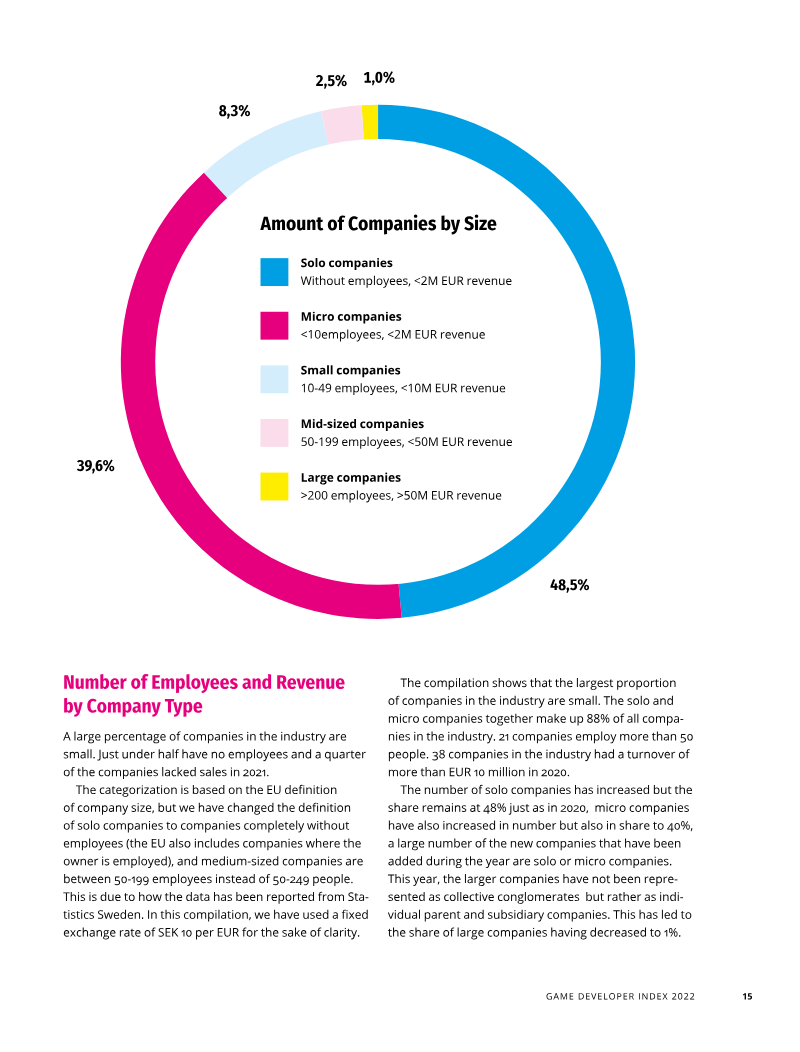
The Swedish games industry serves as a powerhouse of global digital entertainment, characterized by rapid expansion, aggressive international consolidation, and a highly specialized business model. By focusing on high-value creative and communicative processes—a strategy known as the "smiling curve"—Swedish firms have achieved significant commercial success, with an estimated one-in-four people globally having played a Swedish-developed title. As of 2022, the sector encompasses 832 companies and nearly 8,000 domestic employees, supported by a robust educational ecosystem and regional clusters that foster entrepreneurship across the country.
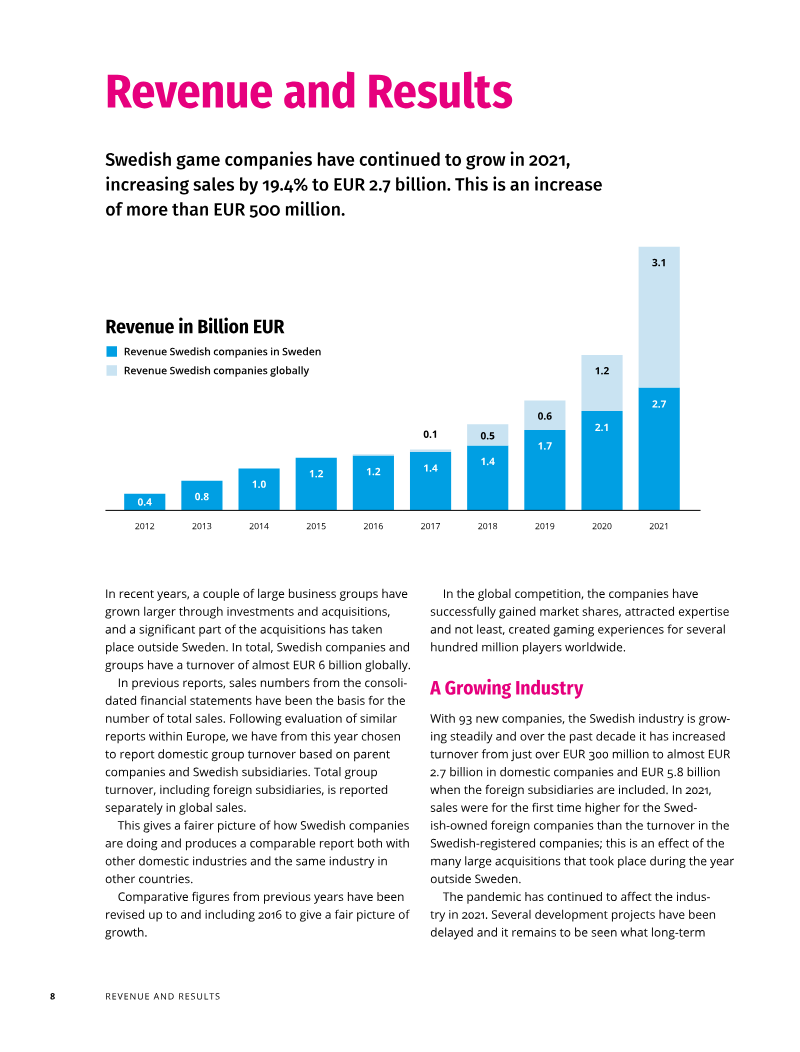
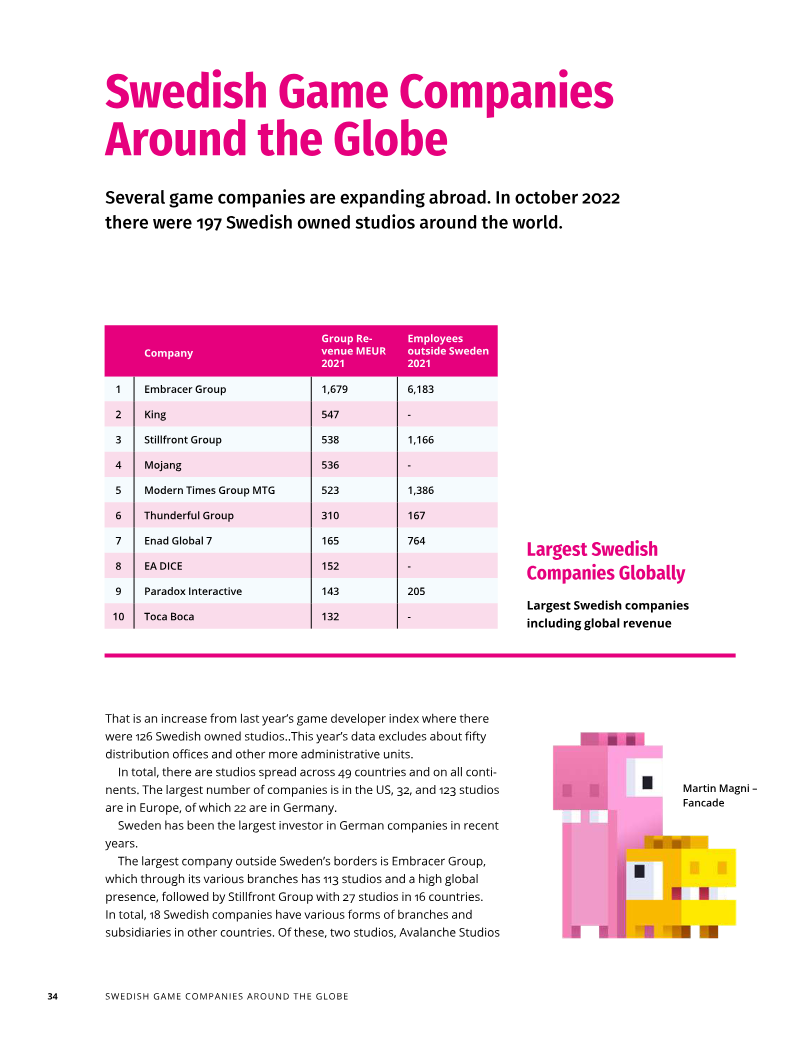
Financial performance reached a peak in 2021, with domestic revenue climbing to €2.7 billion and global revenue hitting €5.8 billion. This growth was fueled by a surge in pandemic-era engagement and a high volume of strategic acquisitions led by major conglomerates such as Embracer Group and Stillfront Group. While these entities have expanded their footprint to 197 studios across 49 countries, the industry has recently navigated a market correction and valuation decline linked to broader macroeconomic shifts. Despite these financial fluctuations, the sector remains a dominant force, accounting for 6% of total global watch time on Twitch.
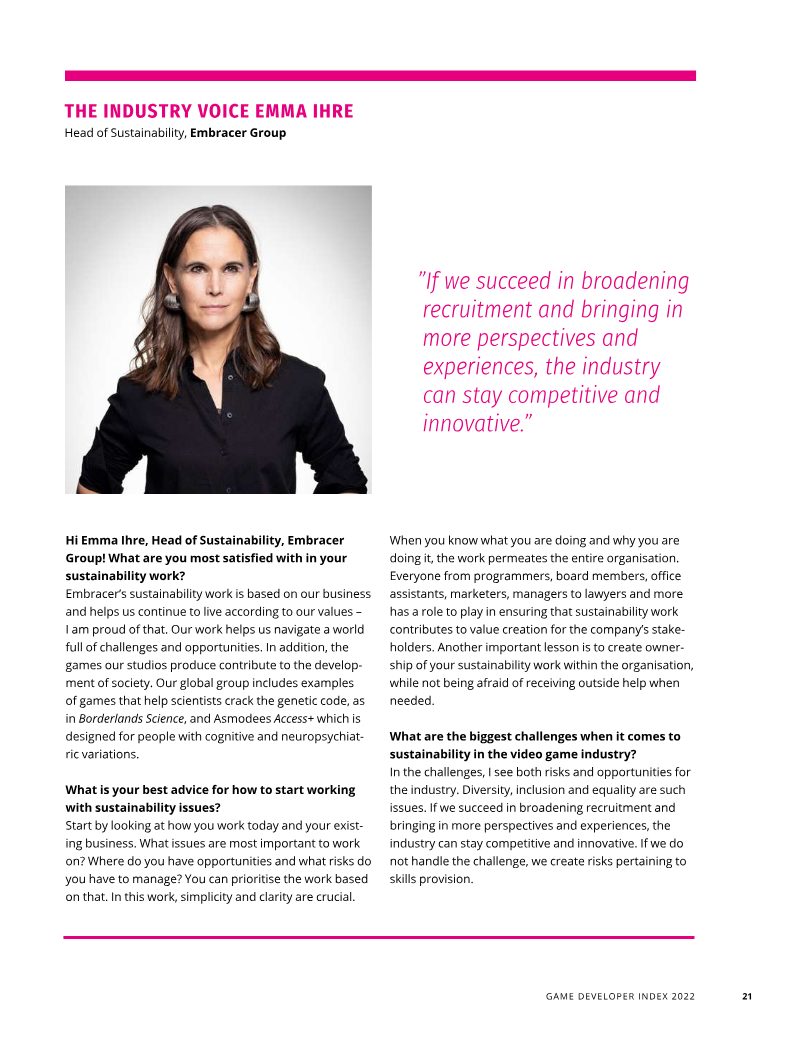
Sustaining this momentum requires addressing systemic challenges, including a persistent skills shortage, recruitment difficulties, and a need for greater workforce diversity, where women currently represent 22.1% of the domestic staff. The industry is actively responding to these pressures by prioritizing inclusive work environments and adopting sustainability frameworks like the Green Games Guide to mitigate the environmental impact of digital distribution. By balancing aggressive M&A activity with a commitment to long-term talent development and sustainable practices, the Swedish games industry maintains its position as a resilient and influential leader in the global digital economy.