1 free read left. Create a free account for unlimited reading + AI research.
Create free accountWhitepaper DiGRA
1 free read left. Create a free account for unlimited reading + AI research.
Create free accountWhitepaperDiGRA
The paper defines the gap as the mismatch between what a player's body expects to feel and what a VR game's physics delivers. It spans tactile, vestibular, and metabolic channels.
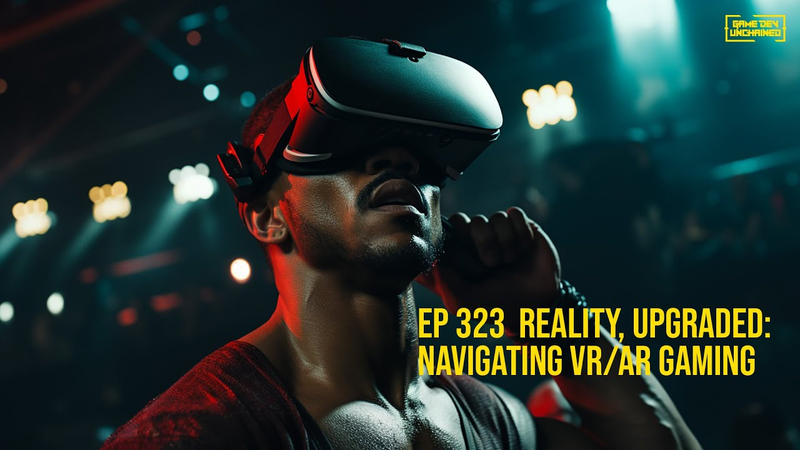
This paper argues that the pursuit of hyper-realism in virtual reality game design can undermine the very experience it aims to enhance. The authors introduce the "Embodied Simulation Gap," the mismatch between what a player's body expects to feel and what a VR game's physics actually delivers across tactile, vestibular, and metabolic channels. Their central claim is that designers should prioritize embodied comfort and symbolic abstraction over strict verisimilitude, treating fidelity as a stylistic choice with cognitive and physiological costs rather than a default marker of quality.
The analysis is organized around three channels of this gap. In the haptic domain, the paper draws on pseudo-haptics research to show that visual cues such as material texture generate strong weight expectations that become sensory mismatches without physical feedback, and that the illusion weakens with habituation. In the vestibular domain, it discusses how teleportation reduces motion sickness relative to joystick locomotion but disrupts spatial orientation and narrative continuity. In the metabolic domain, it notes that physical inputs such as walking-in-place impose greater fatigue than controller-based inputs, and that realistic interaction can turn play into labor.
To illustrate strategic abstraction, the paper examines three titles: Beat Saber, whose weightless sabers align visual expectation with controller feedback; Moss, whose fixed third-person perspective avoids vestibular conflict; and Red Matter, whose diegetic mechanical grippers map cleanly onto controller inputs. The study is a conceptual and qualitative design analysis grounded in a targeted literature review and comparative case examination, rather than an empirical study with a defined participant sample or systematic data collection.
Each row is a game or company this document names, each column a document, oldest first. A mark means that document names it. Select a row to see those documents.

DiGRA · 2026

DiGRA · 2026



DiGRA · 2026



DiGRA · 2026



DiGRA · 2026



DiGRA · 2026



DiGRA · 2026



DiGRA · 2026

DiGRA · 2026



DiGRA · 2026



DiGRA · 2026

DiGRA · 2026

Game Developers Conference · 2022