LegalVideo Games Europe
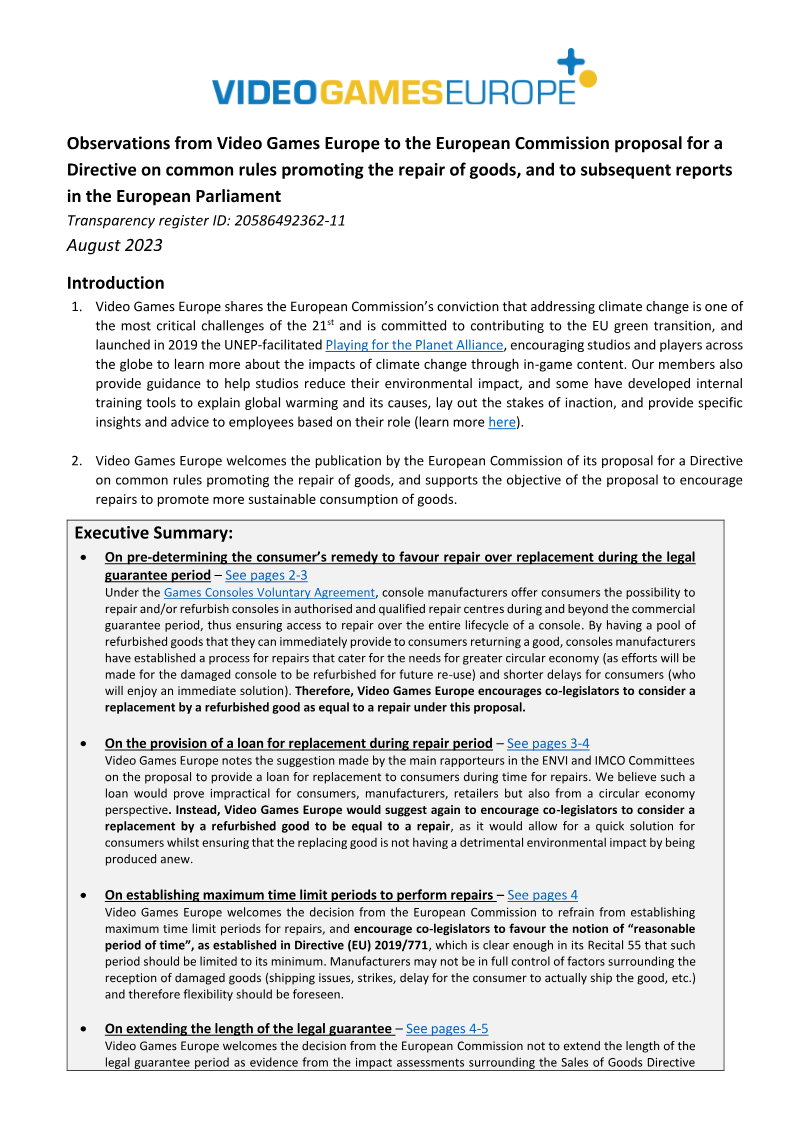
Video Games Europe: Position on the Right-to-Repair Directive Proposal
1 Aug 20236 pages~22 min full read
Video Games Europe endorses the European Commission’s draft Directive on common rules promoting the repair of goods, framing the initiative as essential to the EU’s green transition and to more sustainable consumption of electronic products. The organization argues that the gaming sector, which generated €23.3 billion in revenue in 2020, employs around 90 000 people and reaches roughly 250 million European players—over half of whom use consoles—has already established effective repair and refurbishment practices that should inform the legislation.
The core recommendation is that a replacement with a refurbished console be treated as equivalent to a repair, reflecting the voluntary agreement among major console makers (Sony, Microsoft, Nintendo) that provides authorised repair centres, a stock of refurbished units, and a typical repair turnaround of less than 14 working days. This approach is presented as both cost‑effective for consumers—repairs or refurbished replacements cost well below a new unit—and beneficial for the circular economy. The paper opposes the parliamentary proposal for mandatory loaned replacements during repairs, citing logistical complexity, fraud risk, and additional environmental burdens from extra shipping. It also welcomes the Commission’s decision to avoid fixed maximum repair times, preferring the “reasonable period of time” standard from Directive (EU) 2019/771, and supports retaining the current two‑year legal guarantee, noting that extending it would yield only 0.3 % CO₂ savings and negligible waste reduction over 15 years while imposing higher costs on firms.
A market‑based pricing regime for repairs is advocated, arguing that price controls would channel demand to manufacturers and marginalise independent repairers. The organization cautions against expanding the scope to include batteries or imposing direct producer liability, recommending that such matters be addressed within the existing Batteries Regulation and consumer‑protection framework to avoid legal uncertainty. Overall, the submission seeks to align the right‑to‑repair rules with proven industry practices, ensuring environmental objectives are met without compromising consumer convenience or market competition.

Video Games Europe · 2026

Video Games Europe · 2026

Video Games Europe · 2026

Video Games Europe · 2026

Video Games Europe · 2026

Video Games Europe · 2026
Video Games Europe · 2025
Video Games Europe · 2025
Video Games Europe · 2025
Video Games Europe · 2025
Video Games Europe · 2025

Video Games Europe · 2025
Video Games Europe · 2023
Video Games Europe · 2023
Video Games Europe · 2023
Video Games Europe · 2023
Video Games Europe · 2023
Video Games Europe · 2023

King · 2026

8Bit · 2026

Values Value · 2026
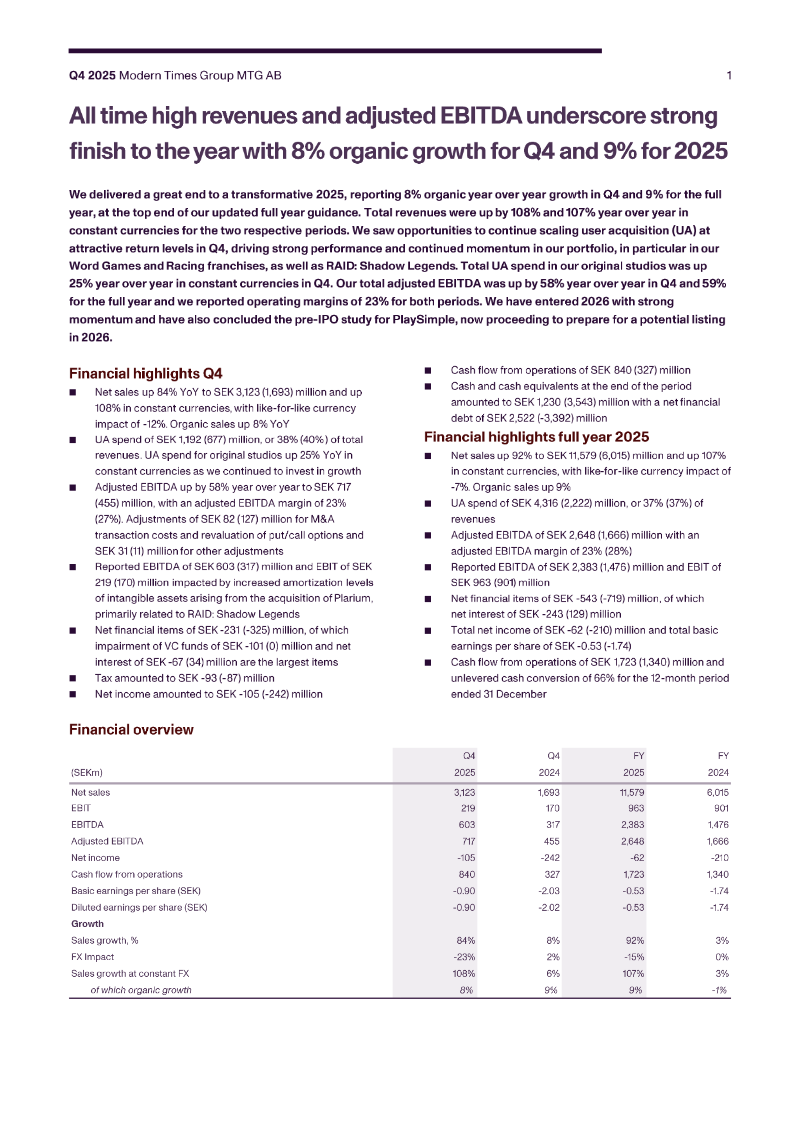
Modern Times Group · 2026
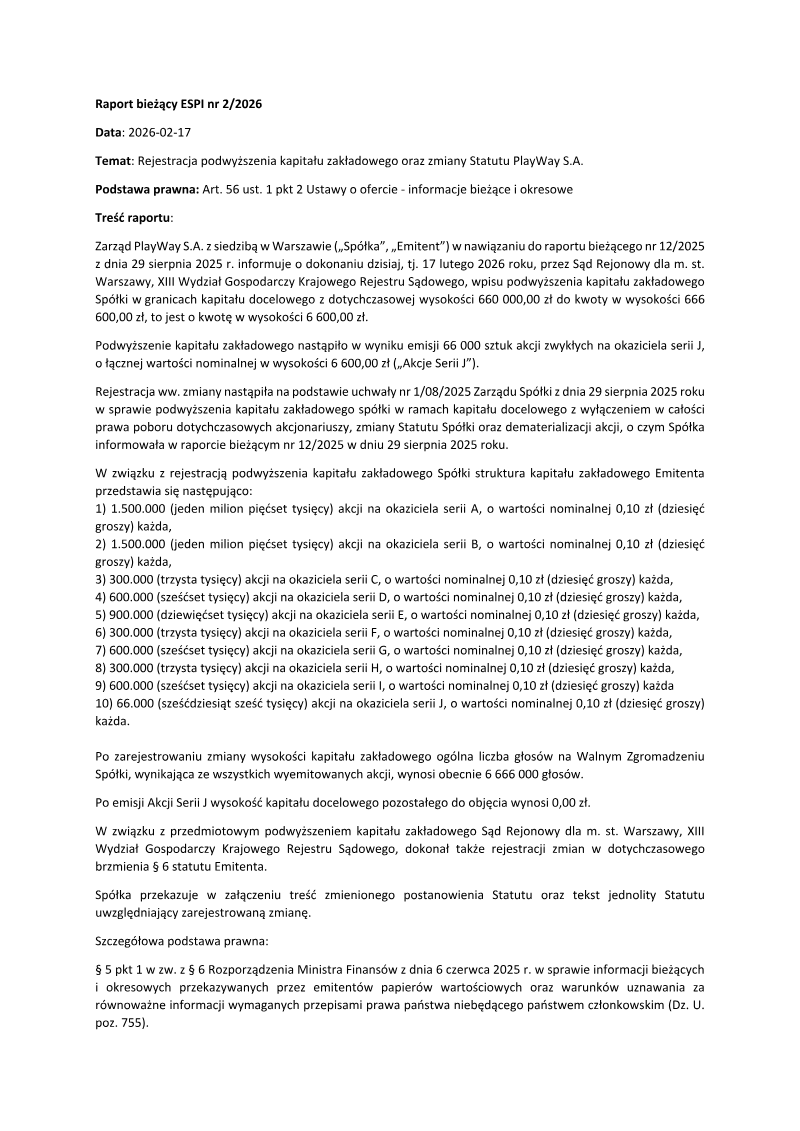
PlayWay · 2026
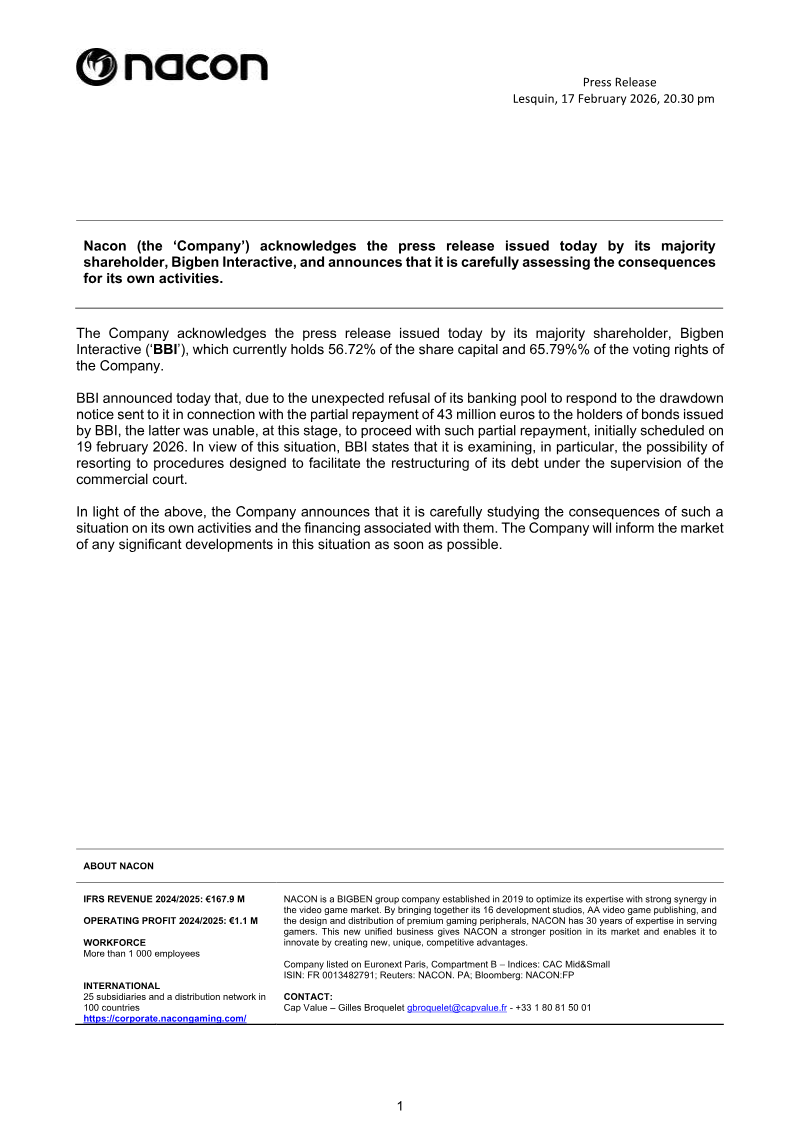
Nacon · 2026