LegalVideo Games Europe
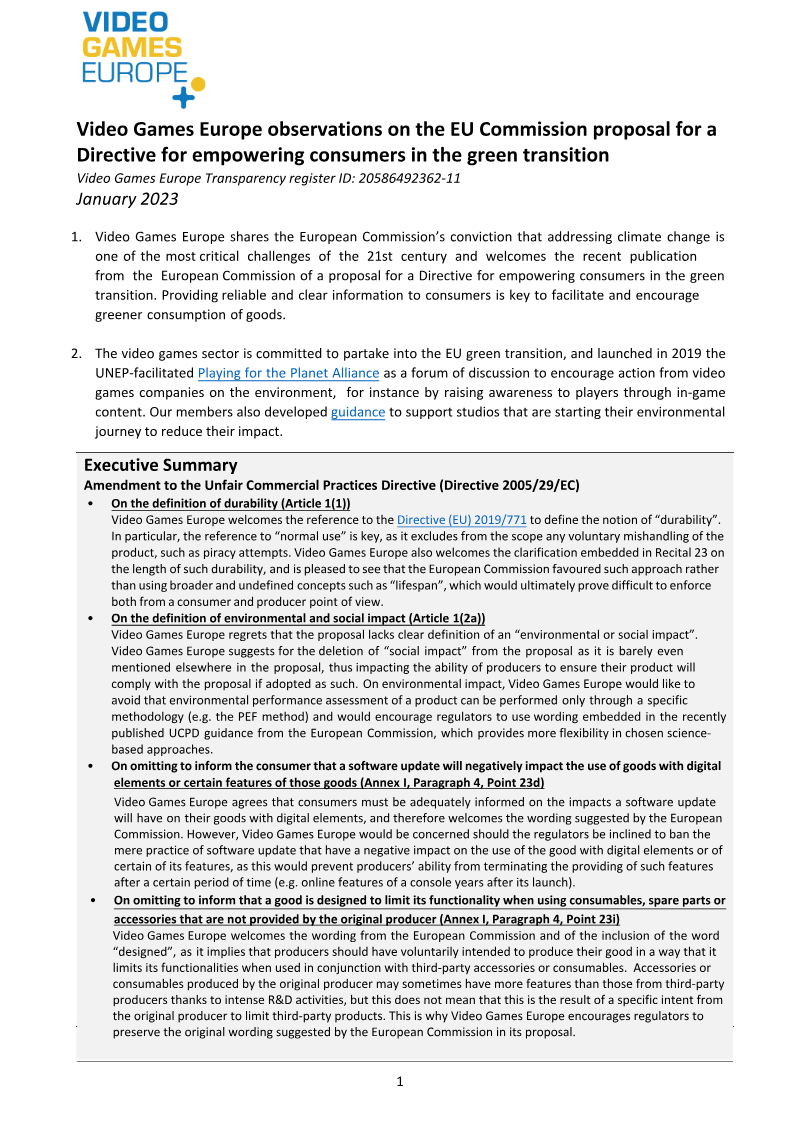
Video Games Europe: Contribution on Ecodesign for Sustainable Products
1 May 20236 pages~20 min full read
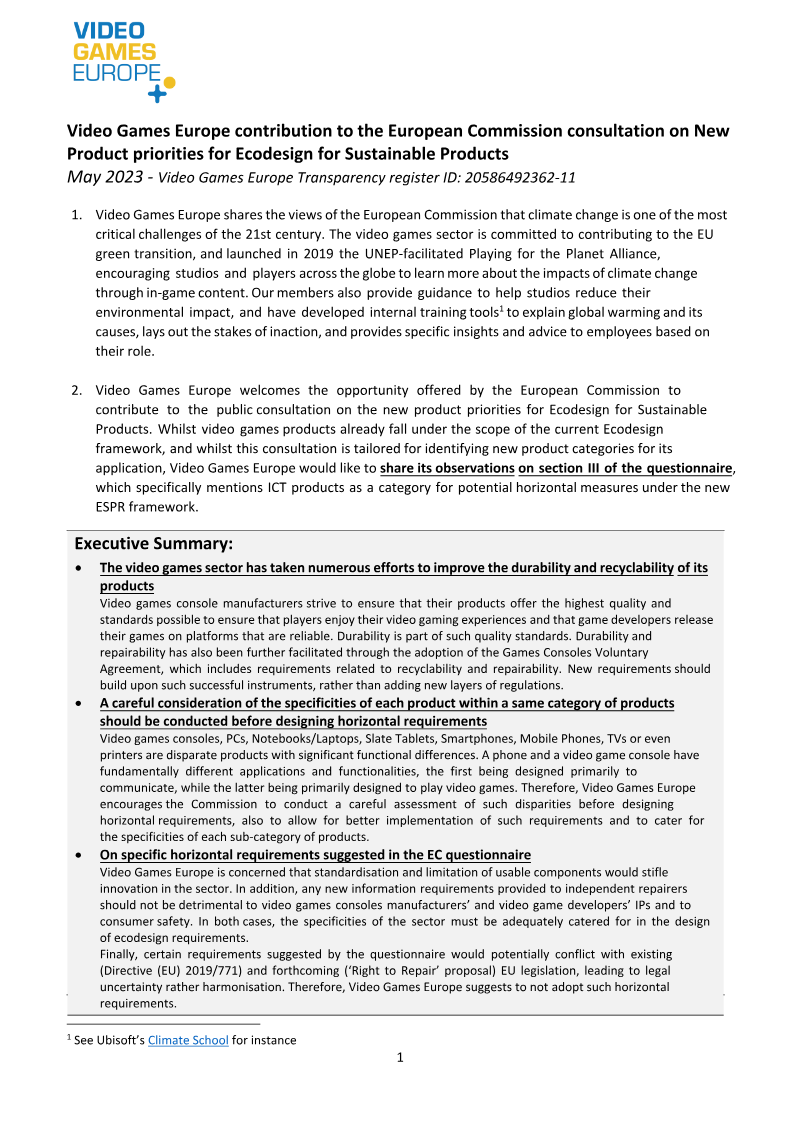
The submission aims to shape the European Commission’s new ecodesign priorities by presenting the video‑games sector’s perspective on durability, repairability and the risks of imposing uniform horizontal requirements across ICT products. It argues that the industry already contributes to the EU green transition through initiatives such as the UNEP‑facilitated Playing for the Planet Alliance and the Games Console Voluntary Agreement, which embed resource‑efficiency, recyclability and out‑of‑warranty repair provisions for consoles. The sector stresses that any additional measures should build on these existing frameworks rather than create overlapping regulations.
Key observations highlight the diversity of ICT devices—consoles, PCs, laptops, tablets, smartphones, TVs and printers—and note that their functional and technical differences make a one‑size‑fits‑all approach impractical. Standardising components or limiting material counts, the response warns, could curb innovation, diminish spill‑over benefits to fields such as healthcare and AI, and restrict creative freedom for developers. It also stresses the need for safeguards protecting intellectual‑property rights and consumer safety when sharing repair information, given the reliance on proprietary diagnostic tools and trusted‑platform modules.
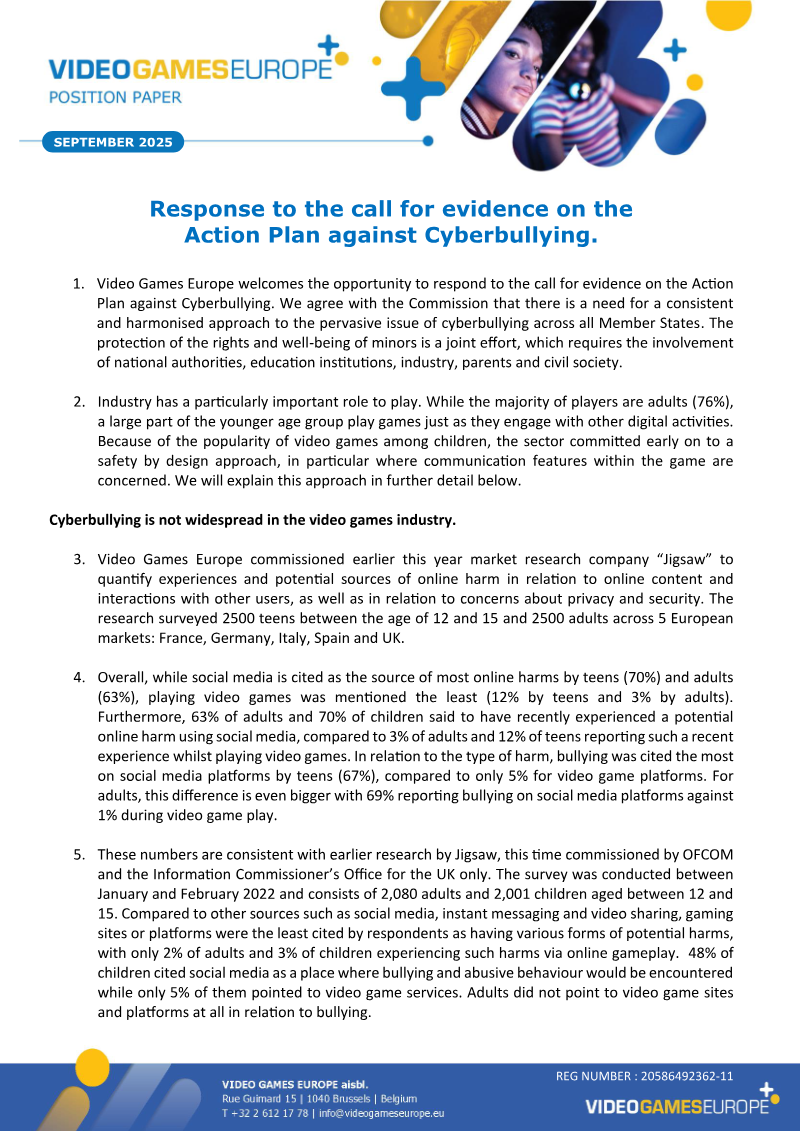
The commentary points out that durability, labelling and repair‑information requirements are already covered by the EU Sales of Goods Directive (2021) and the forthcoming Right‑to‑Repair proposal, and that new horizontal rules could generate legal uncertainty. The sector’s scope encompasses the European market, representing roughly 5,000 studios, over 98 000 employees and a 2021 turnover of €23.3 billion, serving more than 135 million players across 18 countries. The response, submitted in May 2023, draws on existing voluntary agreements and industry data rather than a formal survey.
Video Games Europe · 2026

Video Games Europe · 2026

Video Games Europe · 2026

Video Games Europe · 2026

Video Games Europe · 2026

Video Games Europe · 2026
Video Games Europe · 2025
Video Games Europe · 2025
Video Games Europe · 2025
Video Games Europe · 2025
Video Games Europe · 2025
Video Games Europe · 2025
Video Games Europe · 2023
Video Games Europe · 2023
Video Games Europe · 2023
Video Games Europe · 2023
Video Games Europe · 2023
Video Games Europe · 2023

King · 2026
8Bit · 2026
Values Value · 2026
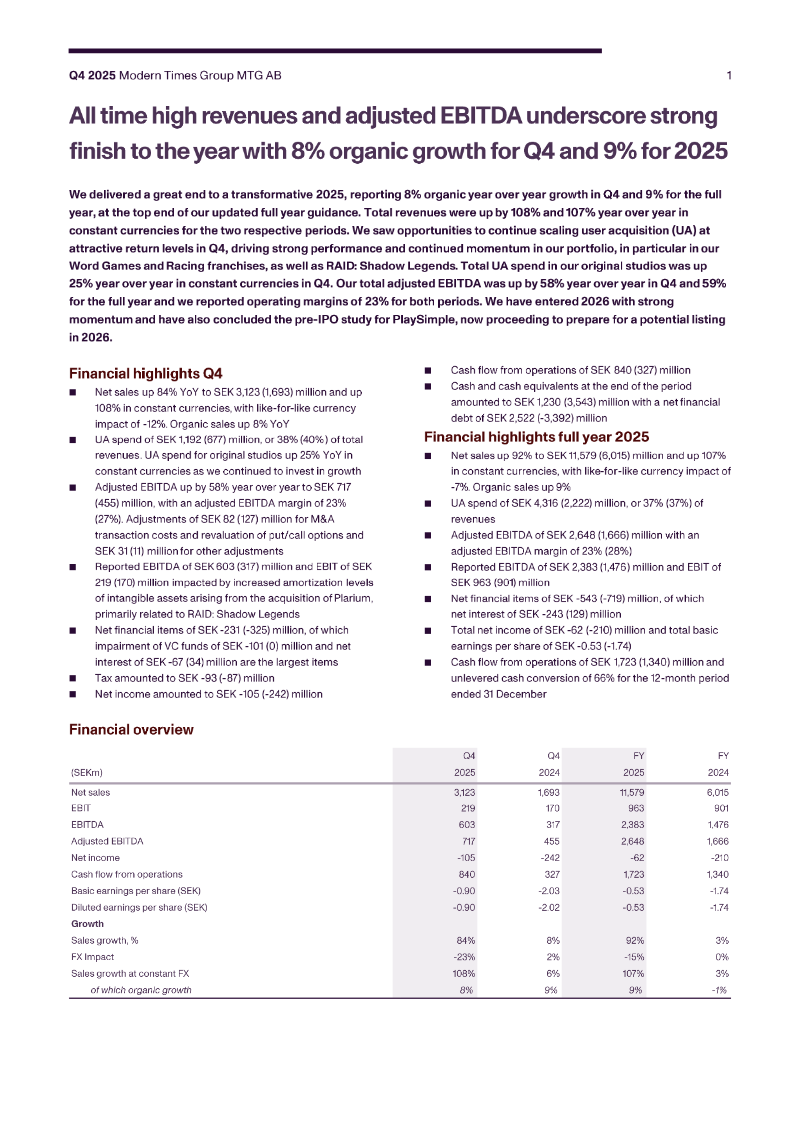
Modern Times Group · 2026
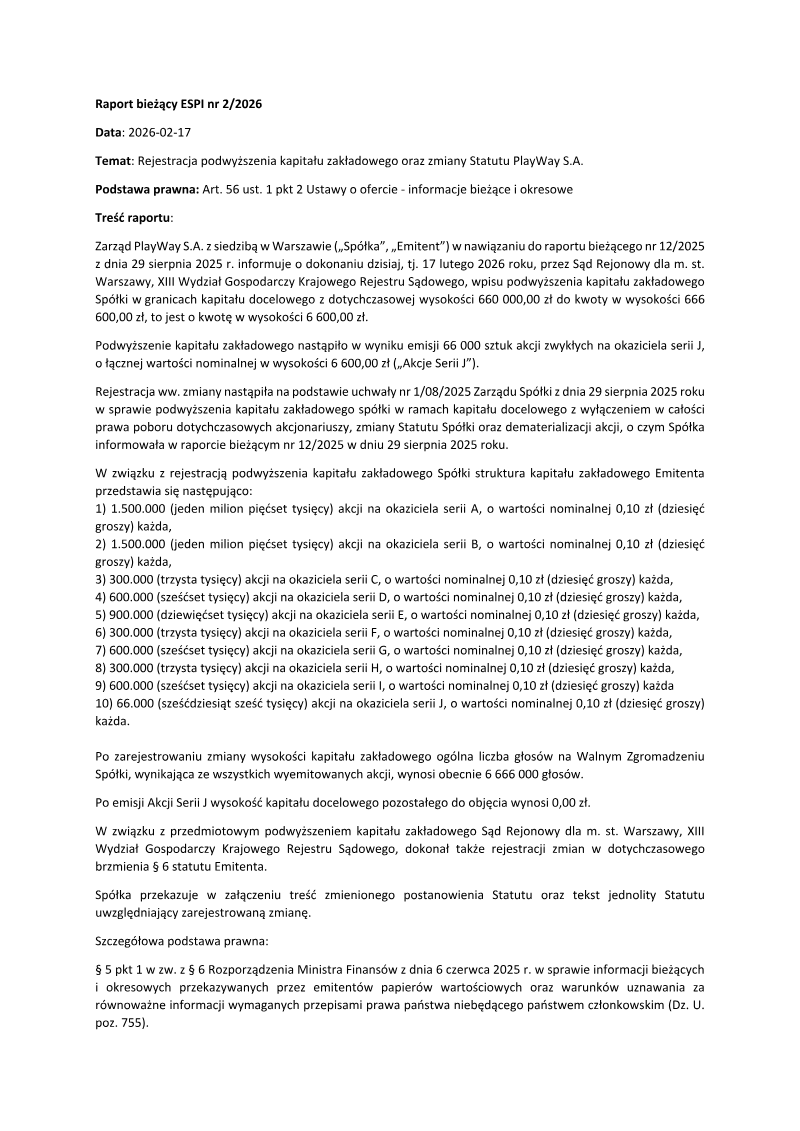
PlayWay · 2026
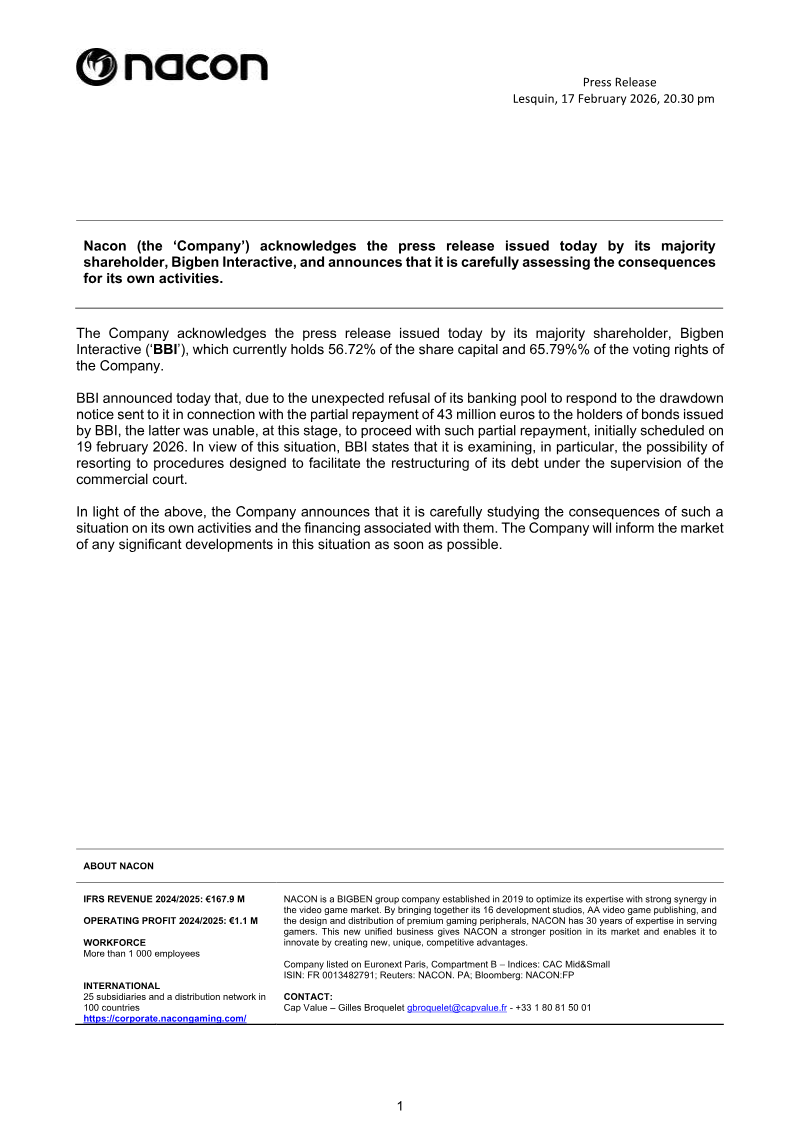
Nacon · 2026