LegalVideo Games Europe
Initiative on Virtual Worlds: A Head Start Towards the Next Technological Transition
1 May 20237 pages~19 min full read
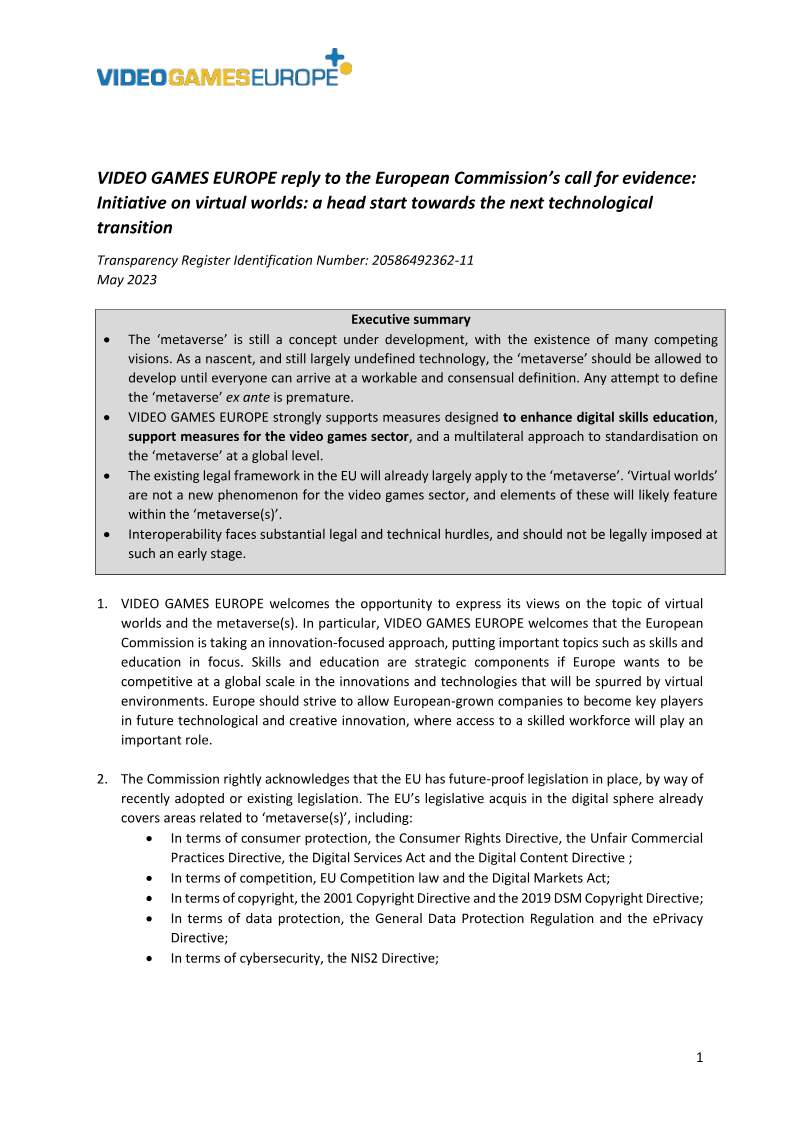
The response aims to shape EU policy on virtual worlds and the emerging metaverse by presenting the video games sector’s perspective, emphasizing that the concept remains fluid and should not be prematurely defined. It argues that existing EU digital legislation—covering consumer protection, competition, data protection, and cybersecurity—already applies to virtual environments, and that imposing legal interoperability at this early stage would hinder innovation. The submission stresses the strategic importance of digital‑skills education, urging a holistic pipeline from primary schools to higher education and the removal of immigration barriers to attract global talent.
Historical evidence shows that virtual worlds have long existed in games, from the 1974 MazeWar prototype to contemporary platforms such as Roblox, Fortnite and Animal Crossing, demonstrating their role in fostering social capital and community resilience, especially during the COVID‑19 pandemic. Empirical data underline the sector’s economic weight: European consumer spending reached €23 billion in 2021, the industry comprises over 5,100 studios, generates more than €12 billion in annual turnover and employs roughly 90 000 people. A forecast for Sweden predicts a shortfall of 25 000 game developers by 2031, highlighting a broader talent gap across the EU.
The text calls for expanded public‑funding mechanisms—Horizon Europe, Digital Europe, InvestEU—and the inclusion of video games in the General Block Exemption Regulation to enable SMEs to access support. It also advocates for greater awareness of existing R&I schemes, stronger public‑private partnerships, and the preservation of unlicensed spectrum for Wi‑Fi to sustain network capacity, noting that current fixed‑line and mobile traffic growth rates have stabilized below 20 % and 10 % respectively. Overall, the submission positions the video games industry as a catalyst for Europe’s digital transition while urging measured, standards‑based regulation that respects market dynamics.
Video Games Europe · 2026

Video Games Europe · 2026

Video Games Europe · 2026

Video Games Europe · 2026

Video Games Europe · 2026

Video Games Europe · 2026
Video Games Europe · 2025
Video Games Europe · 2025
Video Games Europe · 2025
Video Games Europe · 2025
Video Games Europe · 2025
Video Games Europe · 2025
Video Games Europe · 2024
Video Games Europe · 2024
Video Games Europe · 2023
Video Games Europe · 2023
Video Games Europe · 2023
Video Games Europe · 2023
Video Games Europe · 2023
Video Games Europe · 2023

King · 2026
8Bit · 2026

Values Value · 2026
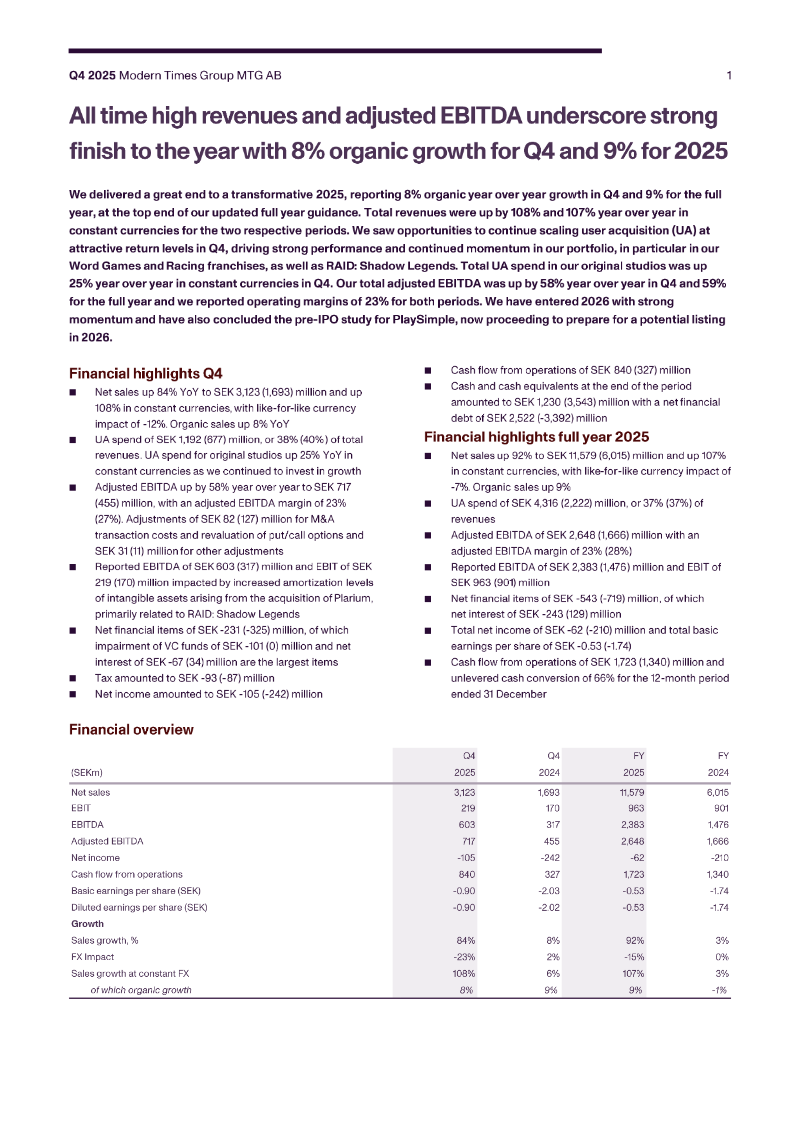
Modern Times Group · 2026