1 free read left. Create a free account for unlimited reading + AI research.
Create free accountWhitepaper International Journal of Serious Games
1 free read left. Create a free account for unlimited reading + AI research.
Create free accountWhitepaperInternational Journal of Serious Games
Distilling the key insights…
4D virtual reality simulation games represent a transformative approach to healthcare training, specifically regarding the mastery of high-stakes resuscitation protocols. By leveraging immersive environments, these simulations provide a safe yet authentic space for professionals to practice critical decision-making under pressure. The primary thesis posits that while the technology offers significant potential for scalable and cost-effective education, the efficacy of the learning experience is inextricably linked to the seamless integration of clinical realism, interactive game mechanics, and intuitive interface design.
Research conducted with healthcare professionals reveals that immersion and authenticity are the primary drivers of engagement. Participants consistently report that the vivid nature of 4D environments fosters a high-impact learning experience, allowing for the rehearsal of acute care scenarios that are difficult to replicate in traditional settings. However, the findings also highlight a critical dependency on usability. Complex, menu-heavy interfaces and navigation challenges can disrupt the flow of the simulation, potentially hindering the educational process. An initial orientation phase is therefore essential to mitigate user confusion and ensure that technical barriers do not overshadow the clinical objectives.
Ultimately, these simulations serve as a valuable tool for professional development, though their full integration into educational systems requires further refinement. While current data confirms that interactivity and immediate feedback are vital components of perceived learning, future efforts must focus on quantifying objective learning outcomes and identifying specific target demographics that derive the most benefit. Continued investment in this technology is warranted, provided that developers prioritize user-centric design to ensure that the technical environment supports, rather than complicates, the acquisition of essential clinical skills.
International Journal of Serious Games · 2023
International Journal of Serious Games · 2022
International Journal of Serious Games · 2020
International Journal of Serious Games · 2020
International Journal of Serious Games · 2020



International Journal of Serious Games · 2020
International Journal of Serious Games · 2020
International Journal of Serious Games · 2020
International Journal of Serious Games · 2020
International Journal of Serious Games · 2020
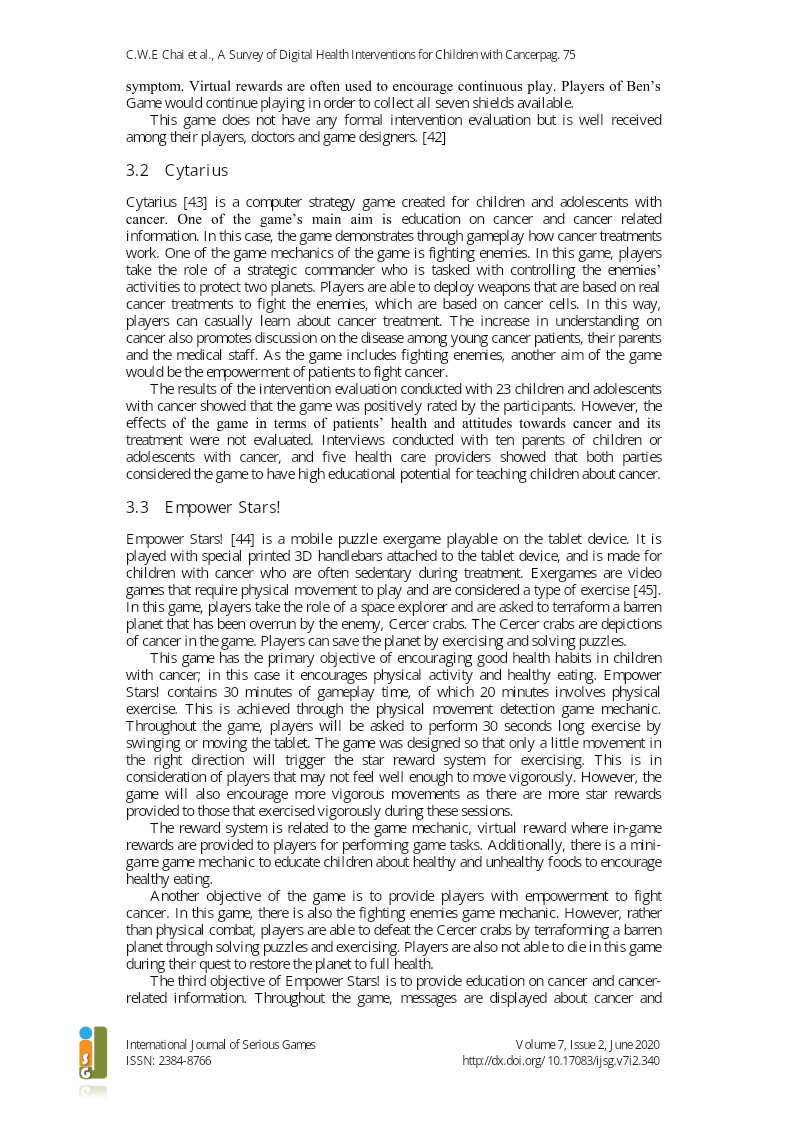
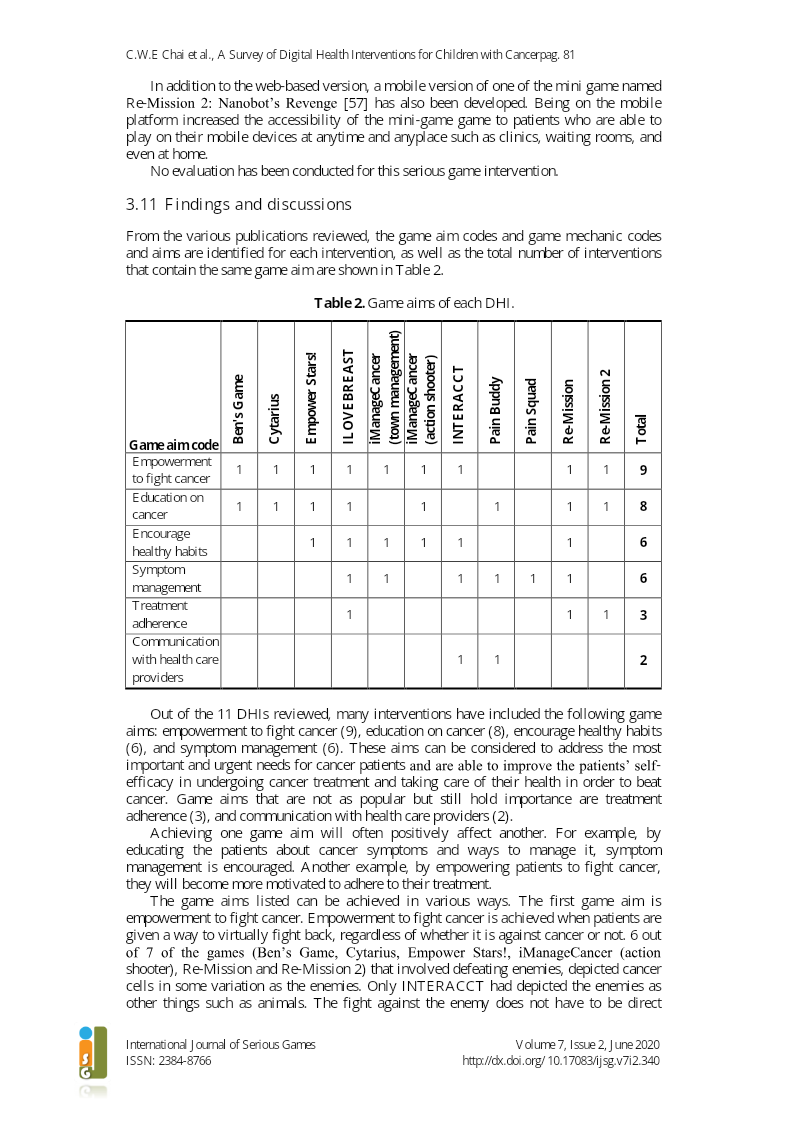
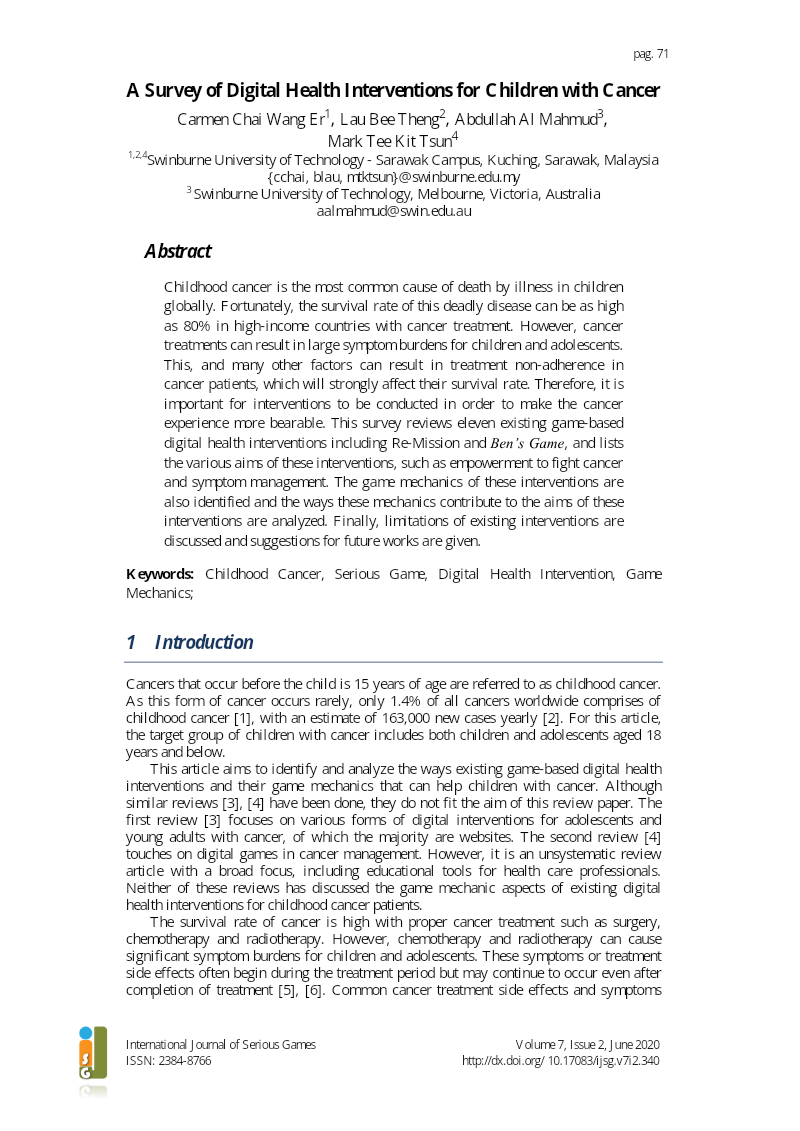
International Journal of Serious Games · 2020
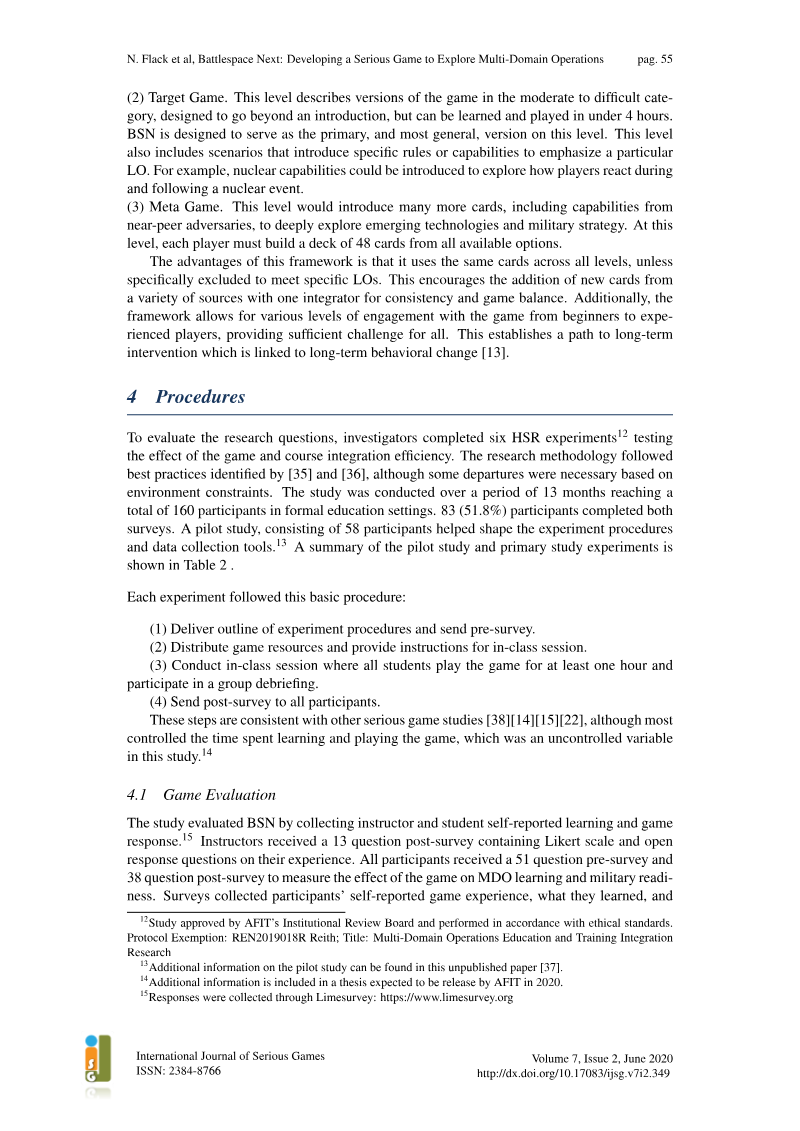
Air Force Institute of Technology · 2020
European Conference on Games Based Learning (ECGBL) · 2024



European Conference on Games Based Learning (ECGBL) · 2026



European Conference on Games Based Learning (ECGBL) · 2026