1 free read left. Create a free account for unlimited reading + AI research.
Create free account
Uncover Market Opportunities & Expand Your Product Portfolio by Understanding Gamer Preferences
Key insights
6 takeaways- 01The mobile gaming sector is the industry's fastest-growing segment, with global consumer spending projected to exceed $100 billion in 2020.
- 02Developers must move beyond broad app store classifications and utilize granular sub-genre, art style, and monetization data to identify precise growth drivers.
- 03Monetization strategies are shifting toward hybrid models that combine traditional advertising with advanced mechanics such as loot boxes and gacha systems.
- 04Regional consumer preferences significantly impact revenue, with action RPGs dominating APAC markets while casino games maintain disproportionate popularity in the United States.
- 05Market performance is bifurcated: hyper-casual games lead in volume with over 5 billion downloads in the first half of 2020, while core strategy and RPG titles capture the majority of consumer spending and time spent.
- 06The battle royale genre has reached a maturity plateau in new user acquisition, yet it remains a financial powerhouse through sustained revenue growth and effective monetization.
Ask AI about this video
Transcript
so our first session for this global trends track is um our superstar session which is uncover market opportunities and expand your product portfolio by understanding gamer preferences um by app annie unfortunately uh james could not join the uh this session today so i introduced lexi seido from app annie sorry about that all right well i'll um i'll hand it back to james to kick us off in all right great okay thanks i guess the the the joys of a uh a webinar conference uh interesting yeah so i'm james gagan i'm a product manager here at appani and today we're going to be talking about the complexity that exists in the
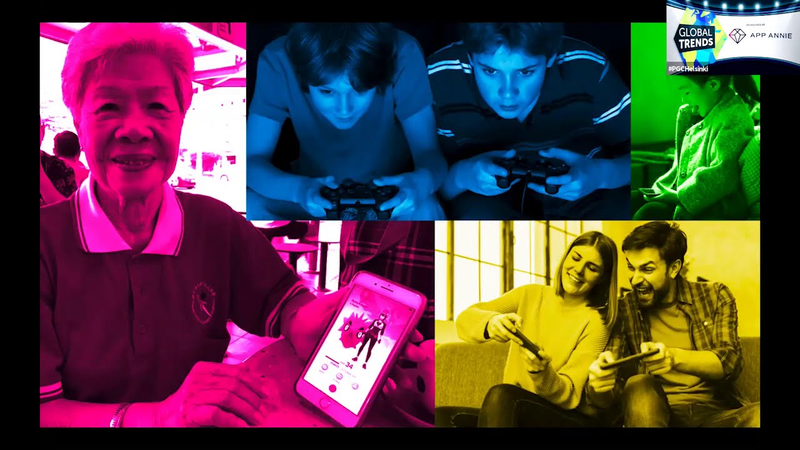
mobile games market and how you can use um some data that we've developed to really help understand your market and in the end help launch more successful games and before i move on just put up this disclaimer a bit give you a few minutes to read this all right so 10 years ago gaming was very com was not very complex not as complex it is as it is today the audience um was basically um not diverse as it was today and with the advent of mobile smartphones all different kinds of people have started to play games there have been
young people who've started to play games old people and even couples so with the advent of this really complex audience playing games the mobile games industry started to get very complex as well and so today we're seeing all different kinds of games being played within the industry we're seeing arcade style runners tamagotchi games sandbox games hyper casual asmr games puzzle games and so on and so now that the industry has gotten so complex mobile games publishers are asking a lot of questions about how can i better understand this complex new landscape they're asking questions like how can we size up market opportunities today in the most
granular way for example our match pub puzzle games or match plus build puzzle games growing faster in downloads and what are the design features and monetization mechanics that work best inside such a game for example do starter packs or loot boxes monetize users best in brazil which in-game features are driving user engagement the most and so this is why we built game iq to help answer these kinds of questions so game iq is really a game changer for mobile games publishers we're combining a comprehensive taxonomy of game classifications that we've developed with app annie's industry-leading market estimates we've developed this product over the past year and a half or so based on dozens of conversations with the world's major games publishers and
we're classifying 28 000 games within our new taxonomy and here you can see our taxonomy goes really really deep we're classifying games along 111 sub genres really deep levels like battle royale action games first person shooters poker poker casino games and for example within puzzle just to get a deeper look we're classifying games along bubble shooter match 3 merge room escape and so on and here's a look inside our product on top of these classifications we're also tagging apps along their art style their gameplay features ip so we've selected ip here you can see which games are using certain ips like jurassic park or kim kardashian or kingdom hearts
and here's a look at just some of our tags that we're tagging games with for example within monetization we're tagging apps that have advertising subscription and so on art style we're tagging games of realistic 2d 3d portrait and gameplay features like multiplayer customization events mmo and so on so within the app store it's not really telling you much about the game it's telling you that this marvel strike force game is a role-playing game but within game iq we're first telling you that this game is a core game it's a core game versus casual or casino we're next telling you it's an rpg game and beyond that we're telling you it's a turn-based rpg game in addition to the game's classification we're also telling you
the tags that this game has for example you can see here it has marvel ip the monetization mechanics it has the features it has and so on so with all this information it's a lot of data and we've created a bunch of reports to help take advantage of this data and to better on better answer these kinds of questions so for example we have market sizing reports that can help tell you questions like how are battle royale games performing in europe or what's the total estimated revenue of harry potter ipgames our insights generator report can help tell you how are games monetizing users which features are engaging users best which ips are growing globally in terms of revenue or downloads our shared users report helps tell you
what other game sub genres battle royale users are using our top games report tells you which sandbox games had the most downloads during the last month and our top companies report zooms out to the company level all right so yeah the top companies report zooms out to the top company levels to tell give you company level insights and on top of all we on top of it all we've built custom iq to help tweak the taxonomy or to create your own and so now i'll pass it on to lexi to talk about some more details on some insights that can be gained from this data thank you james i'm ceto i'm a senior market analyst um at app annie and i am one of the
people that's been lucky to work with a lot of this great mobile data so i'll take you through um the next section on how we can look at game iq in action uncovering market opportunities expanding your product portfolio and amplifying your ua and marketing so we'll start off kind of with a very open kind of picture of the market here so what we're seeing um i mean most of you um attending probably know this but mobile gaming is the fastest growing form of gaming and it's the world's most popular form of gaming so in 2020 we estimate that um by the end of this year we'll see over a hundred billion dollars in consumer spend through the app stores on games alone um and compared to all other forms of gaming that is about 1.5 x um the rest of them combined so that would include pc mac gaming handheld consoles and home consoles all together um and we also see when you break them out that mobile gaming is actually 2.8 x
the consumers spend and then pc mac gaming the next highest level so that is also just through the app stores it doesn't even include um in-app advertising or in-game advertising which is another major drop card for mobile gaming now what game iq does is we're able to look at this in a more granular view and get a lot more um get a lot deeper into these insights and where that revenue is coming from so one of the main things that we can see is that core drives the majority uh core games drive the majority of consumers spend globally um but what's really interesting is when you start drilling down beyond that so with the genre level we have strategy and rpg games and they actually drove nearly half of all the consumer game spend in games worldwide not just core and within those we also see that turn-based rpg and action rpg are the biggest drivers alongside city battle within strategy um so we start to see really how these things break out and
where the spend is really coming from so looking at that sub-genre level what was really also quite interesting is we can start to look at how uh sub-genres have grown by consumers spend where's the highest growth sectors here um and in that top threshold we actually see that of the top four we see all the categories represented which is really good to see we see that there's a lot more diversity than just core games growing the fastest we see um within core and strategy the sub-genre city battle is growing the fastest within casino we see it's within traditional and slots is actually going the fastest in consumers spend for casino games but second fastest of all uh and again within core action battle royale subgenre is growing very fast and then within casual uh we look to the puzzle genre and match and build sub genre is actually growing quite fast and also we just wanted to highlight a little bit of the um sort of that granularity that we've spoken of
so within the casual genre or class actually the simulation genre and then sandbox sub-genre we see that there's a large growth happening there as well and that roblox is driving a lot of that growth that's number one um and the difference to the app stores is that in the app stores roblox is simply categorized as adventure um so we get to see a lot more of the drivers that are really behind a lot of this growth when you start to look at it on a segmented view like this so this is another great feature um this is insights generator which we've seen in another slide before but what i want to call attention to here is just the power of when you layer that with um with our game iq classification so first when you look at battle royale games we see that they've actually grown some of the most of any sub genre by the depth of engagement so that average time per user as well as the breadth so growing the total number of active users that's kind of pushed that category that sub-genre from
niche players into attention leaders another key one that we want to look at is sandbox so that's a sub-genre within the casual class and the simulation genre and again we see that time spent per user and then the number of users has grown phenomenally um and that has actually pushed it into the challenger box out of the average performer's box as a category similar trend we're seeing is within the subgenre of card and board games where you see that um it's within the casual class and the puzzle genre um cardboard games have actually seen phenomenal growth in active users so you can really see it's more of the the kind of um the breadth of users versus the depth in this case but nonetheless it has pushed that sub genre far into the challengers quadrant um so this is a really great way to kind of get a competitive benchmark and to see what how and where the growth is happening
here's another view that's actually i find really interesting as well so when we start looking at our game iq data we're able to look at it on both in terms of the country level as well as the regional level insights that it can provide so this view looks at top games by downloads and we're looking at themes and settings which is one of our tags one of our modifier tags that we showed you before and that's a really it's a great way to enrich the analysis and kind of go across um sort of taxonomy lines and see how things shake out when you start grouping like apps or like games so in this view what's really interesting is that across all the markets we analyzed across all regions here um we saw that fantasy was actually the number one theme or setting um for all of these markets by downloads so that's really interesting because i think it kind of pairs um quite nicely with the fact that a lot of us have been stuck at home during lockdowns
and so people generally speaking are in need of an escape uh what that escape is obviously is varying by market so brawl stars is quite big in south korea germany france brazil whereas pokemon go um is quite popular in the us canada uk and then as a second level you can see that there's a lot of differentiation happening um for the number two sort of downloaded theme or setting uh in america's alone we see that the us has casino gambling is number two canada has home design brazil modern military so we start to see there's a lot of diversity happening and just to kind of reiterate when we look at the top five across various markets we can just see the breadth of themes and settings that are popular in our highest buy by the download account or the demand so whether it's apocalyptic or casino gambling sports soccer home design or modern military we can start to see um kind of where the regional
preferences lie and how there might be competitive advantages another great thing that we've done uh that we have is the tag for ip so we've tagged gamespace in their ip and we've seen that in japan though some of we have some of the largest share of downloads um among ip games as well as consumer spend um and what we've done here is we've pulled kind of by markets based on their percentage of downloads and spend from ip games and then we've pulled the number one ip game so what's interesting is in the um globally actually we've seen that pubg is the number one game with ip by downloads and by spend in h1 2020 but then you start to see market differences so for instance in the us and the uk we see call of duty is the number one ip game by downloads but pokemon go is a number one game by spend and in the uk the number one game by downloads is scrub will go um for games with ip versus pokemon go for consumer spend so we start to see
which games are achieving milestones in which metrics and how that varies across different markets based on what some of these tags and that tag can be monetization model or in this instance ip and speaking of monetization models so this is another really great tag that we have so looking at monetization methods among and layering that within some of the taxonomy that game iq provides so we could slice and dice this by sub-genre or genre but in this case we've looked at core overall and one of the key things we've noticed here is that among generally most markets uh the number one uh monetization method among core games was gotcha loot boxes and then you can kind of see we've we've pulled out different countries and there are differences among the countries but another one i wanted to call out is advertising which indicates um these are the among top games by consumers spend so the advertising layer indicates that
there's a bit more of a hybrid model happening since monetizing through consumer spend that's measured through the app stores and what we'd expect for for casual games is that the advertising monetization method would actually be um one of the more predominant ones another thing that we can see here another kind of cut is to look at the differences among among regions and which regions in which countries are over indexing um or have a particular um you leverage a particular monetization method more than others so for instance we see that in china um gotcha loot boxes starter packs vip and cosmetic items tend to be used more frequently than other markets and then conversely we also can see that within again the advertising area um markets like the us uk brazil france and germany tend to over
index for their use of advertising as a monetization method in core games so that's showing that there's more of a hybrid model taking place and something that's very important to know especially if you're a publisher looking to branch out from like an overseas publisher looking to bridge new markets or if you're a us publisher and you're considering uh trying to capture some some of my share within apac markets this is an important thing to know because the monetization models are more prevalent and and also there's a difference in consumer appetite so another key thing we can look at is sort of just again how some of the um some of game have some some of the genres and categories of games shake out among different markets as well as different metrics so what we tend to see with downloads is that casual games tend to dominate uh but you do see some of the different variations happening in some markets
which are with uh japan south korea indonesia showing slightly higher levels uh relatively speaking of core game downloads in time spent we do see that core starts to over index a bit more in the time spent in those games um particularly in in japan south korea and indonesia in this view um and then when we look at spend that's where we really see consumers spend um we see core uh punching above its weight here um i also want to draw your attention to just in the u.s so casino games actually represent 22 of consumers spend among top games um and that's actually over mixing quite a fair bit from the amount of downloads so casino games only represent around four percent of downloads in the us so these are really helpful to see how the different gamer preferences vary by region and there are general trends typically across regions but we also need to kind of take into account the country's specific
preferences this is another great view where we're able to look at um the genre and sub-genres um and how they map out around the world so one of the things that we're seeing in this view is that demand for hyper-casual games which is a genre within casual um that it's relatively spread across markets the the us is number one for downloads and number one for spend but only represents about 15 of downloads so it shows that it's quite um has broad appeal globally um for revenue the u.s represents nearly 40 percent which is um which shows sort of that kind of priority potentially for monetization and then we look at parent hq so this is a good view to be able to see so of the most downloaded hyper casual games um across most markets uh many of them most of those downloads come from french publishers and in the us that's what we're seeing here
is that the more of the um downloads of hyper casual games are actually coming from french publishers and we can look at that same view and slice it by um sub-genre within core so this is the city battle sub-genre within core strategy and again we see that um the u.s is number one but it only represents around 11 of total uh market share here and we can look at how parent company um headquarters plays out a lot of the downloads of these games come from uh publishers from out of china um and so you can see that in the us around 70 of those downloads do but then within uh you also see that there's a large portion um relative to the other markets that come from u.s publishers as well all right well i'll quickly run through some key findings before we wrap up for q a um so some of the things that we found
particularly interesting when looking at this data set i'm starting to play around with the tool so we found that actually hyper casual games excuse me um hyper casual games were downloaded over five billion times in each one globally um which is a significant figure we're also able to see that 50 of the time spent among games um the top 1000 games by monthly active users actually came from core games and we're also able to see that casino games grew 40 percent year year-over-year in consumer spend in h1 uh which is pretty significant so a lot of people obviously staying home um and and spending and uh playing casino games versus going out and doing that perhaps due to coven um but also a trend that's picking up over time we also see that uh 20 of time spent was by was in battle royale games but that
actually battle royale games represented only three percent of total downloads and then last we see that 80 percent of consumer spend in action rpg games comes from apac markets which is particularly important um to understand where sort of which markets over and direct over index and which subgenres and genres so the next steps i'll just leave this with you guys um to get started with game iq if you're interested to learn more um head to bitly slash game iq app annie or if you want to see what other insights and ways you can slice and dice this data and how much uh you can get out of it you can get our free report um it's our latest report here at bitly report game iq and with that i'll pass back to kate for q a thank you very much um so we do have some questions so the first one comes from steve and he's asking we all know hyper casual is the growth sector in recent years
but your data shows increased time and spend for core games which genre would be more lucrative overall for new studios casual or core that's a great question so i think the trend with hyper casual um i guess the way we look at it is that actually within what mobile's done basically is you know democratized gaming and virtually every smartphone owner has a console in their pockets now so what we've seen is that kind of expansion at both ends of the spectrum so we've seen hyper casual being one end of that spectrum and then more hardcore being the other end of that spectrum we're starting to capture traffic um and migrate people who might be more uh pc map gamers or console gamers um and that's due also to mobile um having better hardware and the device facts and the capabilities as well so with that i think right now what we're seeing is there's a large audience for um for hyper casual it's in a lot of ways hyper casual is that first sort of
um probably dipping your toe into gaming in a lot of senses and for people who aren't typically going to categorize themselves as gamers um we kind of view it as turning a lot of non-gamers into gamers um and so from a monetization standpoint um it truly depends um but both are i mean we see a lot of hyper-casual games benefit from in-app advertising and actually we've seen um we expect to see even more spend in in-app advertising than the app stores overall not just in gaming um so that's a big market of opportunity and in h1 we actually did see that ad placements grew around 70 in the us despite shrinking marketing budgets so that's a good sign for the industry generally and also for gaming specifically because we know um you know ad dollars are following both the the large audiences but the the ones that are engaging frequently as well
great um the next question and we let's see we have about five minutes left um do you have any ua metrics like cpi etc and ad monetization metrics like um arp dau arp dao in game iq i could take this one um yeah so so we we do have revenue um and downloads and uh daily active user data in game iq so we will have metrics like arp dow for you for you to calculate by by by using the um revenue and the daily active users and rpd for for revenue per download so so that's data we do have in game iq we also have data um on other usage metrics like like lexi was showing like session duration and and um frequency and things like that and um in addition we have advertising and ad monetization data um how apps are acquiring users through advertising and and how apps are um also monetizing their their in-app
experience through ads excellent um so next question surprising that you don't have word games as a category can you share some insights on word games let me just start start off on that one uh lexi or you want to take it sure yeah you can go ahead okay sure yeah so um we we do have word games within within puzzles so we have a puzzle genre and then um below that we have a um a bunch of puzzle sub genres one of those subgenres is words we have other ones uh like room escapes match threes matching builds etc etc um so so that is that is one that that we do have um with respect to any any insights uh on word games i'm not sure if i have one top of mind um like lexi i don't know if you you maybe have something about word games we actually we haven't pulled anything specific to
that but i think um we have seen games so for instance uh scrabble go was a big one um we saw that scrabble go commanded a lot of um time spent within especially markets uh western markets uk france canada the u.s um so that was the big kind of ip launch that we saw happening in queue uh well in h1 um so from that standpoint um that's a big one but i think that's something um continue to look at our blog at vandy.com insights because we are always publishing new analyses um and so we could potentially see something of that come up soon we don't have any data pulled on that specific sub-genre right now but i've just gone back to this screen here so you can kind of see um within puzzle um that we do have the word sub genre so that's a very specific um sub genre within all i think james had said we have like about 110 different categories and sub-genres so
data to be found for sure so last question with a quick answer and for all of the there are several other questions waiting so i'll remind people that after this next question uh which will be the last live you can head over to the pgc helsinki discord where the rest of the questions can be posted and the speakers can answer those so the last question is has the battle royale bubble burst or does it show any signs of doing so yeah so maybe i could start with that i was just just just looking up some data just to to make sure i'm saying it right so i think what what i'm just seeing is that that battle royale is um in terms of downloads worldwide over the past 12 months or so it's remained relatively stagnant at really actually very very high levels but not super high growth in terms of revenue though the revenue is increasing quite a bit so i think this is still you know not losing popularity in
terms of usage but it's finding more and more success in terms of monetization excellent well great thank you so much lexi and james uh we really appreciate the session and again for people who still have questions the link to the discord is in the chat so i really encourage you to go over there and keep the conversation going so we are going to move on from here so thank you again
Summary
The mobile gaming industry has evolved into a highly complex ecosystem, necessitating granular classification systems to navigate its diverse landscape. By categorizing thousands of titles across specific sub-genres, art styles, and monetization mechanics, developers can move beyond broad app store classifications to identify precise growth drivers. Mobile gaming currently stands as the fastest-growing sector in the industry, with global consumer spending projected to surpass $100 billion in 2020, a figure that significantly outpaces performance on other gaming platforms.
Market dynamics reveal a clear bifurcation between user acquisition and revenue generation. Hyper-casual games continue to dominate in total download volume, recording over 5 billion downloads globally in the first half of 2020. Conversely, core games—specifically within the strategy and RPG categories—command the majority of time spent and consumer expenditure. Monetization strategies are increasingly hybrid, blending traditional advertising with sophisticated mechanics like loot boxes and gacha systems. Regional preferences further dictate success, as evidenced by the concentration of action RPG spending in APAC markets compared to the disproportionate popularity of casino games among U.S. players.
The battle royale genre has reached a state of maturity, characterized by a plateau in new user acquisition. Despite this stagnation in download growth, the genre remains a financial powerhouse, demonstrating sustained revenue expansion and effective monetization. Ultimately, long-term success in the mobile sector depends on a nuanced understanding of these regional consumer appetites and the ability to adapt product portfolios to match the specific performance metrics of distinct sub-genres.


















Comments