1 free read left. Create a free account for unlimited reading + AI research.
Create free accountFinancial report Ubisoft
1 free read left. Create a free account for unlimited reading + AI research.
Create free accountFinancial reportUbisoft
Distilling the key insights…
The Ubisoft 2006 Annual Report details a pivotal fiscal year characterized by a strategic transition toward next-generation console development. As the industry faced a broader 3% decline, the company achieved 3% growth, reaching €547 million in sales. This performance was underpinned by a 37% increase in research and development investment and a significant expansion of the internal production workforce to over 3,400 employees across 14 global studios. By prioritizing proprietary engine technology and fostering internal collaboration through initiatives like the "Academy of Experts," the company successfully positioned itself to capitalize on the emerging next-gen market, with these platforms already accounting for 29% of annual revenue.
Financially, the period was marked by the adoption of International Financial Reporting Standards (IFRS), which necessitated a restatement of equity and earnings. While the company reported a consolidated net income of €11.9 million, it also faced a net financial loss of €9.1 million, influenced by exchange rate volatility and increased development and marketing expenditures. To maintain a stable balance sheet, management utilized a combination of syndicated loans, bond instruments, and active hedging strategies. The company also streamlined its portfolio by reducing its stake in Gameloft SA and acquiring the Far Cry intellectual property, reflecting a commitment to strengthening its core in-house brand assets.
Corporate governance remained highly centralized under the leadership of the Guillemot family, who maintained control of the Board of Directors. The company implemented rigorous internal control frameworks, including standardized ERP systems and centralized financial management, to ensure operational integrity across its international subsidiaries. Despite the challenges of a competitive hardware transition and the risks associated with software piracy, the company maintained a solid liquidity position and a clear long-term objective to triple net income by 2010 through deep consumer engagement and continued investment in human capital and technical infrastructure.
Ubisoft · 2026



Ubisoft · 2026

Ubisoft · 2026

Ubisoft · 2026
Ubisoft · 2026

Ubisoft · 2026

Ubisoft · 2026
Ubisoft · 2026
Ubisoft · 2026
Ubisoft · 2025
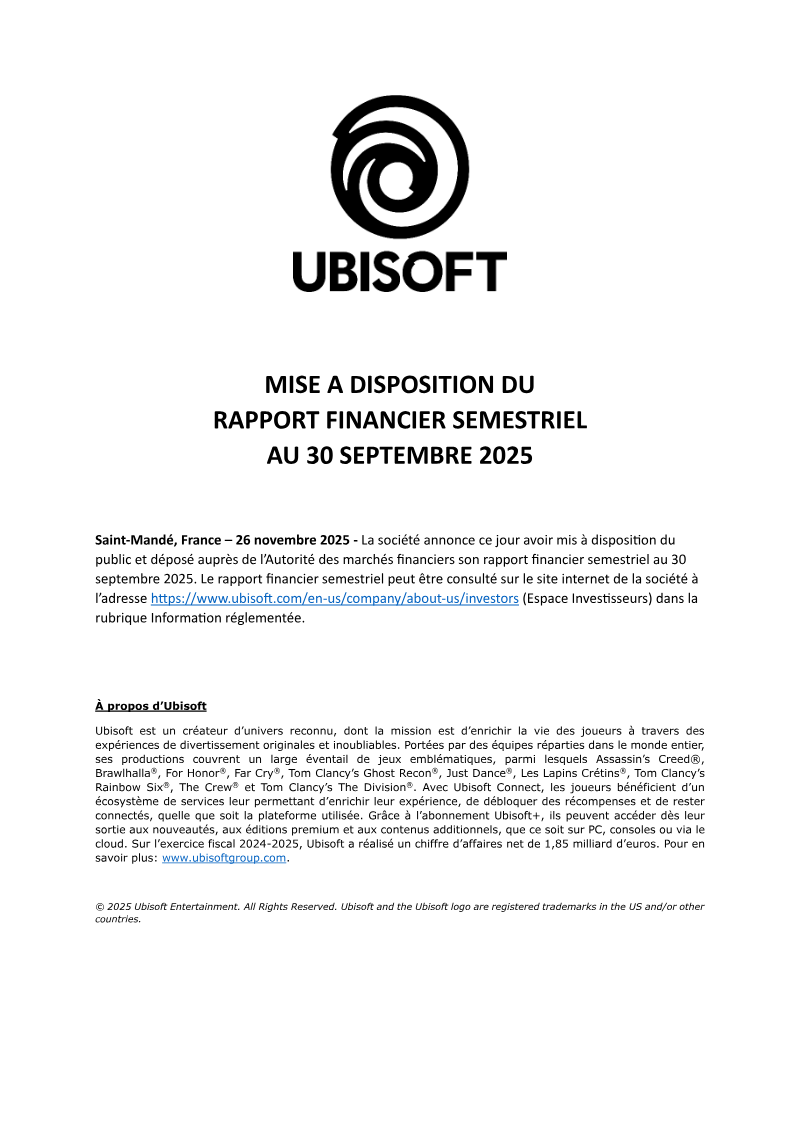
Ubisoft · 2025
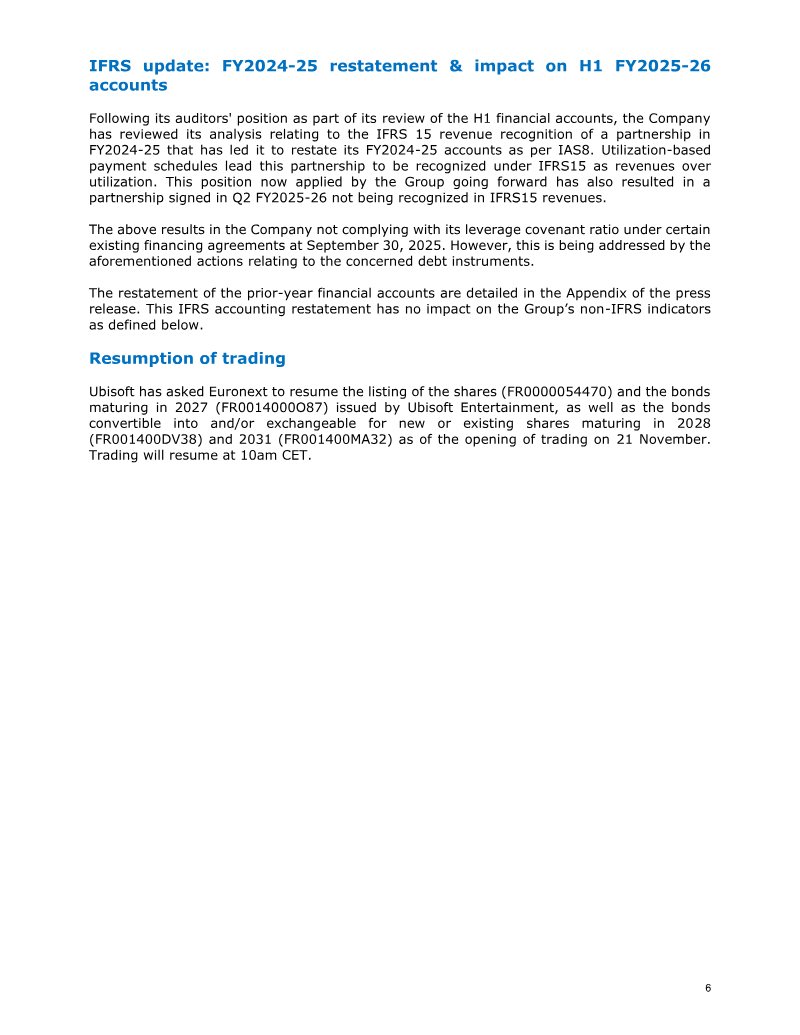
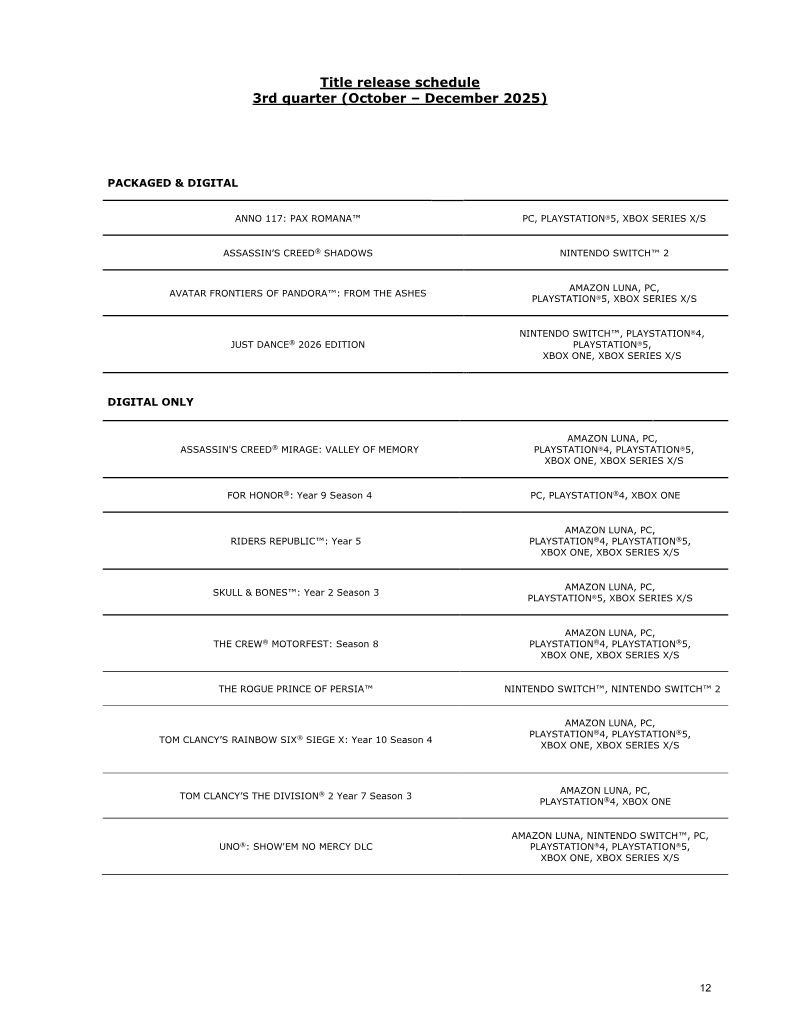
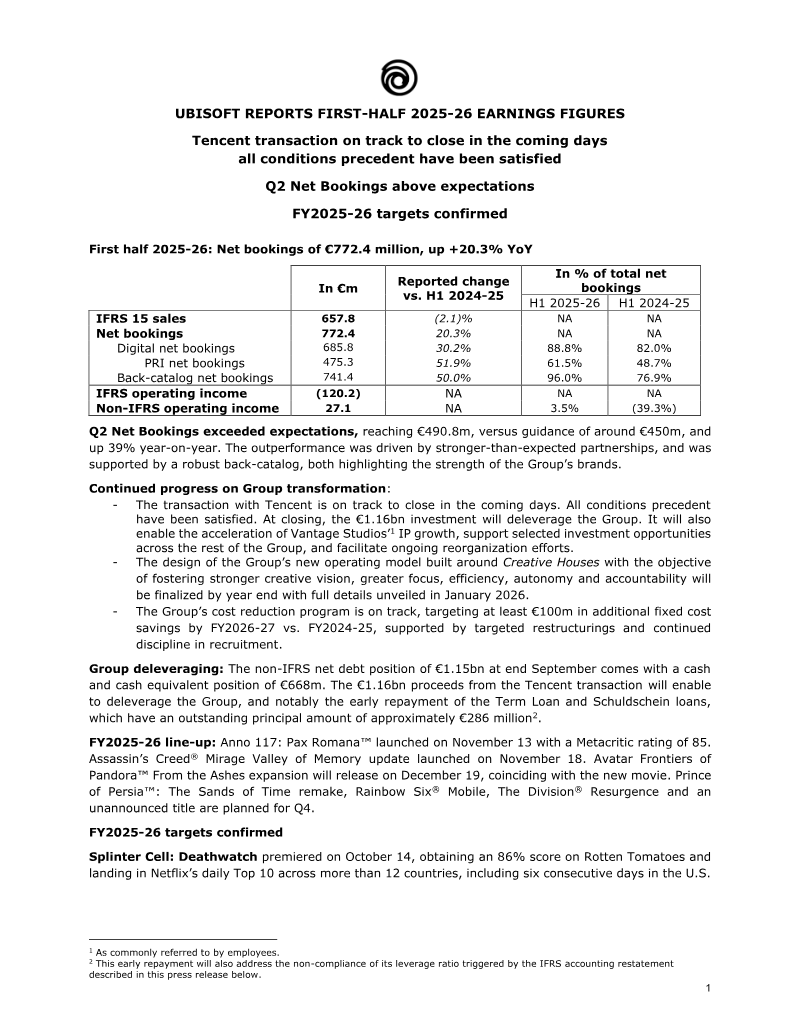
Ubisoft · 2025