FinancialUbisoft
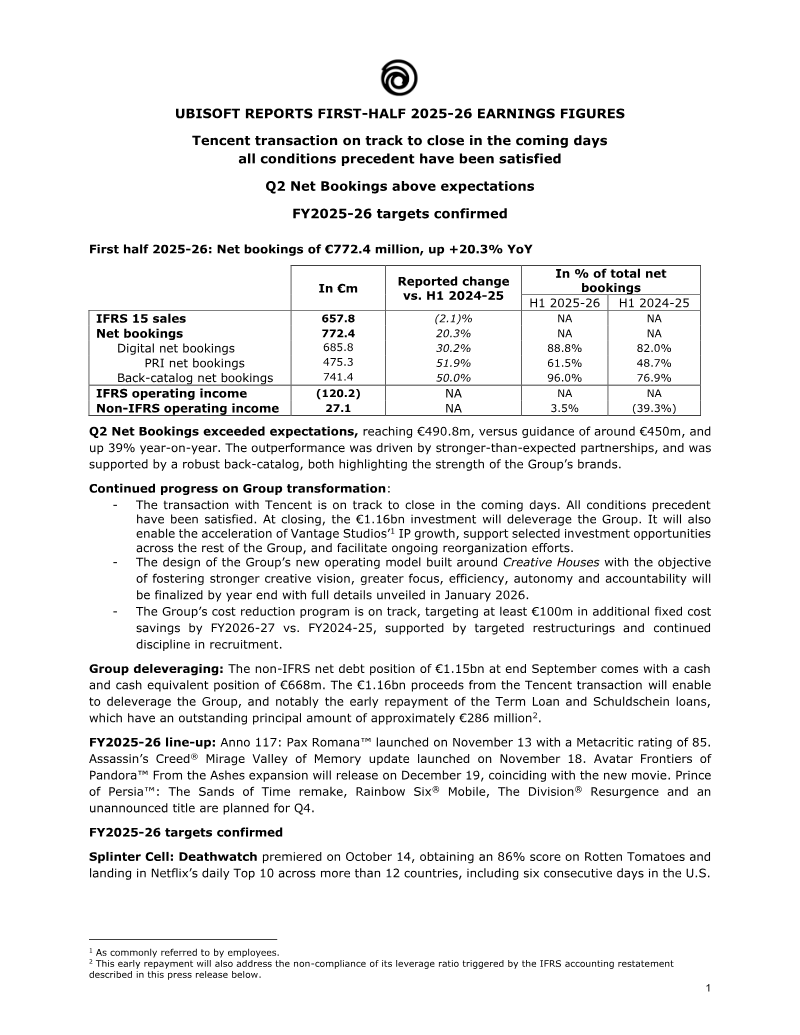
Ubisoft Reports First-Half 2025-26 Earnings Figures
26 Nov 202519 pages~38 min full read
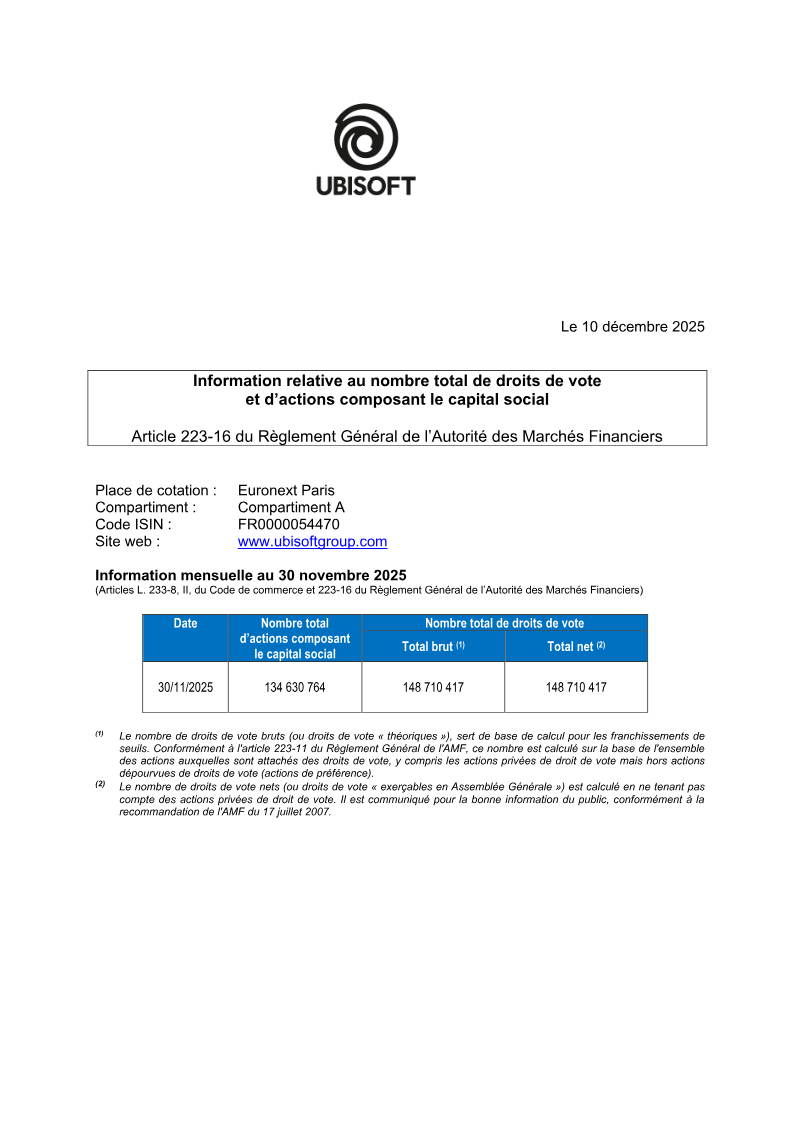
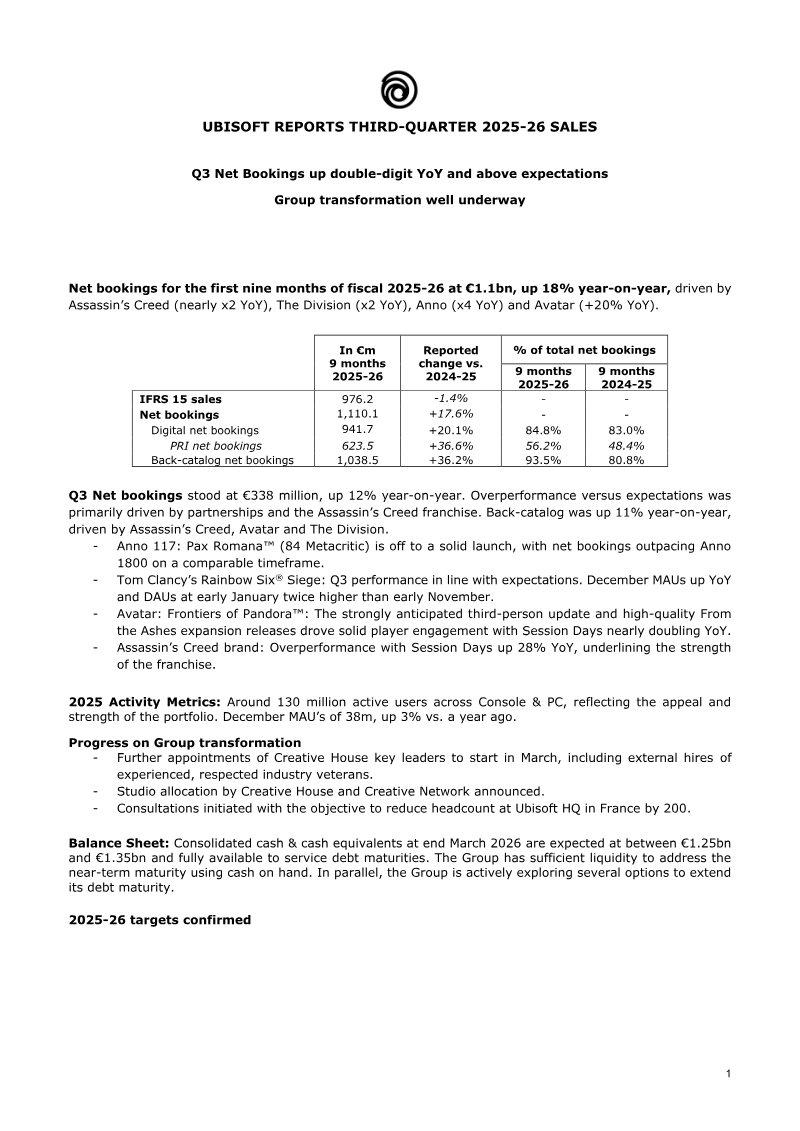
Ubisoft’s financial performance for the first half of fiscal year 2025-26 reflects a period of aggressive strategic transformation and operational restructuring. Net bookings reached €772.4 million, representing a 20.3% year-over-year increase fueled by a resilient back-catalog and strategic partnerships. While the company reported a consolidated net loss of €161.4 million, this figure marks a notable improvement from the €246.5 million loss recorded in the prior year. Furthermore, non-IFRS operating income returned to positive territory at €27.1 million, signaling that cost-efficiency measures are beginning to stabilize the bottom line.
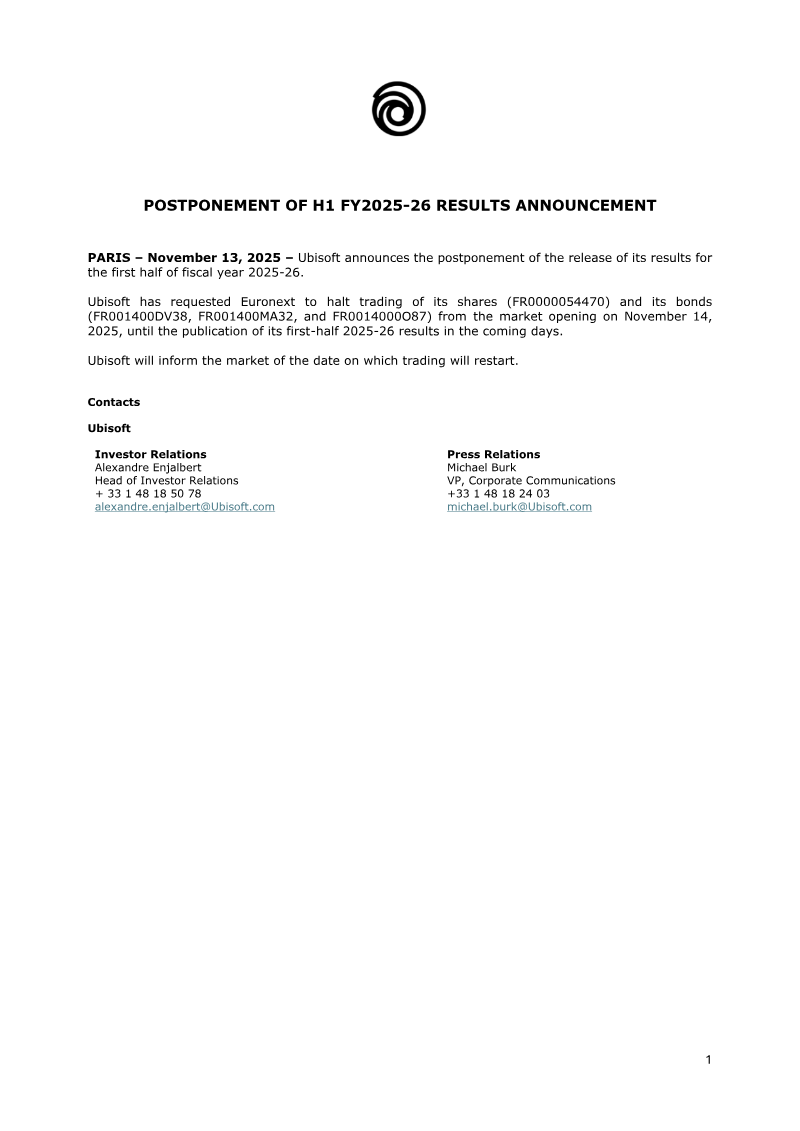
The organization is currently executing a comprehensive cost-reduction program aimed at achieving €100 million in savings by fiscal year 2026-27. This initiative has already resulted in a 9% reduction in the fixed cost base and a headcount decrease of approximately 1,500 employees over the past twelve months. To address a net debt position of €1.42 billion and technical breaches of leverage covenants, the company is securing a €1.16 billion investment from Tencent through the newly formed Vantage Studios subsidiary. This capital injection is intended to deleverage the group and facilitate the repayment of roughly €286 million in debt, providing the liquidity necessary to support ongoing internal and external game development.
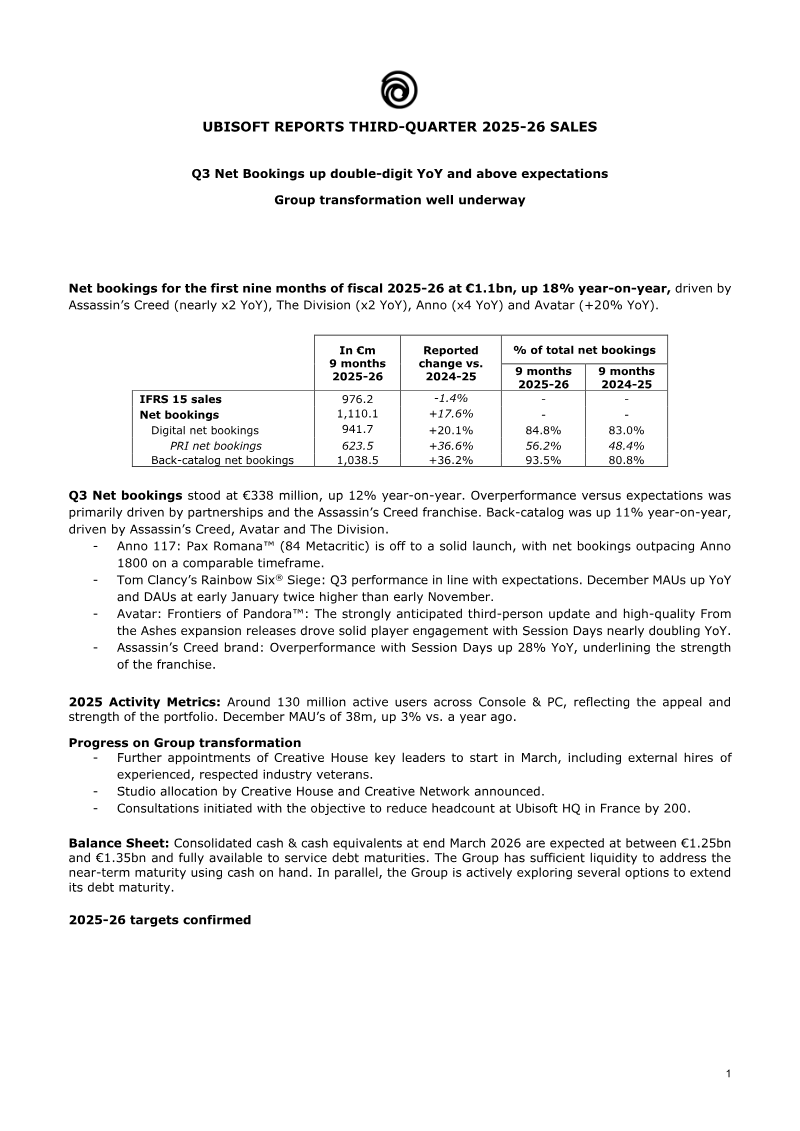
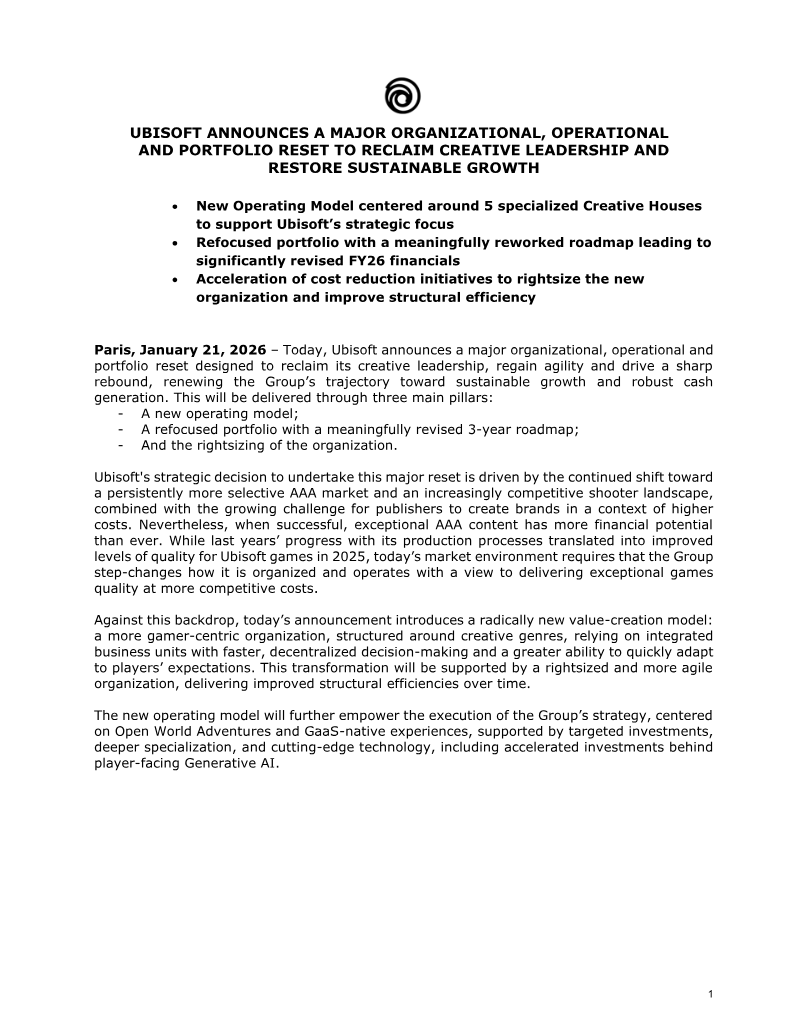
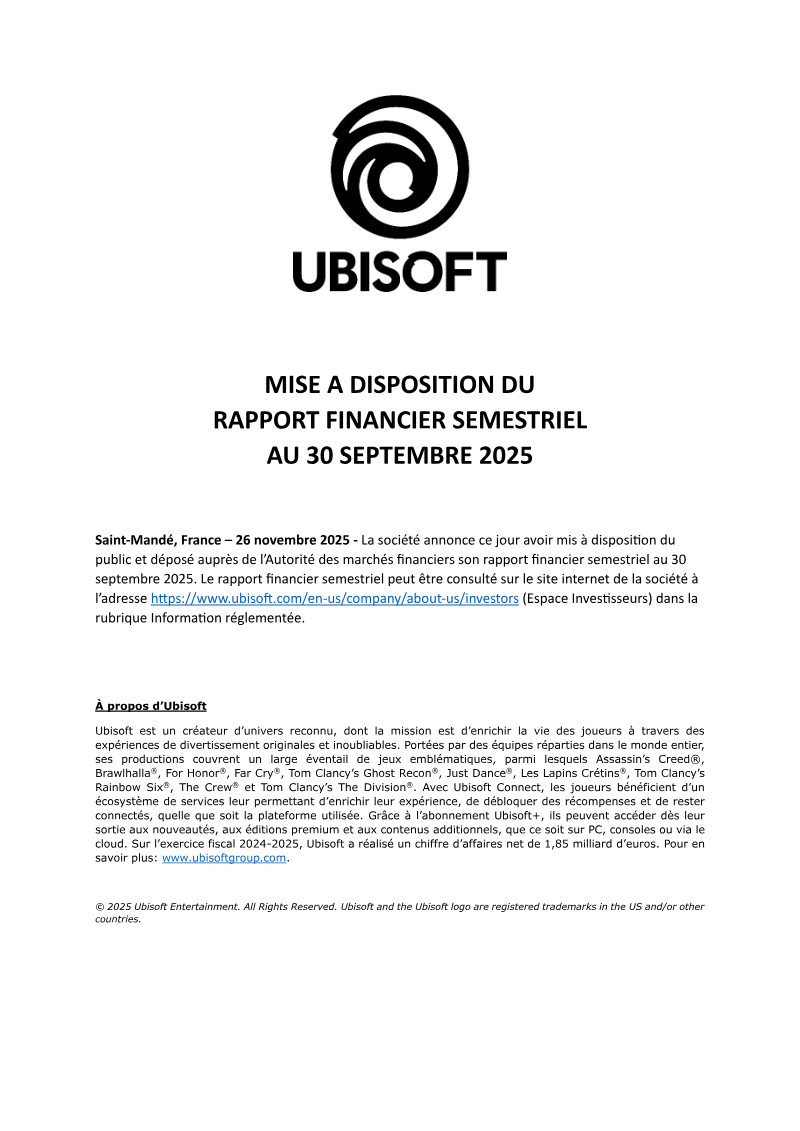
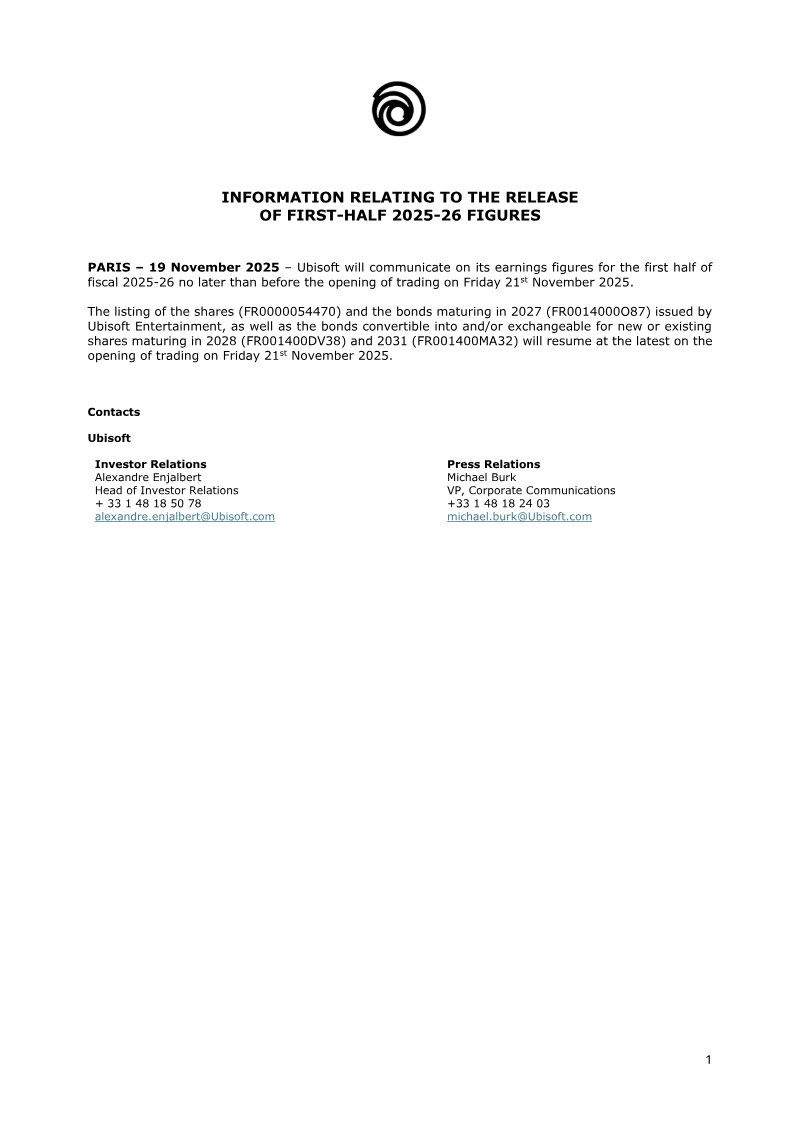
Looking ahead, the company is transitioning to a new "Creative Houses" operating model to streamline production across its global studios. The upcoming release schedule remains a critical driver for future growth, with major titles such as Anno 117: Pax Romana and Assassin’s Creed Shadows slated for the third quarter. These launches, combined with sustained live-service updates for core franchises like Rainbow Six Siege, are expected to bolster revenue as the group works toward long-term financial stabilization and a more efficient development pipeline.

Ubisoft · 2026
Ubisoft · 2026
Ubisoft · 2026

Ubisoft · 2026
Ubisoft · 2026
Ubisoft · 2026
Ubisoft · 2025

Ubisoft · 2025
Ubisoft · 2025
Ubisoft · 2025
Ubisoft · 2025
Ubisoft · 2025
Nacon · 2026

Ubisoft · 2025

Nacon · 2025
Nacon · 2025
Ubisoft · 2025
Nacon · 2025
Pullup Entertainment · 2025
Nacon · 2024

Nacon · 2024