More from Association for Computing Machinery
View all
Whitepaper
Mapperoni: A Tool for Teaching the Basics of Level Design
Association for Computing Machinery · 2026
Whitepaper
‘That’s What Girls Have to Think About All the Time’: Board Games for Civic Engagement and Perspective-Taking
Association for Computing Machinery · 2026

Whitepaper
Exploring Player Experience Factors for Designing Persuasive Recruitment Games
Association for Computing Machinery · 2025

Whitepaper
“It’s Not My Fault”: Exploring Attributional Patterns in eSports Player Toxicity
Association for Computing Machinery · 2025

Whitepaper
Towards Custom Quest Tutorials: Identifying and Addressing Players' Cognitive and Performative Struggles in Games
Association for Computing Machinery · 2025
Whitepaper
Serious Gaming Meets Audiology: Developing a Video Game for Auditory Testing
Association for Computing Machinery · 2025
Whitepaper
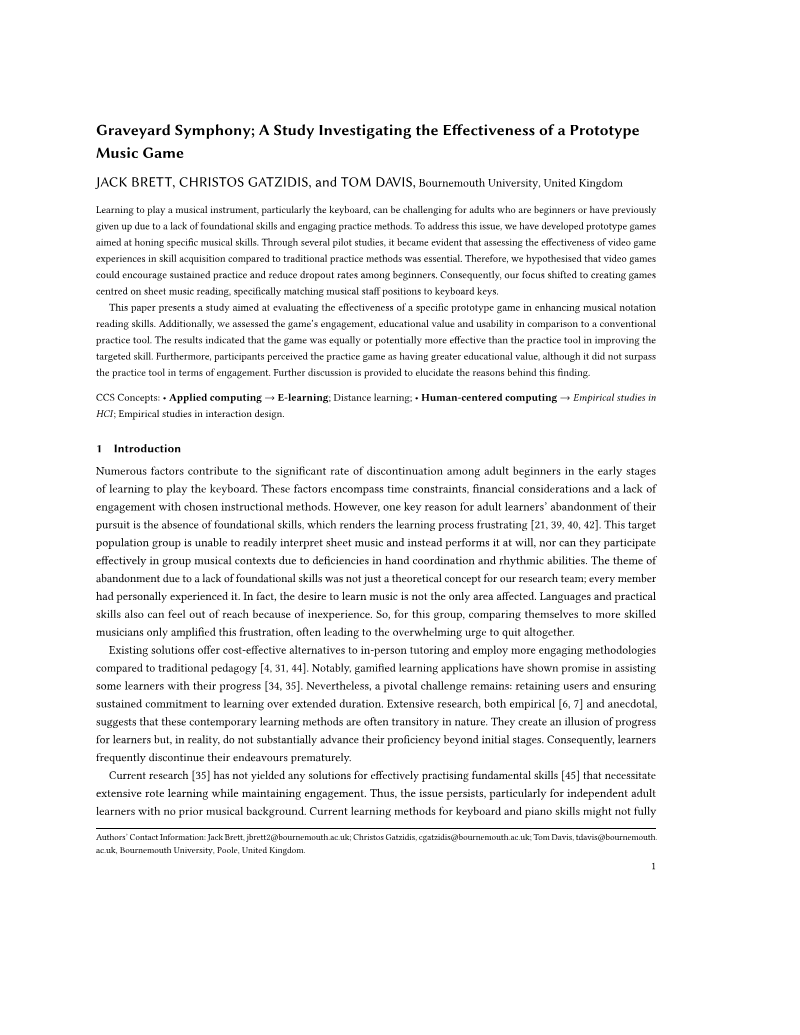
Graveyard Symphony: A Study Investigating the Effectiveness of a Prototype Music Game
Association for Computing Machinery · 2024
Whitepaper
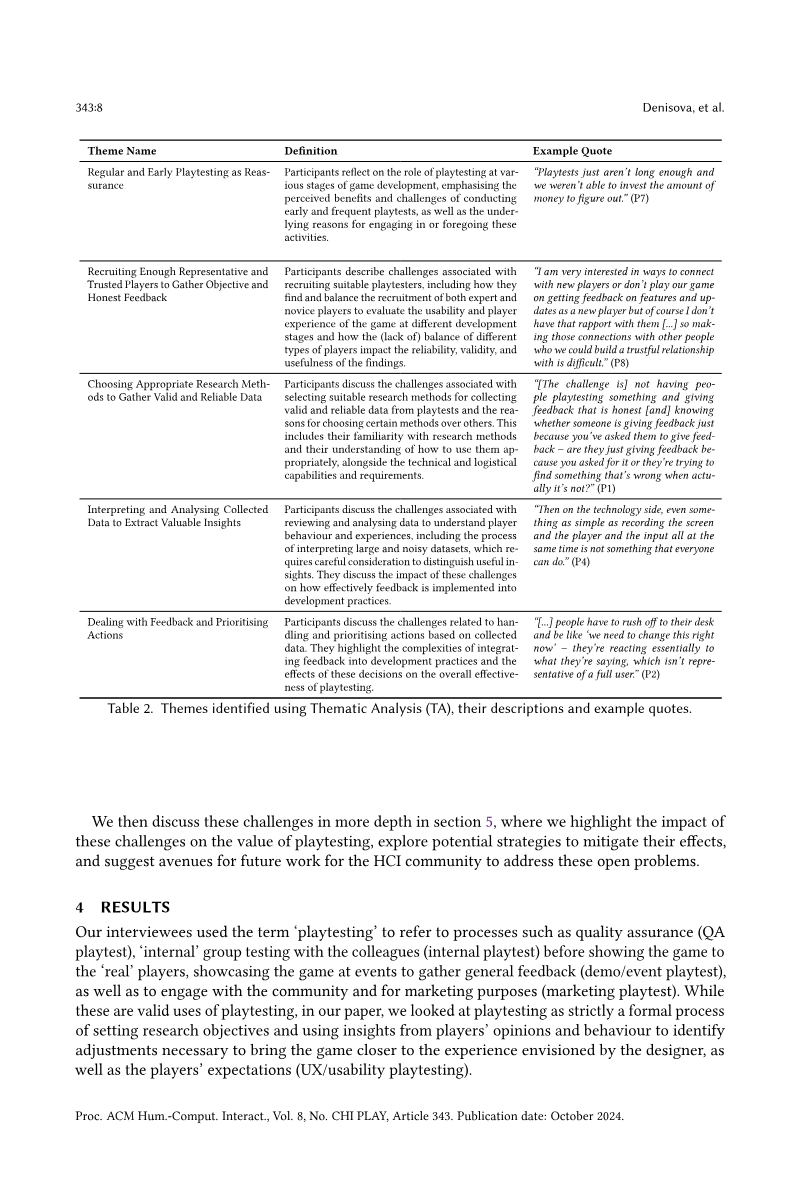
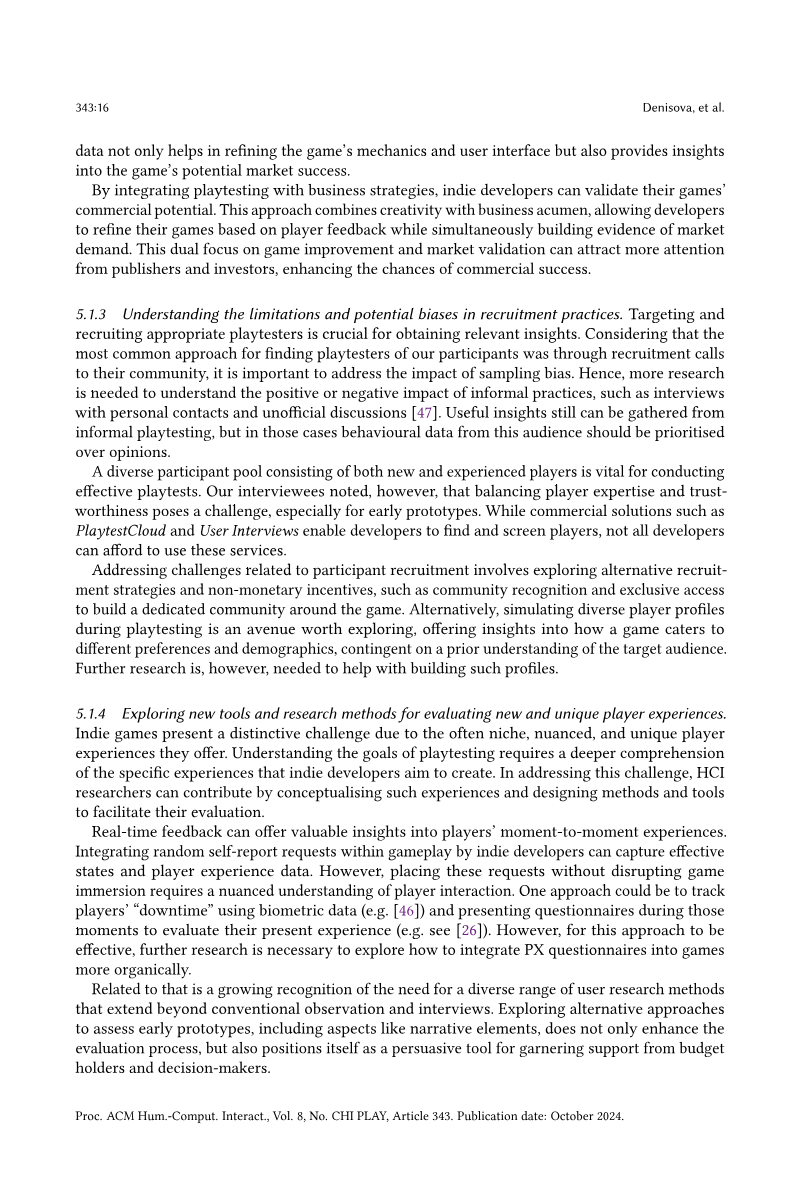
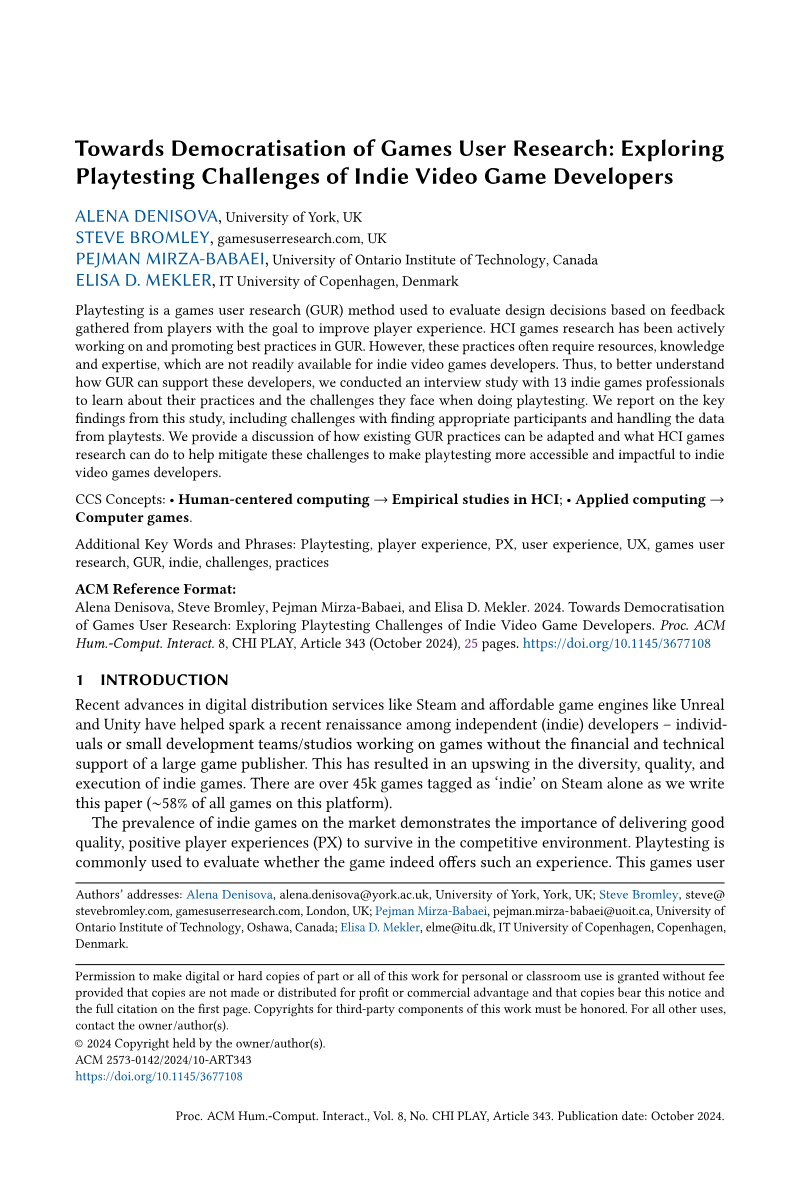
Towards Democratisation of Games User Research: Exploring Playtesting Challenges of Indie Video Game Developers
Association for Computing Machinery · 2024

Whitepaper
Storytelling Games for General Anxiety: Clinician Perspectives on Walking Simulator Games as Intervention
Association for Computing Machinery · 2024

Whitepaper
Behavioral Design in Video Games
Association for Computing Machinery · 2024
Whitepaper
Elevating Game User Research with a Guided Interface for Data Analysis
Foundations of Digital Games (FDG) · 2024
Whitepaper
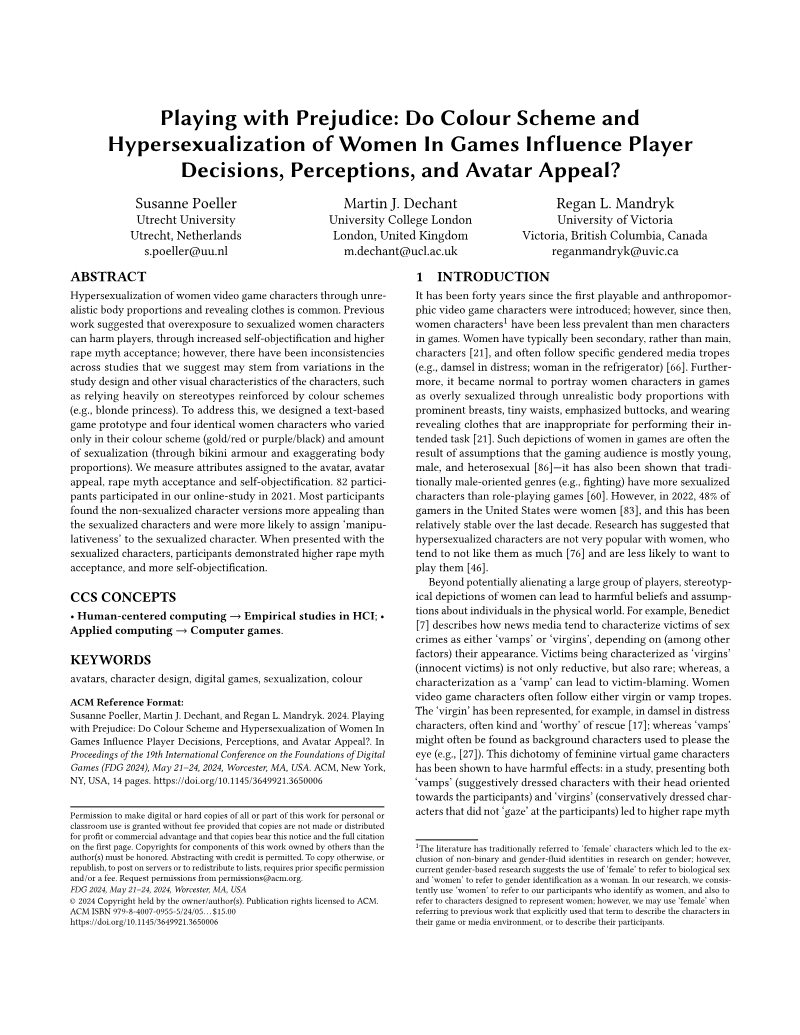
Playing with Prejudice: Do Colour Scheme and Hypersexualization of Women In Games Influence Player Decisions, Perceptions, and Avatar Appeal?
Foundations of Digital Games (FDG) · 2024