VideoDeconstructor of Fun
Top 3 Mistakes Gaming Startups Make - According to the VCs
9 Sept 202459 min video
Transcript
[Music] you've heard of heroic Labs by now and we keep talking about them because in today's mature Market you need every Edge to be successful rather than spending those precious company dollars on building game Tech focus on building your game and shipping it get into your players hands faster and grow your community heroic Labs is Battle tested partner and friend of the podcast their Tech enables you to be flexible creative and scale for Success heroic Labs has your Tech stack cover whether you're looking for a world class backend game server an amazing game development framework Fantastic live Ops toing or reliable Mass scalability heroic Labs has solutions for all of these challenges and it's not just us a deconstructor of fun praising heroic Labs the company works with some of the world's biggest Publishers on many of the Beloved games focus on your game save a big chunk of cheese and avoid Tech risks with heroic labs [Music]
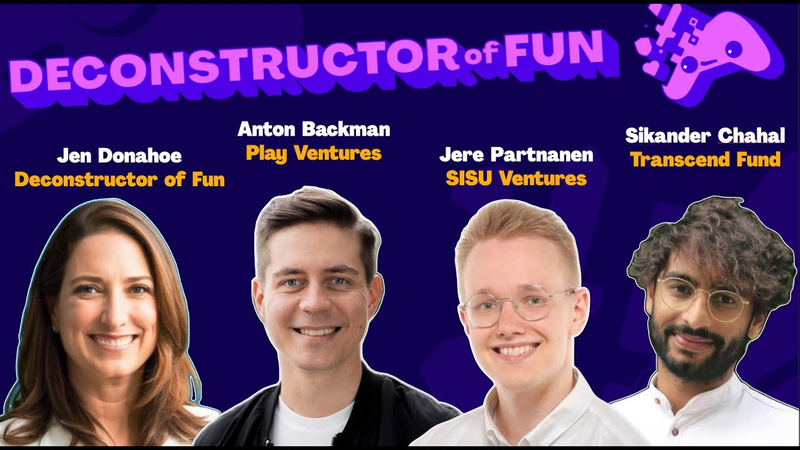
hello everyone and Welcome to our deconstructor of fun interview series I'm your host Jen donaho of this weekend games is the normal thing that you hear me on but today I'm going to be doing a panel interview I'm also a strategic marketing consultant at beta hat research and Jade Inferno Consulting if you wonder what I do in my day job in fact in my day job I don't often get to talk about the topic we're talking today in my history I usually worked at the bigger companies so I worked at EA Zinga Riot scopely and only recently did I get a chance to even work at a startup and deal with the topic of funding and VCS and how do you get money when you're a tiny little company and so a lot of this is new to me and because it's new to me I thought well maybe it's going to be actually new to a lot of different people and so what I wanted to do is gather some experts and asked them a bunch of questions about the idea of VCS in General VCS and gaming and so I
sourced a bunch of questions from the deconstructor fund Community thank you so much for answering me on slack so here are some of the things that we're going to cover from not only the basics but getting into just a lot of different areas of how funding works and how VCS work and how it might intersect with what we're trying to do as game makers so how do VCS work how do you all make money what does good look like for a VC how the investment process works why does a VC take a lead position VC's in the in the board in the board structure and what is important to a VC as game companies are pitching what is it that we all need to bring to the table to get funding so today I'm honored to have three experts here who are going to school me on all things fundraising and VCS so we have sakander y and Anton and I probably already butchered your name because I'm a dumb American and I'll do my best so why don't I let you all introduce yourself so so sander why
don't you go first hi Jen thanks for having me greeted here and you didn't butcher our names I think it's it's a very good pronunciation so I'm a principal at transcend fund my background is as a mixture of investment in games spent the first five years of my career invest in banking went home every day very late in the evening and played games until late and and wondered that was the right thing for me and so left that and decided to try and focus more and more on games I spent a couple years at a few different funds all the way from public internet equities where I managed to get my first taste of looking at games and actually at the time one of the best investments that the fund made was in games and I realized this is you know where I really wanted to focus on so I did that for a while then joined lvp where I was doing early stage gaming VC for a year and then moved on to newo where I was joined their Consulting team working with mostly gaming companies but also media companies and anyone in the gaming ecosystem doing special projects in gaming so that could range from helping them understand the viability of new games all the way from helping companies
enter the gaming market and so I got a really strong and deep understanding of the gaming audience and then join transcend fund two and a half years ago and in transend fund we're at early stage gaming VC primarily focus on seed we have around 37 portfolio companies uh and most of the Investments we have made to date have been in content I'd say we're a Content Specialists we invest across a game ecosystem so anything that supports or touches the gaming audience we will invest in but more recently we have done quite a few investments in the PC console space but you know also in Mobile and also outside of that so yeah I think we really focus on helping gaming entrepreneurs that's how we set up our fund and that's a specialty oh amazing time at newo too I mean you've seen it all inside outside Investment Banking it's amazing Yu why don't you go next hey hey thanks for the invite Jen so my background is in more of the ecosystem side and and as a Founder founder myself but outside gaming so I've had a company myself where we
utilize AI to build this business coaching platform but I won't really go into into that that's kind of been my side project for a while now and I've also worked in the Finnish startup ecosystem for example running kind of a lot of the games program for slush which I assume a lot of lot of the listeners here are aware of and joined the fund through that experience and currently working as a as a principal at cesu game Ventures which is actually one of the oldest game funds as we know of at least with LBP and initial being on in on that category as well and at cisu we really utilize a long history of the partners being Studio Founders and Studio directors across 16 game companies over the last 30 years for example having founded companies like funcom and remedy back in the day and we invest primarily in content at preed and uh early seed but we do look at adjacent platforms
mainly B2B in the industry as well but we haven't necessarily look ventured that deep into sort of the consumer platform side of the side of the industry if it's not on the content end and our focus is really trying to be Hands-On with companies from the very very earliest stages in every possible way got it so very early stage a little Tech Focus little B2B supporting the ecosystem if that's what I'm hearing I'd say maybe 80% content and the rest is sort of in in that B2B area a little bit of both and then finally Anton who hosted Mishka and Phil I guess last week at the party where Phil mispronounced or mislabeled the DJ I guess I I am I'm into Metallica and '90s alternative rock so I had no idea who the DJ was he was trying to talk about anyway I'm 100% you would recognize the song though but it was it was Darude and Sandstorm and that actually came in with like a big surprised to a lot of guests that this
guy is actually finished so I think Mishka and Phil had a really good time over there no but thanks Jen happy to be back on the podcast after a long break after doing a bunch of web 3 episodes back in the day with Ethan so I'm really happy to be back so for the audience listening I'm Anton I'm a partner at play Ventures I've been part of the play Team almost since the Inception of the first fund and prior to that I co-founded an analytics company here in Helsinki back in 2018 and then soon after when play was founded I I joined that team to fully focus on on games investing prior to my own entrepreneurial Endeavor I also co-founded a micro VC fund here in Helsinki backed by the founders of supercell Skype and some other Nordic entrepreneurs very much focused on generalist investing at the time but but through that I also found my true calling of of working together with gaming Founders and really getting in the in the weed investing at the early stages into these companies and these teams so throughout that career I've been working with mostly with gaming
startups on an operating or in investor role in the past years similarly to Y and and many other active startup industry participants here in in Finland I was also involved with slush back in the day and that's U where I got the introduction to the wonderful world world of BC and and startups and I think M and M Anda share a lot of lot of experiences from there that has helped us also getting into into this part of the industry on play Ventures briefly so we're a gaming focused VC firm founded in the end of 2018 currently we're managing five funds actively investing at the preed and Seed stages of startups and with some series a also added in in the mix as well and I would say from our investment Focus we do invest globally we're mostly based out of Helsinki and Singapore with some team members spread out across Europe and Asia as well and the three pillars that we're investing against first off we have the game studios mostly focus on mobile also
because our our team background consists mostly of of Founders and operators from the mobile gaming space the second pillar is really about platforms and and Tech supporting the broader gaming and the broader mobile industry and as a third pillar within our new fund is something we call playable apps and with that we refer to Consumer internet experience primarily on mobile across different verticals like wellness sports fitness lifestyle and these are products where we see that mostly former gaming Founders come in and apply the best practices and the learnings they've had from building mobile games for decades and putting those to use in other verticals as well kind of bring in the best of user acquisition live Ops uiux monetization design and really appending these other parts of the mobile industry so those are kind of the three pillars that we're investing against and of course for any Founders out there listening and if you feel like you're hitting any of these buckets please please hit us up you hit um a lot of buckets there I love the
third bucket that's really unique and very smart we're hearing a lot of you know it used to be called gameification you know where I think dual lingo or some of the language apps are very well known for taking some of the best practices that we have in games and applying it to their consumer app so really interesting that you're diving in there so let's bust in let's talk a little bit about VCS in general and start with some Basics we'll get that out of the way pretty quickly but who wants to take the basic question how does venture capital work and how do VC's make money so I'm happy to take a stab VC is about about Investors investing in the equity of companies subsequently taking part in growing the company's value and then eventually taking part in also in the equity upside of selling the company either through through m&a or IPO so either a merge or an acquisition or then going public on the stock market some things that are important to remember and this also relates a bit into what VCS are are looking for VCS generally invest in very
highrisk Investments and that then it generally correlates that the earlier you invest and the more risk you also take on and also to help set the discussion a bit a general rule of thumb if we take a fund of let's say between and 35 companies that early stage funds usually tend to Target the expectation in general is that almost half of your companies are likely going to return nothing that we are talking about such high-risk Investments here from the rest of the have a chunk of these the expectation is that you get your money back a few of them might recent might return decently from between five and 10x and say one or two per vintage tends to return the whole fund by themselves so this kind of underlines the importance of of like what is the potential upside of the companies that that the VC is invest in as this model more or less demands that each and every investment has pretend like in theory the chance of becoming so big that it
could return the whole fund by itself because that's essentially what's going to keep the VC in business and that's what allows the VC to raise their next fund and focus on finding the next big outcome that then kind of dictates more or less kind of how we think about what is the expectation of of the companies we invest in and what's their role kind of in the broader portfolio and we expect that one or two of these companies that we invest in for every vintage which is usually a four-year period throughout which a fund invests actively through that some of the will be the big Winners that then allow the VCS to stay in the business and continue investing yeah and to add to that I think it's kind of important to know for for example cisu and and play here I I think transcend is a bit of a newer fund so it's not necessarily true yet but this has this kind of power law Dynamic that Anton described here has been the case I believe for both of our funds so for example for cisu small Giant games was our largest exit historically and that returned the fund multiple times over with the other Investments not
necessarily being even anywhere close to that number and VCS while they put the general partners of the fund put a bit of their own money in to align incentives VCS are ultimately investing other people's money and who those people are be they strategic investors in a certain industry or just Pension funds might matter but ultimately you're trying to beat a certain Benchmark for returns of the capital that these limited partners as we call them are putting into the fund usually the fund life cycle might be in total 10 to 12 years and that can be extended if there are high potential Investments still in the in the portfolio but if you think about comparing a 10-year period to for example an index fund you'd expect to make in a good scenario 2 2.5 to 3x the capital that's been put into the fund by these limited partners
and if you don't you're not be beating that index index fund and it is incredibly difficult to make a 3X as a venture fund especially the higher the amount goes that you've so far raised yeah and and I would reflect what Anton was saying at higher risk and if you are a team looking for Venture Capital uh money you need to make sure that you are presenting a very very cohesive pitch not just about what you know product you're creating or game you're making but the team that you're presenting to a venture capital business because they are investing just as much in the team and you know the earlier in some aspects more than the product and the market and that includes Basics just you know for example making sure you have the right founder Equity structure right so if you have a few co-founders you want to make sure that these co-founders are well incentivized through having you know the right amount of equity in the company otherwise wi it won't make sense if you know it's just
one founder and there are two or three other critical people but they're not sufficiently incentivized so the way that you structure your cap table the way that you structure your founding team and the way that your team thinks about the business the mindset of the team that they want to build a enduring business that can reach that outcome that is you know penally going to return three times the fund of the investor that needs to be somewhat indicated through how the team thinks about the business and it's not just a hey we want to create a small product or a game that we love but hey we want to build a business and you know that's what we're going to spend you know all of our time doing that needs to really be communicated so I think that's one important thing that I think Founders that are thinking about getting vure Capital funding should have always in their mind when they're speaking to vure capitalist you mentioned cap table and Equity can you talk a little bit more about what you mean by that and you said it's good for them to think about structuring that correctly what's your recommendation on how people should approach that
yeah you know I don't think there's a on siiz fits all but generally if you have let's say two other co-founders such there three of you and you are all you know critical to the success of the company in some shape or form it's not uncommon that it's equally split but at the same time it's also not in common that let's say the the CEO co-founder has a little bit more and you know there's you know there's slight variations in in how much the other co-founders get but I think typically the key thing is they have to have a sub substantial amount of equity in the business so it can't be you know that one co-founder has say 90% and two of them have 5% each because it really just indicates that the other two co-founders may not be as critical to the success of the company and if they are critical to the success of the company then they should be you know rewarded so you just have to make sure that they they are happy with what they have and they they they feel like they would have a real incentive to drive that outcome you know let's say it's 5 years down the line where you're thinking about an exit and how big that exit should be and how much
they should be rewarded for that as long as they feel like they have enough of a stake in the company and it makes sense to the Venture Capital then I think that's fine there's there's no one-size fits all but you know ideally it would be somewhat similar in terms of how much each co-founder has yeah while something like 10% for a Founder initially might seem like quite a lot it easily gets diluted to less than half that uh in due time especially if the company ends up raising more than let's say three rounds which is quite common especially outside the game industry but perhaps less common in in games oh maybe unpack that a little bit more when you say gets deluded talk through you know maybe why they should start at a certain amount and each round like from precede to seed to series a because people are coming in you need to give them Equity correct and so that's what is that what you mean by dilution so I mean it's more about that
you create new equity which then dilutes the previous equity and as part of funding rounds when you bring in new investors usually they will mandate and as a Founder you should kind of mandate this yourself an option pool that is get that gets distributed to employees potentially other Founders if they've been diluted far too much especially if the founding team is quite quite large this might might happen so you might expect yourself to dilute even more than 25% each round and in the current market environment that is quite common and even might be more than that given how difficult it is to find funding and how much more of a sort of investors Market we are currently currently living in but the usual Dynamic is that initial rounds might dilute you more especially seed and series A's but as you get toward a more established company that has a strong position on the market you can you have much more leverage in finding new cap and diluting for example 10% in
a series C for example oh interesting yeah I was just going to add to that I think the interesting part of this question is well there's a lot of let's say Hidden Truths or or stuff that's not really out there like in blog post and anything and it's it's really like about seeing it from the inside and having more more experience about like what's too little and what's kind of too much it really comes down to what kind said about like how do we make like people want to make sure that everyone's incentivized properly in the company a common Pitfall for example is that let's say a company at its preed stage is Raising from Angel Investors and those Angel Investors end up investing let's say around maybe a few hundred thousand dollars but they end up owning 50% of the company that's when BC is could consider as as a broken cap table because you feel like okay the company has given already this much away of the equity you have to take into account the future future investment runs that the compan is going to be raising like the investor likely also wants a fair share which is likely between let's say up to 10 maybe 15% of the company to make sure
that it also works with with their fund model and suddenly you end up in a situation where let's say the company still might be pre-product Market fit but the founders have already diluted less than 50% because the VCS also think about the next round okay that they have to extrapolate that okay will the investor of the next round be concerned that you know there's too little equity for the founders left here is there too much Equity with people who are not contributing full-time to this company as that's I would say that's a big importance for us I would assume both the andand agree with me as well that you can have all the flashy advisers on the cap table as well but ultimately what gives us the most Comfort is that we're seeing that the top tier team who's working on the project full-time are properly compensated for the for the equity because that's ultimately the the story that that everyone's building against in these startups and these sort of broken cap tables often especially happen in in less established sort of venture ecosystems we tend to see this quite commonly in for example some
Eastern European companies Where Angels have just taken a share that is both detrimental to the company and by extension to themselves which just means that there's a lot of like lack of sophistication in both kind of the company and the angel investor oh interesting that makes a lot of sense Anton I want to ask you a little bit about gaming VCS in general and what are they looking for I mean you said that you have three pillars that goes pretty broadly you know there's content there's platform there's distribution what is it that you think gaming VCS are looking for and and how can Founders who are are trying to build different things you know almost choose the right home for them based off of what their ideas are want to preface this by saying that not any sort of specific we're looking for companies in what what probably fall into all of these buckets but the common traits would be obviously a superstar team having something called a founder market fit so not only an interesting
interesting idea but seeing that the team actually has a credible story and the chobs to actually go and execute on that vision and that what they've done previously somehow translates well into what they're doing now which is maybe is another way of saying that the team has unique insight about something and that's usually then materialized through obviously a lot of work in the past and figuring out that okay this is a real problem we need to tackle there's a real opportunity here that we want to go after so gaming VCS it's a relatively new phenomenon when we look at some of the biggest successes in gaming startups like the supercells and the Kings and the scop of the world when these companies received their pre-seed and and Seed Investments there weren't too many gaming VCS out there in the market it's just like lvp here is the OG who who was involved with supercell obviously very early on cisu has also been in the market for very long but really we came into the market in 2018 a
lot of the other funds have also come in into the market in the trail of like after the success cases kind of proved that gaming VC is a thing then the gaming funds were also kind of a response to that having worked in the market so in a way we're operating in a in a market that is also getting more mature but that highlights the importance that at least we at play that we're looking for for interesting openings and opportunities in the market that are supported by very strong Tailwinds you're more likely to succeed in a pie that is growing where it's getting bigger for everyone and you get to take your own share instead of fighting for your share in in an existing pie that has a lot of big pie eaters already on the table this is for example also a good segue into why we have also started to increasingly aside of our games Investments to also look at these what we call playable apps as so we're looking at a very mature ecosystem of of mobile gone are the days of hundreds of millions of new devices
coming to Market every year people downloading their first apps figuring out what games to play not as crowded UA channels Etc so we believe that and I believe as well those pockets are are just very very different and it's important for VCS to keep evolving also themselves and finding those new opportunities in the market and when it comes to to the apps part and just to to give a bit more context there we look at app store Revenue 70% is games despite games only being a subcategory of app that are out there but then we asked ourselves the question is it just impossible to monetize anything else than games on mobile or are all of these other categories just underdeveloped and are far far behind from mobile games we chose to believe the latter and that's now as we see supported by Tailwinds that that non-gaming app spend is looking to surpass gaming spend by 2030 at least according to to data AI reports so kind of the old edges that that's been that have been discussed also on this podcast multiple times interesting
teams product Market fit growing markets unique insight and strong Tailwinds into what you're doing so Condor I think you have a perspective on this as it relates to risk as well yeah I mean just in terms of the the topic of what platforms you know to invest in and and how that changes the shape of risk I mean we are transcend we we've taken the view that sort of eventually crossplatform is going to become more and more of a a main stay for gaming and even though it's been spoken about for a while it's still I'd say fairly in its infancy we haven't really seen many true crossplatform Games come out I mean I think you know mihoyo for example is sort of the gold standard of what can be done with crossplatform and and there are obviously the bigger games out there that like fortnite and and others that that have that have gone to that that point but you know from our Viewpoint and our kind of the way that we're investing and how we view risk we're not taking a very very strong position and which platform is going to be let's say
the the place that the the next new big franchise is going to come out in content we're investing across all platforms so whether that's PC console mobile even VR or XR you know we've made investments in all those space but we kind of believe that both the the teams that are building interesting new IPS on the are going to be on all these platforms and each one will have the differences in how you think about the risk of that content yes p in console I think has uh a little bit more difficulty in say figuring out what will stand out but then in terms of the way that you can reach audiences and sort of almost kind of like the UA and PC consoles a little bit more interesting and there are lots of different ways to reach your audiences compared to mobile whereas in Mobile there is a lot more datadriven you know early ways to to validate your game than you know going against kind of the current landscape of UA is is very very difficult and so there are you know there are differences in each platform how we View risk VR for example I think is is seen as a slightly
Niche category but we believe it's going to grow a lot and we believe that the potential for a new kind of uh franchise or IP is pretty strong there and you're seeing the likes of even Guerilla tag already reaching that status right so the way that we view risk just depends on both a platform and the audience and the go to market and all the things that you think about when you're building a business and and they're different for each one but ultimately we are not saying this is going to be the platform where the next new IP is coming from we want all those platforms because we believe that kind of true crossplatform will be will be the main stay in you know the next 5 to 10 years and so yeah the way that we speak to teams and the way that we assess risk is really through those lens and it really depends on all of those different things that that affect you know how they will grow and how things will will pan out so y for cisu do you have a specific Focus around content platform you said earlier like 80% content and 20% Tech right the technology the B2B technology or did I
get that wrong yeah I mean that's kind of roughly roughly it even though we've never sort of specifically defined Define that and in terms of content we are relatively platform agnostic even though historically I mean obviously I mentioned small Giant games most of our exits have come from mobile but we've had some success in PC console as well uh which is part of why we're also interested in looking at the the category more but as sander said you you just have to look at those categories and especially distribution in those categories rather differently I mean for example in PC console we often hear people reference some of these well reference cases of of Studios that have grown to a certain size over over a billion dollar valuation for example but when you look at them closer they've often taken 20 years or even more to get to that state so growth in that category just tends to be a bit bit slower for example mobile for us it is still very
very interesting but we have to look at it as a as a very mature Market I mean if you look back to the start of the kind of mobile craze and and apps on mobile you could realistically make things work with very sort of rudimentary approaches to the the value that you're providing to the user but in in for example mobile games nowadays once the mobile UA Arbitrage has really gone and you're looking at a very mature market then you're back to really looking at what problems do you need to solve as a mobile studio in order to grow and a lot of the times those problems are going to be less about design and more about distribution which is why exactly those distribution and advantages are extremely important to us and and really articulating that Venture case through a distribution Advantage is both important both mobile as well as PC and usually we would try to be very
conscious of what like constitutes that advantage in in both categories and and I think one part that hasn't been mentioned so far is Tech which I think presents a pretty interesting category for Venture investment in games where I think we've taken at least recently a rather strong stance that we don't necessarily believe that most games only Tech Investments are necessarily ever going to have that Venture return profile and instead we've for example made the distinction that we'd like to invest in tech companies that use games as kind of a beach head uh because the requirements of game studios for something like analytics for example are often way more sophisticated than for traditional consumer apps so if they can make it work in games there's uh a distinct possibility that it can be more widely used if that's been taken into consideration initially or if it's a pure games related platform it just has to be extremely fundamental to games not
to even mention some of the problems that these companies have in terms of selling their product to Studios which are very biased toward that build end of the sort of build or buy Spectrum but we've we've still made quite a number of number of tech investment recently but it's all all been with a very specific thesis around why this is a venture bable business and it's not just because it's interesting games technology that can be widely used in studios this podcast is brought to you by appsflyer in today's Digital World understanding your apps Journey from Discovery to download is more than just insightful it's essential enter apps sler the leader in Mobile attribution and marketing analytics that allows you to measure the full potential of your marketing efforts making every ad dollar work smarter with apps flyer that's your new reality dive deep into Data driven insights that reveal exactly where your
users come from and how they'll interact with your app app sler where your app's potential meets performance step into the future of game monetization with exola the premier partner for game developers seeking to expand their reach in Revenue exola provides a robust Suite of tools designed to enhance user acquisition manded subscriptions and streamlined Payment Solutions worldwide unlock new markets and maximize profitability through their customize secure payment architecture and dedicated support team exola powering game developers to achieve Global [Music] success I think it's very important point that y makes about sort B2B software companies only servicing the games industry I think also has to do with the purchase power of these
companies and kind of where in the list of priorities this software Falls in with these companies if we look at mobile by far the biggest expenditure at scale is going to be your UA budget and that's ultimately where you want want want to keep spending your money and it's it's just really hard to build a massive Venture case hence we've also largely stood away from companies focusing on let's say providing some backend services for gaming this is not to say that this could make outstanding businesses on their own and these will likely kind of continue growing and be very healthy businesses but it comes back to the point of like how big can these things actually get and will they eventually also be able to return the fund but as y said if you start looking them more horizontally as well games and games compers are still great early adopters of these companies largely also given the fact that you need to stay competitive in this industry and always be exploring the new way of of having an edge over your competition and so this get this thing gets highlighted in companies operating in the in the UA space or the marketing space or or or let's say the in the broader
distribution space be it for example sort of companies building out web stores such as app charge in our portfolio allowing the studios to now in the wake of dma and kind of what's happening with epic and apple forcing Apple to allow developers to open up directly to users and then being there to provide that service now that that market is opening or be it with this kind of an emerging form of rewarded installs that are making a comeback to Market specific Al companies like Benjamin and Playback in our portfolio or then taking use of this first party data they can gather from the users and actually try to Leap Frog some of those conventional ad platforms and really providing providing users similar as we saw in the pre idfa deprecation era so we're very interested in Founders kind of seeing these waves coming coming their way and some ripples in the market that allow them to kind of inject themselves in there and go and fill that vacuum at its core those are new markets being made and as long as they are they are solving pain points for customers
they're able to grow and and become really interesting to us in content specifically it's not kind of solving a problem in the same way I would argue but obviously you're catering to different needs and different interests of players but even there we would encourage teams and and get excited about teams that have found let's say a very popular but laps genre in terms of like the market leaders being very old actors obviously my game did a very good job with Rush Royale there kind of seeing Tower Defense as a great kind of lapse genre but taking the best learnings from random dce the Korean game and then launching that in the west and basically revitalizing a lot of the Tower Defense genre in the west or then an example again from our portfolio K entertainment that are building in a niche that's not too well known looking at very hardcore Mech games on mobile seeing that war robots the incumbent has doing a lot of things well but really leaving a wake for a new entrance to come and build within that Niche which
on a spending level is still quite massive so really looking for these kind of pockets of content that have been lapsed in later years and having a compelling thesis of you know why they're actually going to come in there and not only eat the pie of the incumbent but also growing that pie and it might be better mization it might be making a game with a broader appeal there's different things to this but it all comes down to finding that sort of pocket that they seem that the incumbent is doing a bad job at and then coming in and kind of eating their lunch that makes sense to maybe quickly add to that I I think it's an interesting point to kind of compare investments in very mature genres and these more Niche genres I think from a PC console perspective I think it's very interesting to look at something like escape from dark as an example of really hitting an extreme Niche extremely hard and and finding a lot of success in in something that a lot of people wouldn't necessarily expect to be a large
opportunity given how brutal and unforgiving the game is but it's offering something that just simply isn't out there on the market and really doubling down on what players want from that as opposed to something like trying to work work things out on a in a MOA category which has been incredibly difficult in the last basically 15 years there's a lot of dead entrance in the category and from mobile you could look at a m mature category like puzzle and Match 3 in particular which is basically the biggest opportunity in games bar none but it is so saturated and the incumbents are so sophisticated in both design and and UA that it's requires something rather special for you to enter that market and grow to venture scale so all of that makes a lot of sense trying to find places where maybe
there's an incumbent who's gotten lazy or you know y to your earlier point which was interesting about how do you use games as a use case for expanding and going more broadly as someone as a growth marketing person I go to something called ma in in Las Vegas every year it's stands for mobile app unlock or something like this and what I often see at those conferences is that everyone goes to all of the game panels even if you are not in gaming because gaming is the lead in how do you unlock new UA how do you unlock new acquisition and so I think that that makes a ton of sense in in areas you got you all want to focus on so so cander so so pretend as if there are one of these opportunities and you see it pretend like they've pitched you and and well if you want to start at a pitch that's fine too and and what are you looking for at a pitch and then and then how does each of the stages work in terms of what they can expect until they get that check in
their hand yeah yeah you know so typically you know how we even meet Founders can be uh in itself a little bit of a a black box to to you know many Founders out there you know a lot of the founders that we speak to you know come through recommendation from you know our Network could be a founder of a portfolio companies that we already know it could be someone in our Network that is a Founder elsewhere or it could be really any one that's kind of close to us or you know has spoken with us in the past but also you know we do get a lot of you know just cold inbounds and and we do check those and actually two of our investments that we've made have been through cult inbounds so you know it is also a way to to reach us but ultimately you want to get our attention and you have to sort of hustle to do that right there's only so many pictures that we can see in a day and I'd love to speak to every everyone that messages me and that there's so many cool ideas out there and incredible Founders but there's only much time that we have and and yeah just making sure that you can
get in front of us in in whichever ways possible and you know be creative about it I think you know we definitely appreciate that so you know once you speak to us it'll you know typically be one of the team members and there'll be an intro call and you want to definitely establish up front you know what is interesting about the fit between what you're building as a founder and the team that you speaking to and in our case you know if you are building in the gaming space in content you know there's going to be at least some interest in in how you're going about it but even if it's not in content even if it's in Tech or platform Services if it's something that's really enabling the community in games or if it's something that's really you know potentially enabling even the rest of our portfolio then that's also interesting to us but really that initial you know introductory meeting is to just establish whether there is a you know a connection between how we think and you think and and just us to get an understanding of what is it that you're really driving for I would say you know don't go too much into the details of like here is the you know specific
market and here is you know like the nitty-gritty of everything we're building sometimes teams try to pack too much into that initial introduction meeting and I understand why you want to make sure you don't miss anything but actually I think sometimes less is more and you know through my experience as well with helping our teams that are raising their next round is that investors are just as much emotionally driven as they are rationally driven and we may like to say that we are you know rational beings and we you know we we do all the calculations in ahead and we try not to bias ourselves but like ultimately there's going to be that level of hey can we see ourselves working with you long term can we see ourselves really helping you in in getting to that next step and in building the vision out you know for the next five years kind of are we the right thin and those kind of conversations I think if you can get that up front they really hit harder than than just kind of the cold hard numbers of maybe what you're trying to do so you know you'd have that introduction meeting and then you know we're we're a small team of six and so we very quickly like to get the
whole team on board over the next couple of weeks it could be two or three more extra calls but again each call is for you to get to know us for us to get to know you for us to really understand you know what is it that you're looking for in a partner and how that we can help you but ultimately what is driving you as a team as well your background on where you come from you know really does make an impact of like why you are here today and what what is it you're building if you are a team that's building let's say in you know the ugc space whether it's fortnite creative or Roblox then I think it just definitely helps if you're a team that's already done that in your spare time or if you are a team that's building in PC consoles and having run a game Studio or having some kind of success under your belt you know you don't have to be like the CEO of a previous company but I think as long as you were really part of making the sausage of the game that was successful really does help and so all those things should be coming together and should show through your presentation your pitch and why you're passionate about what you're making and
so you know we really want to understand that over yeah three calls maybe could be for you know it really depends and if conviction builds quickly sometimes you know within one or two calls we've said you know I think we really want to work with these people you know let's put down a term sheet and that's generally our approach as long as you meet the whole team and as long as we feel a lot of conviction then we can move fairly quickly being being a smaller fund at least helps you know I think we we can move much more quickly we can really very quickly understand whether you would fit with some with our wider portfolio as well and so if there's somewhere where we want to move quick we can issue a ter sheet within a week uh so I think that would be the general process wow Anton any differences or similarities from your side I think cander um summarized that pretty well I would say the process looks quite similar in Broad strokes and I would assume so for for many other many other VCS as well I I really like what Sandra said about kind of the importance of kind of the human aspect of it all it's important to remember that the VC is also just a just a normal person doing
their job as well with both kind of rational and and irrational characteristics and it's a very common wisdom in in BC overall and startup land that that you keep hearing a lot this advice that you know get a get a warm intro to the investor but what does it actually mean if if I think from my point of view it's also really about like when you look at preed investing you're investing in a team it's all about creating trust for that person as a investor you're just trying to gather all of the available data points all of the available information which is going to be limited anyway that helps you get over the finish line and actually build that conviction and invest so hence why warm introductions have been popularized and kind of made The Benchmark so to speak because when somebody you trust in your network introduces you to a potential founder they're kind of putting themselves on the line also they're putting their reputation on the line with little to nothing to gain from it and that obviously gives a boost of confidence with the investor as well that okay this person whom I really
trust is um actually buying for this person and and kind of telling good things about them okay I should definitely meet meet this person this is not to say that you couldn't approach c c emails we've also invested in companies based on based on a c reach out to us it's really about how do you frame your email in a concise way and kind of get the interest of the investors to to jump on and and Hope on Hope on a discussion there there's multiple ways to do this but again it underlines the the human aspect and it's really about the investor actually building the required trust to pursue the investment so let's assume that you've built that trust and now you're into the position where we need to think about board seats can you talk to me a little bit about how you think about being on the board and how the board operates and and things that Founders should know about boards yeah in general the board can be a very powerful tool for the company specifically the CEO but also the other founders of the company there is a VC here in Finland who led the preed investment into supercell that
we had the pleasure at the play Summit to hear some of his thoughts into what makes a good board for a start and he had a lot of interesting tidbits there to which I agree as as well because boards can also be let's say not value destroying but let's say definitely not value adding my opinion and also from working with multiple startups on the board is that before you really have a business that requires a lot of strategic decision making you you're likely better off just working with let's say advisers you have on the cap table or or your investors in a in a less formal manner let's say doing bi-weekly catch-ups or you do some other exercises brainstorming that where you get more inut for what you do but where I feel like the board is becoming more valuable is that when you have reached product Market fit with your company and there's more sort of vectors to pursue for the company where you really want strategic advice and also in terms of more more Hands-On things like leveraging your board to help with convincing a new hire to join the
company or obviously also leveraging the board for investor intros and kind of helping with the round but that's really sort of later down the line where there's actually more decisions to be made otherwise generally what we see in the earlier stages is that we try to move all of that board discussion offline instead and then be more active outside of those kind of more formal things in general the VC I was alluding to a moment ago was saying that which which I really like is that the board should be doing its everything to support the CEO until it's time for them to fire the CEO um so that's like a pretty harsh way of of putting it but that's in general what's happening let's say behind the scenes when you've heard about bigger companies where the CEOs have been replaced take Travis Ken at Uber for example that was an example where the board Ed the CEO because they felt that the CEO is not anymore f fit to run the company so so the board acts as a
steward for the company but but also equally importantly to be the the most important resource to to the CEO as well yeah I maybe often I tend to agree with anon's hot takes and I'll agree here that I give an example from our perspective where we we don't tend to take board seats especially at preed and just find that it becomes a rather useless rubber stamping activity where people feel the need to create presentations for something that can easily be handled over more casual calls with investors which then changes quite a lot as you bring bring a lot of different stakeholders in this case mostly mostly investors as as part of the board later down the line maybe after series a or not necessarily even after series a mostly when you are at later stage as Anto said after product Market fit and we've been on part of part of some boards initially I'm part of one currently even though we don't
take many seats and in one case we have had to do a rather sort of painful process of finding a new CEO and that has been rather difficult for everyone but ultimately ended up in a rather positive situation for the company at least for now but I I definitely agree that there is a level to which these boards can be rubber stamping activities but also kind of showcasing some ego even from some investors that can end up being very negative to to Founders especially if these investors are not or have not been active in the industry and don't necessarily understand what they're working with in those cases you might end up really being there kind of explaining some rather basic concepts to people who still feel some sort of need to be a part of decisions that they simply should not be a part of and at least we did consider that a legitimate problem and even though we have made a lot of investments in the industry I
think like 84 by now and the partners have been operators and Founders we still often don't think we have all of the information needed to give certain types of types of advice that we sometimes see given to to Founders wow okay yeah makes sense I would also quickly add I mean in terms of governance I think there may have been a period I felt during let's say the the the peak of the the zero interest rate you know payday where governance was sort of thrown out of the window and you know we've seen some big blowups in the past where some you know after it all happens people ask where was the government where were the investors why was no one checking what they were doing and I do think that has some knock on effect of you know how people think about even structuring board at the early stage and so as much as I agree that you want to work with your portfolio companies through casual catch-ups and that's really where the meat of the the upside gets built I think the protection of the downside
there needs to be an eye on it and you know the board seat can be one way to do that you know through you know methods that you've already mentioned if things are not going well if the co needs to be changed but even if some decisions are being made and you know it's has to be approved by everyone on the board scene I think that can be at least helpful to protect some potential you know mismanagement or wrongdoing uh and often times when that happens there are bigger problems that a board won't solve but at least it's a way to kind of figure it out early or to understand what's going on early and I think the other thing that could be useful that I you know have seen is that when you have a when you have a certain board construction and then that company goes on to raise a new round you have new investors you have a new board actually sometimes it's helpful to have your old you know board member whether it's you know the the old VC to stay on as either the board or as an observer to kind of you know help transition into a new you know wider board structure because you trust them you want them to be involved in the discussions and you want them to just
kind of sense check new discussions that are going on with new board members and sometimes that can give Comfort to a founding team because they've worked with the old born member for ages and they have someone new joining and sometimes it's nice to have them all together rather than sort of being handed over to a new set of Parents Without You know any any kind of you know guidance so I think that can also be helpful but yeah on the whole I do think it is larg of formality and it's just there to protect the downside and to quickly add because cander mentioned observers like for example in our term sheets we generally do not expect a board seat but we may expect an observer seat that doesn't have a voting kind of voting responsibility as part of the board interesting so how does that manifest are you do you go to the board meetings how are you observing I mean usually it is that you go to the board meetings but if there is a decision that would require the input of the board and and for example a vote then Observer just simply doesn't have a say in in those cases yeah you you can express
your usually you can express your opinion but when it comes to counting the votes then you're off the table at at that point in time I do want to quickly underline what y said about these board meetings especially in later stages and and when there starts to be more observers and board members around the table of becoming investor q&as I see that even in like growing and very good companies happening every now and then and and that's just something that's unacceptable and something that you know the founders should really rally the people that they trust around like like eliminating that because the investors in the company should should know what the company is doing and understand its business always send the materials one week ahead before the board meeting make sure the investors have read that to kind of avoid overly repeating the stuff that's already been sent because it's valuable time you should see that board meeting as a tool to really pick the brain of of the people around you and the people who support your business and avoid them becoming sort of sessions where investors get to ask questions about how
the business works but unfortunately that also happens in better companies that are out there but I guess it's something we're all just trying to work to improve reduced board bloat is what I hear you is what I hear you saying that makes sense we have come kind of to the end we talked about a lot but did we miss anything that one of you may want to jump in and capture in case we miss something well one thing I wanted to bring up which sander kind of briefly mentioned is is fund size which I think is quite an interesting thing to look at which Founders don't necessarily have a lot of like a clear view into where fund size might affect the types of decisions that are made quite heavily and the types of companies that are seen as investable and often also leads to something that is a bit confusing to a lot of people in the industry for example these massive rounds that happened at large valuations where a like a multi-billion dollar fund
puts I don't know $50 million into a very early pre-product Market fit Stage Company because that's kind of just what they invest they don't necessarily have a mandate inside a very bureaucratic organization to invest less than a certain amount so when they do want to invest and they want to invest when they're still upside available and potential multiples available in a certain investment that's kind of what they have as the option but for example for smaller funds like for example cisu is currently a 55 million million doll fund and the previous funds were much smaller than that we look at certain opportunities somewhat differently for example based on valuation than another fund might I mean I'll give you an example here where one of the things we also do that not not a lot of funds to my knowledge do is that we incubate companies where we get involved very early perhaps there's a CEO but there's no team there might not even be a very kind of clear idea of what exactly
they're doing but we commit to supporting kind of building the early team coming to that defined early strategy and then take kind of requisite stake in the company and for example with sander we have a common investment that comes from our incubation I don't want to call it a program but our incubation activities which is Cosmic Lounge mobile game Studio heavily focused on AI and in those cases we invest at a very low valuation I mean I think Cosmic Lounge has a very high ceiling as a company but in other cases we for example look to invest in more Indie type PC console Studios but if we get in at let's say 2.5 million valuation that is a radically different sort of calculation than one you might make when you invest for example 4 million at 20 million valuation you can get by with a very different exit for that company than you would if you were
to invest at a larger valuation which is exactly why fund size starts to matter a lot because a multi hundred million dollar fund cannot necessarily invest let's say 200k it just not doesn't make sense for them in terms of what alternatives they have available to them I would also sort of highlight there that let's say even if sort of the fund size would be more a smaller fund size would be more applicable for let's say take your Indie PC console type of investment I would argue that you also keep in mind during that diligence process about like okay if the company is going to need a followon investment will this be attractive and big of an opportunity enough for that follow on investor then go and underwrite that next round so even if you find this match with let's say a smaller fund I think then it's important for that smaller fund to then get comfortable okay this money will take them to a level where it for example maybe it unlocks publisher funding maybe it unlocks strategic funding or something else that will continue keeping this
company in the business but it might not unlock another VC so a lot of nuance again to this question but I think something worth pointing out amazing well thank you all for your time I really appreciate it maybe we'll even do a follow-up because there's so many things we didn't even get the chance to touch on so thank you
Auto-generated captions from YouTube — names and numbers may be misheard.

















Comments