Key insights
6 slides
The franchise
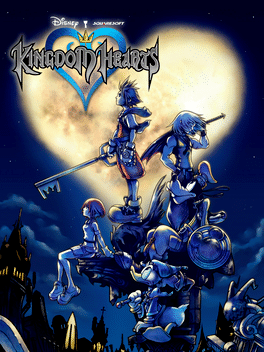
Kingdom Hearts integrates Disney and Square Enix properties into a spatially fragmented game universe.
The franchise, spanning from 2002 to 2020, serves as a case study in convergence culture. It combines diverse intellectual properties into a coherent game universe.
1 / 6
- 01The Kingdom Hearts franchise (2002–2020) utilizes a convergence culture model by integrating diverse intellectual properties from Disney and Square Enix into a single, coherent, yet spatially fragmented game universe.See it on page 1
- 02Kingdom Hearts III demonstrates two distinct approaches to world-building: linear, film-replicating environments like 'Arendelle' and expansive, non-linear playgrounds like 'San Fransokyo'.See it on page 2
- 03The 'Arendelle' world functions as a linear maze that prioritizes the recreation of iconic film scenes, using direct digital assets from Disney to mirror the visual composition of the original 2013 film.See it on page 3
- 04The 'San Fransokyo' world represents a shift toward gameplay-centric design, where the city serves as a vast, interactive environment rather than a passive setting, allowing for vertical exploration and unique traversal mechanics.See it on page 6
- 05Spatial design in Kingdom Hearts mirrors the principles of Disney theme parks, where linear paths and structured areas create an illusion of freedom while strictly guiding the player toward specific narrative goals.See it on page 3
- 06The franchise’s core identity is defined by its ambivalence, balancing the 'Disneyfication' of its worlds—which homogenizes source material—with original game mechanics that allow players to experience these environments in new, ludic ways.See it on page 9
Ask AI about this article
Summary
The Kingdom Hearts franchise serves as a definitive case study in convergence culture, illustrating how the integration of disparate intellectual properties—specifically those of Disney and Square Enix—can be achieved through sophisticated game world architecture. By transforming iconic cinematic environments into interactive, theme-park-like digital spaces, the series employs a process of ludification that positions the player as a tourist navigating familiar cultural landscapes. This strategic synthesis allows for the preservation of established brand identities while simultaneously fostering a distinct, immersive experience that transcends traditional cross-media collaboration.
The architectural design of these worlds reveals a tension between passive replication and active innovation. While certain environments prioritize the faithful mimicry of film scenes to satisfy audience nostalgia, others, such as the expansive, non-linear city of San Fransokyo, leverage specific game mechanics to empower player agency. This evolution in design demonstrates that the franchise is not merely a vehicle for profit-driven branding, but a medium-specific project that reinterprets established narratives through interactive spatial exploration. By balancing linear storytelling with open-ended gameplay, the series successfully bridges the gap between passive cinematic consumption and active digital participation.
Ultimately, the franchise distinguishes itself by embedding its collaborative nature directly into its structural design rather than relying on superficial licensing. By treating Disney iconography as a foundational element of its world-building, the series creates a transformative experience that resonates with both long-term fans and new players. This approach confirms that the successful convergence of media requires more than the mere juxtaposition of assets; it demands a deliberate architectural strategy that respects the source material while fully exploiting the unique potential of the gaming medium to redefine how audiences engage with legacy intellectual property.