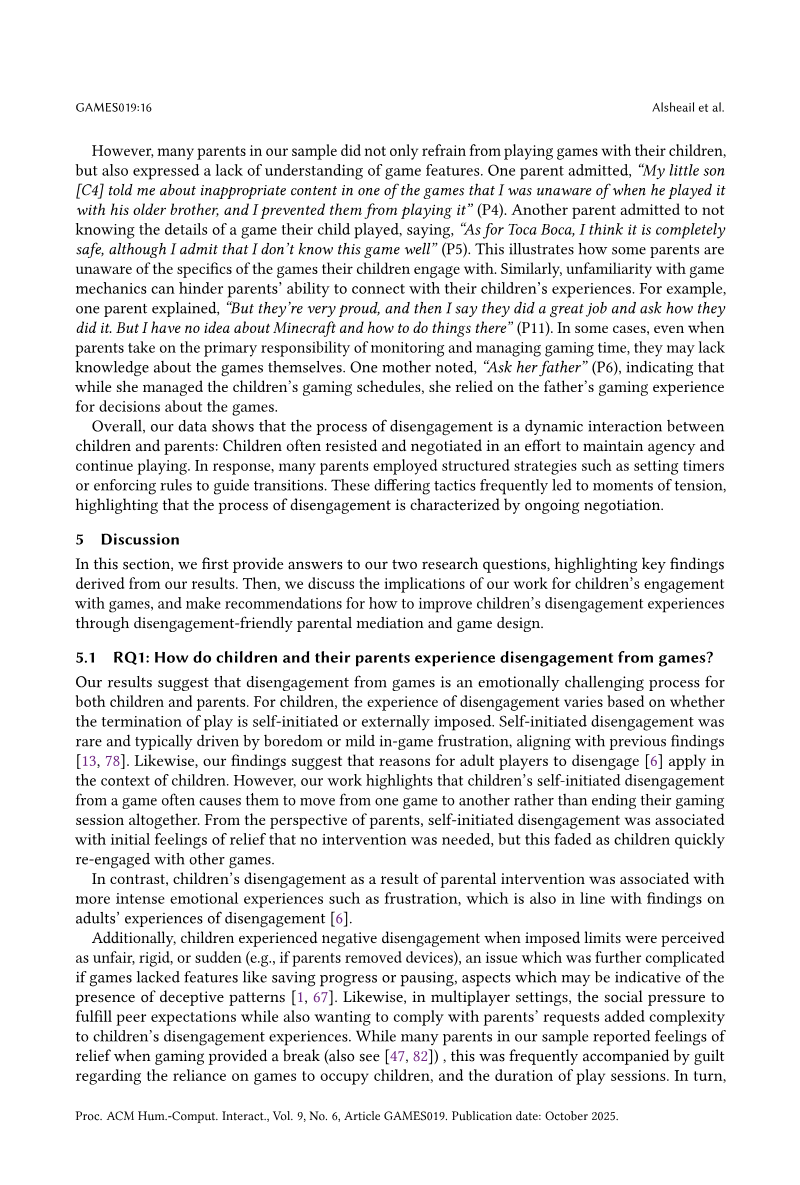
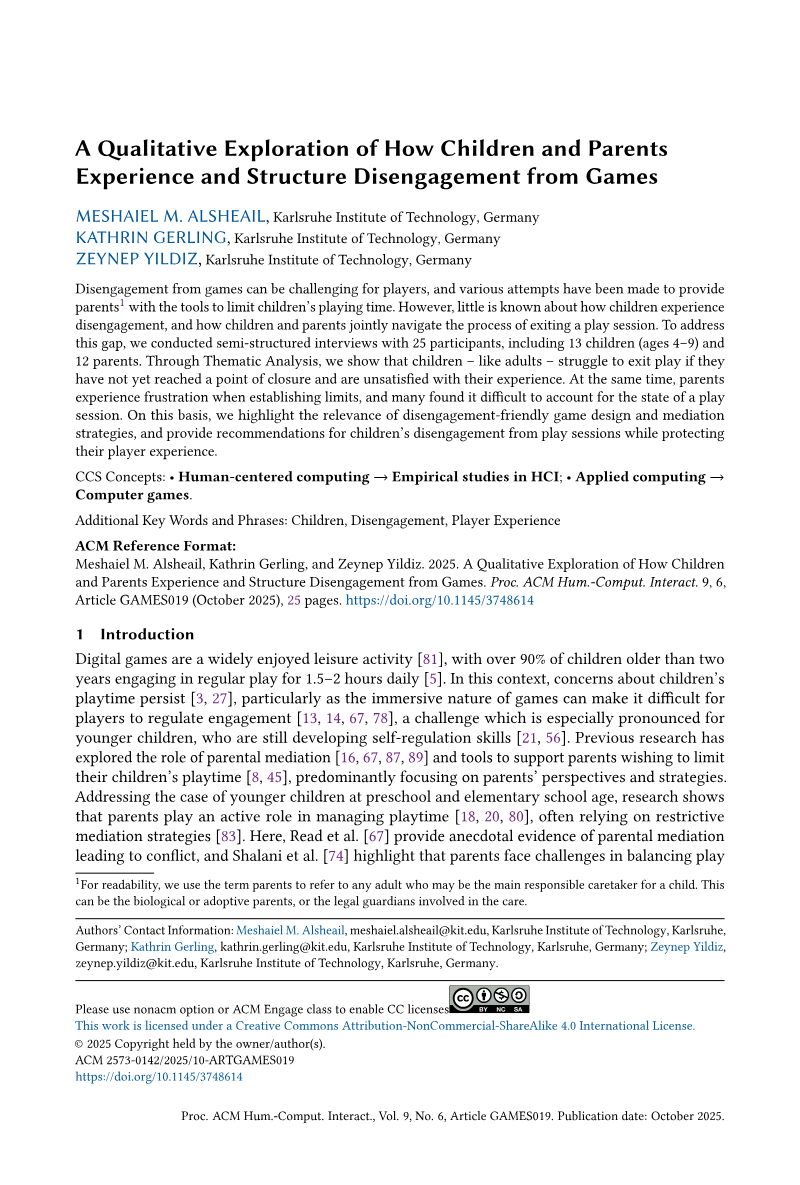
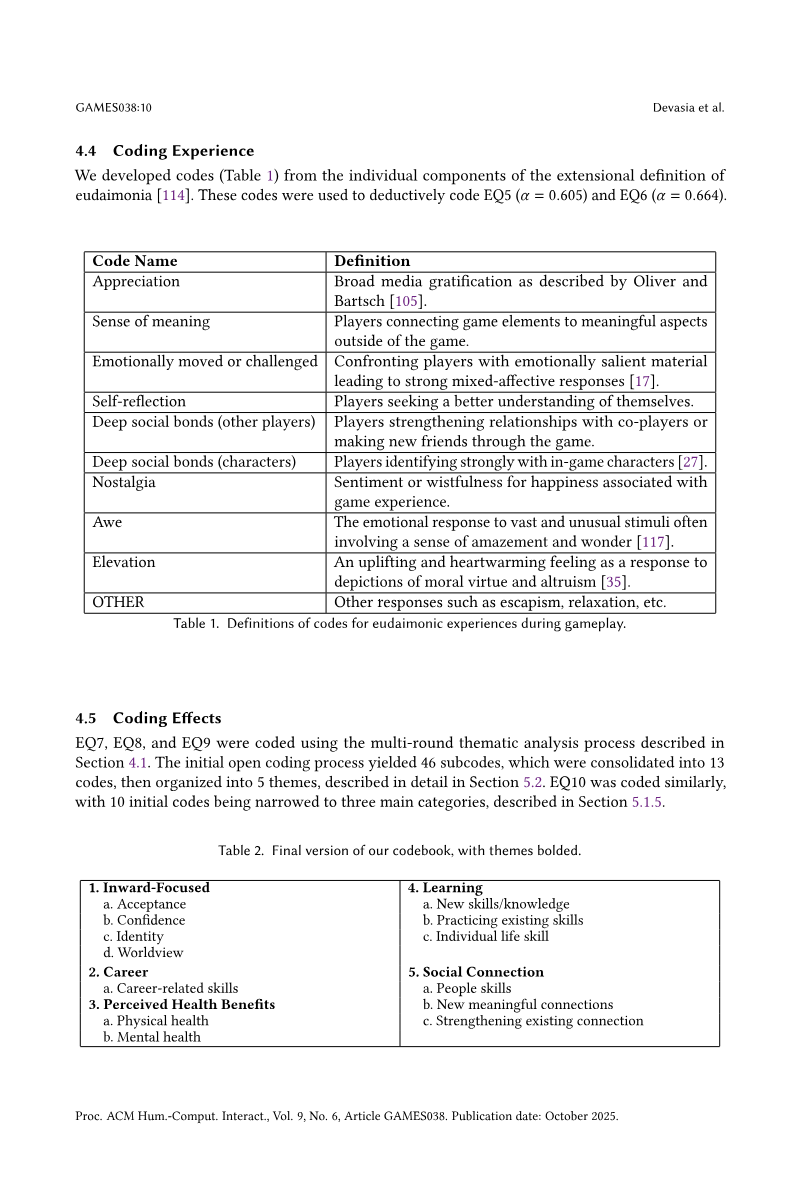
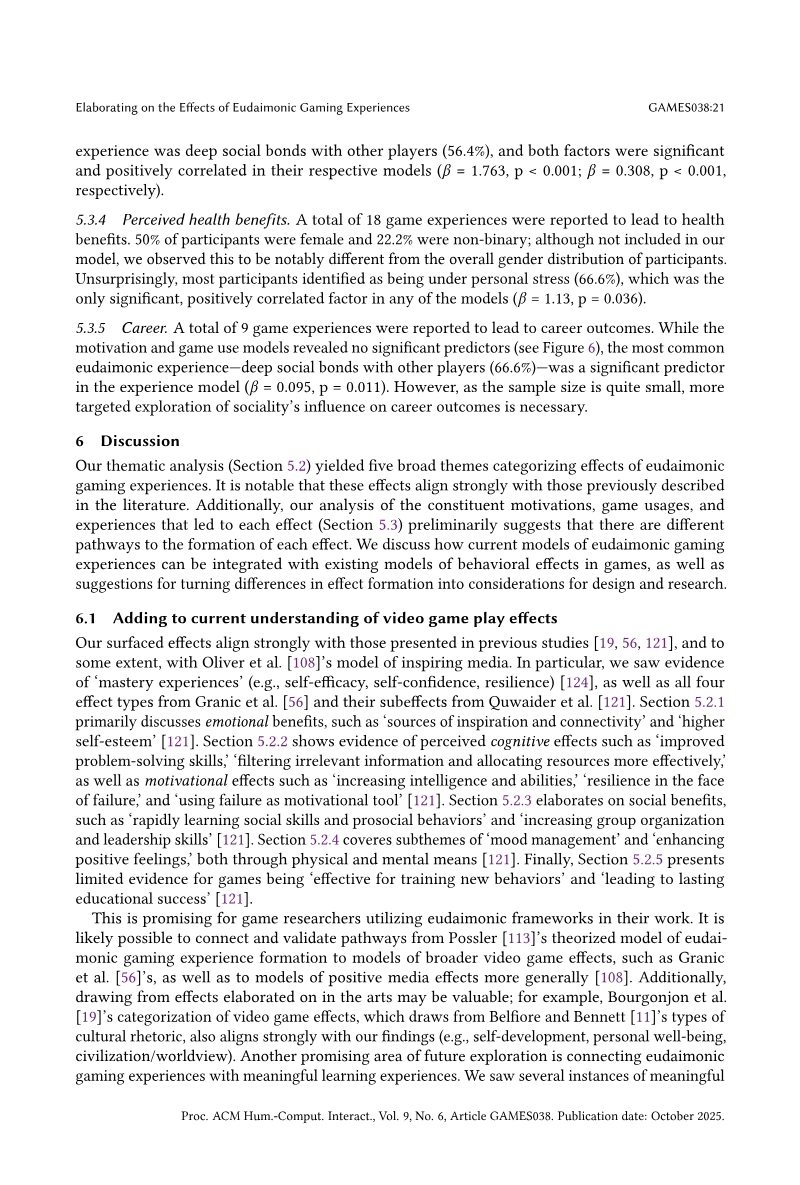
Games and companies in this document

Connections
Each row is a game or company this document names, each column a document, oldest first. A mark means that document names it. Select a row to see those documents.
More from Association for Computing Machinery
View all
Whitepaper
Exploring Player Experience Factors for Designing Persuasive Recruitment Games
Association for Computing Machinery · 2025
Whitepaper
Towards Democratisation of Games User Research: Exploring Playtesting Challenges of Indie Video Game Developers
Association for Computing Machinery · 2024
Whitepaper
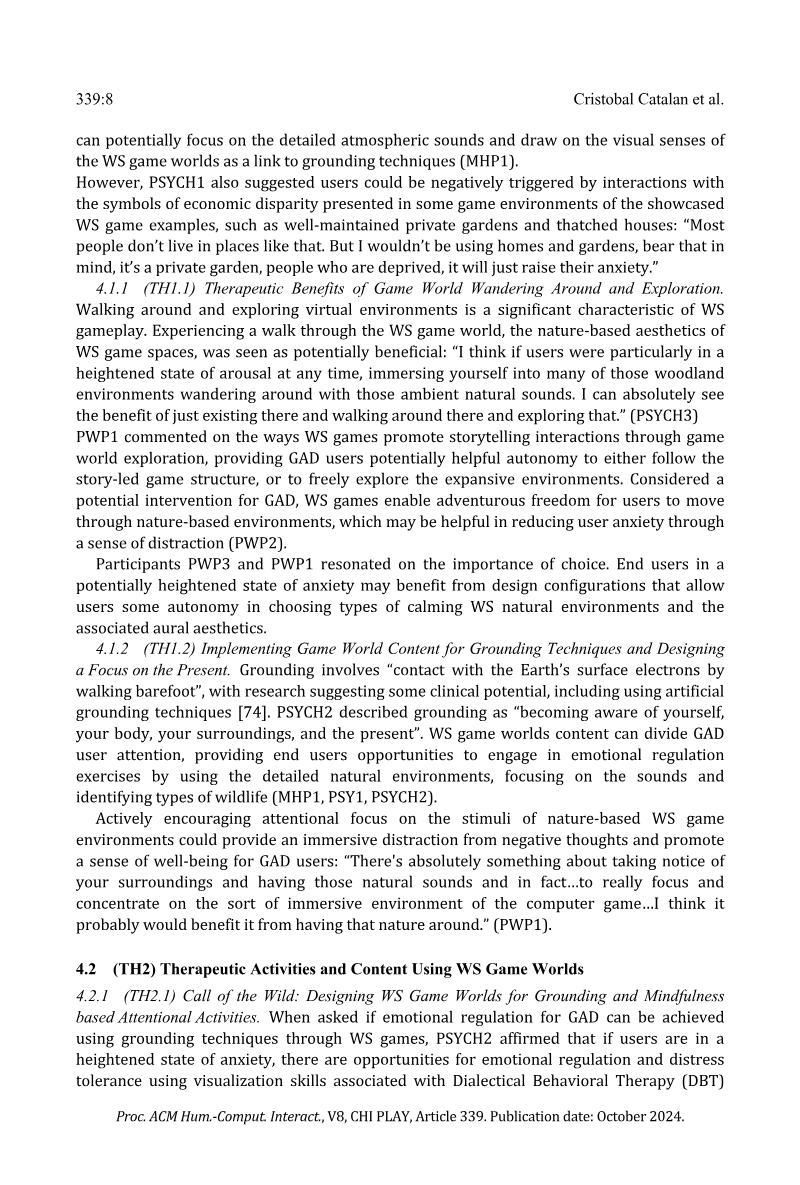
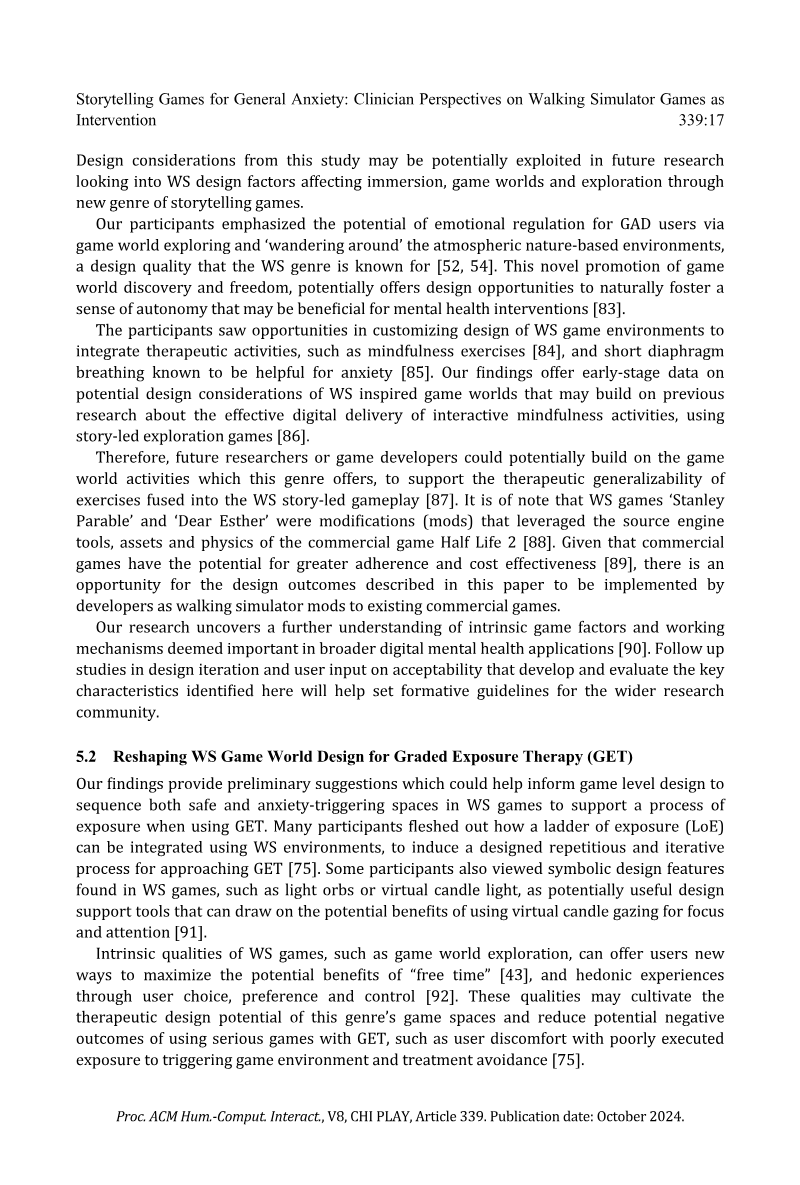
Storytelling Games for General Anxiety: Clinician Perspectives on Walking Simulator Games as Intervention
Association for Computing Machinery · 2024
Whitepaper
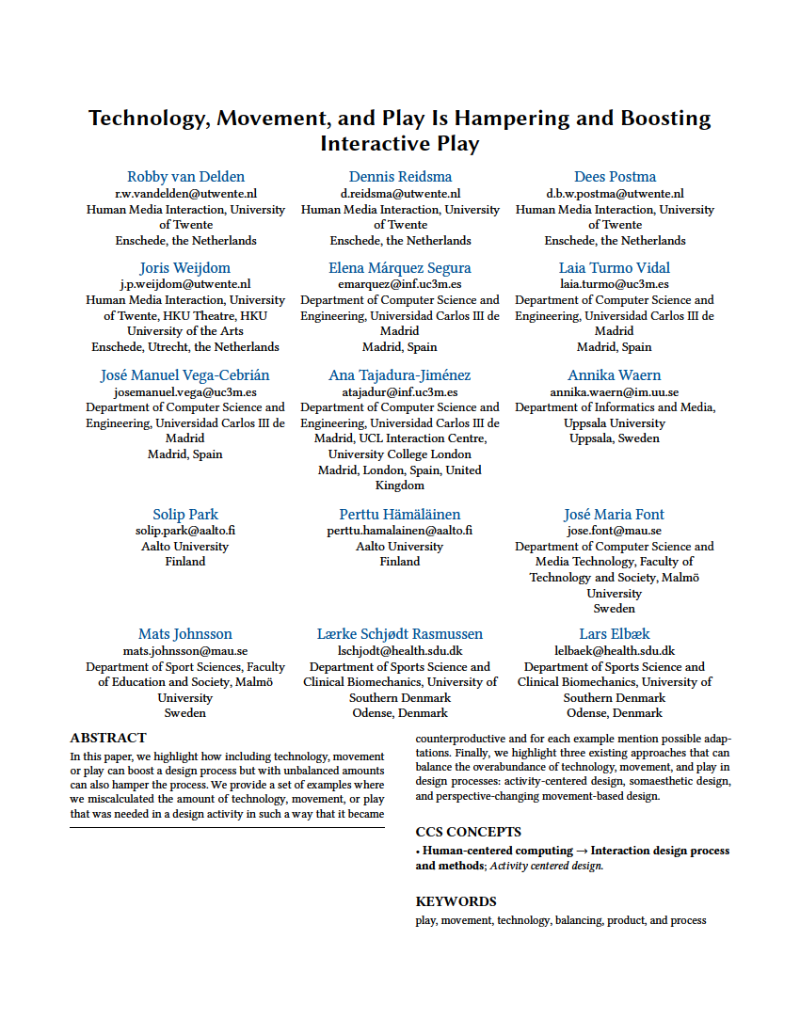
Technology, Movement, and Play Is Hampering and Boosting Interactive Play
Association for Computing Machinery · 2023
Whitepaper
Conversations with Pigeons: Capturing Players' Lived Experience of Perspective Challenging Games
Association for Computing Machinery · 2023
Whitepaper
Informing Children about Privacy: A Review and Assessment of Age-Appropriate Information Designs in Kids-Oriented F2P Video Games
Association for Computing Machinery · 2023
Whitepaper
Visualizing the Spatio-Temporal Evolution of Gameplay using Storyline Visualization: A Study with League of Legends
Association for Computing Machinery · 2023
Whitepaper
Investigating Social Emotional Learning at Primary School through Guided Interactive Storytelling
Association for Computing Machinery · 2022
Whitepaper
The Playful Potential of Digital Commensality: Learning from Spontaneous Playful Remote Dining Practices
Association for Computing Machinery · 2022
Whitepaper
Shoulder-to-Shoulder: How Pinball Supports Men's Wellbeing
Association for Computing Machinery · 2022
Whitepaper
Pokémon GO with Social Distancing: Social Media Analysis of Players' Experiences
Association for Computing Machinery · 2022
Whitepaper
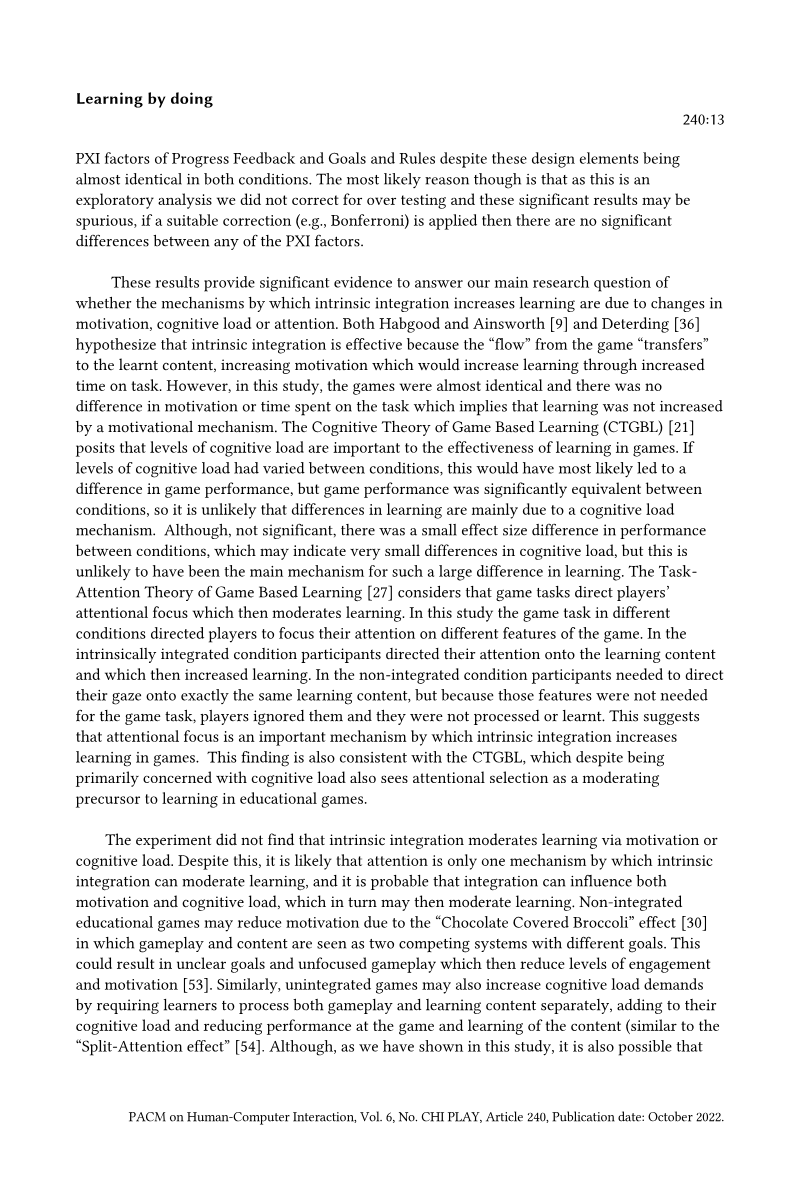
Learning by Doing: Intrinsic Integration Directs Attention to Increase Learning in Games
Association for Computing Machinery · 2022