1 free read left. Create a free account for unlimited reading + AI research.
Create free accountArticle Loading... The Journal of the Canadian Game Studies Association
1 free read left. Create a free account for unlimited reading + AI research.
Create free accountArticleLoading... The Journal of the Canadian Game Studies Association
Distilling the key insights…
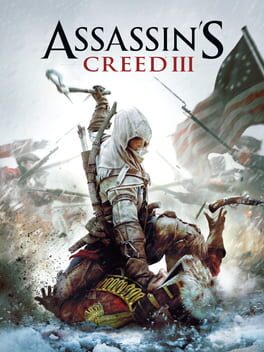
Assassin’s Creed III functions as a case study in how digital media utilizes historical and visual realism to reinforce dominant, Western-centric narratives. By framing the American Revolution through a lens of meticulous detail, the game employs a strategy of selective authenticity that prioritizes commercial appeal and traditional heroic tropes over genuine historical critique. Although the narrative centers on a Kanien'kehá:ka protagonist, the overarching structure remains anchored in a white, male perspective, effectively relegating indigenous experiences to the periphery of the colonial struggle.
The game’s reliance on the Animus as a narrative device allows for the dismissal of historical inconsistencies, facilitating a teleological view of history that favors the established victory of the Patriots. This design choice limits the player’s agency, preventing the exploration of counterfactual possibilities or truly emancipatory historical engagement. By catering to an imagined audience that expects a conventional portrayal of the American Revolution, the game treats the Native American protagonist as a form of racial tourism, where cultural representation is curated to avoid challenging the player’s comfort or existing historical biases.
Ultimately, the pursuit of realism in this context acts as a constraint rather than an enhancement of historical understanding. The focus on aesthetic and environmental accuracy serves to preempt criticism while masking the sidelining of systemic issues, such as the marginalization of indigenous sovereignty and the institution of slavery. By prioritizing a polished, recognizable version of the past, the game fails to leverage its interactive potential to interrogate the power dynamics of the colonial era, instead reinforcing the very historical narratives it purports to explore.
Each row is a game or company this document names, each column a document, oldest first. A mark means that document names it. Select a row to see those documents.
Loading... The Journal of the Canadian Game Studies Association · 2018
Loading... The Journal of the Canadian Game Studies Association · 2018
Loading... The Journal of the Canadian Game Studies Association · 2017
Loading... The Journal of the Canadian Game Studies Association · 2017
Loading... The Journal of the Canadian Game Studies Association · 2017
Loading... The Journal of the Canadian Game Studies Association · 2017
Loading... The Journal of the Canadian Game Studies Association · 2017
Loading... The Journal of the Canadian Game Studies Association · 2017
Loading... The Journal of the Canadian Game Studies Association · 2017
Loading... The Journal of the Canadian Game Studies Association · 2017
Loading... The Journal of the Canadian Game Studies Association · 2016
Loading... The Journal of the Canadian Game Studies Association · 2016
Journal of Games Criticism