Transcript
[music]
Hello and welcome to the PocketGamer.biz Podcast video interviews. I'm Craig Chapple, head of content at PocketGamer.biz, and in these new video interviews, we're going to be speaking to key figures in the mobile games industry about what they're up to, the big news, and the top trends. Today, we're going to be covering all things direct-to-consumer. And to do that, we've got Gil Tovi, chief marketing officer at AppCharge, a mobile games payment platform that's just released a report all about the DTC space, which is a really interesting numbers. So, Gil, welcome to the podcast. How are you doing? And could you please introduce yourself and AppCharge for people that might not be aware about what you do?
Yeah, sure. Thanks for having me, Craig. It's the first time on the PocketGamer podcast, so it's exciting for me. I'm Gil, I'm CMO at AppCharge. I've been in gaming for, I would say, about 16-17 years now. I used to lead marketing at a company called Overwolf for 5 years, and
then I joined the founders here at AppCharge very early on, and we we built everything from the ground up. Uh exciting times for DTC.
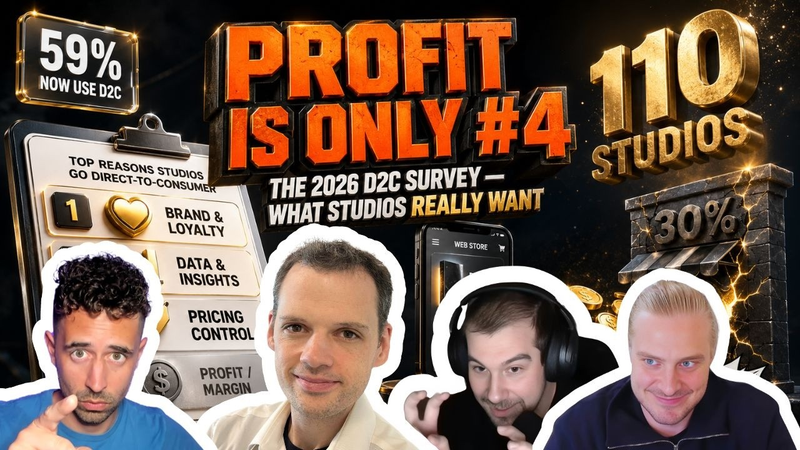
Indeed. And actually, on that, so we're going to dive straight in. You released this big report on DTC, lots of big numbers, but the big news is is that you claim, and this is from a survey which we'll go into as well, that direct-to-consumer has grown into a $17 billion market. So, in practical terms, what does this mean for the mobile games industry?
So, part of our goals with the report is that and and we partnered up with uh the amazing team at GDC, and then they've been like uh amazing at doing this with us. Part of our goal with this report is just like uh we feel that people are sleeping on how huge this industry has become. And we took a bunch of heuristics and what we can get our hands on in terms of data to try to estimate the size of the market. Obviously, like we could talk about the methodology a little bit later and how we got to that number and what assumptions we made. And obviously, it's skewed like everything else. Like we know that it's skewed, but like our goal was to just like "Hey, let's have a discussion if like 17 is the number, if it's actually 20, or
maybe slightly below but but like these are getting into the 10 figures, and we feel like people are still treating this as like a nice to have side side hustle, side job." I think one of the interesting finding is in the report, we can get to this later, is like with this huge industry and huge component of the revenue of studios, you ask studios how many dedicated DTC people you have on board, and I think 85% say that they have few employees or lower that are dedicated to DTC. So, how can you have that low amount of dedicated resources and dedicated responsibility for something as significant and as influential to your overall revenue and to the size of this market? So, that was our goal with this.
So, I actually wanted to jump straight into the methodology first. Do you think this is a realistic figure to pull from this report? So, I guess there's a couple ways you did it. So, you surveyed 1,200 games industry professionals across a variety of studios, and you you sorry, and you've got the median
average, which is 15%, and you've put that against Newzoo's figure of 113.3 billion dollars. Do you think this is like, how accurate do you think this figure is, or are you just trying to put something out there to gauge the market? Like, what is what's the goal here? How accurate is this?
So, like I said before, our goal was to spark a discussion, but we did want to put a figure out there, so we used some heuristics and some and this methodology that you described. So, yeah, we took we were utilizing GDC user base to try to survey people from the mobile gaming industry, and then we added responses to that same survey from a large number of our clients who participated as well. I think that if anything, to answer your question, I think that this number is a bit conservative, because I think the sample size is is skewed towards small studios. And we all know that like the majority of revenue in the mobile gaming industry is is probably attributed to like the top end, 80-90% is probably attributed to the top 200 studios, ish. And if you look at like over-representation or under-representation like in dollar amount, I think that you would find like
this sample size is probably skewed down. I think this was good enough to try to get the ballpark, and we're aiming for a ballpark. And I think the ballpark is is is important enough because we're not in the millions, we're not in the hundreds of millions, we're not in the billions, we're at like 10 figures. And do we land on 20, do we land on 16, do we land on 23? We did the best with the knowledge we could get our hands on. I think that like yeah, the median across the sample was 15% and then like I I love your work. I love like the the the post that you released a couple of weeks ago on like the state of how you how you review public companies and their public reporting. And you see the the Playtika with the 40% and you see part of our report was AppMagic sharing the number that they see Monopoly go with 30%. So you see all these like huge studios reaching the 30s and 40s and 50s percent. We did a case study with Play Studios around 60% DTC share. Mikael Corayk, one of the industry's analysts, shared on in our on our report that he has helped studios with 70%. So if anything, I think I
think that the sample size is skewed down.
Yeah, that's interesting you say that because I think it also just to clarify some of the numbers, I think it was I can't see if I remember now, but it was 281 respondents that kind of the analysis actually focused on for the for the mobile report. And I think 130 of those specifically worked with mobile games, I think.
So
So I guess it's like a small sample
were decision-makers in the mobile gaming space compared to ICs. And then we added to that our sample size of of our clients.
Yeah, interesting you noted about that that your report as well. So public companies, like when you say it's conservative, I guess some of those are not included so included. So Playtika I think was 1.2 billion approaching 1.2 billion dollars annual run rate. You mentioned Store Front, I think that's 44%, which is about the same as they make on Apple Google Play, which is really interesting. And I think Play Secrets is actually like 39%. MTG makes a whole bunch. And there's there's some really interesting numbers. So, yeah,
you think that's conservative? You think And do you think when you you mentioned there like 60, 70% etc. Do you think those are real realistic things to be aiming for?
So, we we see them. We see them day-to-day with our partners. I think that people are trying to get to that like gold number and then like they assume that that's like the steady state. Sometimes what we will see is that it ebbs and flows, right? So, like D2C and your revenue share, you measure it by day or you measure it by week or you measure it by month and then you can really affect it with certain campaigns that you run to your user base and try to get them to explore your D2C web store or payment links or you can do a dedicated offer that's like web store only. We see a lot of spikes around Black Friday for that example, like people trying to get their player base to know about the web store and gravitate towards the web store. So, it really depends. For sure, we have seen clients reach 60 and 70% on certain days, 60% most often. But if you look at like the steady state, then the real number is probably lower, but we're getting there.
Like we're there. It's getting This past year has been insane with everything that happened since the April 30th, 2025 court decision which that opened the door to payment things. And we've been seeing publishers capitalizing on that.
So, one of the things that I thought was interesting in the report was that And I'll just do a read part of the report basically. So, the report notes that across all respondents, D2C provided a a median revenue uptick of 15%. And then it says I'll say brief. Those numbers rise dramatically as companies move up the maturity curve. So, the median revenue rise for companies that feel they are keeping pace with the competition is 25%. For D2C leaders, it's 35%. Large publishers with revenues of $500 million or more have seen greater revenue acceleration than their smaller peers, which hints at the power of scale as this shift continues. And the last bit, the vast majority of organizations, 92%, expect those revenue gains to continue in the near term. In fact, 41% expect double-digit revenue increases in 2026. So, a meaningful
segment even expects D2C revenue to jump 30% or more in the coming year. I'm interested in in a couple of things there. I guess just to clarify, is that focusing specifically on D2C revenue growth, or is that focusing on overall revenue growth?
So, the way you you can see in the report, the way we asked the questions, first off, we asked studios, "Where do you think you fall on maturity, and are you an early adopter? Do you think that like you're ahead of the industry in how mature you are and how well you adapt and adapt and have adopted D2C? Do you think you're on par with everyone else, or do you think you're behind, you're a laggard?" Uh and people have reported this on themselves. And we actually found an interesting finding that the the majority of the sample does not think that it's innovators. It's like ahead of the pack. Most think that they're lagging, and the second category is that they think they're on par. Uh we even had one answer there in the survey that says, "Oh, I'm actually an industry leader." And we only saw like 3% choose that option. And again, it's interesting
because we asked our clients to take the survey, and we saw their answers. Some of the clients that we consider to be industry leaders did not think they're industry leaders. So, there's a lot of like I guess like FOMO, or you think that you're actually not as far as you are, or you think that there's so much still left to do, so you won't say on yourself that you need to say you're a leader despite that we feel that we're industry leaders. So, that I think that was surprising. And then the entire the rest of the report, we actually benchmark against that question. So, for different answers, we shared, "Hey, here's the sample size number, but here's the number of just the innovator group, here's the number of just the laggard group." So, to answer your question about the DTC rev share 15%, that's sample-wide. If you look at just the industry leaders, that's actually much higher. They're getting to the 30s. As to your question about the expected growth of revenue, that was specifically we asked them, "Do you expect your DTC revenue to grow or to stay the same as it did last year?" And we had, I think, 18% or something like that that said that they expected to grow 30% this
year. So, the majority of the sample size does think that DTC revenue is going to continue to grow and then and continue to grow in double digits. And many of them also talked about how well the web store performs against their app store revenue. And many said that their web stores and DTC perform better than their app store revenue, so it's growing more. A lot of interesting findings there.
One of the things I, you know, about DTC is does it it doesn't grow your actual company revenue, right? But it increases your profitability. Is anyone that expects the market to grow bigger because of DTC wrong?
So, I don't know if I can get behind that. We often see a net revenue increase. So, it's not just Of course, in the margin there's an increase, but we often see an overall net an overall net increase. Like I the concept of cannibalization is a topic of concern for publishers that they always always want to measure what is what is gained and what is lost from shifting traffic away to DTC. And we we find that that is very different between
web store traffic and payment links traffic. Payment links, you're taking a purchase that was supposed to be completed in app and you you're steering it away to be completed on the web. And therefore, some of that may be lost because the you're adding friction to the checkout flow. You still gain on the net because like you every single transaction you you you get to keep a lot more from every transaction because of DTC. But some of that gets left behind. On the web store front, we usually find often find that there's a net gain. You don't just shift a transactional volume from place A to place B. You're actually getting like a one plus one equals three type of situation. Again, because players buy at different situations and different intentions, the DTC flow often times is is is unrelated to the game. And then like you you take your power users and you steer them away towards like getting to know your web store and getting to to form the habit of buying on your web store and they'll continue to do that and and they'll continue to buy in game. So, when you talk about a web store traffic cannibalization, there is is
much less of a severe issue. It's not just about shifting from one pocket to another. It there actually is incremental growth often times we see.
And that's because you're giving better value, but then people actually spend more because of that or they're more engaged with community. Like what are the some of the
So, at the end of the day you're you're you're with a web store you're creating more opportunities to buy, not just related to the game session. So, if you take your in-app store, the the only time a player would face it is when he's doing a play session. And then like no one starts a play session just to go to the store. You don't open your game and immediately opens the store and buy something at the in-app store. But a web store is different. A web store you can come across it on your commute. You can come across it on on different times. And you can come across it while you're playing. But you're creating more opportunities to buy. So, people end up buying more. That's what at least what we're seeing.
Interesting. One of the things actually So, one of the questions that I wanted to ask there is what what do you think is actually better for publishers doing DTC? Is it it
Obviously regulation everywhere is different. But if if you can, is it putting a direct link into your game or is it leading someone to a web store and out of that ecosystem? Like where do you actually benefit the most?
So, I I would push back on the or in your question. Why choose? So, like we are strong believers that a a full cohesive DTC suite is actually what you want to go with. You want to have a bunch of layers of DTC interacting in each other in a synergy again to allow the players the most amount of flows and and and and options to choose to pay where you want them to pay. So, a lot of our publishers that see the most amount of success have a very like a sophisticated stack of payment links which is like uh taking in-app purchases and steering them away to the web to be finished on the web and a web store and a bunch of marketing tools to educate players or to send players smart links and deep links to give them to see specific personalized offers. So, you integrate your support, you integrate your community, you integrate your
social groups and whatever. Uh you integrate your VIP account management into the flow. So, then like everything is is playing together to create an overall good effect that is better than like the sum is greater than the parts. Like that's where we see the most amount of success. And yeah, that's not available anywhere in the world. It's mainly available in the US at the moment and we do expect to see some changes in that again like with regulation, with the Google Epic settlement and ECL now and I'm guessing that Apple will follow suit probably later this year. So, you might see some changes to how open and how available payment links are even in the US which even makes the importance of the web store even greater. The web store being like this central focal point, the hub of your community, the hub where you send your players to that will always will remain the lowest amount of taxation or the the lowest amount of fees to ever be charged on on payment.
So, if you've got So, you've got both. You've got your own web store off the platform and then in the app you have your direct your direct payment link. So, I thought one of the thing
advantages about DTC is you can build your community off platform. Whereas if you do it within the ecosystem, I mean one you might get charged a platform fee, but I'm not sure if you do it for direct payment links. But second, you're losing that you're not bringing that player into your kind of the community that you're supposed to be building outside of the store. You're not bringing them to your actual web store, right? If they're just buying within the app.
If you're doing payment links, then yeah, they just see a checkout screen. They go through the payment flow with you. They'll have They'll probably leave their email and their credit card, and then they'll hop back into the game.
But that seems like you're losing some of the benefits.
So we do see this flow as like an on-ramp to D2C. Publishers who are operating both payment links and a web store, we will see that uh players who got exposed to payment links as their first touchpoint with D2C, like 25% of them end up being repeat purchases on the web store. So yeah, they didn't come for the web store, they came for just that one purchase that started in game, but they ended up staying and they ended
up coming back to the web store to grabbing that daily bonus or to grab that offers that you have there. So payment links has served as like a jumping board or an on-ramp to educate them about it that you even even have a web store. And that got them to keep coming back uh in great numbers. Uh and we think that that flow is going to be more important uh especially in the near future when payment links is not going to be as open and as free as as we got used to them being for the past year. We can't put a date on it yet because the courts are still out, the jury's still out, but we're probably looking like towards the end of the year we're going to start seeing some fees attached to uh steering, to like link outs and stuff like that. Uh we already have Google with the ECL and the Epic uh Google settlement, and we're probably going to have Apple join suit later this year. We already have Apple doing this in Japan and now Brazil, recent news from last week, that uh in those two regions Apple will allow you to send users out, but it will take a between a 10 and 15% fee. Or sorry, it is in
between 15 and 20, I I have to uh double-check, but it does it does charge its own fee. And it it regulates how you must do it, and there are scarce screen for the for the uh for the player and everything you would expect from Apple to do. But we are getting to a more regulated world where link outs are possible, but taxed.
So, on regulation in the report, it talks about it a bit and it says that companies have been caught flat-footed by regulatory changes to D2C. Why do you think that's happened? Because regulatory legal battles have been underway for years. Although we are talking now about all the various changes and kind of maybe even how difficult it is to track. But why aren't Why do you think some companies just haven't really, I guess, invested significantly or really got started properly with D2C?
I think that we're seeing an industry that is being formed and created and growing in record speeds. I think that like every single year in D2C is as seen like a significant year-over-year growth of double digits. And I think this has accelerated last year again like
starting from the April 30th, 2025 ruling. D2C for years has been this thing that's like it's only web stores. Oh, and it's only viable if you're a social casino game with whales and and that that that only makes sense if that's you. But then like what we saw in the last year is that it is not just web stores. It's payment links and hey, it's viable for everything like casual, hyper casual, strategy. We're seeing way more categories now adopting a D2C strategy. And then it has become so big, so fast that I don't think many publishers have adapted with like dedicated team members that support it and dedicated goals and and the the the the partners that we work with again like the top of the line. We do consider them as industry leaders and innovators. You would see them having goals. You would see them having dedicated teams. You would see them having either platform teams or the the different game studios would have teams to operate D2C and to take goals and to take iterations and try to improve over time. But many don't. Many many especially like mid-size studios and small studios that do not have dedicated
D2C team members. And we do see a strong correlation between how successful you are in D2C and how much resources and dedicated team members you put on this.
And I guess I I the report also said that new roles have been created. So, if you I guess if you are medium to large publisher and you're serious about it, yes, you need to hire new people specifically for this, or can you just I don't know, get someone on your somewhere else on your team?
So, historically D2C people has been have have come from either monetization or live ops, sometimes finance. And we see different studios park this or give give accountability to different areas of an owner. Sometimes it's the financial function, sometimes it's the game GM who is the owner, sometimes it's a platform team, and then sometimes it's a leadership role. Once like shout out to Sri Gopalia, he's a VP D2C. And then like he's accountable to push push the work forward and drive meaningful results. And we expect to see more of these like leadership roles that are dedicated to D2C, and then they're accountable to the success of the D2C of their studios.
One thing I wanted to ask on the regulation front, if you could say here's the Epic Google deal. So, that is or removes there's no anti-steering, so that's great. Then it's 20% I believe it's 20% platform fee if it's within the Google Play, and then a 5% extra for if you use Google Pay, and then there's other things you could do to lower it. It gets a bit more complicated. Are you happy with that agreement?
So, I think back when it was released, I I did a podcast in The Constructor of Fun. Like I think I'm an optimistic guy. I'm trying to see the best in people and companies, maybe sometimes to a fault. I'm I'm happy I was happy about the direction, the movement. I was happy about us getting to a place where payment links and in-app payments are steerable in D2C in like a white-listed way. I think it's like there's a lot of frustration from publishers about all the cloak and dagger, all the issues around like can we speak about this publicly? Can we do this publicly? What are what are others doing? We would love
to learn from others, but then not everyone are comfortable talking about this because of like there's the issue with Apple and Google. So, I was happy about like getting to a place where we're like more regulated and this has been made available. But, when you look at the numbers, the numbers don't make sense. Like, it was ostensibly a a good deal that moves the 30% to a 20%, but not really because it was not for new users. I'm sorry, it was not for old users, it was just for new users. And you had like a lot of hoops to jump through to get to that 20 like 5% off. And it wasn't a meaningful enough change, which is why like the judge said you guys are confused. Go back, check the numbers, and the judge did not accept this settlement because it's not for the benefit of the industry. I think that this could be a good thing if the numbers are tweaked a bit. And again, like in this post-regulation world where payment links are not fully free, but they do incur some more portion of of of a payment fee or like a charge fee for the platforms, we think that like again, but but they're global, they're not US-only, and you can do them everywhere,
and then you're bound to not do scare screens. I think that this does have a potential value and gain to the entire industry because then like you get to a place where there's this suite of like the web store that that operates hand in hand with your payment links, that operates hand in hand with how you do support, and how you how you send users to the web store and do the discovery, and that has been made possible through that white listing and regulation. So, on the whole, I'm positive. I think this is a good thing that we'll get to, but I think the the devil is in the details, and we have to get the numbers right because as it currently stands with those numbers that were in that settlement agreement, they do not make sense for the vast majority of publishers. When you take into account your existing player base, you look at still like either 25 or 30% fee, so nothing has changed. Still like a 30%. Why would I send players out to my platform and still pay 30% to Google? It's it's it's a no deal.
What do you think is a good fee?
I don't know. It's it's not zero. I'll
tell you that. Like, of course like we benefit and publishers benefit from this from Beat being zero for a year. Uh we're going to we've been seeing so much growth and so much just like value grab from publishers to own like we saw a lot of growth in mobile gaming due to this in this past year because App Store revenue has has been shrinking for games. But, it's not zero. Like, I think it's like there is like Apple and Google at the end of the day have created these platforms. They own the user base. They they develop the hardware. There should be some form of of agreement that they see some of the value even if it's leaked out of the platform. Um so, it's not 0% but it's definitely not the 30 or the 25 it was. I think it's like we're seeing some interesting things again like in Japan and now Brazil where a lower uh figure is the one that they landed on. I just can't remember it's like with if it's 15 or I it's it's either 10 15 or 15 20. I I need to check. But, it's definitely not the 30.
And when it comes to direct to direct consumer payment providers like the self, what are the fees that are
generally charged? Cuz whatever the revenue share gets lower to, I guess in theory we'd have to account for typical payment.
So, it depends on your volume. We typically charge like I get anywhere between like a 4 and a 5%. Depends on your volume and then we we do believe in being very upfront about how much we charge not not like uh sorry, unlike some other players in the market or large platforms that would charge you one thing but then like they'll add a bunch of this like added charges and and taxes on on on the back end and you can't estimate how much you're going to be charged at the end of the month. So, we do believe in being upfront about it and we share everything that we charge for and and that is our rate.
I had a couple more questions. I'm just maybe two. Which was after all of this and this big report, is the the I guess the sensationalist question of it would be is D2C overhyped? So, it's great to get all this kind of extra money coming in for publishers, right? But, at this stage in the mobile market, is it all just getting sucked up by user acquisition costs? So, when I looked at
DTC earnings, and I looked at versus user acquisition costs. And this is just one example, by the way. This is not an industry-wide trend that I've seen yet. For example, Stillfront, this didn't seem to happen. But, for Modern Times Group specifically, it showed that UA was increasing. So, UA was increasing in step with revenue kind of shifting to its DTC platform. So, as its DTC was growing, so UA. I guess that's the way they chose to deploy it. My question to you that is two-fold is DTC overhyped, and how squeezed are publishers right now?
So, as far as the people in the industry whose job is to overhype it, if you feel it's overhyped, I must be doing something right, me and my counterparts and my team. I don't think I think I think part of this report was our goal with it is to actually show that it's underhyped, or I think people are sleeping on how big of an industry this already is. I think people are still like operating in the old mindset. This is like a one category thing, and it's a web store only thing, and it's not. It
hasn't been for the past year. And we've seen like an explosion of clients this past year because of that. So, if anything, I think it's like it's underhyped. Again, like it's I'm speaking from a position I I'm supposed to overhype it. And I think your finding on UA is really interesting. Studios be studios, right? Like they're they're they're fighting for margin, they're fighting for market share, they're fighting for the share of wallet and the share of time of the same players. So, whenever the game they do found an edge oftentimes you would see them pour that into UA. You can say the same about the AI revolution we're seeing now. Like if studios by some miraculous way find a way to use AI to cut, I don't know, 10% of their teams and and cut costs and and and still be as operational and profitable as they are, where is that gain is going to be funneled into? It's probably going to be funneled into UA, because that still is the one of the the the highest value levers that can impact their growth and that can impact their EBITDA. So, I think that this is
actually great that all these like revenue gains and margin gains from gains from studios are being funneled into UA that will help their longevity, that will help their positioning against their competitors, that will help their financial health. For years we've been seeing layoffs in the mobile gaming industry and and studios finding it hard to just like stay afloat and stay profitable and break even. I think we're hearing less voices of that now and I think that that is a signal to the overall health of the industry and and I think that DTC has played a major role in getting us there. I'm hoping others feel the same. What do you feel?
I think that I mean me personally just as someone that doesn't have I guess skin in the game in terms of being a publisher doing it. It's but it's with UA costs so high, I guess without DTC this would be an even greater challenge for for certain publishers. Because it's not like DTC costs are going to go down. That's sorry, UA costs are going to go down. So, if they're putting that to try and grow or even to just try and maintain the status quo, I guess that's still a benefit I would assume of DTC.
That's a good point. It's a good point. Like what what would happen in the industry now if if we didn't have all the changes that happened in DTC? Like where where would we at? Where where where would would we have been? What was the health of the of the studios of the industry? What was the balance point between just like profitability, break even, margins? It's interesting.
The last question that I wanted to to throw to you is that was really interesting. So, now we have this kind of underestimate I guess but a figure of 17 billion for DTC. Do you think I are you concerned that there's not really much visibility on the value of the mobile games market? So, we have Newzoo and Sensor Tower that put out these you know these great estimates. For mobile they're a bit different. I I I I guess it's cuz China Android revenue but I'm not actually sure for from Newzoo, but we don't have real visibility into this of what actually the DTC markets were. Still probably have a third-party stores, particularly in China, maybe we don't have that much visibility on and maybe some other
countries. We don't know what ads are worth at all. Does Does Does that impact Do you think that impacts the industry in any way? So, I guess I'm thinking like to attract more investment, we're saying the industry is quite mature, and I guess it is, but don't We also don't know the value of parts of the industry.
I think that yeah, like in investors and and and and research firms sometimes have more access to data than they're letting out publicly. There are sometimes like like paid companies that can can share more things than what we get for like a news report or a sensor tower report, but you're right. Like the many studios will keep the cards close to their chest, and we don't have as good a visibility as some other industries do. I think that it does even out because everyone have access to the same data. And uh again like like over the years like I think that like in recent years we have seen a decline in investments in gaming, that's for sure. Again like Turkey is an outlier, but like within most of the hubs in the markets, I think we're seeing a decline in gaming investments.
I'm wondering if like to to like to take your question and think about it like I'm wondering if we had more access to data and this is like being being made aware that this market is actually much bigger with ad revenue taken into account and with the an actual approximation of DTC revenue and the actual approximation of of in-app revenue, would we have seen more investments? I don't know. I think that at this at least for our part, we're trying to do the most with like in this report, we try to do the most with what we can get our hands on with the help of GDC, with relying on on the numbers from Newzoo, and our small sample size that is somewhat representative. We think it's it's a it's skewed towards small studios, so if like it's there's that bias, but we're again like we were hoping to spark a discussion. And uh if 17 is not the number and it's actually higher or it's actually a bit lower, it is a huge number and that does spark the discussion as far as we're concerned. So, that is that was that's been our goal with this.
I I just it makes it made me think of as an example of Niantic when they bought quite a bit of scope play. I think in
the pre preceding like year or couple of years, the Niantic was probably going to revenue is is down. I'm not talking about inflation here, everyone. But But it is down from estimates. But then they just told us it was actually been on the rise for like a few years, which made me wonder Well, one, I I guess I'd just taken their word for it. I don't know. Uh and two, that could be like it grew by, you know, a pound, a dollar each year, who knows? But I did wonder like have we just lost the ability to actually see if the industry is growing or declining because this revenue is taken off platform and we don't see it until something like this.
I think I hear I hear your point. It is a bit frustrating of like how handicapped we are with like the data we have available and we don't have available as far as like industry researchers and industry reports. I wish we had more data. But in terms of again like that maybe again like maybe this is me the optimist talking again, but like when I joined this industry or region I I've been in mobile gaming for a few years and I've been PC gaming and then I returned to mobile gaming. When I returned to this industry like 3 years ago, there was like three Pocket Gamer
Connects a year or four. How many are there now? So, like I I I I I I think like you find you find the small pockets of or or or flags of health or prosperity. Again, like maybe this is the optimist me speaking. Maybe like I have ownership bias because now I'm in the arena and not looking outside and I'm not outside looking in, but to me the industry is growing. Like I see more of our work every year. I see more of your work every year. Like that comes from somewhere. You guys are filling houses. You You don't just like have a vacant conferences to empty halls, aren't you? So, where does that come from? This this is obviously demand, there's obviously movement, there's obviously like shifts and moves and yeah, we still do to see these layoffs, we still do see a drop in investments. We see the reports that says that IAP revenue is down. I think that the huge growth that we're seeing in DTC has is the counter way to that. And again, like the App Magic data from our report that
they shared that US DTC revenue is up 26% year-over-year.
I feel the industry is growing. Pocket Gamer helps me see that. All right, that's a good place. That's a good place to
It's a good place to end.
[laughter]
That's a good place to end. So, thank you very much Gil for being on the show. Really appreciate it. Appreciate your time.
I appreciate it, chat. Thanks, Rick.
And thank you everyone for listening. I hope you enjoyed this episode. There'll there'll be many more. So, with that, have a good week. Speak speak to you soon. Goodbye.
Auto-generated captions from YouTube — names and numbers may be misheard.
Key insights
Distilling the key insights…
Ask AI about this video
Cite this video
Citation
Generating citation…





















Comments