1 free read left. Create a free account for unlimited reading + AI research.
Create free account
The true potential of virtual reality and future technology
Key insights
6 takeaways- 01Virtual reality is positioned to replace smartphones and desktop monitors by overcoming the physical limitations of current screen technology through immersive, wrap-around displays.
- 02The VR market is expected to scale beyond gaming into a multi-trillion-dollar industry encompassing education, travel, and professional collaboration.
- 03To facilitate natural interpersonal connection, virtual environments must prioritize social presence by maintaining interaction latency below 100 milliseconds.
- 04Achieving mass adoption requires a user base of one billion people, supported by a decentralized model for identity verification and asset ownership via blockchain.
- 05The industry is shifting away from the current 'app store' model toward an interconnected digital landscape that allows for seamless transitions between professional, social, and entertainment spaces.
- 06Future virtual economies will rely on blockchain-based currencies that dynamically adjust supply to user growth, ensuring stability compared to fixed-supply cryptocurrencies.
Ask AI about this video
Transcript
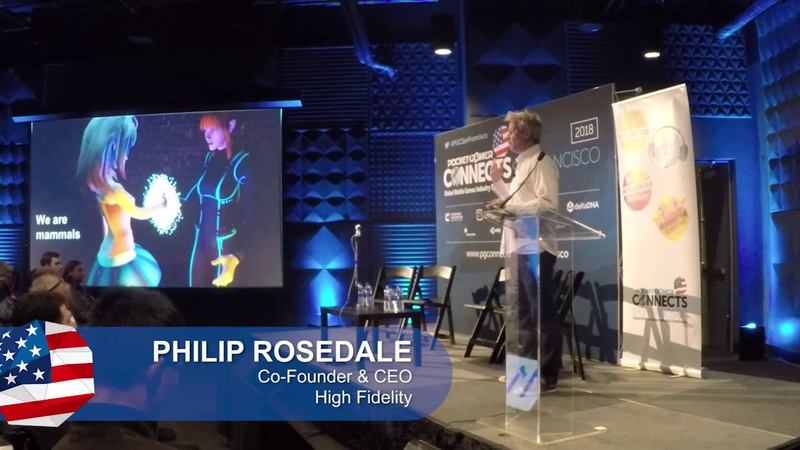
Well, as we look talk a bit about VR, it's fun to imagine as I'll as I'll discuss that conferences like this, the ability to sit and talk to each other, point the laser pointer, all that stuff uh is soon going to be easier to do in VR than it is right here. So, that's pretty fun thing to start with. Um thanks for the introduction. I Yeah, I've been working on virtual worlds uh and waiting for VR pretty much my whole life uh from the time I was just out of school. I've a engineering background uh but since I was a little kid, I was incredibly passionate about the idea that we ought to be able to use the internet and computers to build virtual worlds, spaces that we can all go into
and do anything uh inside of and that has pretty much been my whole life um with with Second Life first and now with High Fidelity. So, what I want to do today is just give you some big thoughts um and then save some time for some questions at the end. So, think about questions. But I'm going to kind of certainly pull the camera back farther than uh than gaming, uh than mobile, uh small devices. Uh take a look at things that way. Uh So, uh the first big thought about VR is is VR dead? You know, everybody's talked about, you know, the numbers not being great for the Oculus Rift or the Gear VR in the case of mobile. What's really going on there? Well, the first big thought I have to tell you is this. Uh VR is not is not dead at all. Uh VR is absolutely going to make it, but maybe not for the reasons that you're thinking. Uh virtual reality in its first incarnation has primarily been a gaming thing. That's what we've all been hearing about and seeing screenshots from and trying out. Um but that's not
actually why uh what's happening right now is happening. What's happening is we're engaged in a war to create the next screen. When Apple very correctly branded the iPhone 4 Retina, uh they they very precisely, as they do, named something that had happened, which is they had finally made the pixels small enough that our eyes at a comfortable 10-in viewing distance couldn't see them anymore. And therefore, they sort of ended the manufacturing of screens because additional screens like 4K displays today, which aren't selling that well, uh the pixels are too small for you to see. Adding additional pixels would only be interesting to robots, not to us. And then of course, the second problem here is that these things are too big. Uh so, while you could make the screen bigger so we can see more, it wouldn't fit in our pockets anymore unless you could fold it up like in Westworld. That'd be cool, but we don't have any plans for how to do that. So, we've run out of space
for screens. And yet of course, as we all know, our appetite for visual information in particular is pretty much unlimited. We will consume rapidly information all around us. This is kind of the fantasy we have, the sort of Minority Report ideal of being able to somehow wrap ourselves in screens. That's what we want to do. Uh and we certainly do have the kind of mental ability to take that data in with our brains. So, so how is that going to work? Well, some of the top applications, sort of experimental applications for the Rift and the Vive, are these virtual desktop applications that basically seek to use the VR headset to wrap you in information. And in fact, if you go with that Retina thing that I mentioned before, if you consider the limits of human vision, and you actually do sort of wrap the screen all the way around your head so that I could, for example, read my email
on the walls of this room while I was talking to you. Question is, how big a display is that? Well, it's really big. Uh at that Retina limit, it's something like a couple hundred million pixels, which is like having 24K monitors circling you. And if we can somehow build the technology to do that, we suddenly have a stable display that you can put anything on either on top of the real world or in replacement of the real world right in front of you at any time. And what's happening right now, and the reason why Magic Leap has raised all that money, and the reason why VR the the the apparent enthusiasm for VR continues completely unchecked. All these great uh companies like Apple now recently made some well, got leaked some information about their plans. Microsoft, Samsung, Facebook. The reason everybody's excited is not
because we're all going to have Star Wars characters running around on our hands. It's not even necessarily because we're going to go into High Fidelity virtual worlds and do things together. It's actually just because we got to get to this next screen. And that next screen is going to be some sort of a lensed apparatus that presents information around us like that. It's the only way we have to go. And it's an enormous change. It's a disruptive, gigantic change. 24K monitors is a lot of monitors. So, that's actually what's going to pull VR into existence, not games. Games are cool, but as I'll touch on next, they're not uh they're not the end game here. They're not as big as what's really going to happen. And so, looking back at Second Life, you probably think because of all the media that surrounded it that Second Life as a virtual world isn't around anymore. Well, actually it totally is. Uh Second Life today has about $700 million a year in buying
and selling of virtual items going on amongst about a million people. The land mass of it is the size of LA. And since 10 years ago, I started Second Life in 1999. We launched it in 2003 and it got pretty well known in like 2005 or 6. From that tire time till now, it's actually enjoyed something that nobody's been able to do, which is it has its own virtual currency, very much like a cryptocurrency in some sense, a kind of a first experiment in it. And that currency has remained stable in price over that entire period of time. How did we do that? Um I'll come back to that. But what's fascinating here is that the the the appeal of going into a virtual world and doing things there has really never gone away. It's just been this pressure of how are we going to do it? How are we going to make it easy? Second Life uh as a virtual world is a desktop and mouse experience, keyboard, um it's hard. The the the the only thing that people in Second Life kind of share really is an intensity and an ability
and a desire for one reason or another to figure out how to basically move around and communicate and exist in a virtual world uh comfortably. So, so so with Second Life as this reference point that there's a tremendous interest in virtual worlds, why why isn't VR working yet? Why aren't these devices on everybody's heads right now? You know, why aren't we all at home? Well, more particularly, why aren't we all at home every day wearing an Oculus Rift, right? There's a lot of obvious answers to this that you're all thinking of right now, which is it's got a cord and that's stupid. I trip over it. The resolution is too low. It's not that screen I just discussed. The resolution is too low to read my email, so I can't pop up my messaging app while I'm shooting things in a video game. Yes, those reasons are true. But the big reason that's subtle and interesting and that I can kind of maybe
get in your heads to think about is, I comically say we are mammals. Um human beings do not like to be alone. And the problem with the first generation of VR headsets and their use in video games is that putting those things on immediately makes us alone. And for the most And if they do contain other people, the ability that we have to interact with those people is pretty limited. It's a pretty thin interaction. But we as human beings seek out each other. We learn from each other. We seek out the comfort of being near each other above all else. And this is true of every kind of technology we've had, we've used. We've used every new technology we've created to better connect with each other. And we must do the same with VR. And so, the big thing that I think has dampened the enthusiasm around the first generation devices has just been this simple fact that when we put them on, we are largely alone and everybody innately uh reals, you know, pulls away from that
idea. So, if we're to use VR, we have to find a first case use of it that brings us together. And in fact, the aspirational property of technology has certainly been its ability to do just that. We've used the internet. We've used text messaging. Now we've used images. We've used the web in the best cases to bring us closer together, and we have to do that somehow with VR. We have to use it uh to bring us together. Mark Zuckerberg famously said that, you know, in the next decade, despite all this stuff I'm talking about, we're going to get a billion people into VR. Well, if you if you fast forward from Second Life and kind of use the learnings from that, what does that mean? Because it influences a lot of what we've been doing at High Fidelity and what we're thinking about. It means a lot. A billion people making some sort of regular use of VR in the way we today make regular use of smartphones would mean a trillion-dollar economy, Which is a staggering thought. It would also mean a lot of servers and
this is why I don't think this is one of the reasons I don't think one company is going to do this. It would mean something like 50 million servers, trust me on that. And that's a lot of servers. That means that peak though we'll have to be adding 100,000 servers or so a day to whatever this is, to whatever this this VR, you know, world thing becomes. Lots of goods for sale and a huge transaction rate which very much relates to the blockchain. Um the transaction rate necessary to sustain all this interacting going on in the virtual world is absolutely enormous, much higher than what we can do with blockchains today, for example. So, if there's really going to be a billion people in VR, what are they going to be doing? Um let me touch on a couple of examples, but at a high level as I said, let me point out that all of the things they're going to be doing involve being together with other people. It involves sort of teleporting yourself to another place using VR. And here's another thing. All of the All of the spaces that VR is going to disrupt, travel, entertainment, education, all of them
are from tens to hundreds of times larger than the computer games industry. Computer gaming has grown amazingly, it's an incredible industry, you guys know this. It's it's almost a hundred billion dollars. But travel, well, but education worldwide is almost five trillion dollars. Travel is about the same. All of the uh experiences that are going to be impacted by virtual reality are actually in the trillions. Gaming isn't the right place to start because it is literally very I mean it's a 1% compared to those things. And also gaming is wonderful, we do it fairly well today. So, it can't actually be disrupted as much by VR. Um This is an example of something we're already doing in High Fidelity. On Thursday and Friday nights we have DJs playing to people that are able to dance together. You're able to dance together by the way, I won't get into it too much here in High Fidelity, but it's a significant thing because we have to get the delay my voice reaching your ears, where my
hands moving near your hands, we actually have to get that delay it turns out down to 100 milliseconds, half or a third of what we can do on cell phones today to make it feel natural, to make it feel like we're connecting. And that you when you guys nod at me and I speak, I I can feel it in the correct timing. To do that you have to get down to 100 milliseconds, but if you get down to 100 milliseconds, which we've done with High Fidelity, you can do something like this. Imagine a bunch of kids being taken together with their teacher on a virtual field trip into a tomb. This is one of the things that we're working on right now. Um that's a staggering thought that you could as a teacher basically run your kids over to here, somewhere like Bespoke, and boom, to take them halfway across the world with an Egyptologist to Egypt. I give these fireside chats where we bring interesting people, again like this, on stage in front of a bunch of people who can raise their hands and ask questions at the end. We do digital scans
um using a number of partners of those people before we put them on stage. So, when you get on stage with me in one of these events, you look exactly like yourself. We've captured you with 100 cameras. Um and and obviously the the as we can see here that the desire we have as humans to come together at networking events and in communities to talk about work is incredible, that alone is an enormous market. In fact, I'll tell you something cool. Uh I realized this when I was coming over here, this is so cool. The Westfield Mall company that that owns and created Bespoke here is one of our investors in High Fidelity. And this Bespoke space, I don't know if you've been over the other side and seen the co-working space, it was actually built first in High Fidelity before it was built in reality. We were able to take groups of the executives from Westfield all together with an Oculus DK2 with a tour guide through the new space and they were able to inspect it and make changes to it before it got built here. So, that's an example obviously of an industry that's that's enormous.
Um Shopping as I mentioned, $700 million a year in Second Life, go from a million to a billion and you're going to a multi-trillion dollar experience. And this relates very much to the blockchain. Um So, let me touch on that for a second. The blockchain is an incredibly exciting sort of technology with thousands of different uses, but nowhere will it have higher impact than in virtual reality. That very large number of transactions in Second Life, the average transaction size is $2 and it's made between two people who are almost always in a different country. So, to do VR, to do virtual worlds, you have to have a cross-border payment system and it has to be really fast. It has to settle really quickly, like within a second or so. And so, there's a tremendous opportunity to deploy blockchain technology in a very visible way in VR and that's what we're doing with High Fidelity. We've built a blockchain, we're looking at different technology different ways to make it better, but we have an up up and running blockchain today that allows you to put
money, but also who owns what, assets, certificates for your virtual sunglasses or your virtual pants or car. The certificates that indicate that you own that, officially own that thing you bought, is also stored on our blockchain. And then finally, and we haven't really written all the code for this yet, but it's been very much in the news lately, appropriately with the whole Facebook thing, is identity information. There is little There is little doubt but that the blockchain will be used to log in to games, to virtual worlds, to services um in a sort of log in with Facebook way, but but this time it'll be log in with blockchain, where we basically put our identity identity information on the blockchain and then certify it when we log into services. That's another big change that's coming and one that is uh pivotal in our planning about our technology. And in fact, this issue of identity is a fascinating one and just one that I would, you know, sort of beg you to
consider in this transformation from video games and even the web today to to to VR. If you are walking around with the same avatar, going from a business meeting to walking down the street to riding a roller coaster to seeing a movie in VR, these are all things that work pretty well today, you're going to do them in VR for sure. What's your sense of identity going to be? Well, Facebook sort of just has your name over your head all the time if you use the the idea of Facebook, it would just be a kind of an explicit, you know, I am always me. Well, that is not going to work. In the real world, we absolutely don't do it that way. In fact, shaking somebody's hand as a form of greeting and disclosing your name to them is one of the rituals that we have as humans that's important to us. So, using the virtual world, you're going to be want to be able to log in with kind of uh uh different levels of information and this is an example of something that it is perfectly fit for the blockchain. You want to sort of disclose to somebody when you walk up to them as an avatar only the information you feel they need.
And you want to be able to do that in an incredibly secure way as well. So, you don't even want to trust Facebook to store that or certify that information. You want to prove that, you know, it's your driver's license or whatever to get into your company meeting. And so, that's kind of a last area that I think is just fascinating and it's really been tickled by all this debate about Facebook and about advertising, you know, and it does matter how we do it in VR. Um matters a ton. I think I'm going to stop. Oh, and then a last thought. Here's a cool last thought and then some questions. Virtual apps are coming. Um Whatever the UI turns out to be for VR, we hope we're building it right now, you know, in in High Fidelity you have a kind of an Android app you can pop up. It's literally a tablet that's that's your UI that lets you mute your microphone or log out or jump to another place in the virtual world. What's interesting is we've already taken the step to make it so that you can put an app kind of in our store and then load a new app, like an app that makes you turn on a jetpack and fly into
the air or whatever. These apps basically live on this screen that we've got on the on this little virtual tablet. One way or another, whether it's us or somebody else, the app model in VR will probably be a different one. And I would think that would matter to people here. The Google Play, Apple Store apps model, Steam apps model for gaming, I think it's going to be substantially changed by VR. I think we're going to see something very different happen there. So, I think that's all I had. Let me take some maybe some questions or thoughts about all this stuff. Wake up, you guys. Yeah. How do we participate in the dance parties Thursday and Friday? How do you participate in the dance parties? If you go to highfidelity.com today/download, you can actually get our software. You can run it on a PC, you can run it on the Oculus Rift and the Vive. Soon you'll be able to run it on a mobile device, but not yet. Um and you can
actually log in and uh there's a uh the dance parties are at a place called Rust in High Fidelity that I will leave you to find, but basically there's many many servers up already and you can just jump into it and give it a try and I'd I'd I'd be I'd be honored if you you join me. You'll you'll see me and my team there most most days hiding around at the edge of the at the edge of the dance floor. Thanks so much for speaking, Philip. You talked about the intersection of VR and blockchain. And I know High Fidelity founded the Virtual Reality Blockchain Alliance with JanusVR and Somnium Space. Can you talk a little bit about virtual land ownership and and monetizing virtual space? Yeah, so monetizing virtual space, there's a lot of fascinating work going on right now um uh in VR around how we're going to own the spaces, you know, are people going to put overlays on top of the real world like here and then put advertisements on the wall for the other conference you should be attending today or whatever.
I mean, there's all kinds of fascinating questions raised about how VR is going to work uh uh as a uh representation of space itself. Second Life had a big uh you know, business in space. One of the things you mentioned that we're doing is we formed something called the VR blockchain alliance, which is a group of companies that are interested in interoperating on things like uh advertisements and login information and asset information and we're like building that team of people uh today and and putting great companies on it. Um maybe one more. I know we're just about out of time. Yes. Thank you. You spoke about virtual currency particularly in Second Life and you but you spoke about how the importance of it was that it was both um very quick between territories and uh uh and uh and that of course isn't I don't think it was very stable for many years. Yeah. But those aren't characteristics currently in blockchain uh cryptocurrency. Yeah. How do you reconcile that? Great. So, how do you Thank you for asking that cuz I forgot. So, the way you make a currency stable uh and we did this at Second Life. So, Second Life's economy
grew from zero to almost a billion dollars over about a decade. And during that period, obviously, the number of users in the economy grew a ton. Now, with the blockchain today with Ethereum and Bitcoin, the first two big cryptocurrencies, there's a fixed amount of them. And so, as new trading partners, so to speak, are joining the worlds and wanting to buy and sell Bitcoins, obviously, the price goes up because well, not obviously, but just trust me. The economic theory is correct on that. The price goes up because there's only so many Bitcoins available. And so, everybody is increasingly fighting over them as they come in. The way you actually make a stable currency, and there are a number of blockchain companies trying to do this right now, including us uh based on what we learned in Second Life. The way we did it with Second Life was we increased the money supply, the amount of money in circulation a pace with new people coming in. We did this using an open market process just like the Fed with Second Life, strangely enough, where we told everybody what we were doing and we sold new currency on the open market. We're going to do this slightly differently with High Fidelity on the blockchain, but the basic concept is basically the same and there are
different strategies for this. But the basic idea is as as people flood into this new land, as they flood into the virtual world and begin going in in the transactions, you have to basically print new money one way or another and distribute that money to everybody. And there's a huge and interesting debate around what the right mechanism is for doing that. But yeah, the new blockchains that will, I think, best accommodate our desire for virtual commerce will have to increase the money supply over time and probably over a period of several decades. So, it's something we're working on. Follow what we're doing to see some interesting things there soon. But um it's a it's a it's an important fact today the blockchain is fixed number of coins. So, you get these crazy fluctuations that you don't have to have. Thank you. It's great. Appreciate it. Thanks very much, everybody.
Summary
Virtual reality (VR) is positioned not merely as a gaming peripheral, but as the inevitable successor to the smartphone and the desktop monitor. The primary driver for this transition is the physical limitation of current screen technology; as pixel density reaches the limits of human perception and physical device size constrains portability, VR offers a solution by providing an immersive, "wrap-around" display environment. This shift represents a move toward a "next screen" paradigm that will eventually encompass trillions of dollars in sectors such as education, travel, and professional collaboration, far exceeding the current scale of the gaming industry.
The adoption of VR has been hindered by the inherent isolation of current hardware. Because humans are fundamentally social, the success of future virtual environments depends on the ability to facilitate meaningful, low-latency interpersonal connection. To achieve this, developers must prioritize social presence, aiming for latency below 100 milliseconds to ensure natural interaction. Furthermore, the industry is moving toward a decentralized model where identity and asset ownership are managed via blockchain technology. This approach allows for secure, cross-platform identity verification and stable virtual economies, which are essential for scaling to a projected user base of one billion people.
The transition to this future requires a robust infrastructure, necessitating a massive expansion in server capacity and the development of new, interoperable standards for virtual commerce. By leveraging blockchain, developers can create stable, scalable currencies that adjust supply to meet user growth, avoiding the volatility seen in current fixed-supply cryptocurrencies. Ultimately, the evolution of VR will move away from the current "app store" model toward a more fluid, interconnected digital landscape where users can seamlessly transition between professional, social, and entertainment spaces while maintaining control over their personal data and digital assets.