1 free read left. Create a free account for unlimited reading + AI research.
Create free account
The State of Cloud Gaming & Where Things are Going
Key insights
7 takeaways- 01Cloud gaming acts as an audience expansion tool rather than a platform replacement, specifically targeting 'blue ocean' demographics like lapsed gamers and users in regions with low console penetration.
- 02The industry is shifting from video-based streaming to command-based streaming, which is more efficient for mobile environments and requires a mobile-first design philosophy to succeed.
- 03Cloud gaming lowers the barrier to entry by removing the requirement for expensive, specialized hardware, allowing developers to reach players underserved by existing mobile or console ecosystems.
- 04Subscription-based cloud models incentivize total gameplay minutes, which uniquely benefits shorter, narrative-driven indie games over endless service-based titles.
- 05Subscription models paired with streaming technology reduce friction between publishers and players, provided services offer intelligent curation and social features rather than functioning as passive content warehouses.
- 06Cloud-native development allows for shared game instances that simplify the creation of persistent worlds and seamless multiplayer experiences without complex network programming.
- 07Global 5G infrastructure rollouts, notably in markets like South Korea, are expected to drive a surge in cloud-native game titles by 2022.
Ask AI about this video
Transcript
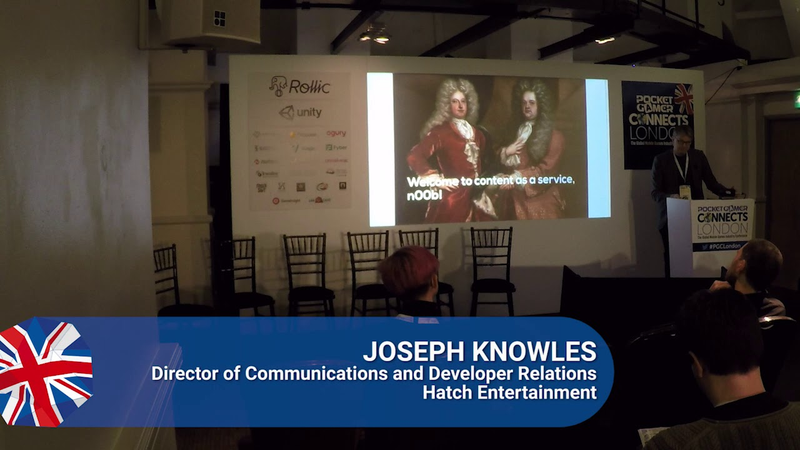
[Music] thank you all for coming hi so my name is my name is Joseph and I've been some of you might recognize me from previous pocket gamers I have been sort of stalking the halls of Pocket Gamer and other games conferences for the past four years on behalf of hatch entertainment helping helping to develop and grow the catalogue of games available on hatch and also just to explain what the heck is cloud gaming I think I don't need to
explain this any more now in 2016 I got some pretty strange looks and stares and a very common reply was but on live I already tried that as Bruce was explaining and it didn't work out so well and now we are where we're back now in this space where suddenly you know cloud gaming is is a very very talked about thing it even has its own track at Pocket Gamer which is pretty cool and and and it's it's unquestionably it's unquestionably back we see massive investments in cloud gaming infrastructure for of course Google and Microsoft as you were and Tencent and you can't forget about AWS I do share Bruce's concern that those are all pursuing video based streaming
putting GPUs in the cloud and that's that's troubling but I think sooner or later I think the world will come around to see the command streaming based approach which is what hatch has done and you know from the very beginning we understood that it would never work with weave with with with video-based stream especially on mobile and and really the the reason for that is you know we we want to you know the reason we went to mobile is because cloud gaming is about growing the audience it's also why all these other companies are now investing seriously in it as well is that they see an opportunity to really grow the audience for games it's not about cannibalizing or taking games off other platforms it's about reaching new players it's kind of the you know the blue the blue ocean marketing strategy right you know you don't want to go into the red bloody pool where there's a lot of competition you want to find
potential new market segments that are still up for grabs and when you have a situation where you don't have to invest in specialized hardware you suddenly have a much larger pool of potential players to draw on and I can give you I mean like some examples of you know if you want to think about this in segmented terms a few categories that are that come up quite a lot when when you when you talk to developers and when you when you talk to journalists and as I've been doing for the past four years on this topic one one clear target group emerges is the lapsed gamer right these are gamers who played a lot when they were younger but they no longer have the time or the desire to invest in new specialized hardware and the new console but who can come back into games at a smaller you know in smaller increments and and the current mobile game scene isn't doing much for them because there's you know maybe five genres that
are really available to you as a mobile gamer at least unless you really dive deep and do a lot of homework figuring out new types of games to play but another segment is the family gamer you know meeting families with kids and adults who play it together you know when you you think about a household you know it's millat of there's a lot of competing demands on your on the sort of entertainment time and entertainment sort of attention budget that is available to you and and you know sort of games for the whole family when you can deliver them without having the family invest in a very expensive console that's that's a pretty interesting space as well a really interesting one is watcher so a lot of people are watching games but not necessarily playing them you know the
and this is something that I forgot to understand because when I was a kid we didn't watch streamers but but but but there you know now you know the best streamers command to hear a very very large audiences the audiences are bigger than then then the games themselves were ever half so you know for those who tend to watch streamers play more than then actually play themselves what if you know what if they could play two if the game were only a click away or if they can actually jump into the same exact game as a shared game instance and have an influence on the in-game environment anyway and certainly last but not least when we talk about growing the audience there are very large large emerging markets that never had a console space console fenestration is very low and when you talk about a nut market like India or China you know this is a wide open wide open field there so and so
just here is kind of a an overview of oh this is not a totally well rendered page oh there it is yeah okay yeah so this is kind of the current distribution landscape I don't think these ones on the bottom are going to replace the ones on the top I think it's always going to be complicated you know there's and and you know III do think though the there is a big difference between cloud gaming on mobile and cloud gaming on your PC or on a or where the controller connected to Sun screen one sort or another it's an important thing to forget although you know play on any screen is kind of a key
cloud gaming message right there's you know that that's that's that sounds good but in practice there's fundamentally different form factor or player right here you know there's good exceptions they're good developers who really designed for both mobile handheld touchscreen gaming and controller based gaming at the same time I mean these games certainly exist and there's good examples out there but you know the mobile first games are always going to work best on mobile and mobile and and you know and and the good controller first games will always you know be working very well with a controller first and when you try to port them to to mobile with a virtual joystick or you know I mean you really need to rethink the ground game from the ground up so to work with different form factors this is a simple kind of a simple design truth but I think it does get lost a little bit in the discussion around cloud gaming so so this is why hatch is very
much focused on mobile first so and I am you know representing hatch here but I'm trying to be a neutral observer as well at the same time you give you some you know actionable insight here but one one logo missing here is play Giga which base book just acquired so I think you know it seems reasonable to expect that Facebook will will be involved on both sides of this of this of this chart here getting into the PC and console space as well now so far we've only been talking about cloud gaming not really been talking about subscriptions often times these are used interchangeably but you know I think there's the there's the
purely technical side of cloud gaming but I think you know subscription is a is a very old and well proven business model these guys here are Joseph Addison and Richard Steele locals here who like to write essays and they started a magazine back in 1711 and they have some words for you if you think that delivering content as a service monetize primarily with subscription is some crazy new pie-in-the-sky concept that will never work these guys will tell you otherwise and three centuries of subscription-based media will also tell you otherwise and you know I actually started my career as a journalist and then magazine editor working on behalf of readers who subscribe it's a very motivate it's very motivating to have that kind of relationship with your audience you're always thinking what can I do
this week to make subscribers happy to make the arrival of this issue in your mailbox an event something to get Seth to get excited about and also you're thinking how can we grow the audience what goes on the cover this week how can we stand out and leap off the newsstand we didn't call it content as a service but that's that's what it was which brings me to my next point I just wanted to quote somebody else not not me here and you know and this is this notion that you know subscription is this very old long-standing business model but you know one of the reasons why it's been largely missing from games is that it doesn't really work technically and but I really believe this streaming in combination with subscriptions that's the kind of you know that's the secret sauce that removes so much friction in that very
long obstacle stone funnel between publisher and player when you can play instantly you can really hook into that that subscription economy that that you know that that sort of Netflix asks or Spotify ask experience and well in the words of Andrew Wilson it's not unreasonable for us to believe that we might entertain an additional 100 million players through subscription than we would in the traditional model and again it's getting back to that that blue ocean idea it's about growing the market it's not about cannibalizing or it's about you know expanding and and and casting a wider net for players that's it I also believe that you know Netflix for games as a concept is kind of overrated and you know games are different from movies the way we interact with them is
different the time we give them is different you know it really isn't a different sort of investment in time that you give to a game versus just watching a movie and a subscription service needs to be a cohesive coherent service so the very clear idea of who is customer is it's not enough to just provide a warehouse of stuff and say all right go knock yourself out I mean you need a guide through that warehouse right I mean you need you need some sort of intelligence and and you know help with curation and you also want to do more things than just you know look at various game trailers and eventually play them you want to you know you wonder how all these things connect and combine into a - you know one experience so and you know moreover what we call games it's it's a pretty wildly diverse category right I mean and from a consumer point of view it's almost too diverse to be useful at all GTA v toca Boca life and
freeze the look the mobile puzzle game 3 these are you know technically all in the same industrial sector but imagine logging into a consumer service that offered you these three experiences side by side and you wonder who the heck is this product for right and this is um you know a really important thing and and you know that there's a reason why you know publishers will have you know dedicated marketing teams just working on one game and then another game that they're publishing has its own marketing team and so on because they're different audiences so I think that you know I mean I mean part of what I promise to talk about was you know we're I think klog gambling is going and I'm not Nostradamus but I don't think you need to be Nostradamus to to think that you know that you know no one is immune from the rule of product market fit right so you'll see a flowering of services that decide
early on what they're going to specialize in and they cater to that later on we're going on panel later on we're gonna hear from a company called Anne stream which I'm quite interested in they're they're really focusing on retro games and and and they have a very clearly defined audience and I think that's pretty smart strikes me a smart hatch so for those who don't know what hatches hatch is Rovio's cloud gaming subsidiary we've been we announced the company in 2016 started public beta in 2017 more beta 2018 went to market for the first time last year and now we're really ramping up our go-to market this year in 2020 and in all that period of testing and and and optimising out in public because we have to that's where our users are and you know the only way to really get good at this is to do it out in the open is that you know we we've really you
know learned that we need to focus on on on on two things so we've kind of branched our product into hatch kids which is a very clearly family targeted service and and then sort of the regular hatch or just hatch is is a more social product and is taking that core game catalog we have about 150 games live in the service now and revolving around that that that core you know that core game collection are things like hatchling challenges you know updating real live leaderboards you know challenging your friends one on one and so on and we're really building the service in that direction we're you know it's a social place to come and meet your friends and and and and do all these things on top of the games themselves so you're not just coming for the Netflix ask experience you're also looking for that connection with other
players and you're also looking for intelligent curation you know like that we you know we see that you've been playing this you might like that so what does this mean if you're a game developer well it means all its exciting times you're very busy you know it's an opportunity you know there are a lot of very serious investments into the cloud gaming infrastructure and a lot of there's a lot of new distribution channels opening up in addition to the old ones and when you have that you have opportunity and you have and and you know I you know now is a good time to to get started and by just give you a couple examples from the trade press and by the way hatch is not working with either of these I wanted to pick I
wanted to pick some examples where we're not you know we're not you know directly involved so here's a here's a quote from the outer wilds developer who you know is really enthusiastic about you know launching on game pass and you know is saying that look this will unlock the market to weirder things so creatively it's really interesting um a remedy again talking about single player games sees a real opportunity for in these new subscription and streaming based services for the type of you know strong narrative single player experiences the remedy is making that there's you know going to be a place place for them well into the future because of this and and if I can you know add from the hatch perspective one another thing we've
learned in our in our you know years of testing now is that so we we you know if you're a developer you get paid based on game play minutes right so the more people play your game the more you get paid and a very early concern was well wait a second what if you know what if I've only made a two hour indie game it's narrative-driven it as beginning a middle and end and you know I'm not interested in making a you know an endless MOBA where you can never get off the merry-go-round and it's designed to be played for years and a funny thing happened was that you know it turns out that our most play games on hatch are precisely the short games the the games that only take a minute or so a minute a couple hours or so to to play all the way through and if you think about that I mean it makes perfect sense if you're
only addicted to one game what do you need hatch for you know you just get that game and play it till your heart's content that's fine hatch appeals to a different sort of user you know a user in out in that blue ocean that is interested in a lot of variety of experiences you know some you know coming going one after another so you you play Monument Valley for two hours you get to the end and you're happy and then you look for the next puzzle that well you know that will also be another two or three hour experience and so on these types of games are the ones that do best and these are the ones that you know we have learned to look for when you know evaluating where the content would be a good fit with our platform so anyway if you're a developer worried about the subscription model don't is what I'm trying to say I see that I'm running now into the - on my time so I'm gonna try to get through this on jet engines a little just a
thought about creatively what you can do and there's going to be a company talking later called mainframe industries that is working on cloud native games and I'm really personally quite looking forward to hearing what they have to say about this but you know one one thing that you can do in the cloud is that it really makes all a multi Gaming really super easy in effect when you have when you have a shared single game instance it's the same as a local you know as if you were playing local couch co-op at home with multiple controllers connected to one device it's the same principle with Hatch and other cloud gaming services where you have one shared game instance and multiple concurrent users tapping in from other sources with their controllers that may be many miles apart from each other so so this really kind of lowers the
barrier dramatically for online multiplayer gaming and also really opens up really interesting frontiers and vistas for you know ongoing persistent game states in persistent worlds that other players can sort of come and go as they please and have lasting impacts on very interesting and as I'm here reppin hatch you know we I wanted to just take a moment to remind you that just at the end of last year we published our first hatch original game called arkanoid rising which is taking advantage of this of this two into two you know to basically show what you can do when you have one share game instance you can have different controllers with different views on the same action and it's and and we do this without any you
know complex network programming or anything it's just literally one game instance running in the cloud and player one sees the action from their perspective player two sees it from from from their perspective and in spectators can come in and watch as well and cheer for one side or the other so that's what it looks like here and just giving you a sense of how the game plays it's out it hatches out right now on Android and the UK so you can download this and by yourself pretty cool so to sum up than effort the infrastructure is here it's being built out and already there in some markets and and especially you know for services that are doing command based streaming such as what Bruce from polish stream was talking about it's it's already very easy to use right now and hatches out right now in in in Korea which is you know in South Korea it's
basically you know the whole country is marinating in 5g so it's really fantastic market for us it's starting to get there in the u.s. it's it's very it's a little 5g coverage is a bit patchy in the u.s. but it's definitely you know that seems like this year will be a big year in the US for that and you know streaming and subscriptions is is kind of you know they go very well together I don't think the biggest players though will look like Netflix I think they will they will look like some sort of combination of a social network and Netflix and bi you know again I am NOT Nostradamus here but by 2022 it seems pretty clear to me that many studios will wish they had spent the last two years working on a cloud native experience now whether that's as part of a subscription offering or as its own standalone game you know that that's a
separate question and that's but but I do think that you know it's all the technologies here and ready to be used and and you know if you can you know use it to you know provide players delight and and then then the rest will follow so yeah I'm five minutes over time thank you so much [Applause] [Music]
Summary
The state of cloud gaming in early 2020 reflects a significant shift toward infrastructure investment by major technology firms, signaling a transition from experimental concepts to a viable market segment. The primary thesis is that cloud gaming serves as a tool for audience expansion rather than platform cannibalization, specifically targeting "blue ocean" demographics such as lapsed gamers, families, and users in emerging markets with low console penetration. By removing the requirement for expensive, specialized hardware, cloud gaming lowers the barrier to entry, allowing developers to reach players who are otherwise underserved by current mobile or console ecosystems.
Methodologically, the industry is moving away from purely video-based streaming toward command-based streaming, which is better suited for mobile environments. Success in this space requires a "mobile-first" design philosophy, as porting controller-based games to touchscreens often fails to provide an optimal user experience. Furthermore, the integration of subscription models with streaming technology is identified as the "secret sauce" that reduces friction between publishers and players. Rather than functioning as a generic "Netflix for games," successful services must provide intelligent curation and social features to guide users through diverse content libraries.
Key findings indicate that subscription-based models benefit developers by incentivizing gameplay minutes, which paradoxically favors shorter, narrative-driven indie games over endless service-based titles. Additionally, cloud-native development enables new technical possibilities, such as shared game instances that facilitate seamless multiplayer experiences and persistent worlds without complex network programming. As 5G infrastructure continues to roll out globally, particularly in markets like South Korea, the industry is expected to see a surge in cloud-native titles by 2022. The future of the sector lies in services that blend social networking with content delivery, creating cohesive, community-driven platforms rather than passive warehouses of media.













Comments