1 free read left. Create a free account for unlimited reading + AI research.
Create free account
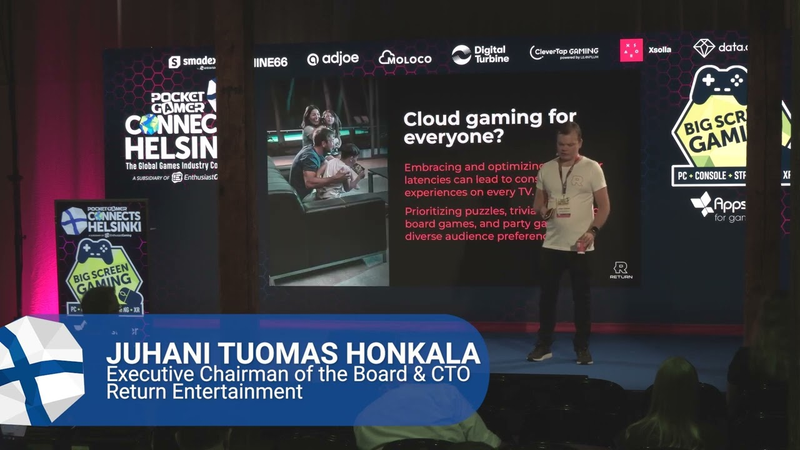
TV Gaming: What Does it Mean for the Audience and Types of Game - Juhani Tuomas Honkala, Return Ent.
Key insights
6 takeaways- 01The future of TV gaming is shifting away from high-end, console-style experiences toward casual, bite-sized interactive content integrated directly into video-on-demand (VOD) services.
- 02Mass-market adoption of TV gaming is currently hindered by a disconnect between existing cloud gaming strategies and a target audience that does not identify as hardcore gamers.
- 03To eliminate the need for dedicated hardware, developers are increasingly utilizing mobile devices as primary controllers and second-screen interfaces.
- 04Industry design is pivoting toward latency-friendly mechanics to ensure accessibility across diverse global network conditions, rather than forcing high-performance, low-latency requirements.
- 05Monetization models for TV gaming are expected to mirror the VOD landscape, relying on subscription bundles and ad-supported models to combat consumer subscription fatigue.
- 06Frictionless access points, such as QR-code-based mobile pairing and integration into smart TV operating systems, are being prioritized to capture untapped, family-oriented audiences.
Ask AI about this video
Transcript
[Music] [Applause] [Music] thank you [Music] let's dive into our last solo Talk of the year of the morning we've got a panel still to go I'd like to invite to the stage uh johani our talker from uh return entertainment to talk about TV gaming come on up come on Connie welcome to the stage here's a clicker all right yeah so hey uh hello hello everybody and my name is my name is you honey and uh I've been in the gaming industry for the last uh 20 years I co-founded a uh one of the first free-to-play studios in the world in in South Korea in Seoul and that was acquired by come to us and
then I was leading the creation of Romeo's Beacon platform which was acquired by by Sega lately just a few months ago and I've been also heading Rabia subsidiary and cloud gaming and we were the first ones to create cloud gaming gaming service for mobile and we were having global operations working with hundreds of publishers and now I'm exact chairman of written entertainment and we are working on a new wave of TV gaming and this is something like I wanted to talk you a little bit about today and if you want to go you you can check the return entertainment.com like for the for the details what we are what we are doing but really like the lines between the on-demand video and the gaming it's getting more blurred like going going forward still like if you
think like 10 years ago Netflix was just starting people were talking a lot a lot about like okay on demand entertainment videos on demand and and whatnot and now the same change is going to happen with the games I'm sure that many of you have already seen the news about Netflix entering the field Netflix is going to provide Cloud games uh with their service and I'm pretty confident that everybody else in the VOD industry is going to introduce and include the games in their service as well so the living room is really transitioning from just linear or like on demand non-interactive entertainment to be more gaming focused going forward and then like I think there is a a big eleph fund in the room I wanted to to address first so this is actually like my first
presentation since covid and like uh at the time like we were talking a lot about stadia and I thought like I wouldn't mention stay there this time but uh but I think I need to do that and the thing is that the with the stadium the whole industry started to think that the hardcore gaming audience is the ideal audience for the for the TVs and uh it's kind of like extension of PC and the console gaming and it's replacing the console problem that people don't have the high-end gpus with the cloud cloud gaming we bring those gpus to your TV but it's been like largely about kind of typical console games like what people have been talking since assassin Creeds the cyberpunk the other first person suitors like really hardcore gaming like that's really has stealed the focus of of code gaming
and uh I think stadia kind of proved that it might not be the only option it might not be even a viable path but forward so is the TV game just extension of console gaming going forwards or is there something else in the pictures as well so I think many of like even the Roblox uh they mentioned this but like it's about 50 50 split these days between the woman and the and the men like who played the video games and interesting like only like 10 percent of the people identify them as gamers so 90 of people are not gamers and even so for more for the women so I would say like 95 of the women do not identify them as a Gamers so that is kind of like a discrepancy like between the stadia approach the hardcore gaming
offroads and the actual audience what's there is for the gaming and if you think like people like who are in the living rooms who are watching the TV who are using Netflix's and other VOD services they are probably not gamers so is there a point of like providing games for this hardcore audience when the audience is really not hardcore at all like it's there's probably like zero percent of Hardcore gamers um so I think we have to see and we have to start thinking that there's a transition from this gamer Pros to more casual players in in terms of TV gaming because uh one of these things uh like about the state really about about the other cloud gaming Services is that they replace the consoles they bring you the better GPU to play play with but that's only what hardcore Gamers really appreciate the AAA games the Assassin creators or the cyberpunks they are only played by
the hardcore gamers only those players appreciate maybe the the latest rate racing only those people even know like what these games are about or how to play them they're very complex things to play they require a very long session times to really understand what you're even even doing but then like the TV audience is so opposite it's really like casual people who are just seeking these bite-sized moments of fun that want to play something quickly effortlessly with their friends with their family with their kids maybe their grandparents and and uh and so on so it's really about like third moments with the with the people you you love and it's really not about this long gaming sessions it's not about AAA Graphics it's not about console gaming gaming at all and one of the I believe like one of the
promises of the cloud gaming is really effortless frictionless experience and that's what I've been working for like last seven years to to tell to people that the cloud gaming makes games more accessible and that is a like ideal thing if you think of like casual audience if you think people who are watching Netflix or other VOD services that when they are watching the movie maybe they want to play right after the game like that's based on the same IP but that has to be is fifth that has to be fast and you have to make it as frictional as as possible so no downloads no no kind of waiting for installation or any any of that and one of the things uh like uh I've been in the cloud gaming for now I think eight years and most of the services out there were built on the premise that you have actually this concrete physical gamepad
you play the games with but then if you think of the TV audience nobody has the gamepads nobody even they have them they probably don't have them full of like battery and retards so it's likely that um even if you wanted to play you don't have the cane bats ready to play with but then the mobile is really something like that everybody has everybody has their hands so we believe and I believe like many in the industries now believe that the mobile is the ultimate controller for the TV gaming experience but it also means a lot in terms of the game design that how you actually use the mobile phone for the controlling the game and it's not just about the controlling it's also that the mobile gives you kind of a second screen
for the whole gaming experience so I believe like in the future and that is something what we are building in return as well is that we are building the games that take advantage of this mobile as a real second screen for the gaming experience so it's not just a virtual Gamepad it's not something like you use kind of as in replacement for the for the physical game controller but it's kind of extension of the gameplay on your mobile so this really makes it necessary to think TVs TV games from ground up and design them for the TVs that TV gaming really what we believe it's it's not about bringing this existing PC or the console games uh to this new new TV format but it's really about creating new kinds of gaming that's more bite-sized it's it's more social it's more fun
and that you can actually start to play it instantly without waiting without going through long tutorials so it's it's kind of a completely new world of game making what is now happening and what is now being born in coming years and uh one of the things here is that this is again like one of these kind of I I would say like um key things like what people are always talking the latency of the cloud gaming and the guy is is the stadia having that enough low latency to play the latest uh first person shooter and and so on but the thing is that uh one of the challenges really is that people don't have great internet and the Casual audience doesn't even know what a great internet means lots of people say okay they have a high speed internet but they're still using old Wi-Fi boxes which do not really allow for really low
latency or the the stable experience so all the cloud gaming services are struggling to reach the wider audience wider TV audience because of the the network and the technical issues and I don't really like those problems are going away anytime soon there are so many factors affecting the Last Mile and it's so difficult to get it right so we believe that instead of fighting the latency and really trying to find the optimal spots where you can play the games that you should actually design the game so that they are latency friendly that that's not really about minimizing the latency but it's about designing the gameplay and choosing game genres that you can play with higher latencies because if you do that you can suddenly not only address five percent of the the best TV TV users with the low
latency internet connection but you can actually access hundred percent of of TV users in the U.S in the Brazil globally and there are hundreds of millions if not billions TVs sold every year so it's a huge Market and largely it's currently completely untapped Market because the cloud gaming services are really focusing on this low latency thing and they can't really address the the wide market so we believe like kind of turning the tables on the on the game design and instead of fighting the latency embracing itself like will will bring better better results and uh really the idea and the I believe like the focus is really about these fun moments because if you think to the Casual audience it has to be something that resonates with the families it has to be something that resonates with the with the woman with you can play with the
kids Etc so I have I have quite often used this Nintendo supercell as a great example of of TV gaming that if you think of like these old ages the TV consoles or the video games if you will they were all about like having serot fun with your friends you had this multiple controllers you could be playing with and uh and uh that that was really like the most important part of the gameplay that you actually had really fun time with the family and if you now think the console games do not have that same approach how many times did you play console games with your with your friends or the uh family that I've been trying to do that with my kids but it's just really hard to find something you can actually play uh that is fun that's bite-sized enough to to play for example like 15 minutes like before before uh dinner time or
something like that so um so yeah we believe that the TV gaming is going to be completely separate area from console and the PC gaming and we are one of the the companies like really focusing on creating this new wave of games and I also believe like there will be more services other than Netflix embracing this uh the cloud gaming like going forwards as well but yeah that was all um I wanted to share you with you with you today and uh please uh check our website or just come over and and talk with me like later on like today or in the in the Maxine in the in the night if you if you will and uh yeah that's my my contact details as well like if you want to send me something um but yeah hey thanks a lot and uh if you have any questions I'll be happy to answer
thank you very much that was great very interesting thank you and yeah we're seeing a lot of uh uh news around uh uh TV gaming being uh coming our way on Pocket Gamer it's a very interesting topic do we have any questions we've got a couple of minutes for questions um there's one here in the uh in the row here if you've got a mic thank you uh thanks for the petition and I'm a question that uh do you think what would be the uh suitable business model for gaming service like this uh that's excellent question so about the business model like how we how we see it going forward that uh I do believe like there are there's going to be two major uh models here the one is that it's part of subscription model of VOD services so it's part of the bundle of you get to watch the TV shows uh movies and the games on the same go so it's a subscription-based model but what we also see is like what is
happening there that people are starting to have this subscription fatigue that you know people already have like too many subscriptions going on so I do believe like ad funded model and the monetization is viable one as well especially with the model of this latency Friendly Gaming it actually uh enables some cost savings like on the on the cloud side as well so it makes it more economical as well but I think those two models I don't believe in a separate subscription model that mods because of the the subjects of fatigue uh that's that's that's there pretty good point yeah um thank you uh do we have another question there's someone at the back so I can run the pillar there we go go for it yeah so I was curious uh how do people um interact with this game is it going to be another channel on a Roku how do people see this in their homes yeah yeah that that's a uh that's exciting uh question so we are now
working with uh some Partners on on bringing our games to to public but the experience will be super smooth and frictionless so uh our reason is that you just see the QR code on your home screen on the TV you don't need to access any of the services and you can just scan the QR code with your mobile and the game starts and your mobile transforms to the controller of the experience great great question people have to get used to how to interface with these games yeah very good uh any other questions we've got a minute we can take maybe one more question before we move on to our panel yeah back there a working spot yeah so thanks for the presentation and to explain on the previous question so what I want to ask is how are you going to display this on your TV because your TV is just a displaying device so it's still need you know something to executing on the code usually you have
to I don't know like smart TV or you have to connect it to a console or something so how are you going to you know make the gaming appear on the TV uh yeah yeah yeah yeah I could question like how to how to make it actually happen so uh it depends on like what kind of TV uh TV Os Os you have either like using a web-based uh streaming of of video um or then using a a small native application that's embedded in the uh in the in the TV um we want to make it frictionless so we are working closely with with our partners to make it as as smoothly so that people don't need to go and download any any separate applications uh we've been also developing our own streaming protocol that is enabling this latency Friendly Gaming that the the other gaming services using webrtc it's not really suitable for the for the for
the model so uh so yeah but yeah either native app or the web app and and so that people don't need to do anything that's great thank you um I'll tell you what let's let's leave it there and give you a round of applause I think people have more questions for you and this is a fascinating topic I think we're going to see more and more about uh console less gaming TV I think that's going to be uh you know as we go forward if you want to have a talk to your honey about this look you up on where your emails there but find you want me to match yeah perfect well another round of applause thank you very much [Music]
Summary
The evolution of TV gaming represents a significant shift in interactive entertainment, moving away from the traditional console-centric model toward a more accessible, casual, and social experience. While early cloud gaming efforts focused on replicating high-end PC and console experiences for a hardcore audience, this approach has struggled to gain mass-market traction. The current industry trajectory suggests that the future of TV gaming lies in integrating interactive content directly into video-on-demand (VOD) services, effectively turning the living room into a hub for casual, bite-sized entertainment rather than long-form, complex gaming sessions.
Key findings indicate that the vast majority of the potential TV audience does not identify as hardcore gamers, creating a disconnect between existing cloud gaming strategies and user behavior. To bridge this gap, developers are increasingly utilizing mobile devices as the primary controller and second-screen interface, eliminating the need for dedicated, high-maintenance hardware. Furthermore, technical limitations regarding internet latency remain a barrier for many households. Rather than attempting to force high-performance, low-latency experiences, the industry is shifting toward latency-friendly game design, which allows for broader accessibility across diverse global network conditions.
The business model for this sector is expected to mirror the VOD landscape, primarily through subscription bundles and ad-supported models, as consumers increasingly face subscription fatigue. By leveraging frictionless access points—such as QR-code-based mobile pairing—and embedding gaming directly into smart TV operating systems or web-based streaming protocols, the industry aims to capture a massive, currently untapped market. This transition emphasizes social, family-oriented gameplay that prioritizes immediate fun and ease of use over the technical demands of traditional AAA gaming.