1 free read left. Create a free account for unlimited reading + AI research.
Create free accountArticle G|A|M|E – The Italian Journal of Game Studies
1 free read left. Create a free account for unlimited reading + AI research.
Create free accountArticleG|A|M|E – The Italian Journal of Game Studies
The essay treats sound in games as a medium whose effectiveness depends on how sonic signs relate to the objects, events, and expectations they represent.
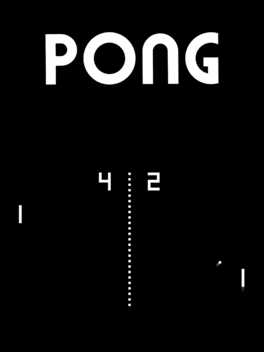
This critical essay examines game sound design through the lens of Sonic Interface Design (SID), using Kristine Jørgensen's three-layer model of the gameworld interface, consisting of the game controller, WIMP elements, and the gameworld, alongside Charles Sanders Peirce's semiotic framework of iconic, indexical, and symbolic signs. Its central argument is that sound in games functions as an informational medium whose effectiveness depends on the relationship between sonic signs and the objects, events, and expectations they represent, rather than on strict physical realism. The author reasons from close analysis of specific cases, including the bite of Pac-Man, the tones of Pong, the success and failure sounds of Wii Sports Tennis, and the serve toss sound in Wii Sports Tennis, which is treated as a sonification of the ball's parabolic trajectory.
The analysis finds that a sound can shift semiotic mode over time, for instance from iconic to indexical as players learn a game's mechanics, and that the design of audio should be calibrated to the balance of realism, hypermediacy, and immediacy suited to a given genre and context. The essay argues that listeners tolerate considerable physical inaccuracy in everyday sounds, which game designers can exploit to prioritize immersion and clarity. It also contends that adaptive music can convey changes in game state, and that sound can serve as a behavioral trigger at the controller layer, drawing on Fogg's behavioral model and the rhythm-action genre.
The scope of the work is conceptual and theoretical rather than empirical: it draws on a range of cognitive, psychoacoustic, and musicological literature and illustrates its claims with several well-known titles from the 1970s through the 2000s, without presenting survey data or a quantified sample. Its conclusions emphasize that a holistic, integrated approach to game audio can improve both the creative potential and the methodical production of game sound design.
Each row is a game or company this document names, each column a document, oldest first. A mark means that document names it. Select a row to see those documents.
G|A|M|E – The Italian Journal of Game Studies · 2026



DiGRA · 2026



DiGRA · 2026



DiGRA · 2026



DiGRA · 2026



DiGRA · 2026



game · 2026
DiGRA · 2025
DiGRA · 2025
DiGRA · 2025
DiGRA · 2025
Adam Mickiewicz University · 2024
Digital Games Research Association · 2024