1 free read left. Create a free account for unlimited reading + AI research.
Create free accountArticle G|A|M|E – The Italian Journal of Game Studies
1 free read left. Create a free account for unlimited reading + AI research.
Create free accountArticleG|A|M|E – The Italian Journal of Game Studies
The article reports platform-level statistics for Discord's user base. It describes the audience as about two-thirds male and largely aged 16 to 34.
This article, authored by researchers at the Universidad Complutense de Madrid, examines the epistemological and ethical challenges of conducting digital ethnography within gaming communities on Discord. Its central thesis is that the platform's culture frequently reproduces hegemonic and antifeminist masculinities, pushing women and dissident identities into a "diaspora of otherness," a retreat from hostile public servers toward private, safe refuges. The authors argue that conventional ethnographic methods of "occupying" a field are inadequate, and that researchers should instead "inhabit" these environments, recognising that platform affordances such as voice channels, permission hierarchies, and moderation bots actively shape social life.
The article contrasts two methodological situations. In hostile spaces, the authors contend that researcher protection is essential and that covert or discreet observation may be justified, with attention to anonymisation and to the risk that researchers could be targeted. In safe spaces, they identify an ethical paradox: an external academic gaze may disrupt the intimacy that defines the community. To resolve this, they propose Critical Digital Participatory Action Ethnography, which advocates co-designing new Discord infrastructures with participants, including collaboratively developed moderation norms and a conception of consent as an ongoing, reversible, dialogical process rather than a one-time signature.
The study is primarily conceptual and reflexive, drawing on feminist epistemology, Actor-Network Theory, and literature on masculinities and online culture. Its empirical grounding is limited: it reports platform-level statistics, including roughly 200 million monthly users and a user base that is about two-thirds male and largely aged 16 to 34, but the two case studies are described only briefly rather than presented with systematic data, sample sizes, or detailed findings. The authors frame their contribution as a political and ethical stance on research design, with the aim of fostering self-managed, care-centred online communities.
G|A|M|E – The Italian Journal of Game Studies · 2026
G|A|M|E – The Italian Journal of Game Studies · 2026
G|A|M|E – The Italian Journal of Game Studies · 2026
G|A|M|E – The Italian Journal of Game Studies · 2026
G|A|M|E – The Italian Journal of Game Studies · 2026
G|A|M|E – The Italian Journal of Game Studies · 2026
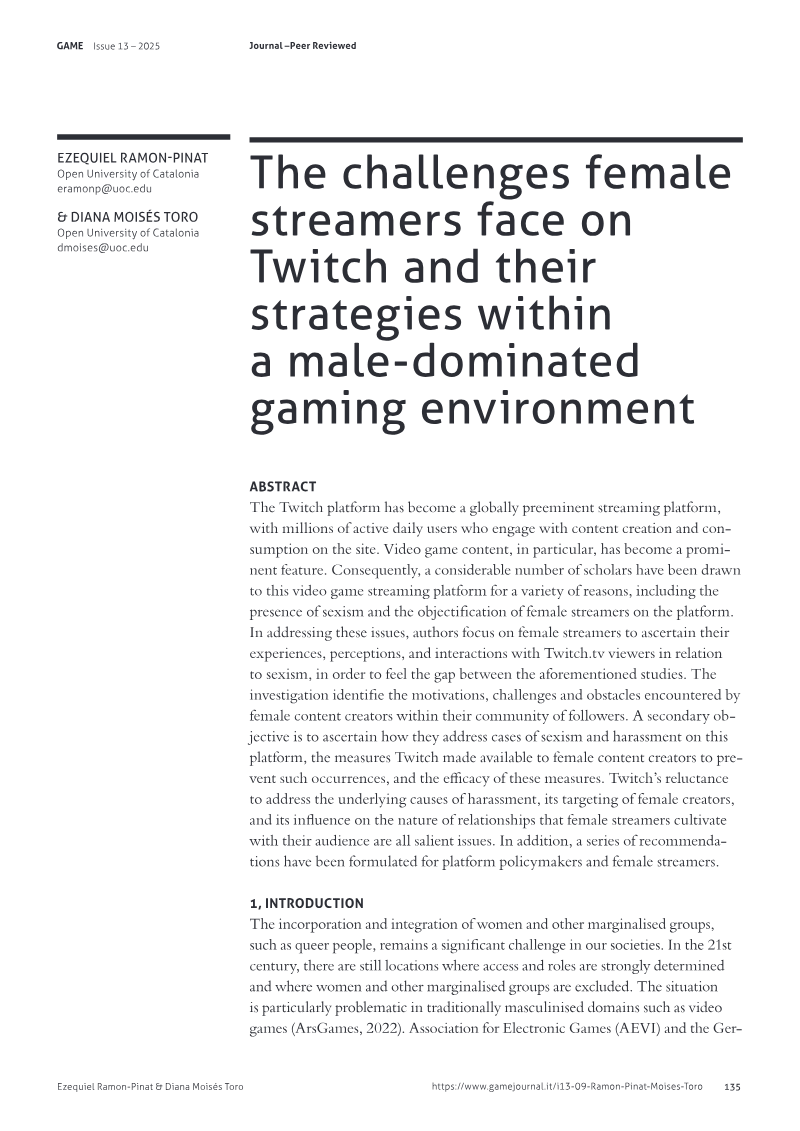
G|A|M|E – The Italian Journal of Game Studies · 2026
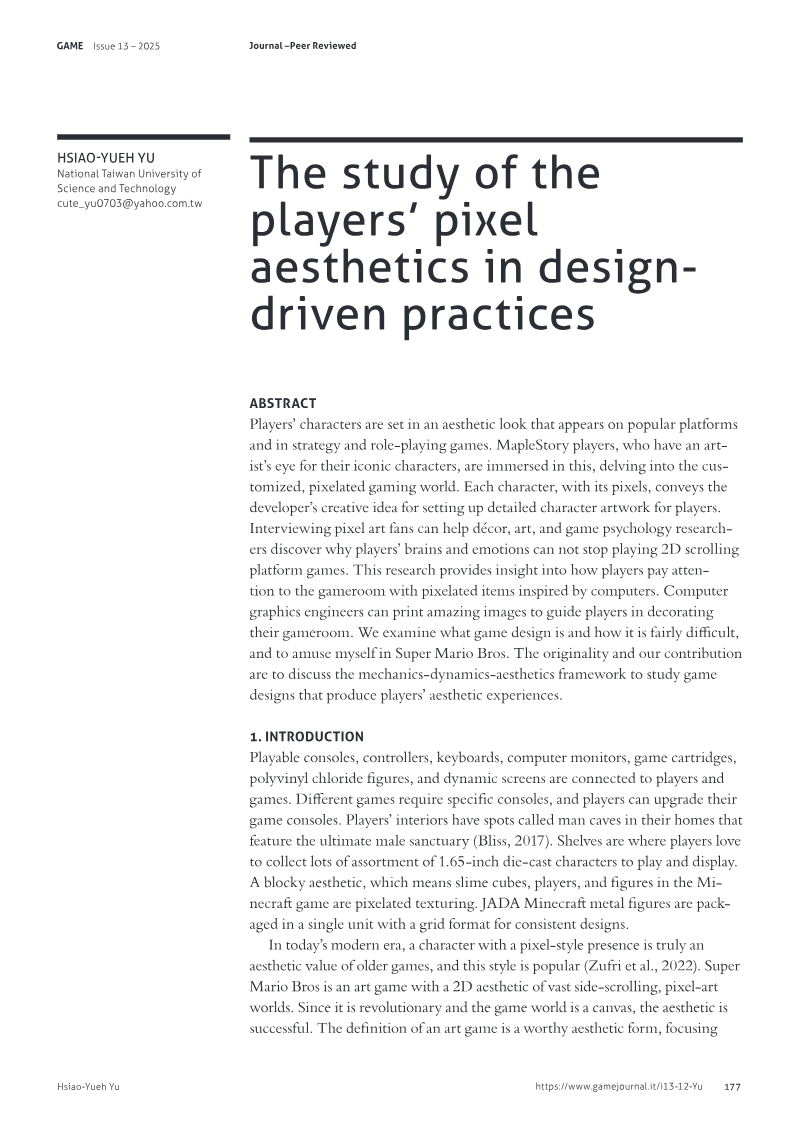
G|A|M|E – The Italian Journal of Game Studies · 2026
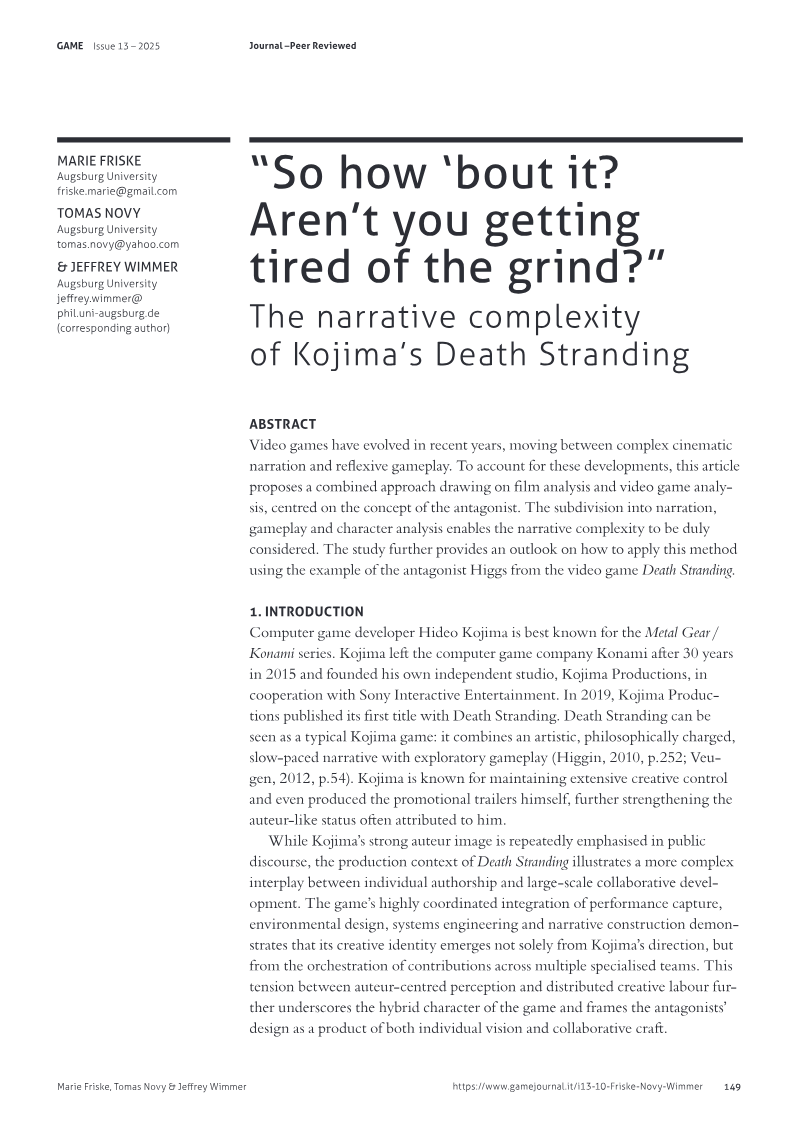
G|A|M|E – The Italian Journal of Game Studies · 2026
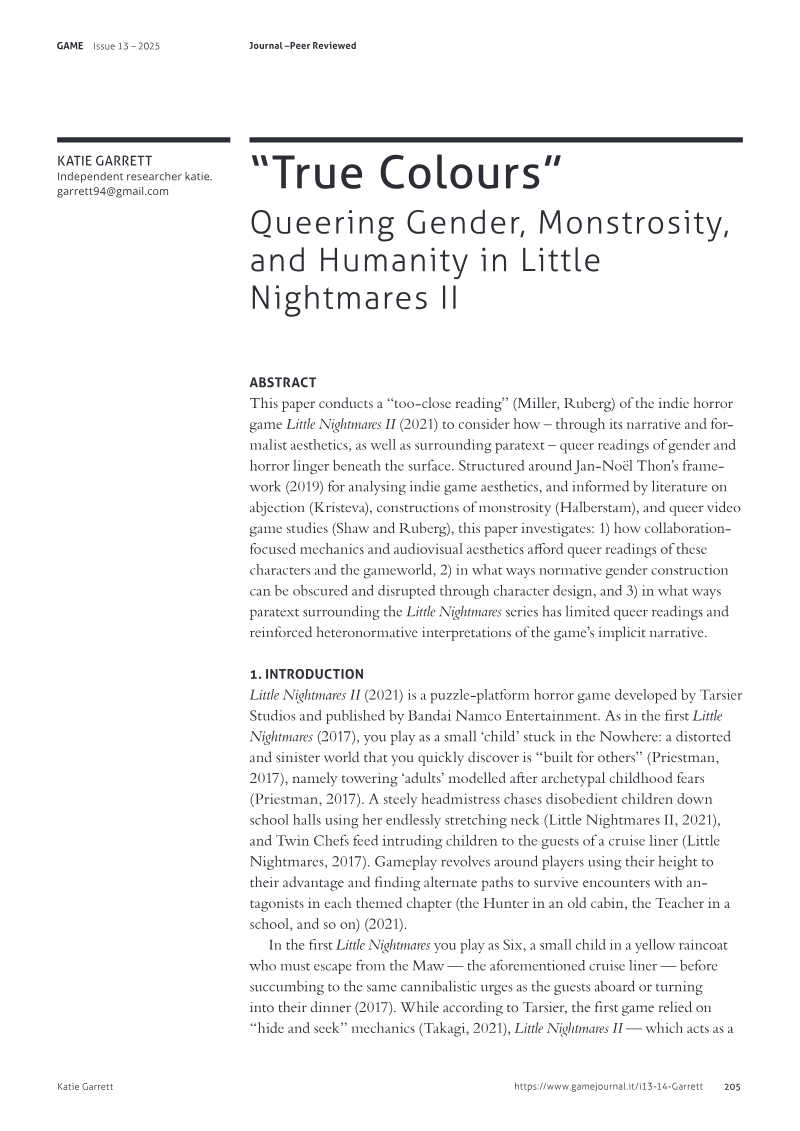
G|A|M|E – The Italian Journal of Game Studies · 2026
G|A|M|E – The Italian Journal of Game Studies · 2026
G|A|M|E – The Italian Journal of Game Studies · 2024
DiGRA · 2026