1 free read left. Create a free account for unlimited reading + AI research.
Create free accountArticle G|A|M|E – The Italian Journal of Game Studies
1 free read left. Create a free account for unlimited reading + AI research.
Create free accountArticleG|A|M|E – The Italian Journal of Game Studies
The introduction argues that games have long been framed as mere entertainment, education, or simulation tools. It treats them instead as expressive languages, artistic practices, and relational socio-cultural environments.
This introduction to the special issue "Beyond Play" argues that the academic study of videogames has outgrown its instrumental framing as mere entertainment, education, or simulation tools. Its central thesis is that games should be understood as expressive languages, artistic practices, and relational socio-cultural environments whose ontological status is processual, emerging through interaction, circulation, interpretation, and governance. Drawing on foundational work in game studies alongside cultural theory, posthuman thought, and new materialism, the authors propose three mutually constitutive perspectives for the field: the artistic and expressive, the design-oriented, and the socio-cultural.
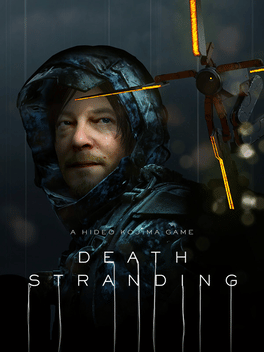
The issue gathers fourteen contributions that operationalize this framework across diverse topics. These include sustainability in Chinese game design, participatory ethnography on Discord, fan labour in PlayerUnknown's Battlegrounds, the gendered harassment faced by female streamers on Twitch, narrative antagonism in Death Stranding, ritual and liminality in the Souls games, pixel aesthetics as design drivers, and queer readings of Little Nightmares II. Each contribution is positioned as an examination of games as infrastructures of governance, laboratories of pedagogy, economies of participation, ritual environments, and contested sites of identity formation.
The introduction situates the issue within the P+ARTS project, funded through Italy's National Recovery and Resilience Plan and the European Union's NextGenerationEU initiative, which frames videogames as a paradigmatic field at the intersection of creative industries, digital design, and platform economies. The authors stress that moving "beyond play" does not abandon the ludic core of games but recognizes that play is itself structured, situated, and politically charged, generating economies, identities, communities, and imaginaries.
Each row is a game or company this document names, each column a document, oldest first. A mark means that document names it. Select a row to see those documents.

G|A|M|E – The Italian Journal of Game Studies · 2026

G|A|M|E – The Italian Journal of Game Studies · 2026

G|A|M|E – The Italian Journal of Game Studies · 2026

PocketGamer.biz · 2026